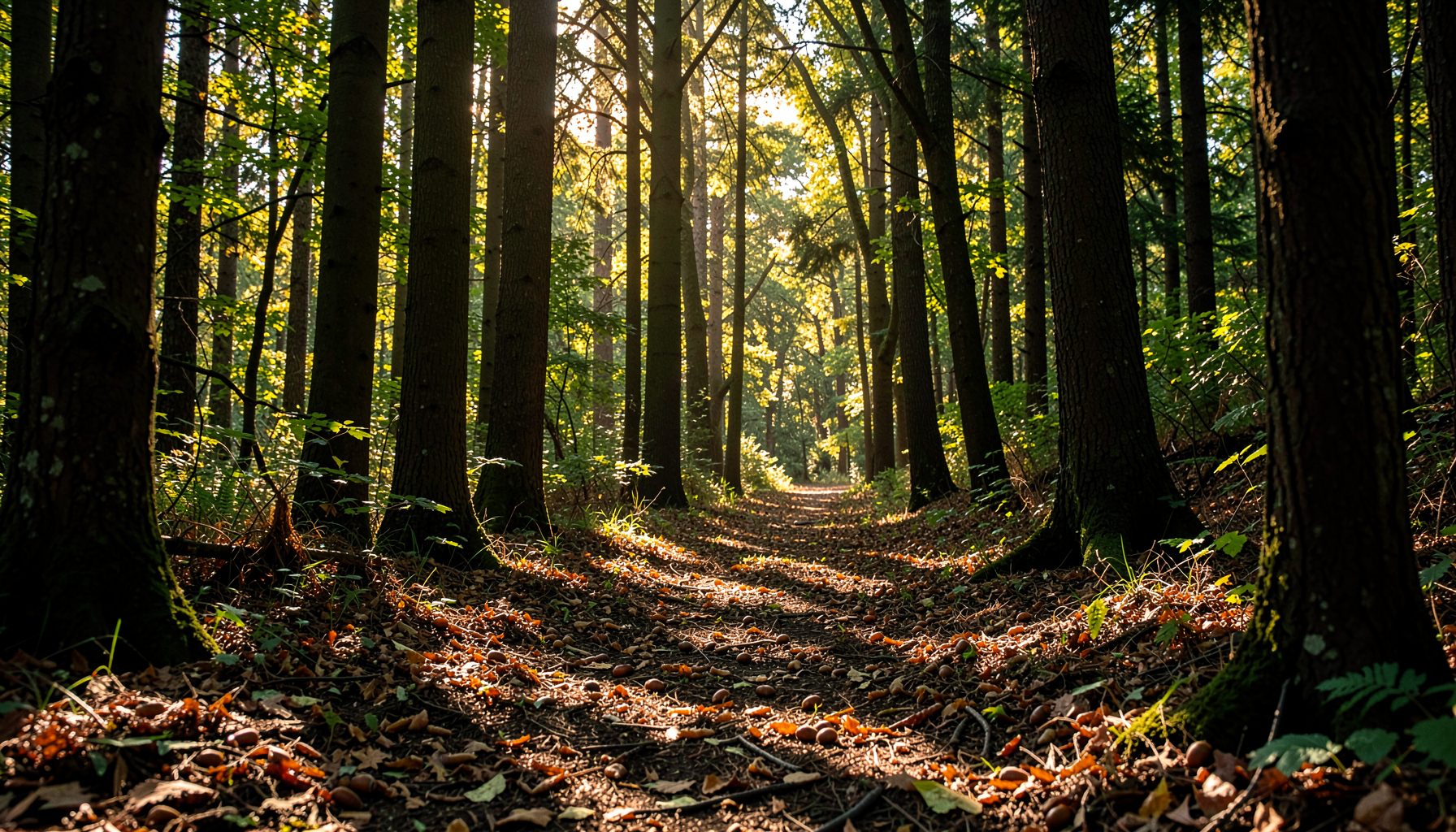
An oak forest can seem to follow a hidden calendar. For several years, branches may carry a modest crop of acorns, then a single autumn arrives with nuts…
Posts
Why Oaks Produce Acorns in Mast Years
How to lead a family-friendly seed collection walk
A family seed collection walk turns an ordinary afternoon outdoors into a hands-on lesson in forest ecology. Children can learn how to recognize native trees,…
Why American Beech Trees Matter in Floodplain Soils
Floodplains are among the most productive landscapes in a watershed, yet they are also exposed to repeated flooding, shifting channels, saturated ground, and…
A Practical Seed Drying Rack for Shared Harvests
A community seed collection can produce hundreds of acorns, walnuts, nuts, and native shrub seeds in a single season. Before those seeds reach a nursery,…
Safe Walnut Handling For Native Seed Collection
Walnuts are valuable native tree seeds for restoring streamside forests, but collecting them safely requires more than picking up fallen nuts. Black walnuts…
The Benefits of Planting Native Shrubs Alongside Hardwood Trees
Healthy forests are built from layers. Tall hardwoods form the canopy, while smaller native trees, shrubs, and herbaceous plants fill the spaces below. Along…
How to map a stream corridor for targeted seed collection
A stream corridor is more than the channel where water flows. It includes the banks, floodplain, adjacent woodland, wet depressions, old fields, and transition…
Why Black Walnuts Matter to Wildlife and Forest Health
Black walnut (Juglans nigra) is one of the Potomac River watershed’s most valuable native hardwoods. Its tall canopy, nutritious nuts, strong root system, and…
How to create a seed sorting station for volunteer events
A well-organized seed sorting station turns a pile of acorns, walnuts, and native shrub seeds into useful material for restoration. Volunteers can examine,…
How Mycorrhizal Fungi Help Native Seedlings Survive
A seedling begins life with a small root system and limited access to water and nutrients. In a forest or along a stream, that early imbalance can determine…