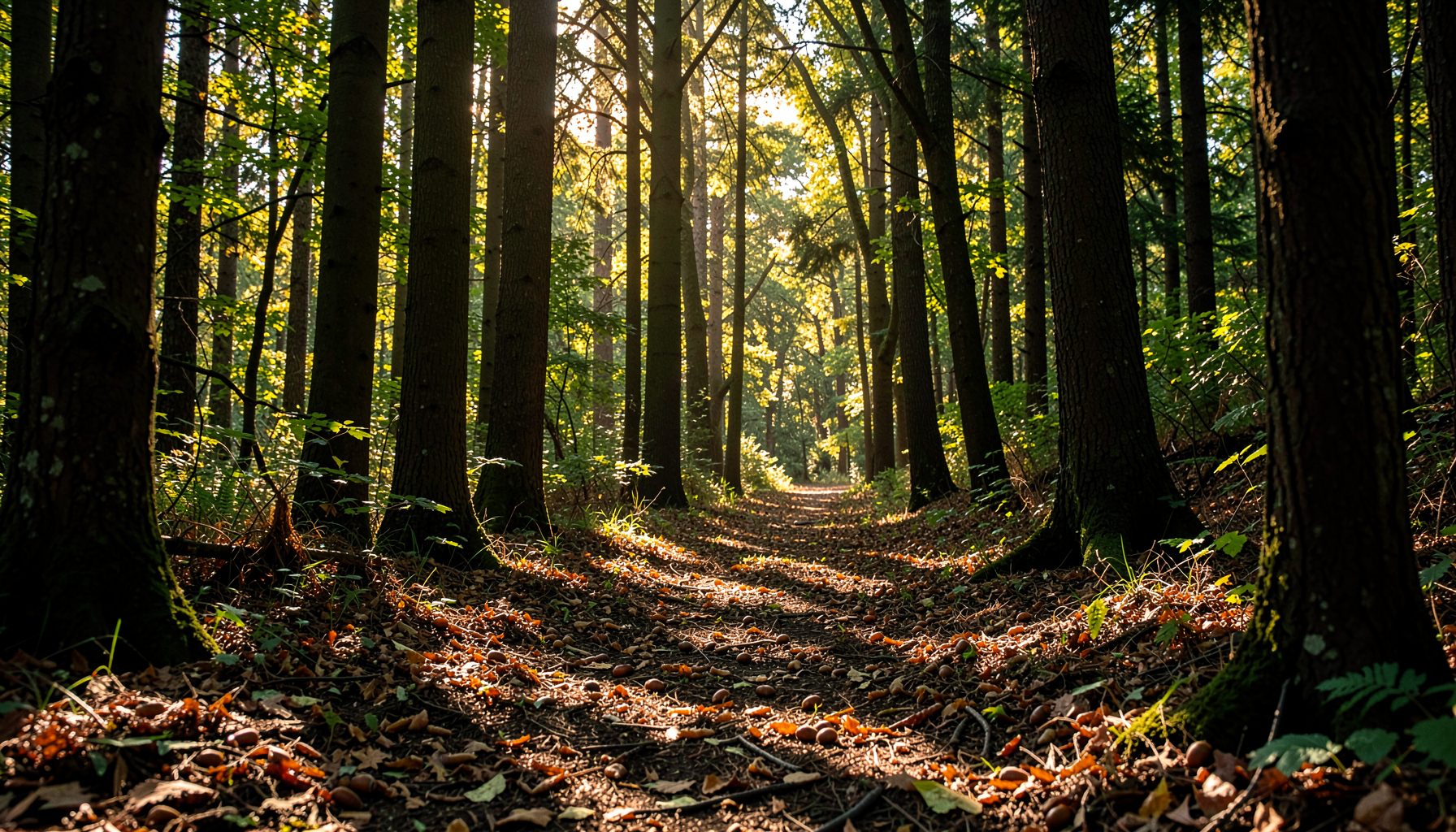
Seed Dormancy and Stratification in Native Trees
The science of seed dormancy and stratification explains why a seed can remain alive yet refuse to germinate. That pause is not a defect. It is a survival mechanism that helps native trees avoid sprouting during a dry spell, a harsh winter, or a season when young seedlings would have little chance of surviving.
For restoration groups, understanding dormancy turns seed collection into a more reliable process. A healthy acorn, walnut, gum nut or shrub seed still needs the right combination of moisture, temperature, oxygen and time before its embryo can begin growing. Each species has its own set of conditions, shaped by the climate and habitat where it evolved.
The same principle matters across very different landscapes. A cool, wet winter in the Potomac River watershed creates a different germination signal from a dry Australian winter in inland New South Wales. Even within Australia, seed from a Tasmanian mountain forest should not be treated exactly like seed from a Queensland creek line or a Sydney bushland reserve.
For volunteers, the practical message is straightforward: collect mature seed responsibly, identify it accurately, store it carefully and follow a species-appropriate pre-treatment. Good records are just as valuable as good equipment because they connect germination results with provenance, weather and handling decisions.
Why Native Seeds Stay Dormant
Seed dormancy is a condition in which a viable seed does not germinate even when it appears to have enough water, oxygen and a suitable temperature. The seed may have a hard covering, an immature embryo, chemical inhibitors or a combination of internal barriers. Dormancy prevents all seeds from germinating at once, spreading risk across time.
Physical dormancy is common in many legumes, including several Acacia species. Their hard, water-resistant seed coats can keep moisture away from the embryo for months or years. In nature, heat from fire, abrasion in soil or gradual weathering may weaken the coat. In a nursery, carefully controlled scarification or hot-water treatment may perform a similar function, though excessive heat can kill the seed.
Physiological dormancy works differently. The seed coat may allow water in, but internal chemistry prevents embryo growth. Abscisic acid helps maintain dormancy, while germination is associated with hormonal changes involving gibberellins and other growth regulators. Some seeds also have a combination of physical and physiological dormancy, making them particularly slow or unpredictable.
Native tree seeds can also be sensitive to their parent environment. Seeds gathered during drought, unusual heat or poor flowering seasons may differ in size and viability from those produced in a favourable year. That is why restoration projects benefit from collecting across suitable local populations rather than relying on one small stand of trees.
What Stratification Does Inside The Seed
Stratification is a controlled period of moist exposure at a particular temperature. Cold, moist stratification is the best-known form: seeds are mixed with a damp medium and held in cool conditions for a set period before sowing. This imitates winter and helps break physiological dormancy in species whose embryos are programmed to wait for spring.
During stratification, the embryo can gradually mature and dormancy-promoting compounds can decline. Membranes become ready to function again, enzymes activate, and the seed becomes capable of responding to warmth and light. The process is biological rather than simply a matter of chilling a packet of seed in a refrigerator.
Warm, moist stratification is useful for some species that experience a warm season before cooler germination conditions. Certain seeds need a warm phase to complete embryo development, followed by cold treatment. Others respond to alternating temperatures, daily fluctuations or exposure to light. The correct sequence must come from reliable propagation guidance for the species and its provenance.
Stratification is different from scarification. Scarification breaks, thins or softens a seed coat, while stratification changes the seed’s internal physiological state. A project may require one treatment, both treatments or neither. For example, soaking a hard-coated wattle seed is not a substitute for cold stratification, and chilling a seed with a sealed coat may achieve very little.
Applying The Science In Australian Landscapes
Australia’s seasonal cues vary sharply. A seed from a cool Victorian woodland may encounter a dependable winter chill, while one from a subtropical Queensland forest may respond more strongly to warm moisture, alternating temperatures or rainfall timing. In the Australian Alps, snow cover can provide a long cold period; near Perth or Adelaide, winter temperatures may be mild enough that artificial chilling needs careful management.
Local provenance is therefore central to restoration. Seed collected from a creek corridor near Canberra may be better adapted to that site’s frost and rainfall pattern than seed sourced from a warmer coastal region. The same applies to plantings in the Murray–Darling Basin, where water availability, salinity and extended dry periods influence seedling establishment. “Native” is not a complete description; species, population and collection location all matter.
Australian plants also display distinctive dormancy strategies. Eucalypts often release relatively small seeds from capsules, with germination influenced by moisture, temperature and light. Many Acacia seeds have impermeable coats and may need a treatment that allows water entry. Banksia species can retain seed in woody cones, releasing it after heat or drying events. These adaptations reflect fire regimes, seasonal rainfall and competition in their original habitats.
In practical bush regeneration work, volunteers may be collecting after a good flowering season, checking seed on a council reserve or carrying labelled bags back from a Landcare day. Seeds should be kept cool, dry or moist according to their storage behaviour, and protected from mould, insects and overheating in a vehicle. A quick stop in a hot ute can damage viability before anyone notices.
From Collection To Nursery Bed
The first step is confirming maturity. Mature fruit often changes colour, dries, splits or becomes easier to detach, but visual signs vary widely. Acorns should be sound and free from insect damage; fleshy fruits may need cleaning; capsules and cones may require controlled drying to release seed. Collection should avoid stripping a whole plant and should follow permission, biosecurity and local conservation rules.
Labelling needs to happen in the field, not later at the shed. Record the species, collection date, location, parent plants if known, habitat, weather and collector. For restoration programs, include a batch code so that germination results can be traced back to provenance. This information supports better decisions when seedlings are planted beside streams, on eroded slopes or in community revegetation sites.
After cleaning, inspect a sample for insect holes, mould, empty coats and abnormal colour. A cut test, float test or small germination trial can provide useful clues, although no single test is perfect. Seeds with high moisture content may be recalcitrant and unable to tolerate drying or freezing, whereas orthodox seeds can often be dried and stored under controlled conditions for longer periods.
Water quality is part of the reason this work matters. Vegetated stream margins slow runoff, capture sediment and support cooler, cleaner waterways; the relationship is explained clearly in this resource about forested streams. A successful seed batch eventually becomes more than a nursery statistic: it can become shade, root structure and habitat along a living waterway.
Designing A Reliable Germination Trial
A small trial is safer than treating an entire collection at once. Divide a batch into untreated seed and one or more treatment groups, keeping the number of seeds, medium, temperature and watering schedule consistent. Record the date of sowing, first emergence, total germination and signs of fungal attack. Replication makes the results more useful because one tray can fail for reasons unrelated to dormancy.
Moisture must be steady but not excessive. Waterlogged media remove oxygen and encourage pathogens, while a drying event can kill a newly activated embryo. Clean containers, a free-draining propagation mix and gentle watering are usually more important than elaborate equipment. Temperature should be measured where the seeds are, since a sunny greenhouse bench can be far warmer than the surrounding air.
Germination percentages need careful interpretation. A low result may indicate poor viability, an unsuitable treatment, incorrect maturity, insufficient time or seed predation. A slow result is not necessarily a failed result, particularly for species with extended dormancy. Keep viable ungerminated seeds under observation for the full recommended period before discarding them.
Volunteer groups can build strong knowledge through repeatable records and shared training. Identification guides, forest ecology lessons and practical propagation material are available through these education resources, which can help schools, families and workplace teams connect seed handling with wider watershed stewardship.
Practical Guidance For Seed Collectors
A careful workflow helps volunteers avoid confusing dormancy with damaged or immature seed. The following recommendations suit community collections, school projects and small restoration nurseries, with treatment details adjusted to each species:
- Confirm plant identification and local collection permissions before gathering seed.
- Collect from several healthy parent plants while leaving enough fruit for wildlife and natural regeneration.
- Label every batch with species, provenance, date, habitat and collector details.
- Learn whether the seed is orthodox, recalcitrant, physically dormant or physiologically dormant before choosing storage.
- Test scarification, soaking or stratification on a small sample before treating the full collection.
- Record temperature, moisture, sowing date and germination results so future batches can be improved.
In Australia, the best treatment information may come from state nursery manuals, botanic garden propagation notes, local Landcare networks or a nearby native plant nursery. Advice from a nursery in Hobart may not transfer directly to a project in Darwin, so climate and provenance should remain part of every decision.
The most useful approach is patient and evidence-based. Seeds do not all follow a nursery timetable, and forcing them with excessive heat, water or chemical treatments can reduce rather than improve germination. A modest trial, well-kept records and sound ecological knowledge usually produce better seedlings than a complicated method applied without context.
Seed collection gives people a direct role in restoring forests and waterways, whether the work happens beside the Potomac or along an Australian creek. Join a local Growing Native activity, involve a school or community group, and turn carefully gathered seed into future habitat, healthier soils and stronger watershed communities.