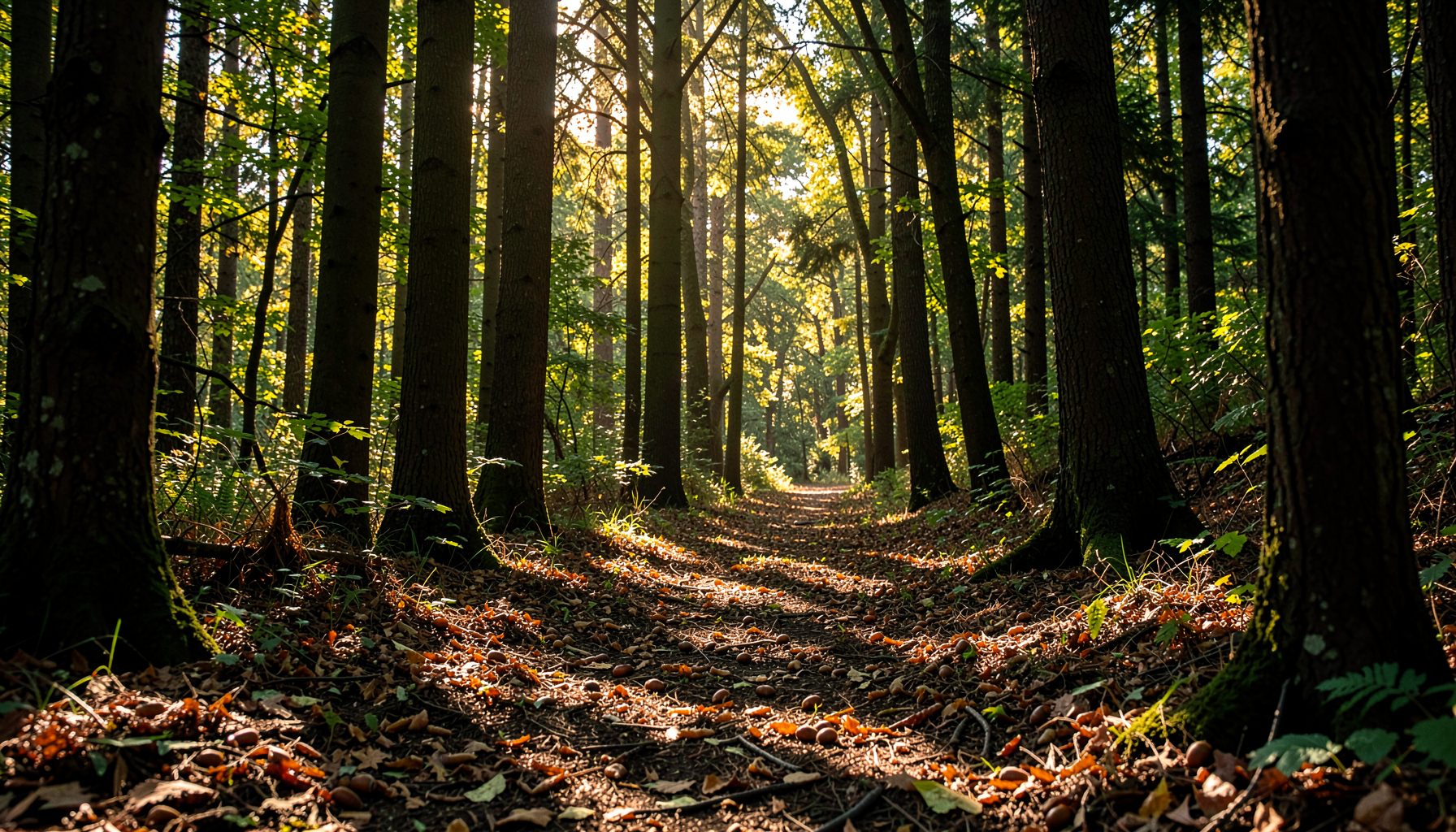
Why fallen leaves are vital for stream health
When autumn leaves drift from forest canopies into creeks, they can look like waste waiting to be cleared away. In a healthy watershed, however, this seasonal layer is a vital source of food, shelter, and nutrients. Leaf litter connects woodland soils with stream channels and helps aquatic ecosystems function through the colder months.
Fallen leaves support the small organisms at the base of the food web. They also slow rainfall, protect soil from heavy runoff, and contribute organic matter that improves water quality. A stream surrounded by native trees receives benefits from leaves long after the colors have disappeared.
Understanding this process helps explain why forest restoration and watershed conservation go together. Planting and protecting streamside trees creates the future canopy, while the leaves from that canopy help maintain cool, clean, biologically active waterways today.
Leaf litter feeds the stream food web
Leaves are one of the most important energy sources in small woodland streams. Water carries some leaves directly into the channel, while others collect along the banks, behind fallen branches, or in shallow pools. Once wet, they become easier for fungi and bacteria to break down.
These microorganisms make the leaves more nutritious and more accessible to aquatic insects. Shredders such as stonefly and caddisfly larvae tear softened leaf material into smaller pieces. Their activity produces fine particles that feed other organisms, including filter feeders and gatherers. In turn, insects become food for fish, salamanders, frogs, birds, and bats.
Different leaves decompose at different rates. Soft, thin leaves may break down quickly, while tougher oak leaves can remain in the stream for months. That variation provides a more consistent supply of food rather than one brief pulse. A diverse riparian forest therefore supports a diverse aquatic food web.
Forest cover protects water quality
The value of autumn leaves begins before they reach the stream. A thick layer of leaves on the forest floor cushions rainfall and helps water soak into the ground. This reduces the sudden surges of stormwater that can scour streambanks, uproot vegetation, and carry sediment into the channel.
Leaf litter also acts as a natural filter. As water moves through decaying organic matter and soil, nutrients and pollutants can be captured or transformed. Streamside vegetation absorbs some excess nitrogen and phosphorus before those substances reach the water. This matters because too many nutrients can encourage algal growth and reduce dissolved oxygen.
A healthy riparian buffer, made up of trees, shrubs, grasses, and natural ground cover, performs this work throughout the year. Leaves add seasonal protection, while roots stabilize banks and the canopy shades the water. Together, these layers reduce erosion and help maintain clearer, more resilient streams.
Cooling shade and habitat from the forest floor
A leafy forest canopy helps keep stream temperatures within a range that aquatic life can tolerate. During summer, shade limits the amount of solar heat entering the water. Cool water can hold more dissolved oxygen, which supports fish, aquatic insects, and other organisms.
The leaf layer also creates habitat on land and in the water. Damp leaves shelter beetles, spiders, worms, and amphibians. Along the stream edge, accumulated litter fills gaps between roots and stones, giving small animals places to hide from predators and fast-moving water.
The kinds of trees growing near a stream influence these benefits. Floodplain species are adapted to periodic inundation, while upland trees often thrive on better-drained slopes. Learning about upland and floodplain trees can help restoration volunteers choose appropriate native species for each part of a watershed.
| Forest and leaf-litter feature | Benefit for streams | What happens when it is missing |
|---|---|---|
| Diverse native leaves | Provides food with different decomposition rates | Food arrives in shorter, less reliable pulses |
| Leaf layer on soil | Slows rainfall and supports infiltration | Runoff carries sediment and pollutants |
| Streamside canopy | Keeps water cooler and supports oxygen levels | Warmer water stresses aquatic life |
| Roots and woody debris | Stabilize banks and create hiding places | Banks erode and habitat becomes simpler |
| Native shrubs and trees | Strengthen the riparian food web | Invasive plants may offer fewer ecological benefits |
Why removing every leaf can harm a stream
Leaves on lawns, sidewalks, and roads may need to be managed because they can block drains or create slippery surfaces. The situation is different in a natural forest or protected stream buffer. Removing all leaf litter from these areas removes nutrients and habitat that the ecosystem has evolved to use.
Blowing leaves into a stream can also create problems. A large concentrated pile may decompose too quickly, releasing excess nutrients and lowering oxygen levels. Leaves should remain distributed across the forest floor, where soil organisms can process them gradually. Near drainage channels, keeping leaves out of storm drains helps prevent clogs and sudden organic pollution.
This does not mean every natural area must be left untouched. Invasive vines, trash, and dense accumulations caused by lawn maintenance can require action. Good stewardship focuses on restoring natural structure rather than treating every fallen leaf as a problem. Maintaining native vegetation and allowing a healthy layer of organic matter to remain is often the more effective choice.
Native trees make leaf benefits last
The strongest leaf-litter benefits come from a varied native forest. Oaks, hickories, maples, birches, willows, dogwoods, and other regional species contribute different leaf shapes, chemical qualities, and decomposition patterns. A mixture of trees also supports more insects, birds, and other wildlife than a single-species planting.
Native trees are especially important along streams because they are adapted to local soils, seasonal flooding, and regional climate. Their roots help hold banks together, while their branches and fallen wood create places where leaves can collect. These natural leaf packs become small feeding stations for aquatic insects.
Restoration begins with collecting and growing the right seeds. Acorns, walnuts, and seeds from native shrubs can be donated to nurseries, where they are raised into seedlings for future planting. Volunteers who join a collection event can learn to recognize local trees while contributing directly to cleaner water and stronger forests.
Safe collection protects both people and the forest. Before leading a group, review seed collection guidance so participants know how to identify suitable seeds, avoid hazards, collect responsibly, and leave enough natural regeneration behind.
Seasonal change is part of stream health
In autumn, leaf fall may briefly change the appearance and chemistry of a stream. Water can become darker as tannins leach from leaves, and oxygen demand may rise as decomposers become active. These changes are natural when leaf inputs are spread across a functioning forest ecosystem.
Winter does not stop the process. Microbes continue breaking down leaves, even at slower rates, and aquatic insects feed within leaf packs beneath the surface. By spring, much of the stored carbon and nutrients has moved through the food web or into the streambed. The remaining material contributes to soil formation and supports vegetation along the bank.
Seasonal leaf turnover also reveals the health of a watershed. A stream with a connected native forest tends to have varied leaf inputs, stable banks, shaded water, and abundant habitat. A channel surrounded by pavement, mowed grass, or invasive vegetation may receive too little useful organic matter and too much polluted runoff.
Stewardship actions that support healthy waterways
Protecting fallen leaves starts with protecting the trees that produce them. Landowners, schools, neighborhoods, and workplaces can preserve streamside buffers, reduce unnecessary clearing, and replace invasive plants with native trees and shrubs. Even small connected patches can improve shade, soil stability, and wildlife movement.
Volunteer seed collection is another practical way to support long-term watershed restoration. Families and community groups can gather native seeds during the proper season, while students can connect tree identification with lessons about decomposition, aquatic insects, and water quality. These activities turn an ordinary autumn walk into meaningful conservation work.
Useful actions include:
- Leave natural leaf litter beneath trees and within stream buffers.
- Keep leaves, grass clippings, and other organic waste out of storm drains.
- Plant diverse native trees and shrubs suited to local floodplain or upland conditions.
- Protect streambanks with rooted vegetation instead of mowing to the water’s edge.
- Join a responsible seed collection event that supports regional tree nurseries.
Healthy streams depend on many quiet processes working together: roots holding soil, canopies providing shade, microbes recycling nutrients, and leaves feeding aquatic life. By protecting native forests and participating in restoration, volunteers help build the future leaf layer that waterways need.
Growing Native connects people with hands-on conservation across the Potomac River watershed. Take part in a local seed collection opportunity, share watershed education with your group, and help grow the streamside forests that will keep leaves—and clean water—flowing for generations.