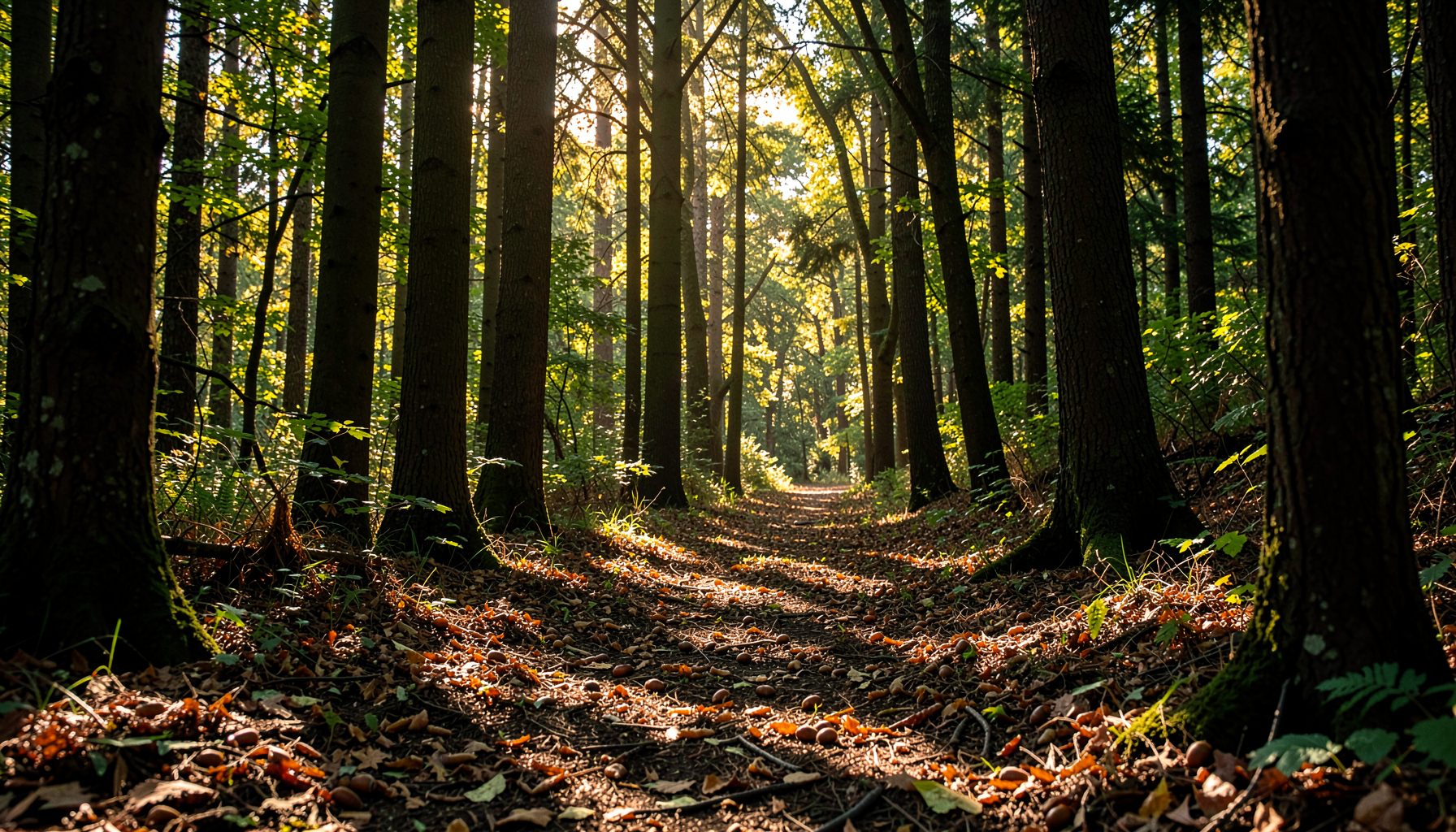
Upland And Floodplain Trees In A Living Watershed
A forest is shaped by the ground beneath it and the water moving through it. Trees growing on a dry ridge face different conditions from those rooted beside a stream, even when both sites are only a short distance apart. Soil depth, drainage, sunlight, flooding, and seasonal moisture all influence which species can survive and reproduce.
Upland and floodplain trees are therefore more than two lists of native plants. They represent distinct ecological communities with different roles in the Potomac River watershed. Upland forests stabilize slopes, shelter wildlife, and help rainfall soak into the soil. Floodplain forests slow runoff, filter pollutants, and protect stream channels from erosion.
Knowing these differences helps volunteers collect appropriate native seeds, helps restoration teams match trees to their planting sites, and makes it easier for communities to recognize the connections between healthy forests and clean water.
How Landform Shapes A Forest
Upland areas include ridges, plateaus, hillsides, and well-drained terraces above the regular reach of a stream. Their soils may be shallow, rocky, sandy, or rich with organic matter, but excess water usually drains away quickly. Trees in these locations must often tolerate periods of summer dryness and compete for limited moisture.
Floodplains occupy the low ground beside rivers, creeks, and wetlands. They may be inundated for hours, days, or weeks after heavy rain or seasonal flooding. The soil is frequently deep and fertile because flowing water deposits layers of silt and organic material. However, saturated soil can limit oxygen around roots, and fast-moving water can scour exposed ground.
The boundary between these habitats is not always sharp. A broad floodplain may rise gradually into a wet terrace and then a drier slope. Restoration decisions should consider elevation, drainage, soil texture, flood frequency, and existing vegetation rather than relying only on a site’s distance from a stream.
Upland Trees Built For Drier Ground
Many upland hardwoods are adapted to soils that drain freely. White oak, chestnut oak, black oak, scarlet oak, hickories, tulip poplar, and several maple species can occur in upland forests, although their preferred conditions differ. Chestnut oak often handles dry, acidic, rocky slopes, while tulip poplar generally grows best where soil is deeper and moisture is more consistent.
Upland tree species tend to invest in root systems that help them reach or conserve water. Their leaves, bark, and growth patterns vary according to exposure. Trees on sunny ridges may have smaller crowns or thicker leaves than trees of the same species growing in a sheltered hollow. Wind, drought, and thin soil can slow growth while favoring individuals with strong root anchoring.
Acorns, hickory nuts, walnuts, and other native seeds from upland trees provide food for birds and mammals. Oak mast is especially important because many wildlife species depend on acorns during autumn and winter. When collecting seed for restoration, volunteers should record the source habitat so that upland material is directed toward suitable upland planting sites.
Floodplain Trees Designed For Water
Floodplain forests often include sycamore, river birch, box elder, silver maple, red maple, green ash, eastern cottonwood, black willow, and various oaks. Species composition changes with flood duration and channel position. Willows and cottonwoods may colonize freshly deposited sediment near active channels, while swamp white oak and other species may occupy slightly higher, less frequently flooded ground.
Flood-tolerant trees have adaptations that help them cope with saturated conditions. Some can produce new roots after sediment deposition, develop trunks that withstand periodic inundation, or germinate on exposed sand and silt. Their root networks bind streambanks and intercept runoff, reducing the amount of soil and nutrient pollution entering the water.
The importance of streamside forests extends beyond the trees themselves. A healthy riparian buffer shades the channel, moderates water temperature, provides fallen wood and leaf litter, and creates layered habitat from grasses and shrubs to mature canopy trees.
| Feature | Upland Forests | Floodplain Forests |
|---|---|---|
| Typical position | Ridges, slopes, and higher terraces | Low areas beside rivers, streams, and wetlands |
| Main water condition | Well-drained, sometimes drought-prone | Periodically saturated or flooded |
| Common native examples | White oak, chestnut oak, hickory, tulip poplar | Sycamore, river birch, willow, cottonwood, box elder |
| Soil pattern | Often thinner, drier, or rocky | Usually deeper, moist, and enriched by sediment |
| Restoration role | Slope stability, infiltration, wildlife food, carbon storage | Bank stabilization, water filtration, shade, flood moderation |
| Main planting concern | Avoiding species that need consistently wet soil | Matching trees to flood frequency and channel dynamics |
Matching Species To Restoration Sites
The right tree for a restoration project depends on more than whether the plant is native to the region. A native upland oak planted in a frequently flooded swale may suffer from prolonged saturation, while a floodplain willow placed on a dry, compacted ridge may fail during summer drought. Site matching is essential for survival and long-term ecological value.
Start by examining the land’s position in the watershed. Look for evidence of flooding, such as deposited silt, water marks, exposed roots, driftwood, or vegetation adapted to wet ground. Soil that stays cool and damp well into summer may support floodplain species, while a dry, sunny slope with exposed stones points toward an upland community.
Existing plants can provide useful clues. Mature trees, shrubs, sedges, and herbaceous plants reflect local conditions over many years. A restoration team should also consider deer pressure, invasive plants, mowing, compaction, utility corridors, and the expected future effects of heavier rainfall or longer dry periods.
Seed collection requires the same attention to habitat. A healthy acorn from a ridge is valuable, but it should not automatically become a streamside seedling. Keeping seed lots separated by species and collection location helps nurseries grow trees that are better suited to the conditions where they will eventually be planted.
Why Both Forest Types Matter
Upland and floodplain forests function as connected parts of one watershed. Rain that falls on a wooded ridge may move downslope through soil, roots, and small channels before reaching a floodplain. The floodplain then slows and spreads high flows, traps sediment, and gives water additional opportunities to infiltrate or be taken up by vegetation.
Removing either forest type weakens the larger system. Clearing upland slopes can increase rapid runoff and soil loss. Degrading floodplain vegetation can leave streambanks exposed and allow sediment, fertilizer, road pollutants, and other contaminants to move directly into waterways. Restoration is strongest when it protects the entire transition from high ground to stream channel.
These forests also create different wildlife habitats. Upland canopies support species associated with mature oaks, hickories, and mixed hardwoods, while floodplain forests offer cavities, fallen logs, dense young growth, and aquatic edges. A varied watershed supports more life than a landscape planted with one uniform mix of trees.
Practical Choices For Seed Collectors And Planters
Volunteers can make their work more effective by treating every seed collection as ecological information. Recording the tree species, approximate location, habitat type, collection date, and surrounding conditions creates a useful history for nurseries and restoration partners. It also helps identify which local trees are producing viable seed in different parts of the watershed.
When identifying a parent tree, examine several features rather than relying on a single leaf. Bark, branching pattern, fruit, buds, leaf arrangement, and habitat all provide evidence. Acorns from different oak species can look similar, and young trees may be difficult to distinguish without careful observation. Educational materials on tree identification and forest ecology can help volunteers build confidence before collection days.
The following practices support better restoration outcomes:
- Collect only mature, healthy seed from locally appropriate native trees.
- Keep upland and floodplain seed sources labeled and separated.
- Avoid collecting from trees showing serious disease, severe stress, or heavy invasive competition.
- Inspect planting sites for drainage, flood frequency, soil compaction, deer browse, and available sunlight.
- Pair canopy trees with native shrubs and groundcover suited to the same habitat.
A diverse planting plan should include several species with different growth rates and tolerances. Fast-growing floodplain trees can stabilize a recovering site quickly, while longer-lived oaks and hickories provide durable canopy and wildlife food. In uplands, a mixture of oaks, hickories, maples, and other compatible hardwoods can improve resilience to pests, storms, and changing moisture patterns.
Grow The Next Forest
Understanding habitat differences turns tree planting into thoughtful watershed stewardship. It helps a volunteer recognize why a sycamore belongs near a stream, why chestnut oak may thrive on a dry slope, and why a mixed planting is more valuable than a single-species row. Each correctly matched tree can contribute to cleaner water, stronger soils, and better habitat for decades.
Growing Native connects people with the practical work behind forest recovery, from collecting native hardwood and shrub seeds to supporting nursery-grown seedlings. Individuals, families, schools, workplaces, and community groups can register as a volunteer and take part in restoring the forests and waterways of the Potomac River watershed. Each seed gathered from the right place is a small step toward a healthier, more connected landscape.