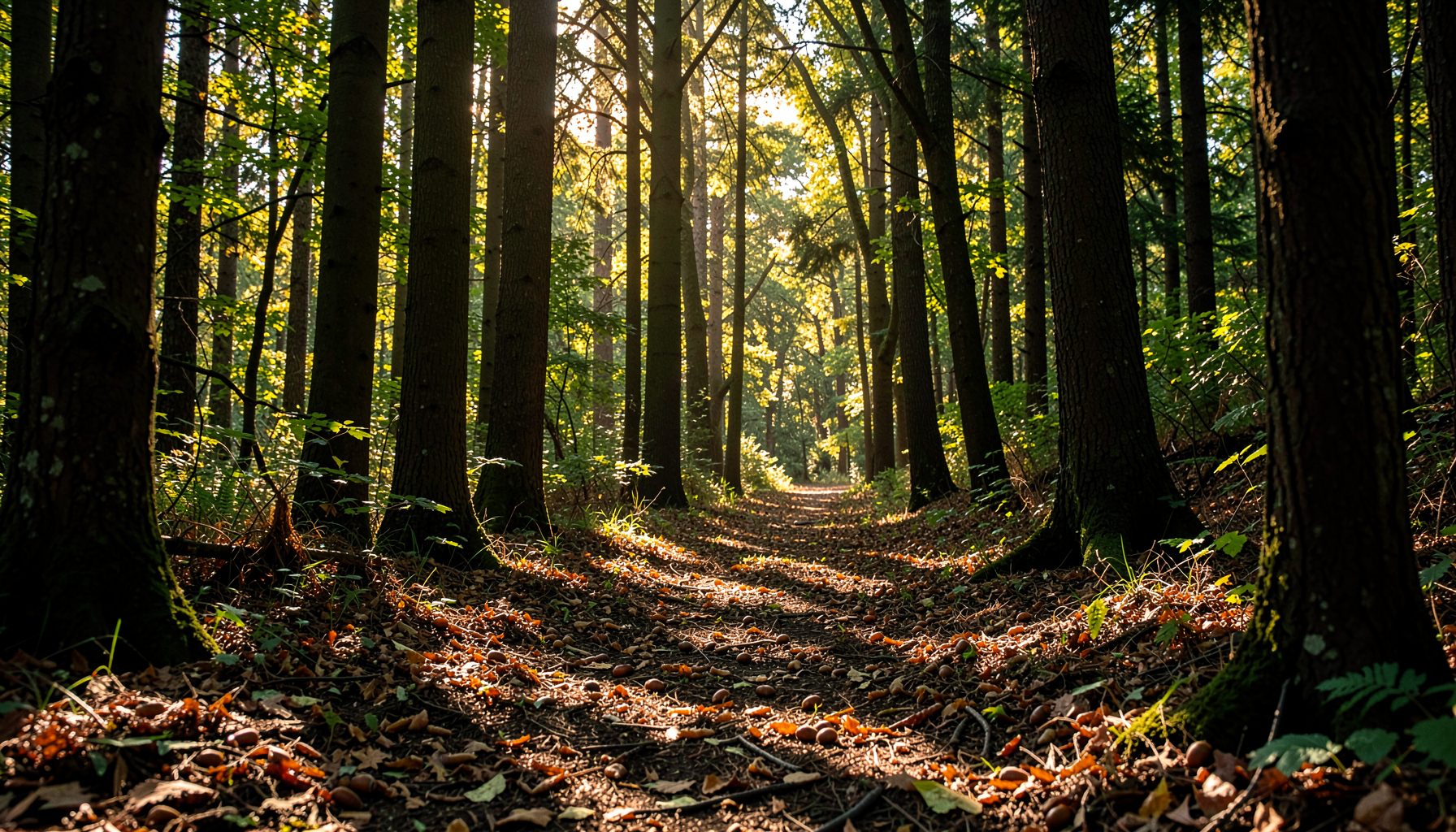
The Winter Ecology of Dormant Tree Seeds
Winter may make a forest appear still, but beneath leaf litter and snow, a complex biological process is underway. Dormant tree seeds are responding to temperature, moisture, oxygen, predators, fungi, and the changing conditions of their watershed. Their survival through the cold season helps determine which seedlings emerge in spring and which forest communities develop over time.
For native trees, dormancy is a carefully timed pause rather than a complete shutdown. A seed may be waiting for a period of cold, protecting its embryo from premature growth, or gradually losing chemical barriers that prevent germination. Understanding these adaptations makes winter seed collection more purposeful and connects individual acorns, nuts, and berries to the broader health of the Potomac River watershed.
What Dormancy Really Means
Seed dormancy is a condition in which a viable seed does not germinate even when it has access to some of the basic requirements for growth. The delay may be caused by a hard seed coat, internal chemical inhibitors, an immature embryo, or the absence of a required cold period. These mechanisms prevent seeds from sprouting during an unsuitable warm spell in autumn, when young roots would be vulnerable to later freezes.
Many native hardwood seeds experience physiological dormancy. Their embryos become ready to grow only after exposure to moist, cool conditions for a specific length of time. This process, called cold stratification, is one reason winter is important to forest regeneration. Seasonal chilling helps synchronize germination with spring moisture, rising temperatures, and increasing sunlight.
Dormancy also spreads risk across the landscape. Seeds do not all germinate on the same day or in the same place. Some remain buried for another season, while others are eaten, damaged, or carried into new microsites. This uneven timing gives a forest multiple opportunities to replace aging trees and recover after disturbance.
Cold, Moisture, And Seed Survival
Temperature is only part of the winter equation. Many seeds need cool moisture rather than dry cold. Water gradually enters the seed, activates enzymes, and allows the embryo to complete developmental changes. If the seed dries too severely, its cells may be injured before spring arrives.
Acorns, hickory nuts, walnuts, and other large seeds often depend on contact with damp soil or leaf litter. Their size gives them a useful supply of stored energy, but it also makes them attractive to squirrels, birds, deer, and other wildlife. A buried nut may be eaten later, overlooked and allowed to germinate, or moved far from the parent tree.
The forest floor provides insulation and shelter. Fallen leaves moderate temperature changes, hold moisture, and create a habitat for fungi and invertebrates that influence decomposition. In stream corridors, this organic layer is especially valuable. Research on fallen leaves and stream health shows how leaf litter supports aquatic food webs and helps maintain the ecological processes that connect forests with waterways.
Seed Coats, Embryos, And Seasonal Timing
A seed coat is more than a protective shell. It may regulate oxygen and water movement, resist damage from soil organisms, and delay germination until environmental conditions are favorable. Some tree seeds have relatively thin coverings and begin their winter transition quickly. Others remain enclosed behind dense or chemically resistant layers.
Large nut-producing trees have evolved different strategies for handling this seasonal pause. Oaks may produce acorns with limited storage life because their moisture-rich tissues are easily damaged by drying. Hickories and walnuts also require careful handling, although their storage behavior varies by species. Smaller winged seeds, such as those of many maples and ashes, may be dispersed in autumn and respond differently to moisture and chilling.
Weather patterns can alter these schedules. A warm autumn may extend seed activity, while sudden freezing can affect seeds that have already absorbed water. Repeated thaws can move seeds through soil and leaf litter, exposing them to predators or erosion. Healthy forests contain enough habitat variety that some seeds remain protected even when conditions fluctuate.
Mast Years And Forest Abundance
Some native trees produce heavy crops of seeds only at intervals rather than every year. This pattern, known as masting, can overwhelm seed-eating animals during a productive season. When nuts are abundant, wildlife consumes a large number but may fail to find and eat every seed. The surplus can support natural regeneration across the forest.
Masting is influenced by weather, tree age, energy reserves, pollination, and conditions shared across a region. A single tree may produce a large crop, but synchronized production among many trees has a stronger ecological effect. The relationship between seed abundance and wildlife behavior is explored in the science of mast years, which helps explain why an unusually productive autumn can shape the following spring.
For restoration work, a strong seed year can provide an important collection opportunity, but abundance does not mean every seed should be gathered. Wildlife needs winter food, and some seeds must remain in place for natural regeneration. Responsible collection takes only a portion, prioritizes healthy parent trees, and follows local guidance about species, timing, and quantity.
| Seed type | Typical winter need | Main risk | Helpful collection consideration |
|---|---|---|---|
| Acorns | Moist, cool storage with limited drying | Loss of viability from drying or overheating | Collect promptly and keep cool and damp |
| Hickory nuts | Chilling and protection from wildlife | Predation, mold, and delayed collection | Choose sound nuts and avoid cracked shells |
| Walnuts | Cool, moist conditions before germination | Fungal damage or poor handling | Remove damaged material and maintain airflow |
| Maple samaras | Moisture and seasonal temperature cues | Wind dispersal and desiccation | Collect mature, intact fruits from suitable trees |
| Shrub berries | Species-specific chilling and moisture | Birds, rot, and premature drying | Confirm identification and process promptly |
Winter Seeds And Watershed Recovery
Native seeds collected for restoration can become streamside trees and shrubs that stabilize soil, shade water, and improve habitat. Their roots help hold banks together during heavy rain, while leaf litter slows runoff and contributes organic matter to small streams. Over years, a collection made during one winter can support a living buffer along a degraded waterway.
Riparian restoration depends on more than planting trees in open ground. Seedlings must match local conditions, including soil moisture, flood frequency, sunlight, and wildlife pressure. Native hardwoods and shrubs are valuable because they are adapted to regional seasons and provide food and shelter for insects, birds, and mammals.
Winter is also a useful time to examine the watershed without dense foliage obscuring the landscape. Volunteers can identify eroding banks, compacted soils, invasive plants, and gaps in forest cover. These observations help connect seed collection with practical restoration goals rather than treating it as an isolated activity.
Recognizing Good Seeds In The Field
A sound seed is usually full, mature, and appropriate for the species. It should not show extensive cracking, soft spots, insect exit holes, fungal growth, or a sour odor. Color alone is not a reliable test, since healthy seeds vary widely in appearance as they age and absorb moisture.
Correct identification matters before collection begins. Bark, twigs, buds, fruit shape, leaf scars, and the characteristics of the parent tree can all provide useful clues during the leafless season. When identification is uncertain, collecting a small sample for expert review is safer than mixing questionable material into a larger batch.
Location matters as well. Seeds from native trees growing near the restoration area may be especially useful because they come from a climate and soil regime similar to the planting site. Volunteers should avoid collecting from protected areas without permission, private property without consent, or trees exposed to road salt and other pollutants.
Practical Ways To Support Winter Seed Work
Community participation expands the reach of restoration programs while giving people a direct connection to forest ecology. Families can learn to recognize common native trees, schools can build seasonal observation projects, and workplaces can organize collection days that contribute to local nurseries. A successful event combines careful identification with clear handling and recordkeeping.
Partnerships can make events more productive and educational. Local arboreta often provide expertise, demonstration trees, and spaces where volunteers can practice identification; guidance on partnering with an arboretum can help groups establish a useful seasonal collaboration.
- Collect only mature seeds from correctly identified native trees.
- Keep each species and collection site labeled from the moment of gathering.
- Protect moisture-sensitive seeds from heat, direct sun, and prolonged drying.
- Leave enough seeds for wildlife and natural forest regeneration.
- Deliver collected material promptly according to the receiving nursery’s instructions.
Good records are part of conservation science. The date, location, parent tree, species, and approximate quantity can help nurseries evaluate seed quality and plan propagation. Over time, these observations may also reveal how changing winters affect flowering, fruiting, seed fall, and germination.
Carrying Winter Knowledge Into Spring
Dormant seeds reveal that a forest’s future is being prepared long before green shoots appear. Cold temperatures, wet leaf litter, animal movement, and careful human stewardship all influence whether a seed survives to become a tree. The process is quiet, but its effects reach from upland woods to stream channels and downstream communities.
Growing Native gives individuals and groups a practical way to take part in that seasonal cycle. By learning local tree species, gathering responsibly, and supporting native seedling production, volunteers help build healthier forests and cleaner waterways across the Potomac River watershed. Visit Growing Native to find a seed collection opportunity, gather a group, or use its educational resources to begin observing dormant seeds in your own community.