How Native Trees Slow Stormwater Runoff
Rainfall does not behave the same way in a mature forest, a construction site, and a paved neighborhood. In a healthy woodland, leaves, branches, roots, soil, and fallen organic matter work together to intercept precipitation and help it enter the ground gradually. In developed areas, roofs, roads, and compacted lawns move water rapidly toward storm drains, streams, and rivers.
This difference matters across the Potomac River watershed, where intense storms can carry sediment, nutrients, bacteria, and other pollutants into waterways. Native trees provide a practical form of green infrastructure that can reduce the volume and speed of stormwater while improving habitat and watershed health.
Their value extends beyond the moment a storm passes. By stabilizing streambanks, rebuilding soil structure, shading waterways, and supporting diverse communities of insects and birds, native trees help create landscapes that are better able to absorb and recover from repeated rainfall.
What Happens When Rain Reaches A Forest
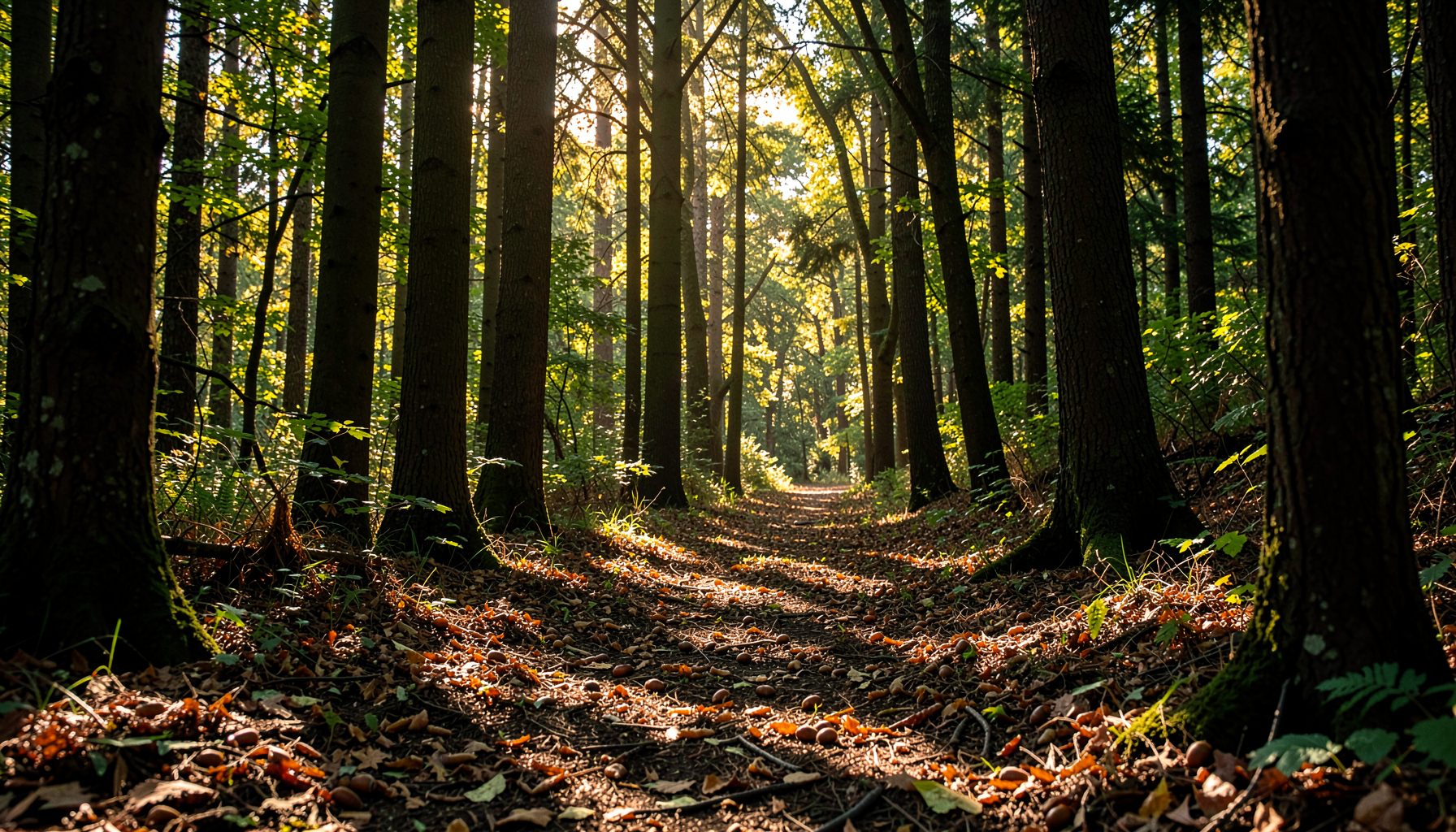
A tree canopy is the first layer of stormwater management. Leaves and branches catch a portion of rainfall, allowing some moisture to evaporate and slowing the rest before it reaches the soil. Water that falls through the canopy arrives in smaller drops and with less force, reducing soil disturbance and surface erosion.
Leaf litter adds another protective layer. The loose material on a forest floor creates small spaces where water can collect and infiltrate. It also shields the soil from raindrop impact, while fungi, microorganisms, and decomposing organic matter improve the soil’s ability to hold moisture.
Tree roots continue this process below ground. Fine roots create channels that guide water downward, while larger roots help maintain pore spaces in the soil. Deep infiltration replenishes groundwater and reduces the amount of water flowing across the surface toward a creek during a storm.
How Native Trees Reduce Runoff
Native tree species are adapted to the soils, rainfall patterns, seasonal temperatures, and ecological relationships of their region. When planted in suitable locations, they can establish strong root systems that improve infiltration and hold soil in place. Species such as river birch, sycamore, black gum, oaks, and red maple may contribute to these functions in different parts of the watershed.
Trees also release water through evapotranspiration. After absorbing moisture through their roots, they move some of it through their tissues and release it through their leaves. This process creates additional storage capacity in the soil before the next storm and supports a natural water cycle between rainfall, soil, plants, and the atmosphere.
A mature planting can intercept substantial rainfall, but performance depends on canopy size, soil condition, season, storm intensity, and available space. Young seedlings will not provide the same immediate benefits as established trees. Even so, planting and protecting trees today builds future capacity for runoff reduction and flood resilience.
Riparian Buffers Protect Streams
Trees growing beside streams have a particularly important role. Their roots reinforce streambanks, helping reduce slumping and soil loss when water levels rise. Shade from the canopy keeps water cooler, which benefits aquatic organisms and can reduce stress on stream ecosystems during hot weather.
Riparian vegetation also filters runoff before it enters a channel. Grasses, shrubs, leaf litter, and tree roots slow overland flow and capture sediment. Some nutrients are taken up by plants or transformed by soil organisms, reducing the amount that reaches the stream.
Restoration efforts are most effective when they reflect local conditions and existing ecological gaps. Mapping depleted riparian zones can help communities identify places where tree planting, invasive plant removal, or streambank protection would have the greatest benefit.
A continuous buffer is generally more effective than isolated trees because it creates connected habitat and several layers of vegetation. Native shrubs and herbaceous plants fill spaces beneath the canopy, adding surface roughness and increasing the time available for water to soak into the ground.
Species And Site Conditions Matter
The best tree for stormwater control is not simply the fastest-growing species. A planting must match the landscape. Floodplain trees tolerate periodic inundation and saturated soils, while upland species generally require better drainage and may decline if their roots remain wet for long periods.
Understanding upland and floodplain species helps planners avoid poorly matched plantings. A tree placed in the wrong environment may grow slowly, become vulnerable to disease, or fail during drought and flooding. Site-specific choices improve survival and protect the investment made in restoration.
| Landscape setting | Useful native tree characteristics | Runoff and watershed benefits |
|---|---|---|
| Streambank and floodplain | Tolerance of wet soils and periodic flooding | Stabilizes banks, shades water, and filters sediment |
| Upland woodland edge | Drought tolerance and broad, lasting canopy | Intercepts rainfall and improves soil infiltration |
| Urban street or yard | Compact form and tolerance of heat or compaction | Reduces runoff from nearby hard surfaces |
| Headwater forest | Strong roots and adaptation to narrow valleys | Protects small channels and supports groundwater recharge |
| Reforestation site | Local genetic suitability and wildlife value | Builds long-term canopy, soil structure, and habitat |
Diversity is important as well. A mixture of trees and shrubs is more resilient than a single-species planting because different plants respond differently to pests, drought, heat, and changing weather. A varied forest also provides a wider range of food and shelter for wildlife.
Forest Loss Increases Water Pressure
Historical land clearing changed how rain moves through the Potomac River basin. When forests are replaced by farms, roads, rooftops, and compacted soil, less water is intercepted and more reaches streams quickly. The resulting flashier flows can deepen channels, erode banks, and carry pollutants downstream.
The history of deforestation shows why current restoration work is connected to long-term watershed conditions. Replanting cannot instantly recreate an old-growth forest, but it can restore essential ecological functions over time and reconnect fragmented habitat.
Urban and suburban tree planting also has a role. Trees near parking lots, homes, schools, and roads can intercept rainfall before it reaches drainage systems. When combined with rain gardens, permeable surfaces, green roofs, and properly designed swales, trees become part of a broader stormwater management network.
Placement should be deliberate. Trees need enough room for roots and mature crowns, and they should not obstruct utilities, sightlines, or access routes. Protecting existing mature trees is often especially valuable because their established canopies and root systems already provide stormwater benefits.
Measuring Benefits Across The Watershed
Stormwater reduction can be evaluated at several scales. At a planting site, useful indicators include seedling survival, canopy growth, soil infiltration, bank stability, and the presence of leaf litter. At the watershed scale, monitoring may examine stream temperature, turbidity, peak flows, groundwater levels, and the condition of riparian habitat.
These benefits accumulate gradually. A newly planted stream buffer may first provide modest shade and erosion control, then become increasingly effective as roots develop and the canopy expands. Maintenance during the early years—watering during drought, controlling competing vegetation, replacing failed seedlings, and protecting plants from browsing—strongly influences long-term results.
Community participation makes large-scale restoration possible. Growing Native organizes volunteers to collect native hardwood and shrub seeds, including acorns and walnuts, for donation to state nurseries. Those seeds can become streamside seedlings that support reforestation, erosion control, and cleaner water across the region.
Seed collection also creates a direct connection between local ecosystems and future restoration sites. Volunteers learn to identify trees, understand seasonal cycles, and see how a single acorn can contribute to a wider effort to strengthen forests and waterways.
Practical Ways To Support Tree-Based Stormwater Control
Property owners, schools, workplaces, and community organizations can contribute by protecting existing trees and choosing planting projects that address real runoff problems. A small buffer beside a drainage swale, a line of trees near a stream, or a native planting around a schoolyard can provide measurable benefits when it is maintained over time.
The strongest projects consider the whole site. They identify where water originates, how it currently moves, where erosion occurs, and which soils and species are suitable. Planting without addressing compaction, invasive plants, deer browsing, or chronic mowing may produce disappointing results.
Useful steps include:
- Preserve mature native trees whenever construction or landscape changes are planned.
- Plant a diverse mix of locally appropriate trees, shrubs, and ground-layer vegetation.
- Restore stream buffers with species suited to floodplain or upland conditions.
- Pair trees with rain gardens, permeable pavement, downspout disconnection, or other green infrastructure.
- Join seed collection, tree identification, and watershed education activities through community programs.
Families and classrooms can turn these actions into learning opportunities. Observing canopy cover, measuring soil infiltration, identifying wildlife, and tracking seasonal changes helps people understand that stormwater management is a living process rather than a single construction project.
Native trees are among the most durable tools available for reducing runoff and improving watershed resilience. Their benefits begin with interception and infiltration but expand into cleaner streams, stronger banks, cooler water, richer habitat, and healthier soils.
Support this work by protecting trees where you live, choosing native species for future plantings, and taking part in Growing Native volunteer activities. Collecting seeds, caring for seedlings, or helping restore a streamside buffer gives the Potomac watershed a stronger ecological foundation for the storms and seasons ahead.