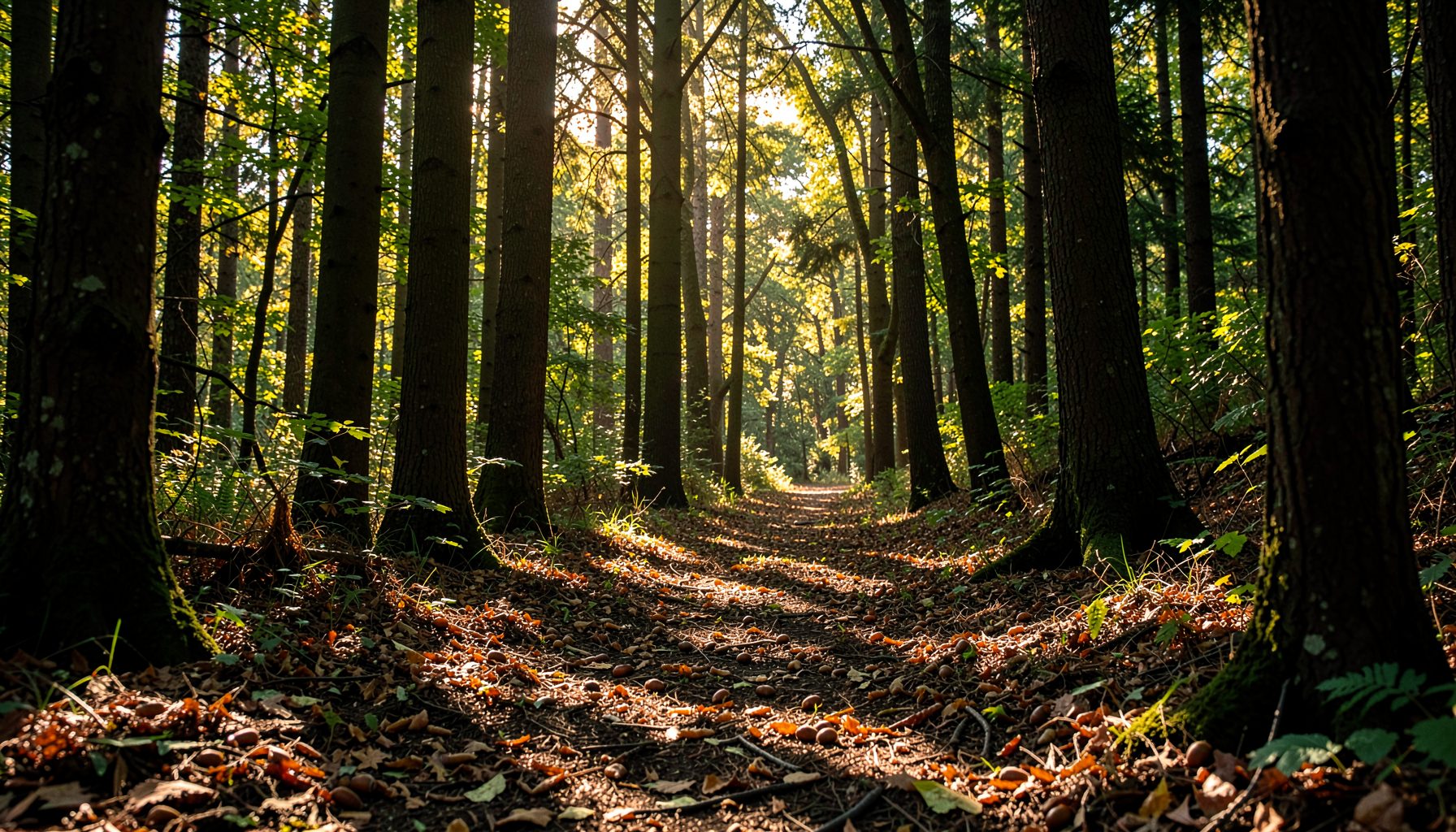
Native trees are the foundation of healthy streams
A creek can look inviting and still be biologically poor. If the water is turbid, the channel is bare and fish cannot find shelter, the tiny animals among the stones often reveal the problem. Stream macroinvertebrates include aquatic insect larvae, freshwater shrimp, snails, worms and crustaceans.
They matter because they experience a creek over weeks, months or years. Sensitive mayfly and stonefly nymphs, along with caddisfly larvae, generally need well-oxygenated water and clean sediment. A community dominated by pollution-tolerant worms or midges can point to degraded conditions, while varied taxa suggest a functioning food web.
The link between native trees and healthy stream macroinvertebrates is practical: tree cover helps create the cool, stable habitat those animals need. Shade, roots, leaves, insects and woody debris form connected habitat around the channel. Growing Native’s Potomac River program shows a useful cycle in which volunteers collect seeds, public nurseries raise seedlings and waterways receive locally appropriate trees.
What stream macroinvertebrates reveal
Macroinvertebrates are useful bioindicators because monitoring turns a water-quality snapshot into evidence of ecological conditions. Different groups respond to different pressures: some graze algae from stones, some collect fine particles, and others hunt other invertebrates. Recording who lives there, in what numbers and across which habitats reveals patterns that a clarity test cannot.
A useful survey combines several habitats because taxa occupy different parts of a creek. Search submerged leaves, coarse gravel, woody debris and the shallow bank. Kick sampling, aquatic traps and direct observation can all contribute, but the method must be consistent so results can be compared between seasons and sites.
No single creature proves a stream is healthy, and no single score should stand alone. The strongest evidence comes from an assemblage with several functional groups, good water quality and physical habitat. Tree restoration is therefore judged by what it changes in the living community, including whether sensitive taxa return and persist.
How native trees shape stream habitat
Native trees influence a stream from the bank, canopy and water’s edge. Mature roots hold soil together and slow runoff, reducing the fine sediment that can smother stone surfaces and fill interstitial spaces. A wider riparian buffer also filters nutrients and pesticides before they reach the channel. These physical changes give macroinvertebrates more places to feed, shelter and complete their life cycles.
Canopy shade is equally important in Australia. Direct sun can raise water temperature, reduce dissolved oxygen and increase stress during hot weather. Trees also cool the air above the bank, while roots stabilise pools and shaded refuges can retain water longer. Along the Murray–Darling Basin, this matters as drought, water extraction and sudden flood pulses turn many waterways into a patchwork of permanent pools and dry reaches. In Melbourne’s Yarra, Sydney’s Cooks River and Adelaide’s Torrens, concrete channels, road runoff and bank erosion add further stress.
Trees feed the stream as well as shelter it. Leaf litter supports fungi, bacteria and tiny invertebrates that become food for beetles, dragonfly nymphs and fish. Fallen branches create slow-water refuges and surfaces for algae and invertebrates, while canopy insects add food to the water. Native trees can therefore increase habitat complexity and the number of feeding opportunities available throughout the year.
Native does not remove the need for catchment care. In Australian systems, naturally recurring eucalypt litter is part of the local ecological history, yet plantation debris, nutrient-rich runoff and excessive sediment can still reduce oxygen or smother habitat. Tree planting works best alongside erosion control, fence design, weed management and reductions in urban pollutants.
Why local provenance matters in Australia
Local provenance gives restored trees the best chance of surviving and reproducing in the right conditions. Seed collected close to the planting site is more likely to carry genetics suited to that soil, climate and rainfall pattern. This principle applies whether the project is beside a small Victorian creek, an urban Brisbane gully or a floodplain waterway in western New South Wales.
Australian restoration commonly runs through council contracts, regional nurseries and Landcare networks. Councils often specify catchment species, and nurseries check seed health and provenance before accepting material for growing. North American acorns and walnuts are not suitable Australian catchment species. The transferable lesson is the volunteer seed-to-seedling process, not the species list.
Good records make community collections more useful. Growing Native’s community seed guide shows how a collection sheet can capture species, parent tree, site, date and quantity. Australian groups can add provenance details, permit conditions and local herbivore risks. Each label should connect the seed lot to its source so the nursery and planting team can trace it later.
Signs of a recovering creek
A recovering creek shows patterns in both its water and its surrounding vegetation.
In the channel, look for:
- Fine sediment cleared from gaps between stones and coarse gravel.
- A varied mix of aquatic insects, crustaceans and snails in habitat samples.
- Healthy populations in permanent pools during dry periods.
- Sensitive taxa returning to reaches previously dominated by midges.
Along the bank and canopy, look for:
- Native tree cover that shades the water while retaining open bank gaps.
- Young trees protected from grazing, mowing and vehicles.
- Leaf litter and small wood retained as natural stream habitat.
- Groundcovers and shrubs slowing runoff before it reaches the bank.
These signals need to be read together. A canopy may look continuous while runoff from a new development still clouds the creek, and macroinvertebrates may improve temporarily if flushes deliver clean water. Repeated monitoring across seasons gives a more reliable picture than a single visit.
From careful seed collection to planting
Seed collection should begin with the planting goal, not simply with what the trees produce. A nursery needs the right local species in suitable quantities, and a project needs enough genetic diversity without taking excessive seed from any parent tree. In Australia, collection may involve eucalypt capsules, wattle pods, native shrub berries or other local propagules rather than the acorns familiar in some overseas programs.
Urban trees face their own production challenges. Stress from airborne pollutants can reduce flowering and seed production, so a planned harvest may need several seasons and several source trees. Growing Native’s account of air pollution and acorns offers a useful example of that pressure. While it concerns North American oaks, its principle is relevant to Australian teams monitoring eucalypts and other local species.
After collection, seed needs careful cleaning, storage and propagation. Regional nurseries can test germination, screen for pests and disease, and grow seedlings suited to local conditions. Volunteers can support this stage through sorting, labelling and nursery sessions, while schools and workplace groups can help with consistent record keeping. A transparent chain from source tree to planting site protects the ecological value of the work.
Planting then determines whether seedlings survive. Sites may need weed control, protection from rabbits, kangaroos or livestock, and careful spacing so trees can shade the creek without smothering it. Many Australian groups call this work “bushcare”, and local Landcare crews often combine planting days with repeated monitoring and maintenance. Surviving trees and improving macroinvertebrate communities are the real measures of success.
Build restoration around community care
A seed hub can become the meeting point for collection, learning and long-term care. Growing Native’s community seed hub illustrates how a local park can hold labelled seed lots, tools and field records, with volunteers checking each contribution before it moves to a nursery. An Australian version could sit within a council reserve, school grounds or community garden near a target creek.
The hub can also support families, schools, community groups and workplaces through small, well-defined tasks. Participants can learn to identify local trees, record habitat notes, collect seed under permission, or check a restoration plot. Educational materials on forest ecology, tree identification and watershed health make those activities useful to volunteers who may be new to field monitoring.
Choose one creek within easy reach, identify its local native tree and shrub species, and contact the council, catchment group or Landcare organisation responsible for the reach. Organise a collection and planting day, then return for seasonal macroinvertebrate surveys so the community can see whether the habitat is improving. Healthy streams begin with trees that belong there and people who keep caring for them.