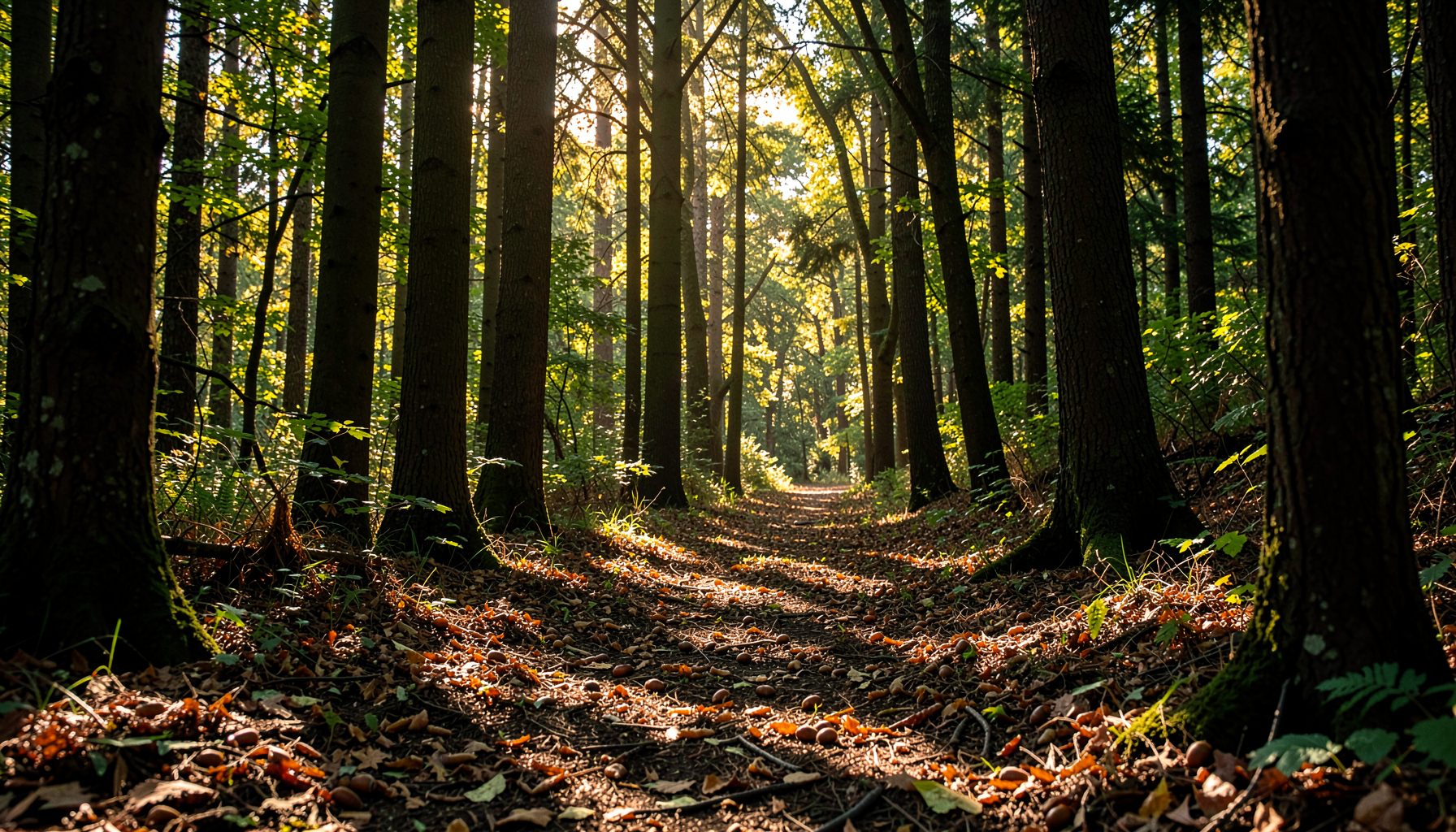
How Air Pollution Shapes Acorn Production in Urban Forests
Oak trees are among the most important native species in the Potomac River watershed. Their acorns feed wildlife, support forest regeneration, and eventually become the next generation of trees along streets, parks, stream corridors, and wooded hillsides. In cities, however, an oak’s ability to produce a healthy crop can be affected by a complicated mix of air pollution, heat, drought, compacted soil, and habitat fragmentation.
Air pollution does not affect every oak in the same way or every year. A mature tree may continue producing acorns while experiencing reduced growth, damaged leaves, or fewer viable seeds. The effects can also remain hidden until flowering, acorn development, or seedling establishment. Understanding these connections helps communities collect better seed, protect urban trees, and restore forests with locally adapted native plants.
Acorn production matters well beyond the tree canopy. Oak-dominated forests intercept rainfall, stabilize streambanks, store carbon, and provide food for birds and mammals. When pollution reduces seed quality or regeneration, the consequences can extend from an individual park to the health of an entire watershed.
Why acorns matter to urban forest renewal
Acorns are the reproductive foundation of many eastern hardwood forests. White oaks, red oaks, chestnut oaks, black oaks, and related species produce seeds with different maturation schedules and germination requirements. Some acorns mature in a single growing season, while others take two years. A strong seed crop therefore depends on conditions during flowering, pollination, fruit development, and late-season maturation.
Urban forests often contain isolated oak trees surrounded by pavement, buildings, lawns, and ornamental plantings. These trees may receive less pollen from compatible oaks, face hotter root zones, and compete with invasive plants for moisture. Airborne contaminants add another pressure by interfering with photosynthesis, leaf function, and the energy reserves needed to form acorns.
A poor crop in one year does not necessarily indicate permanent decline. Oaks naturally vary between light and heavy seed years, a pattern known as mast production. Yet repeated stress can reduce the tree’s capacity to recover and may make a series of low-yield years more likely. For restoration projects, that uncertainty makes careful observation and collection across many locations especially valuable.
How polluted air reaches oak tissues
Ground-level ozone is one of the most significant air pollutants affecting forests in the eastern United States. It forms when nitrogen oxides and volatile organic compounds react in sunlight, making urban and suburban areas, transportation corridors, and downwind rural landscapes potential exposure zones. Ozone enters leaves through stomata, the small openings that regulate gas exchange, and can damage cellular tissues.
Visible symptoms may include stippling, premature yellowing, reduced leaf size, or early leaf drop. Even where symptoms are subtle, ozone can lower photosynthetic efficiency. The tree then has less carbon available for defensive compounds, root growth, woody growth, and reproductive structures. During drought, stomata may close to conserve water, limiting ozone uptake but also reducing carbon dioxide intake and slowing photosynthesis.
Nitrogen dioxide, sulfur dioxide, and fine particulate matter create additional pathways of stress. Nitrogen deposition can alter soil chemistry and favor fast-growing plants that compete with oak seedlings. Sulfur compounds have historically contributed to soil and water acidification, while particles can settle on leaf surfaces and affect light capture or gas exchange. The exact response depends on pollutant concentration, exposure duration, soil conditions, tree age, and oak species.
Pollution can also act indirectly. A tree weakened by poor air quality may be less able to resist insects, fungal disease, heat waves, or water shortages. Reproductive effects may appear through smaller acorns, lower germination rates, premature fruit drop, or reduced flowering in the following season. Researchers therefore examine air quality alongside weather, pest activity, soil moisture, and canopy condition rather than treating any single factor as the sole cause.
From flowering to viable seed
Acorn development begins with flowering, often before leaves fully expand. Air pollution and unusual spring weather can disturb this timing. If flowers emerge during a period of heat, frost, heavy rain, or poor air quality, pollination may be less successful. Oak pollen is windborne, so fragmented urban landscapes and limited numbers of mature oaks can further reduce the likelihood of compatible pollen reaching receptive flowers.
After pollination, developing acorns compete with leaves, roots, and new shoots for stored energy and current-season carbohydrates. Ozone injury can reduce the tree’s ability to supply those resources. Water stress intensifies the conflict: a tree may prioritize survival and tissue maintenance over reproduction, leading to fewer acorns or early abortion of developing fruit.
The quality of the seed matters as much as the number collected. Healthy acorns are generally firm, mature, and free from extensive insect damage, mold, or shriveling. Pollution may not always leave an obvious mark on the shell, so germination tests and careful sorting are useful when seed is destined for nurseries. Collectors should also document the tree species, location, collection date, surrounding land use, and visible signs of stress.
| Urban stressor | Possible effect on oak trees | What observers may notice | Restoration relevance |
|---|---|---|---|
| Ground-level ozone | Reduced photosynthesis and premature leaf injury | Speckled leaves, early discoloration, thinning canopy | Lower energy available for acorn formation |
| Nitrogen and sulfur deposition | Changed soil chemistry and nutrient balance | Shifts in understory plants, weak seedlings | Altered conditions for oak regeneration |
| Fine particulate matter | Coated leaf surfaces and reduced light capture | Dusty foliage near busy roads | Added stress in already fragmented habitats |
| Heat and drought linked to urban conditions | Closed stomata, water loss, fruit abortion | Wilt, early leaf drop, small acorns | Fewer viable seeds and weaker seedlings |
| Traffic-related pollution | Repeated exposure near roads and intersections | Declining canopy vigor in narrow corridors | Need for wider, cleaner planting sites |
Urban conditions can magnify pollution stress
Air pollution rarely acts alone in a city. Pavement and buildings create heat islands that raise daytime and nighttime temperatures. Small soil volumes restrict roots, while compacted ground reduces infiltration and oxygen availability. Stormwater often runs quickly from hard surfaces into drains instead of soaking into the soil around trees. These conditions make an oak more vulnerable when polluted air reduces its photosynthetic capacity.
Road edges deserve particular attention. Trees near high-traffic routes may experience nitrogen oxides, particles from exhaust and brake wear, salt spray, vibration, and repeated soil disturbance. A roadside oak can still be a valuable seed source, but its acorns should be assessed carefully and compared with trees growing in larger, less stressed forest patches.
Urban biodiversity also affects the wider reproductive system. Native insects and birds depend on diverse plant communities, and some help pollinate flowers or disperse acorns. When pollution and habitat fragmentation reduce these ecological relationships, oak regeneration may become less reliable even if adult trees remain alive. Protecting mature trees, connecting wooded areas, and restoring native vegetation can improve the surrounding conditions that support seed production.
Community monitoring gives this issue a practical foundation. Volunteers can record flowering dates, acorn abundance, leaf injury, tree health, and nearby sources of traffic or industrial emissions. Repeated observations over several years are more useful than a single count because oak crops naturally fluctuate and weather can strongly influence results.
Collecting seed with care
Seed collection programs can help turn urban observations into long-term watershed restoration. Growing Native coordinates community-based efforts to gather native hardwood and shrub seeds, including acorns and walnuts, for state nurseries. The resulting seedlings can support streamside planting, erosion control, cleaner water, and more connected forest habitat.
Collection should begin with accurate tree identification. Oaks can be difficult to distinguish, especially when leaves vary due to age or growing conditions. Collectors should avoid gathering from trees with severe disease symptoms, extensive canopy decline, or acorns that are mostly damaged. It is also wise to collect from many healthy parent trees rather than relying heavily on one highly productive individual.
A simple field record improves the value of every collection. Note the species, approximate tree location, habitat type, date, weather conditions, and signs of pollution exposure. Keep acorns from different parent trees or sites identifiable when possible. This information helps nurseries and restoration planners understand the origin of the seed and select planting material suited to local conditions.
For people ready to participate, the program’s registration page provides a direct way to join organized collection activities. Families, schools, workplaces, and community groups can contribute at different scales, whether by monitoring a few neighborhood oaks or helping gather seed across a larger watershed.
Practical ways to support healthier acorn crops
Urban residents cannot control regional ozone levels by themselves, but local stewardship can reduce the combined burden on trees. Protecting root zones, preserving leaf litter, reducing unnecessary soil disturbance, and planting native companions all help create conditions in which oaks can devote more resources to growth and reproduction.
The most useful actions are consistent and observant:
- Protect mature oaks from compaction, trenching, lawn chemicals, and unnecessary pruning.
- Plant diverse native trees and shrubs to connect isolated forest patches and support wildlife.
- Monitor acorn production, leaf condition, flowering, drought symptoms, and nearby pollution sources.
- Collect only sound, correctly identified seed from multiple healthy trees and record its origin.
- Share observations with local restoration groups, schools, and watershed organizations.
Native understory plants can improve soil structure, slow runoff, and provide habitat for insects and other wildlife. Along streams, a layered planting of trees, shrubs, and herbaceous plants helps filter pollutants before they enter the water. These improvements do not remove atmospheric pollution, but they can increase ecological resilience and reduce the impact of heat, flooding, and erosion.
Residents can also support cleaner air through everyday choices such as combining trips, using public transportation where available, avoiding unnecessary engine idling, and maintaining energy-efficient homes. Regional air quality depends on policy and infrastructure, yet community participation helps build public support for cleaner transportation, better land-use planning, and protection of urban forests.
Connecting seed collection to watershed health
Acorn production is a small but revealing measure of forest condition. When an urban oak produces viable seed, that seed can become a tree that shades a stream, anchors soil, stores carbon, and provides habitat decades later. When many oak trees fail to regenerate, the loss may be gradual and difficult to see, especially in places where mature canopies still look green.
Restoration planners benefit from treating seed collection and air-quality awareness as connected activities. Seed from multiple neighborhoods can increase genetic and ecological diversity, while site records can identify locations where trees are coping well with difficult urban conditions. Those trees may offer valuable locally adapted material, provided their health and seed quality are carefully evaluated.
Growing Native’s volunteer opportunities make it possible for individuals and groups to contribute directly to this work. Participation can include tree identification, acorn gathering, educational events, or field support. The program’s broader watershed restoration work links these activities to cleaner water, stronger stream buffers, and healthier forests across the Potomac region.
A single collection day will not solve the pressures facing urban oaks, but it can add useful seed to a nursery pipeline and encourage closer attention to the trees already growing in communities. By observing carefully, protecting mature forests, and helping native seedlings reach restored sites, residents can turn concern about polluted air into measurable support for forest recovery. Get involved with local seed collection and help give the next generation of watershed trees a stronger start.