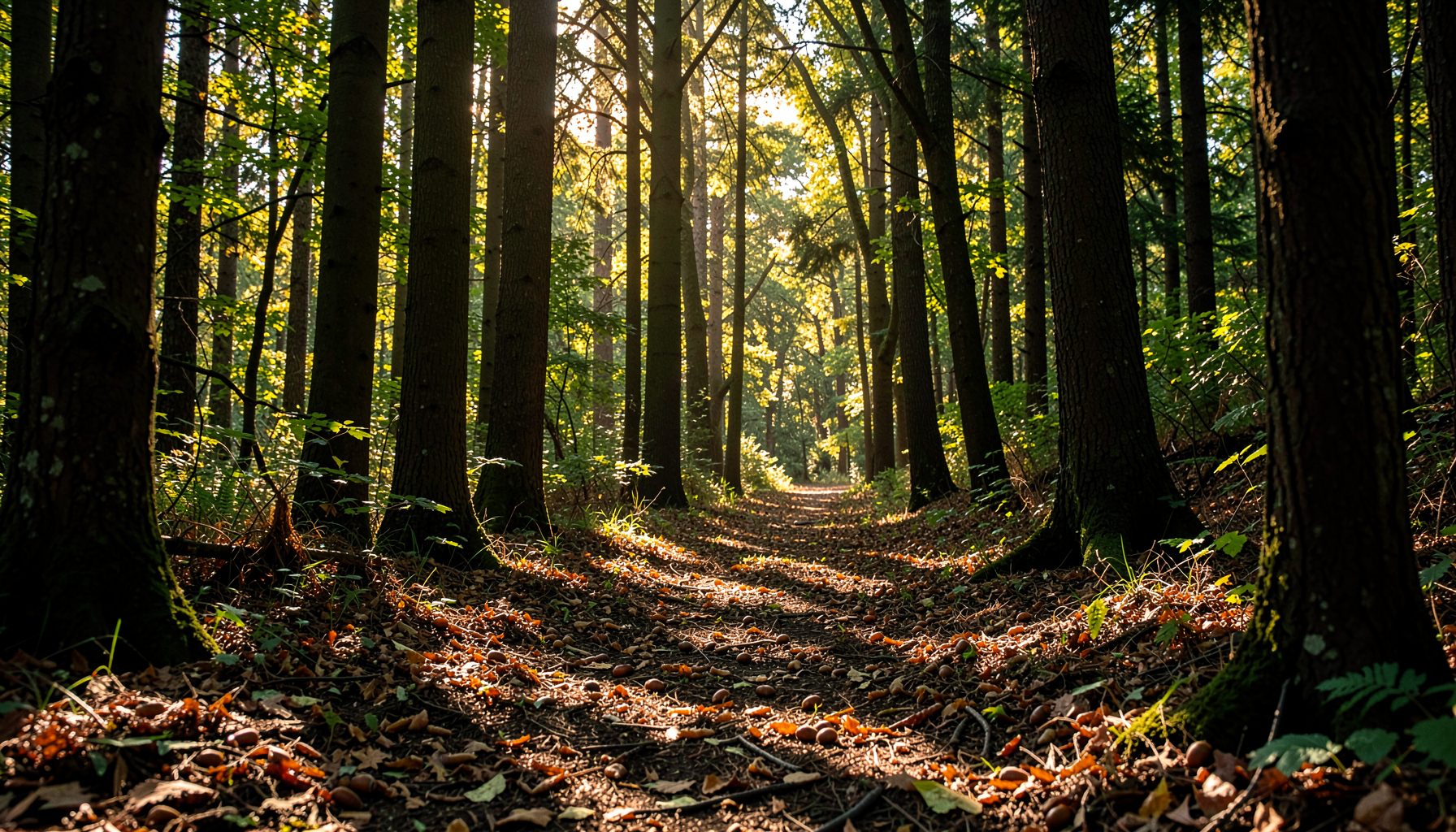
Forests Before Colonization in the Potomac Watershed
Long before towns, roads, farms, and dams altered the landscape, the Potomac River watershed was a vast network of forests, wetlands, grasslands, rocky ridges, and free-flowing streams. From the Allegheny Mountains to Chesapeake Bay, native plants and animals lived within a changing landscape shaped by climate, flooding, fire, soil, and human stewardship.
The precolonial watershed was not a single, uniform woodland. Elevation, bedrock, rainfall, and river systems created distinct forest communities. Oak-hickory forests covered many uplands, while rich floodplains supported tulip poplar, sycamore, river birch, walnut, and other moisture-loving trees.
Indigenous nations had lived throughout the region for thousands of years. Their hunting, farming, fishing, gathering, travel, and use of fire influenced forest structure and biodiversity. Understanding that history helps explain what healthy Potomac forests looked like—and why restoring native trees today is important for both ecological recovery and cultural memory.
Reading the ancient forest
Scientists reconstruct the watershed’s past through pollen preserved in lake and wetland sediments, charcoal left by ancient fires, tree-ring evidence, archaeological sites, and historical accounts. These sources reveal how plant communities shifted after the last Ice Age as temperatures warmed and glaciers retreated from the region.
Around 12,000 years ago, spruce and fir were more common in parts of the Mid-Atlantic than they are today. As the climate became warmer, mixed hardwood forests expanded. By the time European colonization began, many parts of the Potomac basin supported mature deciduous forests dominated by species such as white oak, chestnut oak, red oak, hickory, American beech, sugar maple, and tulip poplar.
Forest age varied across the watershed. Some stands contained enormous, centuries-old trees. Other areas had young growth where storms, floods, fire, farming clearings, or Indigenous land management had opened the canopy. Dead wood, fallen branches, snags, and brush were natural features that provided nesting sites, shelter, and nutrients.
A mosaic from ridge to river
The Blue Ridge, Appalachian Plateau, and Piedmont each contributed different habitats to the Potomac drainage. Dry, exposed ridges favored chestnut oak, scarlet oak, pitch pine, and Virginia pine. Sheltered coves and north-facing slopes held cooler, richer forests with sugar maple, basswood, birch, and hemlock.
The lower Piedmont had broad areas of oak-hickory woodland mixed with fertile valleys and stream corridors. Along the Potomac and its tributaries, floodplain forests formed a living buffer between land and water. Sycamore, silver maple, river birch, boxelder, black willow, and eastern cottonwood tolerated periodic flooding and helped stabilize riverbanks.
Wetlands added another layer to this landscape. Marshes, beaver ponds, forested swamps, and seasonal pools slowed runoff and provided breeding habitat for amphibians, fish, waterfowl, and insects. Small tributaries carried cold, clean water from forested slopes into larger rivers such as the Shenandoah, Monocacy, Cacapon, and Anacostia.
| Landscape setting | Common forest character | Representative native species | Ecological role |
|---|---|---|---|
| Dry ridges and upper slopes | Open, fire-influenced hardwood stands | Chestnut oak, white oak, hickory, pine | Held thin soils and supported upland wildlife |
| Sheltered mountain coves | Cool, moist, dense forest | Sugar maple, beech, tulip poplar, hemlock | Stored moisture and moderated stream temperatures |
| Piedmont valleys | Productive mixed hardwood forest | Red oak, walnut, ash, tulip poplar | Connected forests with fertile soils and wildlife habitat |
| River floodplains | Frequently flooded bottomland forest | Sycamore, river birch, willow, cottonwood | Reduced erosion and absorbed flood energy |
| Wetlands and stream margins | Swamps, marshes, and shrub communities | Buttonbush, pawpaw, spicebush, alder | Filtered water and supported aquatic life |
Indigenous stewardship and seasonal use
Indigenous communities did not experience the forest as an untouched wilderness separate from daily life. The watershed was a lived landscape with established travel routes, fishing places, agricultural fields, gathering grounds, villages, and ceremonial spaces. Nations including the Piscataway, Susquehannock, Nentego, and others maintained deep relationships with the Potomac and its tributaries.
People gathered nuts, berries, roots, medicinal plants, bark, fibers, and fuelwood. Acorns and walnuts were valuable foods, while trees supplied materials for homes, tools, baskets, canoes, fences, and firewood. Seasonal movement allowed communities to use different parts of the watershed as plants ripened, fish migrated, and game shifted habitat.
Fire was one tool used in some places to clear agricultural areas, improve visibility, encourage desired plants, and create habitat for game. Its effects were selective and varied by community, location, and purpose. Frequent low-intensity burning could maintain more open conditions in certain uplands, while protected valleys and floodplains remained heavily wooded.
This history challenges the idea that every precolonial forest was dense, dark, and unmanaged. It also avoids the opposite mistake of treating Indigenous fire and land use as equivalent to later industrial clearing. Indigenous stewardship operated within local ecological limits and left a complex patchwork of forest ages and habitat types.
Trees as guardians of watershed health
Forests shaped the Potomac’s water cycle long before modern conservation science gave these processes names. Tree roots held soil in place, leaf litter covered the ground, and porous forest soils allowed rainfall to soak into the watershed. Water moved more slowly through wooded slopes than across compacted or bare land.
Streamside forests were especially important. Their roots reinforced banks, while branches and fallen wood created pools and cover for fish. Shade from the canopy kept water cooler, a condition that benefits many native aquatic species. Leaves entering streams became food for insects and other organisms at the base of the food web.
A healthy forest also acted as a filter. Sediment, nutrients, and pollutants were intercepted by vegetation and soil before they reached the river. Floodplain trees absorbed some of the force of high water and helped spread floods across low-lying areas, reducing damage farther downstream.
These functions explain why modern reforestation often begins with native trees and shrubs along streams. Research summarized in forest restoration findings shows how collecting locally appropriate seed can contribute to long-term forest recovery rather than simply adding trees to a landscape.
Colonial change and a transformed basin
European colonization brought new patterns of land ownership, agriculture, roads, mills, towns, and resource extraction. Forest clearing accelerated in many fertile valleys and coastal areas, where trees were removed for crops, pasture, construction, and fuel. Timber was also harvested for ships, charcoal, fences, and expanding settlements.
The transformation was uneven. Some steep slopes, rocky ridges, wetlands, and remote mountain areas remained forested. Other places were repeatedly cleared and cultivated, then abandoned and recolonized by young trees. The resulting secondary forests became an important part of the modern watershed, although they differed from older forests in tree size, species mix, soil condition, and deadwood structure.
Several native species suffered major losses after colonization. The chestnut blight devastated American chestnut, once a prominent tree in eastern forests. Dutch elm disease, emerald ash borer, invasive plants, deer overabundance, fragmentation, and altered fire patterns have created additional pressure. Dams, channel changes, mining, and urban growth have further disrupted river and stream habitats.
Yet the watershed has also demonstrated a strong capacity for recovery. Forests returned to many abandoned farms, water quality improved in some tributaries, and conservation programs protected important corridors. Restoration works best when it recognizes both the resilience of native ecosystems and the lasting effects of historical disturbance.
Restoring a living legacy
Native seed collection connects today’s conservation work with the genetic diversity of the region’s older forests. Acorns, walnuts, hickory nuts, berries, and other seeds can be gathered from healthy trees and grown into seedlings suited to local conditions. When planted along streams and in degraded forest gaps, these trees help rebuild habitat over generations.
Local sourcing matters because trees from nearby populations are more likely to match regional climate, soils, seasonal patterns, and disease pressures. A diverse collection of parent trees can also preserve genetic variety, giving future forests more capacity to adapt to heat, drought, floods, and emerging pests.
Growing Native organizes people across the Potomac watershed to collect native hardwood and shrub seeds for state nurseries. Its Growing Native program brings together individuals, families, schools, community groups, and workplaces around practical conservation and environmental education.
The work is hands-on, but its effects extend far beyond a single collection day. A gathered acorn may become a nursery seedling, then a streamside tree that shades water, traps sediment, shelters wildlife, and produces seed for another generation. Over time, many small acts can reconnect fragmented forests and strengthen the watershed’s natural systems.
Ways to carry the history forward
Learning about the precolonial watershed becomes meaningful when it informs present-day care. Volunteers can support restoration while paying attention to native species, local ecological knowledge, and the needs of communities connected to the river.
Useful actions include:
- Learn to identify native oaks, hickories, walnuts, maples, sycamores, and streamside shrubs.
- Collect only mature, healthy seed from approved areas and follow local program guidance.
- Protect existing forest patches, mature trees, wetlands, and natural stream buffers.
- Share watershed history and tree knowledge through schools, neighborhood groups, and workplace activities.
- Join a local collection event or restoration project that supports regionally appropriate seedlings.
Volunteer experiences also reveal the human side of this work. In a day along the Potomac, seed gathering becomes a way to notice seasonal changes, explore forest communities, and contribute directly to future habitat.
The forests that covered the Potomac watershed before colonization cannot be recreated exactly. Climate, species distributions, land use, and communities have changed. Restoration can still recover essential relationships: deep-rooted trees holding soil, shaded streams supporting aquatic life, floodplains absorbing water, and native plants feeding wildlife.
Take part in that continuing story by learning the trees around you, gathering native seed responsibly, and helping place the next generation of Potomac watershed forests in the ground.