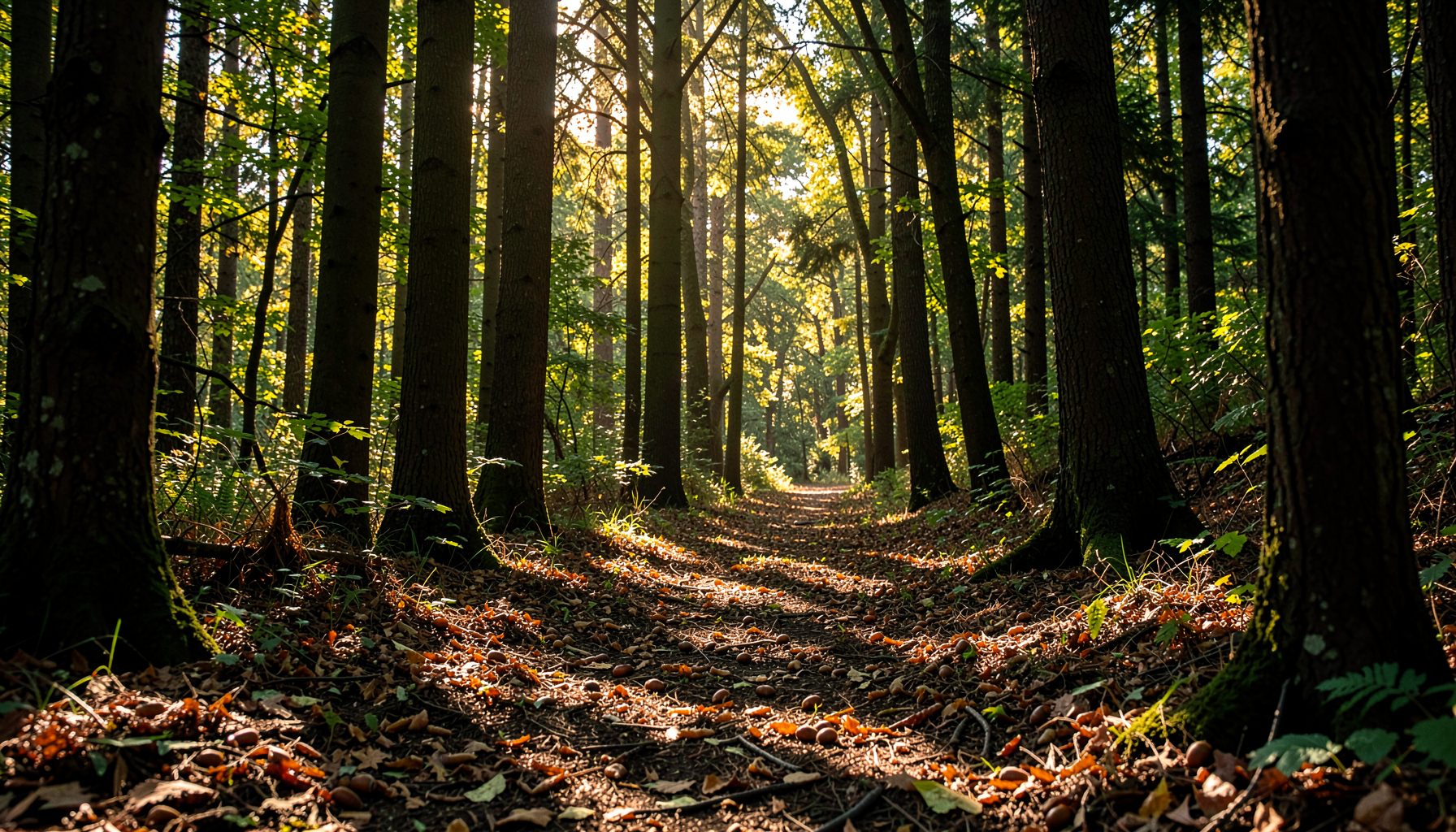
Red and white oaks: why acorn crops vary
Acorn production differs substantially between red oaks and white oaks, even when the trees grow in the same forest and experience the same weather. The distinction comes from their flowering cycles, seed development, maturation schedules, and responses to stress. For seed collectors, those differences determine when to search, what to gather, and how much variation to expect from year to year.
The two oak groups are often discussed together because both provide valuable food for wildlife and useful native seed for restoration. Yet an acorn is not simply an interchangeable oak seed. Red oak acorns and white oak acorns follow different biological schedules, which affects viability, storage, germination, and the timing of volunteer collection.
Understanding these patterns helps restoration programs make better use of seasonal abundance. It also connects a single acorn on a forest floor to broader goals such as streamside reforestation, erosion control, wildlife habitat, and healthier waterways throughout the Potomac River watershed.
The two oak groups follow different schedules
White oaks, including white oak, swamp white oak, chestnut oak, and bur oak, generally produce acorns that mature during the same growing season in which they are pollinated. Their acorns often develop in spring and summer and begin falling in late summer or early autumn. This relatively short cycle means a white oak’s crop reflects conditions during the current year.
Red oaks, such as northern red oak, southern red oak, black oak, scarlet oak, and pin oak, usually require two growing seasons to mature their acorns. Flowers pollinated in one spring produce acorns that fall during the autumn of the following year. A red oak crop therefore reflects weather and tree conditions across a longer period.
That difference matters when looking at a forest after a poor acorn year. A white oak may show a weak crop because of late spring frost, drought, or poor pollination in the current season. A red oak may be carrying the consequences of stress that began many months earlier, even if the present summer appears favorable.
Crop size is shaped by weather and tree health
Oak trees do not produce the same number of acorns every year. Many species show mast behavior, with occasional heavy crops separated by lighter ones. A mast year can result from several trees in an area producing abundant seed at roughly the same time. In other years, individual trees may carry modest crops or almost none.
Spring weather is especially important for flowering and pollination. Cold temperatures, heavy rain, or strong winds can interfere with pollen release and flower survival. Because many oaks rely on wind pollination, the timing of flowering across a population also affects whether pollen reaches receptive flowers successfully.
Summer conditions influence developing acorns. Drought can reduce the energy available for seed development, while extreme heat may increase premature drop. Insects, fungal infections, browsing animals, and competition from other plants can further reduce the number of sound acorns that reach the ground.
The red oak group has an added exposure to risk because its acorns develop over two seasons. A tree may flower successfully but lose much of that crop later through drought, winter injury, insect damage, or poor health. White oaks have a shorter pathway from flowering to seed fall, though their current-year crop can still be heavily affected by spring and summer conditions.
Why abundance and quality are separate questions
A heavy acorn fall does not automatically mean that every seed is suitable for planting. Some acorns may be empty, damaged by insects, cracked during impact, moldy, or too dry to germinate. Soundness depends on species, weather, collection timing, handling, and the condition of the parent tree.
White oak acorns generally begin germinating soon after they fall because they have little or no dormancy. Their stored energy is quickly directed toward a root, so they can lose viability if left warm and dry for too long. They are best collected promptly and handled carefully.
Red oak acorns usually have deeper dormancy and often require a period of cold, moist conditions before germination. This adaptation allows them to remain viable through winter and germinate in the following spring. Their delayed germination can make them more forgiving in short-term handling, but they still need protection from heat, drying, and physical damage.
A collector should therefore record both quantity and quality. A bucket filled with small or insect-damaged acorns may represent less useful seed than a smaller collection of large, firm, healthy acorns. Sorting is an important part of conservation work, not an afterthought.
A side-by-side view of acorn production
The broad differences between the two groups can guide field observations, though local species and conditions will always create exceptions. Tree age, canopy position, soil moisture, genetics, and site history all influence the crop. A mature oak growing in a sunny, well-supported position may produce more consistently than a shaded or stressed tree of the same species.
| Feature | White oak group | Red oak group |
|---|---|---|
| Typical maturation period | One growing season | Two growing seasons |
| Common fall period | Late summer to early autumn | Early to mid-autumn, depending on species and location |
| Germination behavior | Often germinates soon after falling | Usually has dormancy and benefits from cold, moist conditions |
| Main weather exposure | Current spring and summer | Conditions across two growing seasons |
| Typical collection concern | Prevent drying and collect promptly | Protect from damage while maintaining viable seed |
| Examples | White oak, swamp white oak, chestnut oak | Northern red oak, black oak, pin oak |
| Restoration value | Useful for diverse upland and bottomland plantings | Useful for habitat, canopy diversity, and long-term forest structure |
This comparison is a practical starting point rather than a rigid rulebook. For example, individual species within each group can differ in acorn size, fall timing, dormancy, and tolerance of wet or dry sites. Local observations are essential when planning a collection outing or evaluating a potential seed source.
For volunteers working with native seed programs, identifying the oak before gathering is especially valuable. It allows staff and partner nurseries to understand what has been collected, how the acorns should be handled, and which restoration sites may be appropriate for the resulting seedlings.
Wildlife changes the crop after it falls
Acorn production is only the first stage in a much larger ecological process. Deer, squirrels, wild turkeys, blue jays, wood ducks, bears, and many smaller mammals depend on acorns as a seasonal food source. These animals may remove a large proportion of the crop before people ever see it on the ground.
Wildlife behavior can make acorn abundance appear uneven. A tree may have produced heavily, but its acorns may be quickly carried away, buried, or eaten. Another tree may seem unusually productive simply because fewer animals are visiting it. Tracks, husks, caching holes, and gnawed caps can provide clues about what is happening beneath the canopy.
This pressure is one reason oak regeneration can be inconsistent. Many acorns are consumed, and many of those that escape consumption fail to germinate because of unsuitable moisture, competition, disease, or poor placement. A mast year increases the chance that some seedlings will survive, but it does not guarantee a new generation of mature oaks.
Collecting for restoration should respect this ecological role. Responsible programs gather only a portion of available seed, avoid stripping a single tree, and follow local guidance about species, quantities, and collection sites. Leaving plenty for wildlife maintains the forest food web while still supporting nursery production.
Field observations improve collection decisions
A useful collection record includes the oak species, approximate location, date, weather conditions, and notes about the parent tree. Observing several trees rather than relying on one individual gives a more accurate picture of the local crop. It is also helpful to compare trees in different settings, such as forest edges, slopes, floodplains, and mature interior stands.
Volunteers who are learning tree identification can use Growing Native’s education resources to connect field features with forest and watershed concepts. Leaf shape, bark texture, acorn cup structure, habitat, and overall growth form can all assist with identification, especially when several oak species occur in the same area.
Collection timing should match the species. White oak acorns may need immediate attention once they begin falling, while red oak acorns can often be collected through a somewhat broader autumn window. In either case, gather from clean surfaces when possible, avoid visibly spoiled seeds, and keep the collection cool and shaded during transport.
A short field briefing can prevent many mistakes. The forest ecology crash course explains why seed collection is part of a connected system involving trees, soil, wildlife, streams, and human communities. That perspective helps volunteers see quality control as a way to support restoration rather than simply fill a container.
Practices that protect seed quality
Acorns are living seeds, so rough handling and poor storage can reduce their potential before they reach a nursery. Containers should allow some airflow, and collections should not be left in a hot vehicle or sealed while damp. Sorting soon after collection helps remove damaged material and makes later processing more efficient.
A practical routine also improves volunteer safety and consistency. Wear sturdy footwear, use gloves when handling rough litter or thorny vegetation, and bring labeled containers, water, and tools suited to the site. The seed-collecting gear checklist can help individuals and group leaders prepare without overpacking.
Recommended practices include:
- Identify the oak species before collecting and label each batch separately.
- Gather fresh, firm acorns from multiple healthy trees when permitted.
- Leave a substantial share of the crop for wildlife and natural regeneration.
- Keep acorns cool, shaded, and protected from crushing during transport.
- Report unusual crop failures, heavy insect damage, or early acorn drop to program coordinators.
These steps are simple, but they support better nursery outcomes. They also create useful seasonal information that can be compared across years, helping conservation groups understand how drought, storms, temperature, and forest condition influence native seed availability.
Healthy seed collection begins with careful observation and ends with a living seedling planted where it can strengthen a forest or stream corridor. Individuals, families, schools, workplaces, and community groups can take part through Growing Native’s volunteer opportunities, turning an autumn walk beneath oak trees into practical watershed stewardship. Visit the program’s resources, prepare for a collection day, and help gather the native seeds that will grow into healthier forests across the Potomac watershed.