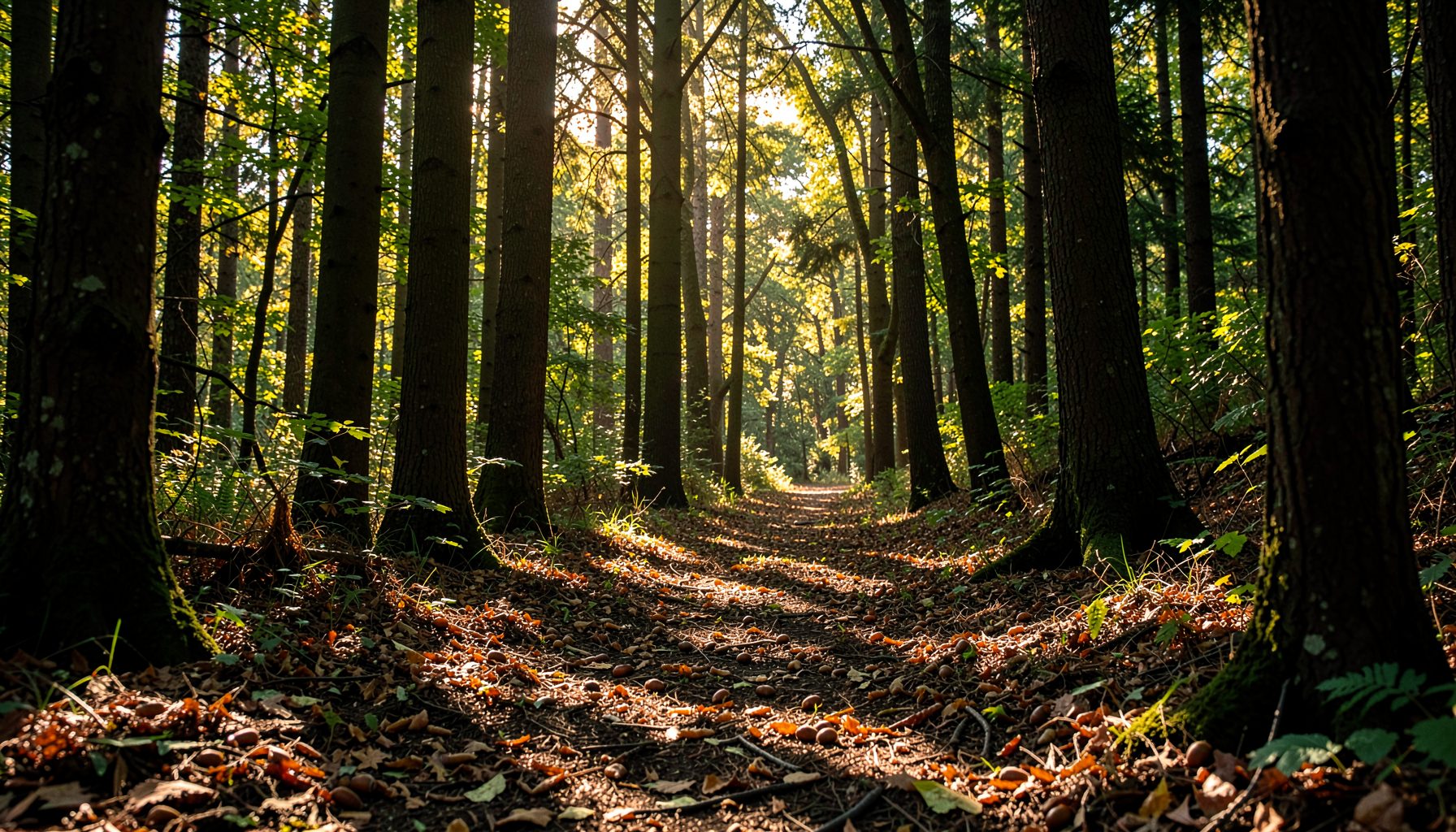
How Forest Reforestation Shapes Local Property Value
Forest restoration is often justified by ecological benefits, but its relationship with nearby homes is just as important. The connection between forest reforestation and local property values comes through measurable changes in shade, drainage, habitat, landscape character and perceived investment. Australian buyers are increasingly attentive to those qualities, particularly where summer heat, storm runoff or bushfire exposure shapes daily life.
Growing Native is a nonprofit conservation program restoring forests and waterways across the Potomac River watershed in the United States. Volunteers collect native hardwood and shrub seeds, including acorns and walnuts, for donation to state nurseries, where they become streamside seedlings. Although its geography is American, the model offers a useful lesson for Australia: restoration creates durable public value when seed collection, sound propagation and careful planting reinforce one another.
| Site feature | Restored or expanding forest | Canopy-poor or cleared site | Likely property-market effect |
|---|---|---|---|
| Shade and heat | More shade and cooler surfaces | Greater exposure to heat | Greater thermal comfort can support amenity value |
| Runoff and erosion | Roots and litter slow water and hold soil | Faster runoff and exposed ground | Better drainage and bank condition can reduce risk |
| Habitat and character | Connected habitat and stronger landscape identity | Fragmented or sparse surroundings | Visual and ecological qualities may improve buyer interest |
| Stewardship | Defined maintenance and monitoring | Unclear upkeep and survival | A credible care record can reduce uncertainty |
| Maturity | Benefits develop over time | Existing gaps remain exposed | New plantings usually affect value gradually |
What the evidence actually shows
Research on urban green space generally finds a positive association with house prices and rents, especially where mature trees, parks and waterways are visible from a property. Analysts often call this an amenity premium: buyers and tenants pay for comfort, attractive scenery and easier access to recreation. The effect is strongest when the green asset is close, safe and maintained.
The mechanisms are clearer than the causal evidence for new plantings. A restored creek can reduce erosion, improve habitat and make a neighbourhood more attractive, while growing trees can lower heat around a home. Those changes may be reflected in comparable sales, marketing time or willingness to pay, although benefits often accumulate slowly as vegetation matures.
A positive correlation is not proof that every new tree raises every nearby value. Better-off households may already choose greener areas, councils may fund planting in affluent districts, and a single project can be overwhelmed by traffic, industrial activity or future development. Sound analysis therefore compares similar properties over time and separates the planting itself from the wider location.
How buyers perceive restored landscapes
Restored forests change a property’s setting even when trees sit on public land. A shaded street, visible creek corridor or recovering woodland can make daily routines feel healthier and give owners a stronger sense of place. Landscaping also signals care, which can reassure buyers that surrounding assets are likely to be managed rather than neglected.
Ecological identity can carry market value too. Australian buyers often value mature street trees, bird habitat and a connection to bushland, particularly in cities where remaining vegetation is fragmented. A well-designed restoration project can offer a shared amenity without requiring every household to carry the full cost, making it attractive for council and catchment investment.
The same qualities can work against a property if they bring allergies, damp, pests, blocked light or falling branches. Roots near pipes and buildings, poorly chosen species and excessive density can impose costs. The strongest market case comes from appropriate trees in sensible locations, with maintenance responsibilities and replacement funding agreed before planting.
Shade, water and reduced exposure
Shade is one of the most readily understood benefits. Growing Native’s explanation of canopy and water temperature demonstrates why connected tree cover can cool waterways: leaves and shade reduce solar heating, while riparian vegetation can limit direct exposure. For residents, cooler streets and streams can improve comfort during hot weather, making environmental improvements relevant to everyday value rather than distant ecology.
At catchment scale, roots and organic litter slow runoff, hold soil and filter sediment. Less erosion can protect banks, reduce maintenance around drains and support cleaner water downstream. These benefits can help sustain the landscape setting on which property prices depend, though new plantings alone should never be presented as a guarantee against flooding or water-quality problems.
Timing matters. A sapling provides little immediate shade, and a poorly established planting can become a financial liability before it becomes an asset. Evidence of survival, canopy growth and ongoing care is more meaningful to buyers, lenders and valuers than a planting count alone. Restoration with a credible maintenance record is therefore more likely to create confidence in future value.
Australian places where canopy matters
Melbourne’s eastern and inner-eastern suburbs already show how leafy character, Yarra River access and nearby bushland shape buyer preferences. In Sydney, homes near sandstone creeks, harbour foreshores or established reserves benefit from green views, while residents in some outer-edge areas also weigh bushfire, landslide and insurance risks. Forest restoration can reinforce these advantages where it protects connected habitat rather than creating isolated patches.
Brisbane brings a different set of pressures: hot summers, intense rainfall and flood-prone creek corridors make shade and stable riparian vegetation especially relevant to liveability. Perth has lost much of its original woodland, so remaining bushland and approved restoration corridors can carry unusual visual and ecological importance during development. In both cities, planning certainty around trees and waterways can influence how buyers compare properties with and without them.
Adelaide’s hot, dry summers make canopy and cooler streets equally practical, especially as household energy costs affect household budgets. More broadly, Australian buyers commonly check cooling demands, council rates, insurance conditions and nearby development when comparing homes. Auction guides and recent suburban sales translate these local realities into market comparisons, so a documented improvement to shade, drainage or habitat can become easier to recognise and price.
Turning seedlings into durable amenity
Seed handling affects the long-term success of restoration and, eventually, the consistency of the amenity it creates. For acorn collectors, Growing Native’s guidance on drying and storing acorns explains how careful drying and storage help preserve seed viability. Strong seedlings improve establishment rates, reducing the risk that public money, volunteer effort and promised canopy gains disappear after a difficult first summer.
The transferable principle for Australia is suitable local provenance, not the imitation of Potomac species. A project might use eucalypts, banksias, melaleucas and appropriate riparian plants, but each choice should match soil, rainfall, fire regime and the site’s ecological community. Qualified local advice can prevent imported or mismatched species from becoming a maintenance cost or ecological liability.
A canopy gain affects valuation only when it is durable and permitted. Councils may apply vegetation-removal rules, native-growth controls, flood overlays or bushfire assessments, while insurers may consider hazard exposure near houses. A valuer will weigh legal access, visual amenity, maintenance and likely survival. Restoration planned with those realities in view is more likely to support long-term capital value than an unsupported planting target.
Practical indicators for owners, buyers and communities
Owners and planners should judge restoration by its likely performance, not only by the number of seedlings proposed.
- Match species to soil, rainfall, fire risk and proximity to buildings or power lines.
- Budget for establishment watering, pruning, pest control and replacement.
- Confirm council permits and native-growth rules before planting.
- Connect planting sites into a coherent canopy strategy.
- Track survival and canopy growth to verify promised benefits.
Buyers and community groups can examine the same evidence when assessing whether an ecological improvement is likely to produce lasting value.
- Compare recent sales with similar canopy, park access and flood exposure.
- Inspect drainage, erosion, flood history and heat exposure.
- Review overlays, bushfire ratings, insurance and development approvals.
- Measure seasonal shade and stream temperature where possible.
- Require multi-year maintenance and monitoring commitments.
These checks separate visible planting from durable ecological and financial outcomes. They also help residents, councils and valuers use consistent evidence rather than relying on broad claims about greener neighbourhoods.
Restore value that lasts
The most credible restoration programs combine seed collection, nursery propagation, planting and long-term monitoring. Growing Native’s Potomac model offers a practical example: volunteers gather native hardwood and shrub seeds for state nurseries, then support streamside restoration that protects water and habitat. Australians can apply that sequence through local Landcare groups, council nurseries, catchment stewards and qualified ecological contractors.
Start with a site-specific plan, source appropriate local seed, and agree on who will water, replace and measure each planting. If you live in the Potomac watershed, join a Growing Native volunteer event or bring a family, school, workplace or community group to support its seed-collection work. A restored canopy, cooler water and healthier habitat can strengthen the places people choose to live while delivering benefits that extend beyond individual boundaries.