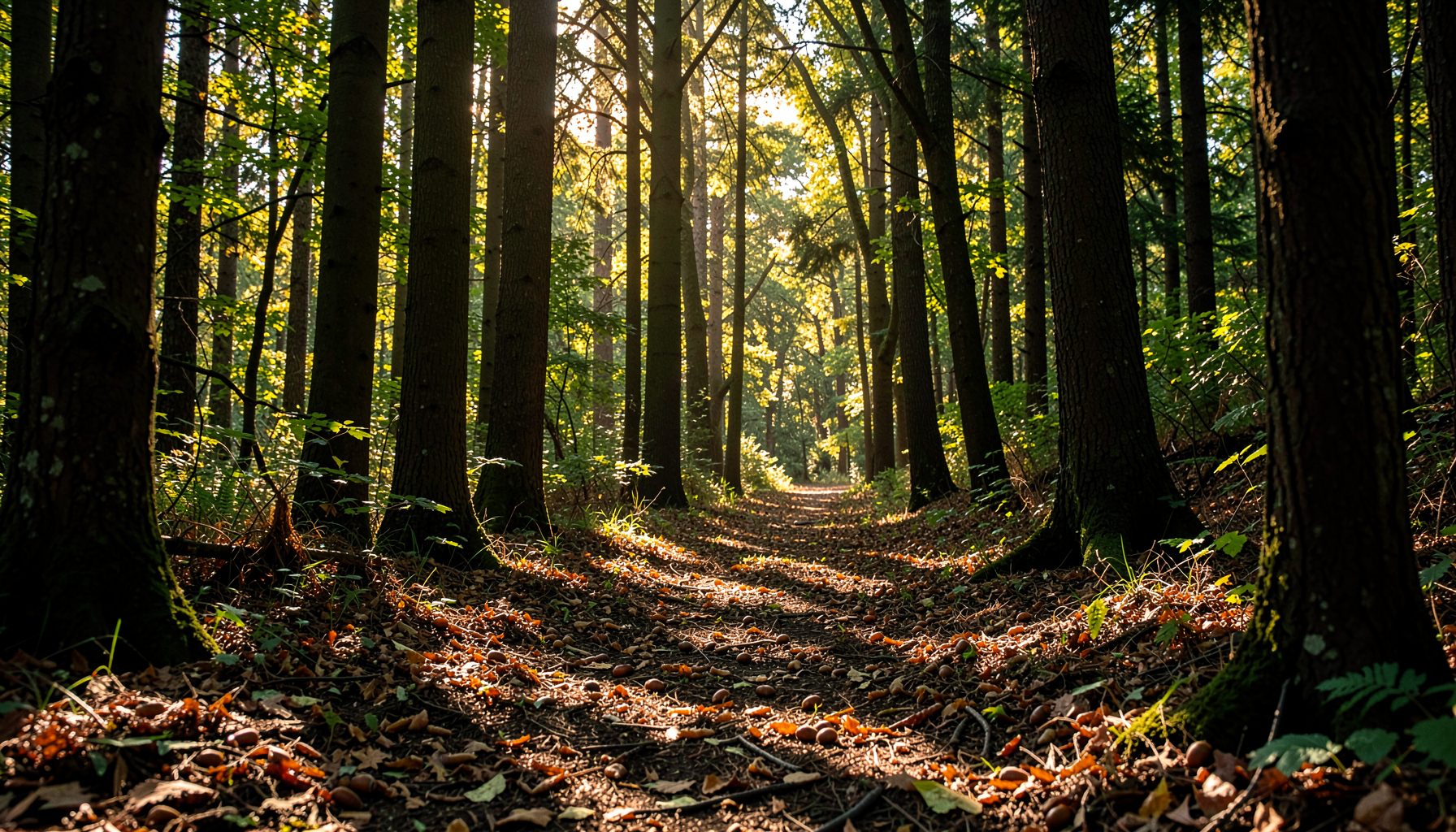
How forest canopy cover shapes stream temperature
A stream’s temperature is governed by a balance between incoming solar radiation, air temperature, groundwater exchange, channel shape, and the amount of shade provided by surrounding vegetation. In a healthy watershed, the forest canopy acts as a living climate-control system, moderating daily heat gain and helping water remain within a suitable range for aquatic life.
This relationship is especially important in headwater streams and narrow tributaries. Overhanging trees, shrubs, and lower vegetation intercept sunlight before it reaches the water, while roots stabilize banks and leaf litter supports the food web. Together, these functions make riparian forests essential infrastructure for clean, resilient waterways.
Growing Native supports this work across the Potomac River watershed by involving people in the collection of native hardwood and shrub seeds. The resulting seedlings can help rebuild streamside forests, improve erosion control, and restore the shade patterns that aquatic ecosystems need.
How shade regulates stream temperature
Tree leaves and branches reduce the amount of direct sunlight striking the stream. This limits the energy absorbed by the water during the hottest part of the day, when exposed channels can experience rapid warming. A continuous canopy is particularly valuable on south- and west-facing banks, where afternoon solar exposure is often strongest.
Shade also works alongside other forest processes. Trees release water vapor through evapotranspiration, which can modestly cool the air near the channel. Deep roots improve soil structure and help water infiltrate into the ground. Where groundwater enters a stream, a forested floodplain can protect these cooler subsurface flows from being disrupted by compaction, excessive runoff, or bank erosion.
The result is a more stable thermal regime, with smaller differences between daytime and nighttime temperatures. Stability matters because many aquatic organisms respond to both the average temperature and the speed at which conditions change.
Why riparian forests matter to aquatic life
Cold-water fish, salamanders, mussels, and many aquatic insects have relatively narrow temperature tolerances. When stream temperatures rise, fish may need to spend more energy seeking refuge or maintaining normal body functions. Warmer water also holds less dissolved oxygen, increasing stress during periods of low flow or high summer heat.
Canopy cover provides habitat benefits beyond shade. Fallen leaves and fine branches enter the stream as organic matter, supporting insects and microorganisms at the base of the food chain. Tree roots create varied bank edges, pools, and cover for aquatic animals. A layered buffer of mature trees, shrubs, and ground vegetation can also filter sediment and nutrients before they reach the channel.
Restoration teams must account for pressures that can prevent young plantings from developing into a useful canopy. Deer and other animals may browse seedlings, while competition from aggressive vegetation can reduce survival. Understanding riparian herbivory helps communities choose protection and maintenance strategies that give native plants time to establish.
What happens when canopy cover declines
When trees are removed from a stream corridor, more sunlight reaches the water. The warming effect is often greatest in shallow, slow-moving sections, though larger rivers can also experience higher temperatures when extensive floodplain vegetation is cleared. A single opening may have a limited effect, but repeated gaps can create a long exposed reach.
Loss of shade is frequently accompanied by other changes. Bare or compacted soil sends warmer stormwater quickly into the channel. Unstable banks add sediment, which can fill pools and reduce habitat complexity. Roads, lawns, parking areas, and stormwater pipes may further increase runoff temperature, especially in developed watersheds.
A warmer stream does not automatically indicate canopy loss. Dams, reduced baseflow, channel widening, removal of groundwater connections, and regional heat can contribute as well. For that reason, temperature monitoring should be paired with observations of land cover, streamflow, bank condition, and groundwater inputs.
| Streamside condition | Sunlight reaching water | Likely thermal pattern | Common ecological response |
|---|---|---|---|
| Dense, continuous native canopy | Low for much of the day | Cooler and more stable | Better dissolved oxygen conditions and habitat cover |
| Mixed canopy with scattered gaps | Moderate and uneven | Localized warming | Refugia may remain, but sensitive species face greater stress |
| Narrow or heavily fragmented buffer | High, especially in afternoon | Strong daily temperature swings | Reduced habitat quality and increased algal growth risk |
| Open, paved, or compacted corridor | Very high, with warm runoff | Rapid warming after sun or storms | Lower oxygen levels, erosion, and simplified aquatic habitat |
Measuring the connection in a watershed
Temperature loggers provide a useful picture of how canopy conditions affect a stream over time. Placed in shaded and exposed reaches, these instruments can record hourly changes that occasional field measurements would miss. Data may reveal hot spots, delayed nighttime cooling, or differences between tributaries entering the same larger river.
Field teams can pair temperature records with canopy estimates made from photographs, densiometers, aerial imagery, or visual surveys. Important details include the width of the vegetated buffer, the height and density of trees, the presence of shrub layers, and the direction of open gaps. Measurements taken upstream and downstream of a restoration site can help show whether new plantings are improving local conditions.
Interpretation requires care. A shaded reach may remain warm if groundwater flow is low or if upstream development has altered the entire thermal system. Conversely, a stream with moderate canopy can stay cool because of springs, deep pools, or substantial flow. Effective watershed planning treats tree cover as one part of a connected set of climate and habitat factors.
Restoring a cooler stream corridor
Successful riparian restoration begins with the right plants in the right places. Native hardwoods and shrubs suited to local soils, flood frequency, and moisture conditions are more likely to survive and develop the layered structure that provides long-term shade. Planting a mixture of species also reduces reliance on a single tree and supports a broader range of wildlife.
Seed collection is one practical way for residents to contribute. Acorns, walnuts, and other native seeds can be gathered during appropriate seasons, identified carefully, and donated to state nurseries or restoration programs. Learning to identify a pin oak by its acorn cap, for example, can turn a walk through a local forest into meaningful conservation work.
New plantings need protection and follow-up care. Fencing, tree shelters, invasive plant control, and watering during unusually dry periods may be necessary during the establishment phase. Restoration plans should also preserve existing mature trees, since young seedlings cannot immediately replace the shade, root structure, and organic matter supplied by an older canopy.
Practical steps for watershed stewards
Individuals, schools, workplaces, and community groups can support cooler and healthier streams through coordinated, local action. The most useful efforts connect observation, native plant restoration, and long-term care rather than treating a planting day as a one-time event.
- Learn to recognize local hardwoods and shrubs before collecting seeds, and follow collection guidelines that protect wild populations.
- Focus restoration on streamside gaps, eroding banks, and areas where roads or development have removed natural shade.
- Use diverse native species selected for floodplain conditions, soil moisture, and expected mature height.
- Monitor planted areas for browsing, invasive competition, drought stress, and survival through multiple seasons.
- Record stream temperature, canopy condition, and bank changes so restoration decisions can be guided by evidence.
Volunteer activities can be adapted to different ages and abilities. Students may compare shaded and open reaches, families can gather and sort native seeds, and workplace groups can help maintain restoration sites. These experiences connect everyday stewardship with larger watershed outcomes, including cleaner water, stronger habitat, and greater resilience during hot weather.
Building lasting watershed resilience
A mature riparian forest develops gradually. Seedlings may need years before their branches shade the channel, and the most valuable ecological functions continue to expand as trunks, roots, and soil communities mature. Protecting existing forests is therefore as important as planting new ones.
Canopy restoration also works best when combined with broader watershed measures. Reconnecting floodplains, reducing polluted runoff, preserving wetlands, protecting groundwater recharge areas, and improving stream crossings can reinforce the cooling benefits of trees. A shaded stream with stable flow and healthy banks is better equipped to withstand heat waves than a corridor that relies on canopy alone.
Growing Native gives people a direct role in that long-term process. By collecting native seeds and helping restore streamside forests throughout the Potomac watershed, volunteers help create the future shade, habitat, and water quality that communities and wildlife will depend on.
Take part by learning local tree species, joining a seed collection effort, or organizing a group activity near your community. Each native seed gathered and each restored streamside gap contributes to a cooler, cleaner, and more resilient watershed.