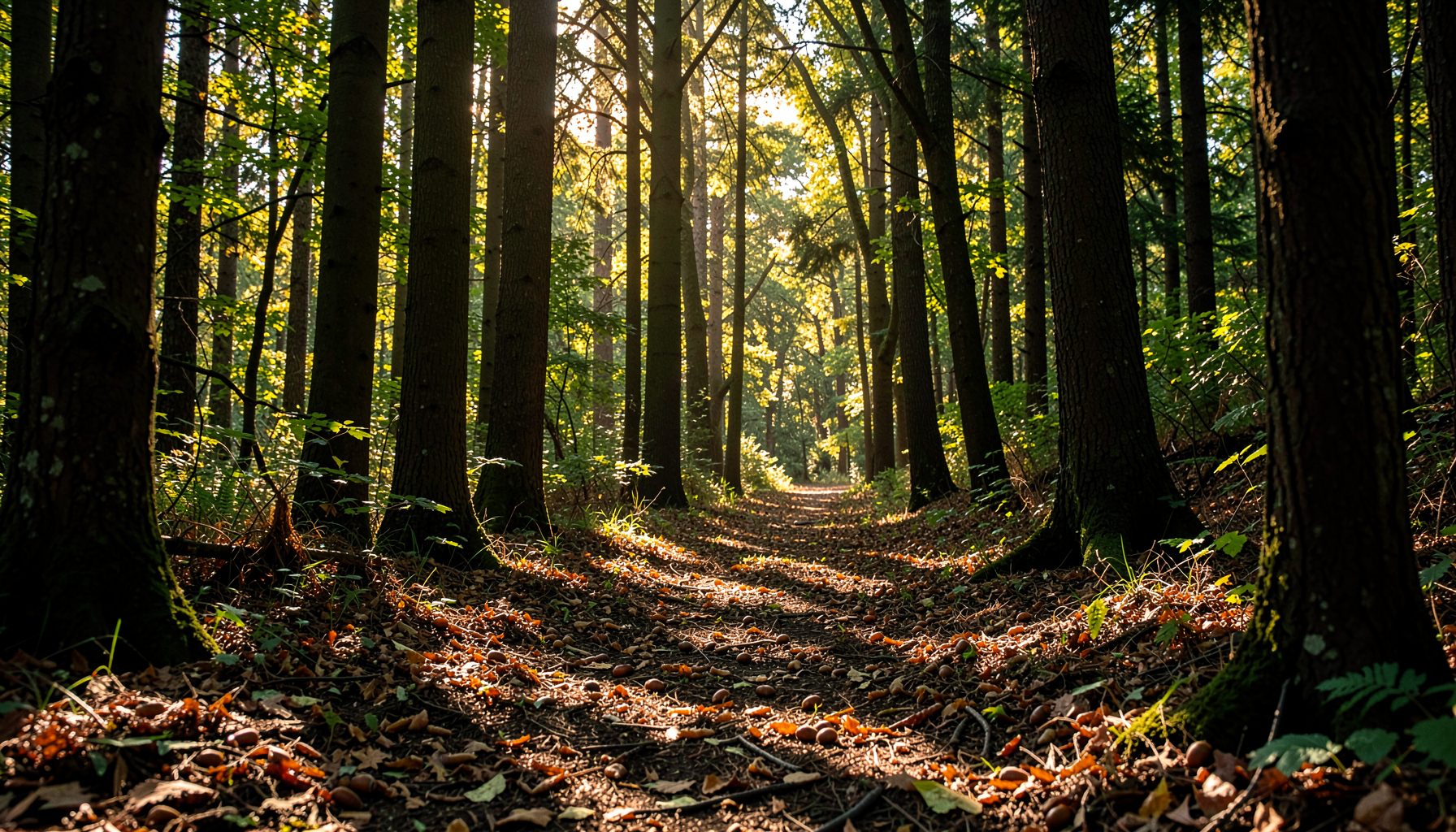
How to Dry and Store Acorns for Long-Term Viability
Acorns are easy to collect, but keeping them alive until planting requires a different approach from storing ordinary dry seeds. An acorn is a living seed with a high moisture content, and excessive drying can destroy the embryo. The goal is to remove surface moisture, slow deterioration, and maintain cool, breathable conditions.
Good storage begins in the forest. Healthy, mature acorns collected at the right time are more likely to germinate and produce strong seedlings. Species, collection date, temperature, humidity, and storage duration all affect viability, so careful handling matters from the moment an acorn falls.
For watershed restoration projects, properly preserved acorns can become future streamside trees that stabilize soil, filter runoff, and improve habitat. Programs such as Growing Native connect community seed collection with nurseries raising native hardwoods for the Potomac River watershed.
Choose Healthy Acorns Before Storage
Collect acorns from native trees during the natural drop, usually from late summer through autumn depending on the species and local weather. Choose firm, mature nuts with intact shells and a fresh brown or tan color. Avoid acorns with cracks, deep insect holes, soft spots, shriveled surfaces, or visible fungal growth.
Gather from several trees rather than relying on one parent tree. This increases genetic diversity and gives a collection project a better representation of the local forest. Pick acorns from clean ground shortly after they fall, or place a sheet beneath a tree and collect freshly dropped seeds before prolonged contact with wet soil.
Species identification is important because different oaks have different germination patterns. White oak group acorns often begin germinating soon after they mature, while red oak group acorns generally require a period of cold, moist conditions. If you are unsure what you collected, use this guide to identify a white oak by examining the cap and other tree characteristics.
Clean And Sort The Collection
Remove leaves, twigs, caps, and loose soil as soon as possible. Do not scrub aggressively or soak acorns for long periods, since damaged shells can allow pathogens to enter. A brief rinse in clean water may remove dirt, but the acorns should be dried on the surface immediately afterward.
A simple float test can help identify damaged or hollow acorns. Place the collection in water for a short time and remove those that float. However, the test is not perfect: some viable acorns contain air pockets, and some nonviable acorns may sink. Use the float test as a screening step, then inspect each seed by hand.
Discard any acorn that feels soft, leaks liquid, smells sour, or shows mold that cannot be removed. If a small hole reveals insect damage, set it aside rather than mixing it with healthy seed. Sorting reduces the chance that one decaying acorn will spread mold through an entire storage container.
Dry The Surface Without Dehydrating The Seed
Spread cleaned acorns in a single layer on a towel, screen, paperboard, or shallow tray. Keep them in a cool, shaded, well-ventilated room for roughly 24 to 48 hours, turning them occasionally. This short period allows surface water to evaporate after washing or damp collection.
Do not place acorns in direct sunlight, near a radiator, in a hot attic, or in an oven. Do not use a food dehydrator unless a specialist protocol specifically calls for it. Acorns are recalcitrant seeds, meaning they cannot tolerate the deep dehydration that many grains and garden seeds withstand. If their internal moisture falls too far, the embryo may die even when the shell looks normal.
The outside should feel dry, but the acorn should remain heavy and solid rather than lightweight or rattling. When acorns were collected in dry conditions and are free of soil, a brief period of air exposure may be enough. The priority is ventilation and surface dryness, not extended drying.
Match Storage To The Oak Species
For short-term holding, place acorns in a breathable mesh bag, perforated polyethylene bag, or container with small air holes. Add a lightly moist medium such as clean peat moss, vermiculite, or damp paper towel if the acorns will be stored for more than a few days. The material should feel cool and barely moist, never wet enough to release water when squeezed.
Refrigeration is generally preferable to room-temperature storage. A temperature near 34–41°F can slow respiration, mold growth, and premature sprouting. Keep acorns away from apples, bananas, and other produce that releases ethylene gas, and label each container with the species, collection location, tree or group, and collection date.
| Storage situation | Recommended condition | Main risk | Best use |
|---|---|---|---|
| A few days before planting | Cool, shaded, ventilated container | Surface mold or drying | Immediate sowing |
| Several weeks for white oak acorns | Refrigerated, lightly moist medium | Early root emergence | Prompt nursery or outdoor planting |
| Several weeks to a few months for red oak acorns | Cold, moist stratification | Rot, sprouting, or freezing injury | Planned seasonal sowing |
| Long-term storage beyond one season | Specialist seed-storage protocol | Loss of viability | Professional nursery handling |
Acorns should not be sealed in an airtight plastic bag. Condensation creates a humid environment where mold can spread quickly, while a completely dry container can draw moisture from the seed. Check stored acorns every week or two, remove any spoiled seeds, and replace wet or moldy packing material.
Control Moisture And Cold Carefully
Moisture balance is the central storage issue. A completely dry acorn is often dead, but an acorn sitting in standing water is likely to rot. Aim for a medium that is evenly damp and porous, with enough air around the seeds. Keeping acorns in a loose layer is safer than compressing them into a crowded container.
Do not freeze acorns in a household freezer as a general storage method. Ice crystals can damage the living tissues, and repeated temperature changes can worsen condensation. Some professional seed banks use carefully controlled cryogenic or low-temperature methods for particular species, but those systems depend on measured moisture content and specialized equipment.
Inspect for radicles, the first emerging roots. A white oak acorn may sprout while refrigerated, and that is not necessarily a problem if it will be planted soon. Handle a protruding root gently, avoid breaking it, and orient the root downward during planting. If a root has turned brown, collapsed, or developed mold, discard the seed.
Educational resources from Growing Native’s conservation education program can help volunteers connect seed handling with tree identification, forest ecology, and watershed restoration. Understanding the biological reason behind each storage step makes it easier to adapt the process to local conditions.
Prepare Acorns For Planting
Before sowing, bring the container out of refrigeration and inspect the collection again. Plant sound acorns promptly rather than leaving them at room temperature for several days. If roots have emerged, avoid unnecessary sorting or repeated handling.
Plant acorns in a well-drained growing medium or directly in a prepared outdoor bed, depending on the nursery protocol. A depth of roughly one to two times the acorn’s diameter is a useful starting point, though exact depth varies with soil, species, wildlife pressure, and whether the acorn is already sprouting. Place a germinating root downward when its direction is clear.
Protect planted acorns from squirrels, rodents, drying winds, and waterlogging. Use mesh, hardware cloth, or another breathable barrier rather than a solid cover that traps heat and moisture. Keep the medium consistently moist during establishment, but allow excess water to drain.
Record what happens. Note the number collected, the number discarded, storage conditions, planting date, germination rate, and seedling survival. These records help a school, family, or volunteer group improve future collections and provide useful information to a nursery receiving donated seed.
Practical Habits For Better Viability
Successful acorn storage depends more on consistency than on complicated equipment. A clean tray, accurate labels, a refrigerator thermometer, breathable packing material, and regular inspections are usually more useful than elaborate treatments. When in doubt, prioritize local nursery guidance because species and regional conditions differ.
Use these practices as a quick field and storage checklist:
- Collect fresh, mature acorns from several healthy native trees.
- Remove damaged seeds and debris before storage.
- Air-dry only the outer surface for a day or two in shade.
- Keep acorns cool and lightly moist, never soaked or completely dry.
- Label each batch and inspect it regularly for mold, rot, or sprouting.
- Plant viable acorns promptly and protect them from wildlife and drought.
Turn Stored Acorns Into Living Forests
An acorn that survives storage is the beginning of a much larger process. With careful planting and follow-up care, it can become a tree that shades a stream, anchors a riverbank, supports insects and birds, and captures carbon for decades. Native seedlings are especially valuable where development, invasive plants, and erosion have weakened forest corridors.
If you have collected a local supply of healthy acorns, connect with a conservation nursery or volunteer program before storing them for an extended period. Share the species, collection date, and location, then follow the receiving organization’s handling instructions. Donate suitable seed through Growing Native’s watershed restoration work and help turn autumn’s acorn crop into resilient forests and cleaner waterways.