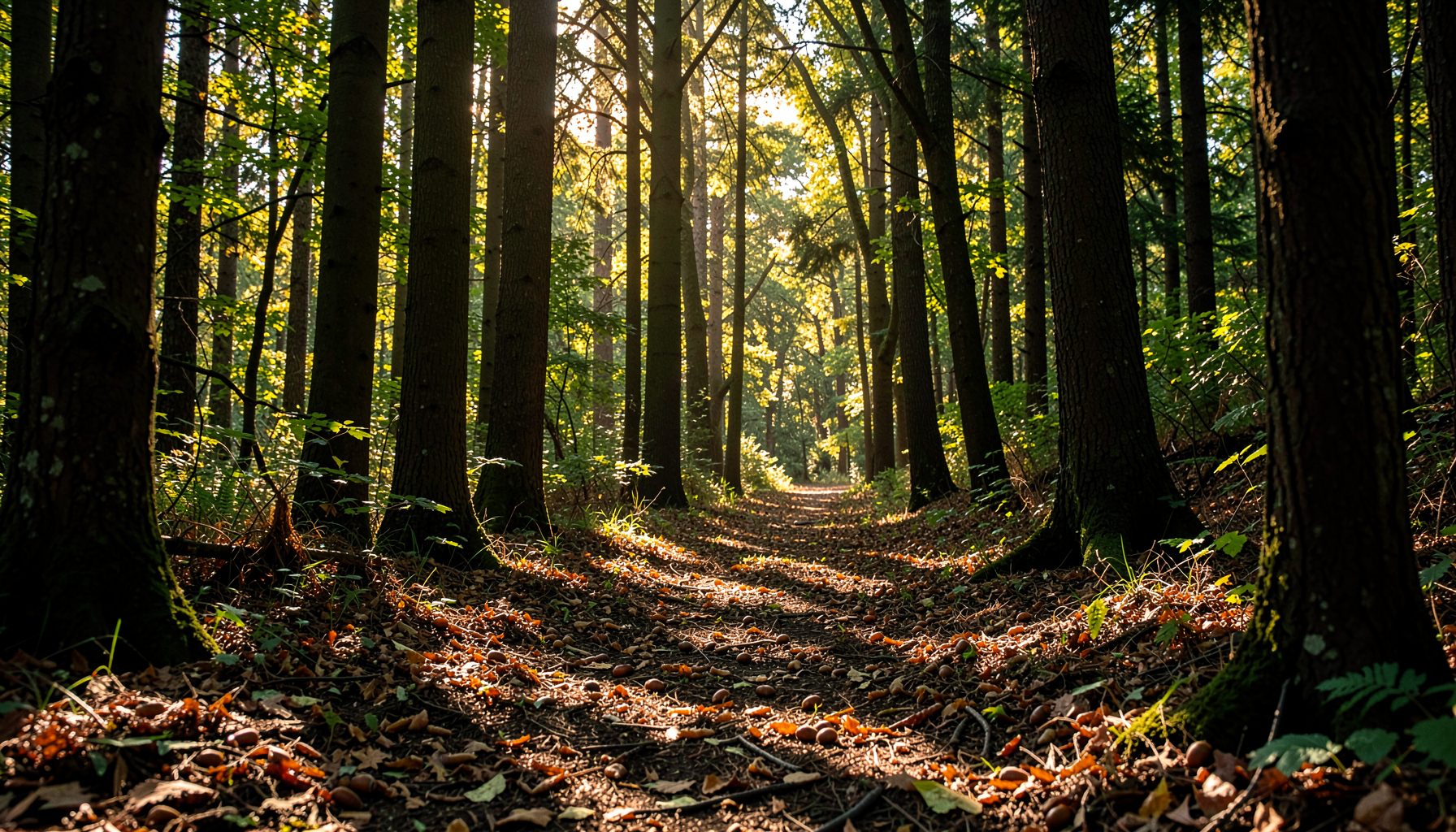
Shaking walnut branches for healthy forest renewal
Walnut collection begins with attention: the shape of the tree, the condition of its fruit, the weather underfoot, and the needs of the nursery that will receive the seed. A productive black walnut can offer hundreds of viable nuts, but gathering them well requires more than pulling branches or filling a bucket.
For conservation volunteers, collecting native hardwood seed is a practical way to connect seasonal observation with watershed restoration. Each sound walnut may eventually become a streamside tree that holds soil, filters runoff, shades a creek, and provides food and shelter for wildlife.
The most effective collection combines gentle branch shaking, careful ground gathering, accurate labeling, and prompt delivery. When volunteers work with the tree rather than against it, a short autumn outing can support forests for decades.
Read the tree before touching a branch
Black walnut trees are often large, mature specimens with rounded crowns and deeply furrowed bark. Their compound leaves create a full canopy, while the developing fruits appear as green, tennis-ball-sized husks that darken as they ripen. A healthy collecting tree may stand near a woodland edge, pasture, park, or stream corridor.
Before gathering, confirm that the tree is a native walnut and that collection is permitted. Property owners, parks, municipalities, and land managers may have different rules. Avoid trees beside busy roads, areas treated with herbicides, and locations where nuts may have been exposed to fuel, pet waste, or other contaminants.
Timing matters. Walnuts are usually ready when mature fruits begin dropping naturally, when the husk changes from bright green to a softer yellow-green, or when a light movement causes several fruits to fall. If the nuts are tightly attached and the husks are hard, waiting several days may produce a better harvest and reduce stress on the tree.
Look at the ground as well as the canopy. A scattering of recently fallen, intact fruit is a useful sign. Nuts that are blackened, hollow, cracked open, or heavily chewed should be left behind unless a nursery specifically requests them for another purpose.
Use a controlled shake, not brute force
The art of shaking branches for walnut collection is really the art of applying limited force in the right place. Spread a clean tarp beneath the outer canopy, where fruit is most likely to land. Move people away from the drop zone, especially children, and never position anyone beneath a heavy branch.
A person on the ground can grasp a low, flexible branch and give it a short, rhythmic shake. The motion should travel through the branch without bending it sharply. For higher limbs, a long, smooth pole may be used to tap or lift a branch from the ground, provided the tool is handled carefully and does not scrape bark or strike people nearby.
Do not climb trees, throw objects into the canopy, or yank upward on a limb. Avoid shaking the trunk or large structural branches, which can injure bark, loosen dead wood, or destabilize the tree. If the fruit will not release with moderate movement, it is probably not ready, or the branch is unsuitable for shaking.
Collect in short rounds. Shake one section, stop, inspect the tarp, and then move it to another part of the crown. This method makes it easier to keep fresh fruit separate from older debris and gives wildlife access to some of the fallen crop. A tree does not need to be stripped to make a valuable contribution.
Protect the seed after it lands
Fresh walnuts can look deceptively durable. Their thick husks protect the seed, but heat, standing water, mold, and rough handling can quickly reduce viability. Lift the tarp by its edges or gather fruit by hand, avoiding unnecessary rolling over gravel or hard pavement.
Wear gloves when handling walnut husks. The outer covering contains a dark stain that can mark skin and clothing, and some people experience irritation from repeated contact. Keep the nuts in breathable bags, crates, or shallow boxes rather than sealed plastic containers. Air circulation helps prevent overheating and fermentation.
Sort the collection at the site or soon afterward. Remove fruit with deep cracks, soft spots, extensive insect damage, or a sour smell. Do not wash or dry seed unless the receiving nursery gives those instructions. Native tree seeds have species-specific handling requirements, and walnut storage may differ from the treatment used for acorns or other hardwoods.
Record the date, location, species, approximate number of nuts, and landowner or collection site. If multiple walnut trees were used, keep batches separate when possible. This basic field information helps conservation programs track seed sources and select planting material appropriate for local conditions.
Match collection methods to the season
Walnut gathering is part of a broader seed cycle. Some fruits can be collected from the ground, while others require clipping, hand-picking, or a gentle branch tap. The best approach depends on fruit maturity, tree height, weather, and the safety of the volunteers.
| Collection condition | Preferred approach | What to avoid | Useful field note |
|---|---|---|---|
| Fresh walnuts beneath a mature tree | Hand-gather from a clean ground surface | Fruit from roadsides or contaminated soil | Note whether the husks are green, yellowing, or dark |
| Low branches releasing ripe fruit | Short, gentle branch shake over a tarp | Pulling, twisting, or bending limbs | Stop when only firmly attached fruit remains |
| High canopy with ripe nuts | Use a ground-based pole only with trained adults | Climbing or throwing tools | Establish a clear drop zone first |
| Wet weather or soaked ground | Delay collection or use elevated containers | Sealing damp nuts in plastic | Moisture and heat encourage mold |
| Mixed or uncertain seed | Separate by tree and label clearly | Combining unknown species | Ask the nursery before transporting |
A brief delay can be beneficial when the forecast calls for severe wind, lightning, or icy conditions. Wet leaves and muddy slopes increase the risk of falls, while strong wind can bring down dead limbs without warning. Good seed work includes knowing when not to collect.
After gathering, follow the receiving program’s instructions promptly. Some native seeds are delivered soon after collection; others need temporary cool storage or preparation for dormancy. The science of winter seed stratification explains why many temperate tree seeds need a period of cold, moist conditions before they will germinate.
Turn walnuts into watershed restoration
A walnut seedling can become part of a much larger ecological system. Along streams and drainageways, native trees stabilize banks with their roots, shade water, and contribute leaf litter that supports aquatic food webs. Their branches create habitat, while their canopies intercept rainfall before it reaches bare soil.
Tree cover also changes how stormwater moves across a landscape. Leaves and branches slow precipitation, roots create channels through soil, and organic matter improves infiltration. The role of native hardwoods in filtering runoff shows how individual trees contribute to cleaner water beyond the planting site.
This is why seed collection is more than a harvest activity. When walnuts are collected responsibly and grown into locally appropriate seedlings, volunteers support a supply of trees for restoration projects throughout the watershed. The eventual planting may take place miles from the original collection tree, but the connection between forest, stream, and community remains direct.
Educational value is part of the work, too. Children can compare husks, leaves, and bark; students can map collection sites; workplace teams can learn how seasonal stewardship supports long-term conservation. A simple nut-gathering event can become a lesson in genetics, forest succession, soil protection, and shared responsibility for water quality.
Make every collection outing safer
A well-prepared group spends a few minutes on safety before anyone approaches the tree. Assign one person to monitor the drop zone, keep bags and tools organized, and review the boundaries of the collection area. Participants should wear sturdy shoes, long pants, gloves, and weather-appropriate layers.
Do not collect alone in remote areas, and keep a first-aid kit, drinking water, charged phone, and emergency contact information nearby. Watch for poison ivy, thorny plants, ticks, uneven ground, and falling limbs. If a tree shows extensive dead branches, fungal decay, or unstable roots, choose another tree.
These practices also protect the quality of the seed. Clean tarps and containers reduce contamination, while separate bags prevent uncertain material from being mixed with a strong batch. A label written at the end of the day is less reliable than one completed immediately after each collection.
- Obtain permission and confirm the target species before gathering.
- Use a clean tarp and shake only flexible, reachable branches.
- Wear gloves and keep nuts cool, dry on the outside, and well ventilated.
- Separate damaged fruit and label each batch with location and date.
- Deliver the collection according to the receiving nursery’s instructions.
Share the work beyond harvest day
The most rewarding walnut collection events bring together people with different strengths. One volunteer may identify the tree, another may manage the tarp, and another may record data or explain why streamside forests matter. Families can gather a small amount carefully, while larger groups can rotate through collection, sorting, and education stations.
Schools and community organizations can use the outing to follow the seed’s complete journey: from fruit on a branch to a nursery-grown seedling and eventually to a restoration site. That continuity helps participants see that conservation is measured in seasons and generations rather than in a single afternoon.
Workplace groups can also make the activity part of a broader service effort. A team might collect in autumn, help prepare planting materials later, and return for a streamside planting day. These repeated connections build practical knowledge and make watershed stewardship visible within the community.
Growing Native provides opportunities for individuals, families, schools, community groups, and workplaces to take part in native seed collection and related conservation activities. To find an upcoming opportunity and prepare for participation, register as a volunteer.
A walnut rolling onto a tarp may seem like a small event, but it represents a living link between a mature tree, a nursery, a future forest, and a cleaner Potomac watershed. Handle each nut with care, share what you learn, and let the next generation of trees begin with thoughtful work beneath the canopy.