How Native Hardwoods Filter Stormwater Runoff
Rain does more than fall onto a forest. It lands on leaves, branches, bark, moss, and soil before reaching a stream. Each surface delays water, changes its direction, and determines how much rainfall becomes fast-moving stormwater runoff. In a healthy woodland, this sequence can reduce flooding pressure, soil loss, and the amount of sediment and pollution carried into waterways.
Native hardwoods are especially valuable components of this system because they are adapted to local soils, seasons, insects, and weather patterns. Their crowns, roots, fallen leaves, and relationships with soil organisms create several layers of protection for the Potomac River watershed. The result is cleaner water and a more stable streamside environment.
Restoring that protection takes time. Seed collection programs such as Growing Native connect volunteers with the long-term work of gathering acorns, walnuts, and other native seeds so state nurseries can grow future streamside trees. Every seedling planted today can become part of a stormwater management system that works through every rainfall event for decades.
How rainfall becomes runoff
When rain strikes a roof, road, compacted lawn, or bare patch of soil, it often moves quickly across the surface. Impermeable areas produce especially rapid runoff because water cannot soak into them. As the flow gathers speed, it can carry soil particles, fertilizers, oil residue, bacteria, trash, and other pollutants toward storm drains and streams.
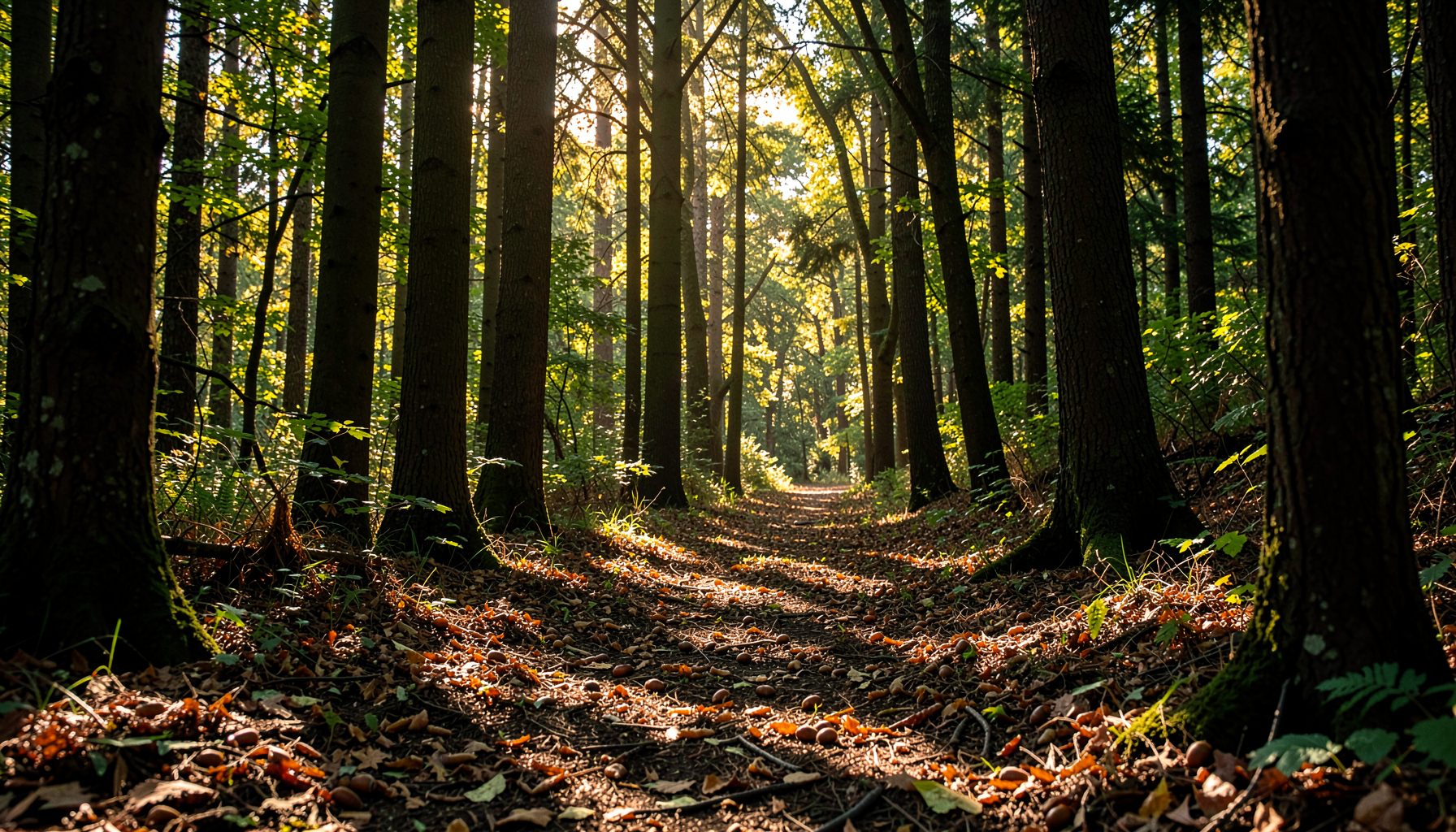
A forest changes that pathway. Branches and leaves intercept some rainfall, while trunks and surface roots redirect water. Leaf litter cushions the soil from the force of falling drops, preventing the crust that forms when bare ground is repeatedly pelted by rain. With less surface sealing, more water can enter the ground instead of rushing downhill.
The difference is especially important during intense storms. A wooded buffer may not absorb every drop, but it can slow the arrival of water, spread flow across a wider area, and reduce the peak volume entering a stream at one time. That delay gives soil, roots, and microorganisms more opportunity to retain or process pollutants.
Roots create living pathways through soil
Native hardwood roots hold soil in place and create channels that connect the surface to deeper layers. Fine roots grow through small spaces, while larger roots form durable pathways that can remain after roots die and decompose. These openings improve infiltration, allowing rainfall to move into the soil profile rather than remaining in a shallow, easily eroded sheet.
Roots also stabilize stream banks. Along creeks and rivers, a dense network of woody roots binds layers of soil that might otherwise collapse during high water. Trees cannot prevent every flood or bank failure, but they reduce the amount of loose sediment available to be washed downstream. Lower sediment loads help protect aquatic habitat and keep waterways clearer.
The soil around native trees is a biological filter as well as a physical one. Fungi, bacteria, insects, and other organisms break down organic matter and transform nutrients. Some microbes help convert nitrogen compounds into less harmful forms, while soil particles can hold phosphorus and other substances. Healthy root systems support this underground community by adding carbon and maintaining a steady supply of organic material.
Canopies and leaf litter slow the storm
A mature hardwood canopy acts like a network of small rainfall barriers. Water may rest briefly on leaves, drip from leaf edges, or travel down branches and trunks. This process, called interception, reduces the speed and force with which rain reaches the ground. Some water evaporates before it becomes runoff, particularly during smaller or shorter storms.
Hardwood forests also have layers beneath the canopy. Shrubs, young trees, fallen branches, grasses, and decomposing leaves increase surface roughness. Instead of flowing in a straight line, water must move around obstacles and through organic material. This longer path reduces its energy and encourages infiltration.
Leaf litter is especially important. The porous layer acts like a sponge, holding water temporarily and releasing it gradually. As leaves decompose, they contribute organic matter that improves soil structure and water-holding capacity. Seasonal changes matter: deciduous hardwoods intercept less rainfall after leaf drop, but their bare branches, roots, litter, and enriched soil continue to provide runoff benefits through winter and early spring.
What each forest layer contributes
The effectiveness of a riparian forest comes from several connected features rather than a single tree trait. A newly planted seedling may offer limited canopy interception, but its roots begin influencing soil structure immediately. Over time, the developing woodland gains additional layers and functions.
| Forest feature | How it affects stormwater | Water-quality benefit |
|---|---|---|
| Leaves and branches | Intercept rain and slow its fall | Reduces splash erosion and delays runoff |
| Bark and trunks | Redirect water toward the ground at a slower rate | Spreads flow and protects exposed soil |
| Leaf litter | Holds rainfall and cushions the soil surface | Limits sediment movement and improves infiltration |
| Fine roots | Create channels and bind upper soil layers | Encourages groundwater recharge and reduces erosion |
| Deep roots | Stabilize soil through changing moisture conditions | Helps protect stream banks and floodplain soils |
| Soil organisms | Decompose organic matter and transform nutrients | Supports natural processing of nitrogen and other pollutants |
| Native plant diversity | Provides varied root depths and seasonal coverage | Creates a more resilient watershed buffer |
The strongest results generally occur where hardwoods grow with native shrubs, grasses, and ground-layer plants. Different species occupy different spaces and use water at different depths. This diversity creates a more complete filter than a single row of identical trees.
Species selection should also reflect local conditions. A tree suited to a wet floodplain may struggle on a dry upland slope, while a species adapted to one part of the watershed may perform poorly elsewhere. Native seed collection helps nurseries produce plants with regional ecological value and supports restoration suited to local landscapes.
Forest buffers protect streams over time
Streamside forests provide benefits during ordinary rain as well as major storms. Their roots reduce bank erosion, and their shade can help moderate water temperature. Cooler, clearer streams generally provide better conditions for aquatic insects, fish, amphibians, and the microorganisms that support food webs.
Wooded buffers also capture material from adjacent land before it reaches the channel. Nutrients from lawns or agricultural fields, sediment from disturbed soil, and organic debris may be trapped in vegetation or processed in the root zone. The wider and more continuous the buffer, the more opportunity it has to slow and filter overland flow.
Forest restoration is therefore a long-term form of watershed infrastructure. A concrete drain moves water away quickly, but a living buffer manages water through many interacting processes. Its performance changes with seasons and storm size, yet it can become more valuable as trees mature and soil structure improves. The work described in Growing Native's mission reflects this long view: healthier forests support healthier waterways and communities.
Why native species strengthen restoration
Native hardwoods evolved alongside the region’s climate, soils, herbivores, pollinators, and decomposers. That does not make every native tree ideal for every planting site, but it increases the chance that well-matched species will support local food webs and persist with appropriate care. Their leaves, flowers, fruits, and bark contribute resources at different times of year.
A diverse planting also spreads ecological risk. If one species is affected by a pest, drought, or disease, other trees and shrubs can continue to stabilize soil and intercept rainfall. Multiple canopy heights and root structures improve habitat while making the buffer more effective across changing weather conditions.
Seed collection is an accessible entry point into this restoration cycle. Volunteers can learn to recognize mature native trees, gather viable seeds responsibly, and understand how those seeds become nursery-grown seedlings. A practical tree identification guide can help participants distinguish native hardwoods and collect from appropriate species at the right time.
Turn watershed knowledge into action
Stormwater protection begins with observing how water moves across a property, schoolyard, park, farm edge, or neighborhood. Areas where runoff concentrates, soil washes away, or streams receive direct drainage can often benefit from native trees and shrubs. Planting plans should account for soil moisture, sunlight, existing vegetation, utility lines, deer pressure, and the expected mature size of each species.
Care after planting matters as much as the planting itself. Young trees may need watering during dry periods, protection from browsing, and control of aggressive competing vegetation. Maintaining leaf litter and avoiding unnecessary soil compaction help preserve the infiltration pathways that make a forest buffer effective.
Education turns individual planting projects into lasting stewardship. Growing Native provides watershed learning materials that can support classroom activities, volunteer training, and community discussions about tree identification, forest ecology, and water quality. These resources help people connect a seed, a seedling, and a stream to the same restoration story.
Ways to support healthier runoff
- Join a native seed collection event and learn how to gather acorns, walnuts, and other locally appropriate seeds.
- Protect existing streamside trees and leave natural leaf litter in place whenever safety and access allow.
- Plant a diverse mix of native hardwoods, shrubs, and ground-layer plants suited to the site’s moisture and light.
- Reduce compacted soil and direct downspouts or drainage away from bare slopes where appropriate.
- Involve schools, families, workplaces, and community groups in monitoring tree growth, erosion, and stream conditions.
A restored forest buffer begins with small actions that accumulate across the watershed. Collecting one handful of viable seeds, caring for one young tree, or protecting one stretch of streamside soil contributes to a network of natural stormwater filters. Get involved with Growing Native to help turn native hardwood restoration into cleaner water, stronger stream banks, and a more resilient Potomac River watershed.