How to Identify a Swamp White Oak by Its Leaves and Acorns
Swamp white oak, Quercus bicolor, is a native hardwood of wet forests, floodplains, stream corridors, and poorly drained lowlands. Its name points to two useful field clues: the tree belongs to the white oak group, and the leaves often show a noticeably pale or silvery underside. Once you learn where it grows and how its foliage and acorns are arranged, identification becomes much easier.
This oak is especially valuable in the Potomac River watershed. Its roots help stabilize stream banks, its canopy shades water, and its fallen leaves contribute organic matter to aquatic and forest food webs. Recognizing the species also helps volunteers collect the right acorns for restoration projects and gives land stewards a clearer picture of local forest diversity.
A single feature should not determine your identification. Leaf shape can vary within one tree, and young branches may look different from mature limbs. Use several clues together: habitat, leaf texture, underside color, acorn stalk length, cup shape, bark, and nearby vegetation.
Start with habitat and growth form
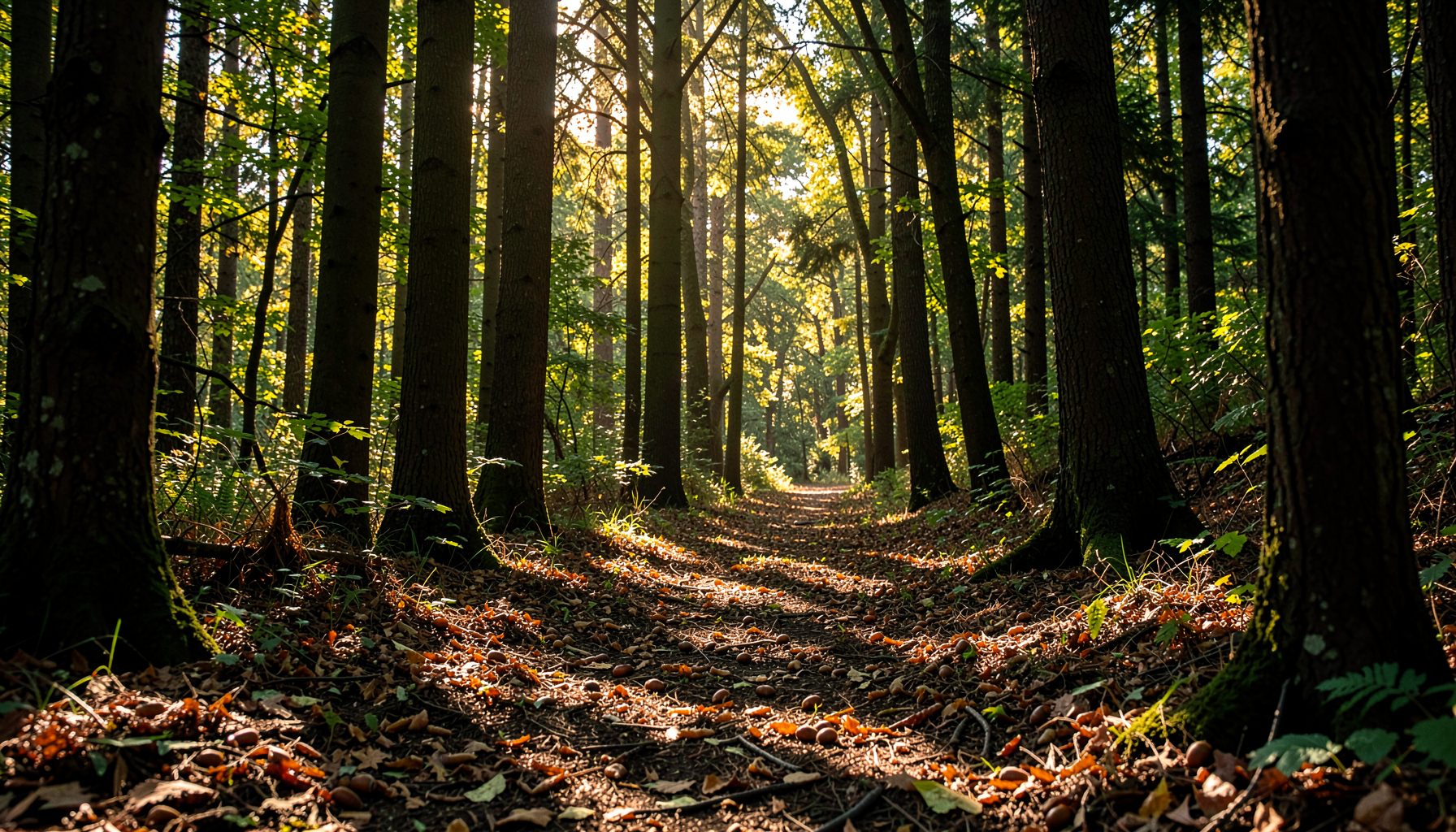
Look for swamp white oak in places that stay moist for at least part of the year. Common settings include river floodplains, wet meadows, wooded swales, pond edges, seepage areas, and streamside forests. The soil may be rich and dark, with signs of seasonal flooding or a high water table. The tree can tolerate standing moisture better than many upland oaks, though it usually grows best where the ground is moist rather than permanently submerged.
A mature swamp white oak commonly develops a broad, rounded crown with sturdy, spreading branches. It may reach a substantial size when growing in open floodplain conditions. The trunk is often straight, but trees in crowded woods can have narrower crowns and taller, less symmetrical forms.
Urban and roadside conditions can make habitat clues less reliable. A swamp white oak may be planted well beyond its natural wetland setting, while a naturally occurring tree may stand in a disturbed corridor. In places where winter deicing is common, salt can stress trees near roads and alter the health of streamside plant communities. The discussion of road salt effects offers useful context when assessing trees in developed watersheds.
Read the leaves from both sides
Swamp white oak leaves are alternate on the twig, rather than directly opposite one another. They are generally simple, with one continuous leaf blade, and often measure about 4 to 8 inches long. The outline is commonly obovate, meaning the leaf is broader toward the tip than the base, although individual leaves can appear more oval or elongated.
The lobes are rounded and fairly shallow. They may give the leaf a gently wavy or irregular appearance rather than the deep, sharply cut divisions seen on some red oak relatives. The upper surface is medium to dark green and may feel somewhat leathery. The lower surface is usually much paler, ranging from whitish to silvery gray, especially when the leaf is fresh and viewed in good light.
Pay attention to the leaf base. It is often rounded, tapered, or slightly wedge-shaped where the blade meets the petiole. The petiole itself is usually short to moderate in length. Swamp white oak leaves may remain green well into autumn before turning yellow, bronze, brown, or reddish brown, depending on weather and site conditions.
Examine several leaves from different parts of the tree. Sun leaves near the outer crown may be smaller and thicker, while shaded leaves can be larger and thinner. A pale underside combined with rounded lobes, a moist habitat, and a broad crown is more useful than any single measurement.
Use acorns as a second confirmation
Swamp white oak acorns mature during the same growing season in which they form. They are typically around ¾ to 1 inch long, though size varies. The nut is brown when ripe and sits in a shallow, bowl-shaped cup. The cup usually covers roughly one-third to one-half of the acorn rather than enclosing most of it.
One of the strongest identification clues is the acorn stalk. Swamp white oak acorns often hang from relatively long, slender stems, sometimes several inches in length. They may occur singly or in small groups. When acorns fall, the stalk can remain attached to the cup or separate from the nut, so inspect both fresh and fallen specimens.
The cup surface may look scaly, warty, or fringed around the edge. Avoid relying on color alone because immature acorns can be green, and mature nuts may darken after lying on damp ground. A sound acorn should feel firm, with no soft spots, deep holes, or extensive mold.
Timing matters during seed collection. Acorns that have recently fallen are usually better candidates than those that have spent days under leaf litter or water. Look beneath the crown, inspect several samples, and keep species separate. Correct identification protects nursery supplies from being mixed with acorns from other oaks.
Distinguish it from similar oak species
Several native oaks can resemble swamp white oak, especially when leaves are viewed from a distance. White oak often has similarly rounded lobes, but its leaves are commonly more deeply divided and its acorns generally have shorter stalks. Its habitat can overlap with swamp white oak in rich bottomlands, so leaf underside and acorn attachment are important.
Bur oak also belongs to the white oak group and can occupy moist lowlands. Its leaves often have a broad, irregular outline with a pronounced pair of deep sinuses near the middle. The acorn cup usually has a conspicuous fringed or hairy margin that can extend well around the nut. Swamp white oak cups are generally less dramatically fringed.
Chestnut oak is easier to separate when its distinctive leaves are present. Those leaves have large, rounded teeth around the margin rather than obvious rounded lobes. Its preferred sites are commonly drier, rocky, and upland, although local conditions can vary.
Pin oak and other wet-site oaks may grow in similar landscapes, but pin oak leaves usually have much deeper, narrower lobes with pointed tips. Pin oak acorns are also smaller and tend to have shorter stalks. When identification remains uncertain, photograph the entire tree, a twig with several leaves, the leaf underside, and multiple acorns with their cups.
Compare the main field clues
The following distinctions provide a practical starting point. Natural variation is common, so use the full combination of traits rather than treating any one row as absolute.
| Feature | Swamp white oak | White oak | Bur oak | Pin oak |
|---|---|---|---|---|
| Typical habitat | Floodplains, wet woods, stream margins, moist lowlands | Rich woods, slopes, uplands, and bottomlands | Bottomlands, prairies, open woods, and fertile lowlands | Wet or poorly drained soils, parks, and urban plantings |
| Leaf lobes | Rounded and usually shallow | Rounded, often more deeply cut | Broad, irregular lobes with deep central sinuses | Deep, narrow lobes with pointed tips |
| Leaf underside | Pale, whitish, or silvery | Usually paler than the upper surface | Often grayish or slightly fuzzy | Less distinctly white or silvery |
| Leaf base | Rounded to tapered | Often narrow or wedge-shaped | Frequently broad and rounded | Usually narrow |
| Acorn stalk | Relatively long and slender | Usually short | Variable, often short to moderate | Short |
| Acorn cup | Shallow, scaly or warty, covering part of nut | Shallow, with overlapping scales | Large, often fringed around the margin | Small and shallow |
| Overall form | Broad crown and substantial trunk | Broad, spreading crown | Massive trunk and heavy branches | More upright, with distinctive persistent lower branches |
See the species as part of a living watershed
Identifying swamp white oak has value beyond naming a tree. Oaks support a large community of insects, birds, mammals, fungi, and other organisms. Their leaves feed caterpillars, their branches provide structure for nesting, and their acorns supply high-energy food for wildlife such as squirrels, deer, turkeys, and blue jays. Learn more about this broader oak wildlife value when considering why native oak restoration matters.
Along waterways, the species contributes to several connected ecological functions. Roots hold soil during high flows, woody debris can create habitat, and shade helps moderate stream temperatures. Leaf litter enters the water and breaks down into material used by aquatic insects and microorganisms. A diverse streamside planting is generally more resilient than a narrow stand of a single species.
These benefits make local seed collection a practical conservation activity. Acorns gathered from healthy native trees can be grown by state nurseries and returned to restoration projects as seedlings. Volunteers should collect only where permission has been granted and leave enough seeds for wildlife and natural regeneration.
Prepare for responsible acorn collection
Before visiting a site, identify the land manager, check local collection rules, and choose trees that appear healthy. Avoid collecting from trees with extensive dead branches, severe crown dieback, fungal growth on most acorns, or signs of chemical exposure. Record the location, collection date, habitat, and identifying features so nursery staff can track the seed source.
A short field visit can combine observation with hands-on learning. Students and community volunteers can compare leaf shapes, sketch acorn cups, examine bark, and discuss how streamside forests reduce erosion. A school field trip guide can help educators organize roles, safety procedures, and collection activities before arriving outdoors.
Useful practices for a careful outing include:
- Collect freshly fallen, mature acorns from several healthy swamp white oaks rather than relying on one tree.
- Keep each species and collection site in a separate labeled bag or container.
- Remove acorns with holes, soft shells, deep cracks, or heavy mold.
- Handle leaves and branches gently, and never strip large numbers of leaves from a living tree.
- Submit the collection promptly according to the receiving nursery or conservation program’s instructions.
When you find a tree that matches the habitat, leaf, and acorn clues, photograph it and record its location. Then share accurate observations with a local restoration effort such as Growing Native. Your identification can become the first step in producing seedlings that strengthen forests, protect waterways, and support wildlife across the Potomac River watershed.