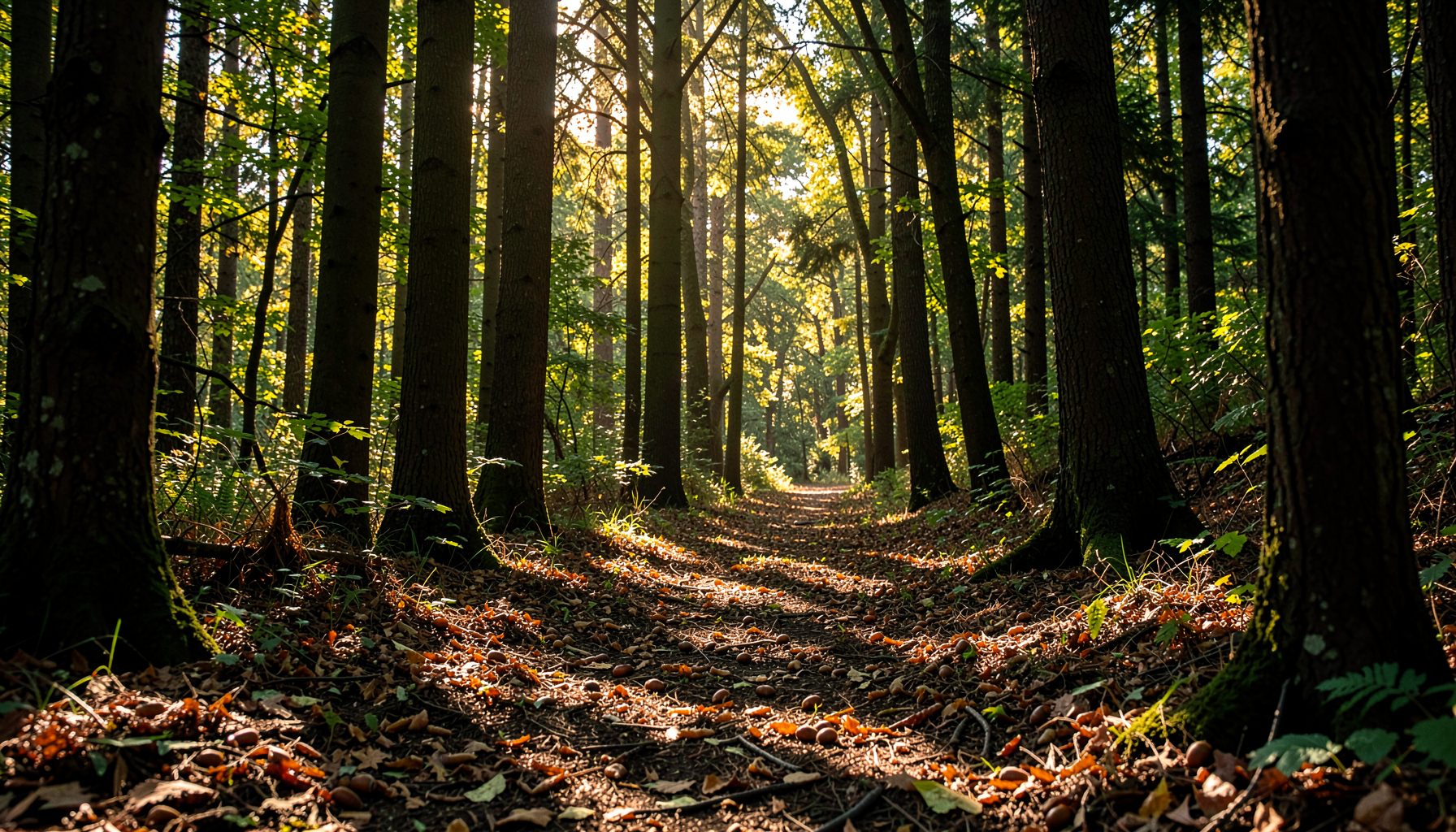
Why Oak Forests Matter to Moths, Butterflies, and Watersheds
Oaks are among the most valuable native trees in an eastern forest. Their branches create shelter, their flowers provide early-season pollen, and their acorns feed birds, mammals, and countless other animals. Less visible but equally important is the role oak foliage plays in sustaining caterpillars, the developing stage of moths and butterflies.
Across North America, native oaks support more than 500 species of moths and butterflies. That remarkable figure reflects a broad ecological relationship rather than a single attraction: different oak species host different caterpillars, while mature trees, fallen leaves, bark, flowers, and acorns contribute resources throughout the year.
For the Potomac River watershed, planting and protecting oaks connects wildlife conservation with cleaner water and stronger communities. A healthy streamside forest can support insects at the base of the food web while reducing erosion, cooling streams, and filtering runoff before it reaches the river.
A Keystone Tree For Caterpillars
Many moth and butterfly larvae are specialists, meaning they depend heavily on particular plant groups for food. Others are generalists that can feed on several kinds of trees. Oaks are unusually productive hosts because their leaves offer suitable nutrition and chemical conditions for a large range of caterpillar species.
The relationship begins when an adult moth or butterfly lays eggs on oak foliage. After hatching, caterpillars consume leaves, grow through several stages, and eventually pupate in leaf litter, soil, crevices, or protective silk shelters. Some species remain on the tree, while others descend to complete part of their life cycle near the ground.
A single oak may lose leaves to hundreds of caterpillars without suffering lasting harm, particularly when it is established in a diverse forest. In return, the tree helps turn sunlight into insect biomass. That biomass feeds chickadees, titmice, warblers, wrens, woodpeckers, and many other birds raising young.
Why Caterpillar Diversity Matters
Butterflies often receive the most public attention because adults are colorful and easy to recognize. Moths are less conspicuous, yet they make up the larger share of Lepidoptera and perform important ecological work. Their caterpillars recycle plant energy into food for birds, amphibians, reptiles, small mammals, and predatory insects.
Oak-dependent caterpillars also contribute to food-web resilience. If one insect species declines because of drought, disease, or a poorly timed spring freeze, other species may still provide prey during the nesting season. A forest with many native tree species offers an even broader sequence of resources, but oaks are frequently one of its strongest foundations.
Insect diversity benefits plants as well. Adult moths and butterflies can move pollen between flowers, while caterpillars influence how trees allocate energy and how quickly leaves return nutrients to the soil. Their presence signals that a forest is functioning as a living community rather than standing as a collection of isolated trees.
Oak Species Across The Potomac Basin
The Potomac watershed includes upland forests, floodplains, rocky slopes, suburban stream corridors, and agricultural edges. Several native oaks may occur across this region, including white oak, chestnut oak, northern red oak, black oak, scarlet oak, pin oak, and swamp white oak. Each has its own preferences for moisture, soil, elevation, and sunlight.
That variety matters for wildlife. An oak suited to a dry ridge should not automatically be planted in a wet floodplain, where a bottomland species may perform better. Matching the tree to its site helps seedlings survive and creates a more continuous supply of leaves, flowers, and acorns across the landscape.
Restoration also has a historical dimension. The history of Potomac deforestation shows why recovering native forest cover requires long-term attention. Protecting remaining trees, allowing natural regeneration, and adding locally appropriate seedlings can gradually rebuild habitat that was fragmented by farming, timber extraction, roads, and development.
From Oak Leaves To Clean Water
The value of an oak extends beyond the insects living in its canopy. Tree roots stabilize stream banks, absorb water, and hold soil in place. Fallen leaves slow rainfall at the ground surface, improve soil structure, and provide organic matter that supports fungi, bacteria, and aquatic invertebrates.
When caterpillars and other insects feed in the canopy, some become prey for birds and other wildlife. Others fall into streams, where they add nutrients to aquatic food webs. A streamside forest therefore links terrestrial and freshwater ecosystems: what grows above the water can influence what survives below it.
Oaks also help watersheds withstand heat and heavy rain. Their shade can lower stream temperatures, while roots and leaf litter increase infiltration. These services become more important as impervious surfaces expand and weather patterns produce more intense runoff. Planting native trees is not a quick substitute for preserving mature forest, but it is a practical part of restoring watershed function.
| Oak feature | Benefit to moths and butterflies | Wider ecological value |
|---|---|---|
| Leaf-rich canopy | Provides food for many caterpillar species | Supports insect-eating birds and mammals |
| Flowers in spring | Offers nectar and pollen to adult insects | Helps early-season pollinators |
| Rough bark and limbs | Creates shelter and egg-laying surfaces | Provides habitat for insects and birds |
| Leaf litter | Protects pupae and overwintering larvae | Builds soil and supports decomposition |
| Acorns | Sustains wildlife that shares oak habitat | Feeds mammals and birds that disperse seeds |
| Deep root systems | Stabilizes trees in varied soils | Reduces erosion and filters runoff |
The Value Of Native Seed Collection
Restoring oak habitat begins with healthy, locally suitable planting material. Collecting acorns from thriving native trees can help nurseries raise seedlings adapted to regional conditions. The timing of collection matters because acorns ripen at different times, and sound seeds must be gathered, handled, and stored carefully.
Community participation expands what conservation organizations can accomplish. Individuals, families, schools, workplaces, and neighborhood groups can gather native hardwood and shrub seeds while learning how to identify trees and understand forest succession. The work gives volunteers a direct role in rebuilding habitat for future generations of insects, birds, and people.
Growing Native’s conservation program connects seed collection with streamside restoration across the Potomac River watershed. Donated acorns and walnuts can be grown into seedlings at state nurseries, then planted where trees are needed to strengthen forest corridors, protect waterways, and increase the supply of native host plants.
Making Space For More Lepidoptera
Landowners can support oak-associated insects by keeping mature native trees whenever safety allows. Removing every fallen branch, clearing all leaf litter, or replacing native understory plants with ornamental groundcover can eliminate places where caterpillars pupate and adult insects shelter. A less manicured area often offers greater wildlife value.
New plantings should include several native tree and shrub species rather than relying on a single type of tree. Oaks provide exceptional host value, but biodiversity is strongest when they grow alongside maples, hickories, birches, willows, dogwoods, blueberries, and other plants suited to the site. Avoiding unnecessary insecticide use is equally important, especially during caterpillar season.
Useful actions include:
- Preserve mature native oaks and protect their root zones from soil compaction.
- Collect only healthy, locally appropriate acorns through a responsible community program.
- Plant oak species according to moisture, sunlight, and soil conditions.
- Leave some leaf litter and natural woody debris where it does not create a hazard.
- Replace invasive plants with native trees, shrubs, and ground-layer vegetation.
Schools and community groups can turn an oak restoration project into a long-term learning experience. Participants can compare leaf shapes, record seasonal changes, search for signs of caterpillar feeding, and observe which birds visit restored areas. Educational resources and forest ecology publications can help connect field activities with lessons about native plants, biodiversity, and watershed health.
Growing A Long-Term Conservation Legacy
An oak planted today will take years to become a major canopy tree, but its ecological influence begins earlier. Young trees provide leaves and shelter, stabilize soil as their roots develop, and contribute to a future forest structure. Planning for mature habitat means making decisions that extend beyond a single season or planting event.
The greatest benefits appear when individual restoration sites are connected. A line of streamside oaks can link larger forest patches, give insects and birds safer movement routes, and improve conditions along tributaries that feed the Potomac. Even small plantings become more valuable when neighboring landowners and community partners pursue compatible goals.
Protecting oak ecosystems is therefore an investment in many forms of life at once. It supports more than 500 moth and butterfly species, strengthens food webs, improves stream health, and gives people a tangible way to care for the watershed. Join a native seed collection, learn to recognize local oaks, or organize a restoration activity with your community so the next generation of forests can support an even richer living landscape.