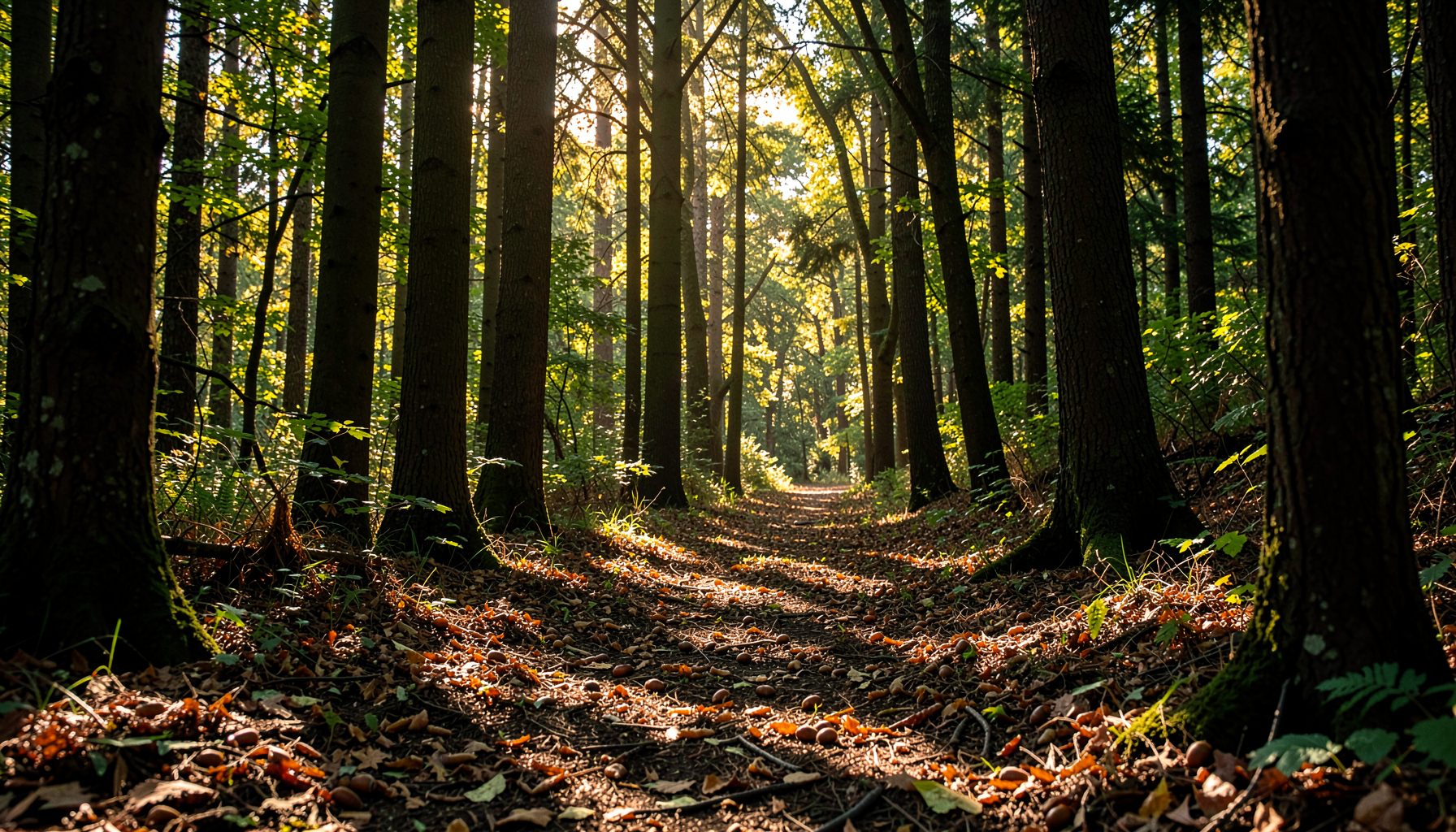
Sourcing High-Quality Seeds From Public Hiking Trails
Australia's bushwalking culture has long celebrated the quiet observation of native woodlands, from the misted eucalypt stands of the Blue Mountains to the rainforested ridges near Cairns. In recent years, that same spirit of careful observation has been turned toward a more practical purpose: collecting seeds from healthy parent trees along public tracks for use in local revegetation projects. Hikers who already know a trail intimately are uniquely placed to spot the vigorous specimens that produce robust seed, and to return at the right moment with bags in hand.
The lessons learned by community groups in other parts of the world translate well to the Australian context. Programs such as Growing Native have shown how volunteer seed collectors, walking familiar routes season after season, can supply nurseries with locally adapted material that grows into resilient streamside seedlings. For Australian readers volunteering with Landcare networks, school groups, or friends-of-the-forest organisations, the trail becomes both a survey route and a harvest route, provided the collector knows what to look for and how to move with care.
What follows is a practical guide to identifying high-quality seed sources while walking public tracks. The focus is on principles that apply across temperate and subtropical forest types, including the dry sclerophyll woodlands that fringe many Australian trail networks. Whether you are scouting a weekend loop in the Dandenong Ranges or a multi-day traverse of the Bibbulmun Track, the same basic questions drive every successful collection.
A key first step is recognising that a "good" seed tree is not simply a mature one. Vigour, isolation from declining neighbours, freedom from obvious disease, and a position within a healthy local population all matter. The spotting declining forest resource outlines these warning signs, and the criteria translate directly to any forest type a hiker might be assessing.
Defining Quality in a Wild Seed Source
Quality begins with genetics. Seeds collected from a parent tree growing in conditions similar to the restoration site carry adaptations that improve survival. In practical terms, this means looking for trees that have already proven themselves in the local climate, soil, and exposure. A eucalyptus on a north-facing ridge in the Grampians has a different genetic profile from one sheltered in a moist gully near Hobart, and the seed it carries will perform best when sown into similar ground.
Provenance is only part of the picture. A tree can be locally adapted yet still produce poor seed if it is stressed, diseased, or isolated. Healthy parent trees typically show full canopies, balanced growth, and vigorous annual seed crops. When walking a trail, take time to look upward before collecting, as many of the best candidates are missed because the eye stays at boot level.
Australian collectors should also consider the broader population context. A lone mature tree surrounded by cleared pasture may carry limited genetic diversity and is often cross-pollinated with distant neighbours, producing offspring of variable vigour. Clusters of healthy mature trees, even if spread across several hectares, generally yield more reliable seed. This is why trail corridors through continuous forest are such valuable collection grounds.
Reading the Trail Landscape for Potential
Not every section of a trail offers equal collection potential. Walkers develop a feel for productive stretches over time, but a few landscape clues help speed the learning curve. Look for transitions: the edges where trail meets creekline, the benches where a slope levels out, or the gaps where fallen timber has opened the canopy. These spots often host mature trees of multiple species, giving collectors variety in a short walk.
Aspect matters as well. South- and east-facing slopes in southern Australia tend to retain moisture and host a wider range of species, while north-facing aspects favour drought-tolerant forms. For collectors sourcing seed for a specific restoration site, matching aspect and moisture gives seedlings a head start. A trail that crosses both sun and shade aspects is therefore particularly useful, because it exposes the collector to a broader gene pool.
Around towns such as Bendigo or the urban fringes of Adelaide, where remaining native vegetation clings to creek corridors and railway reserves, the same logic applies. Even narrow strips of mature woodland beside a shared-use path can harbour the parent trees needed for nearby revegetation. Local Landcare coordinators in these areas often publish maps of significant remnant patches, and these are worth consulting before heading out.
Selecting Healthy Parent Trees on the Trail
Once a likely stretch is identified, the next task is choosing individual trees. The eye learns to screen out trees showing dieback, fungal fruiting bodies, or heavy mistletoe infestation, all common in stressed Australian forests. Bark shedding, epicormic growth from the trunk, and sparse foliage in the upper canopy can all indicate decline. A tree that looks healthy from the trail edge may reveal problems once the collector steps closer.
Equally important is the tree's reproductive history. Some mature trees produce abundant seed most years, while others crop heavily only every few seasons. Local knowledge, including records kept by regular walkers or naturalists, can identify which trees are reliable producers. Where such records do not exist, a single scout trip followed by a second visit in the expected seed-fall window is the simplest way to confirm productivity.
For collectors working with mixed native stands, diversity is itself a quality marker. A trail that supports a dozen healthy species across its length is more valuable for restoration than one dominated by a single vigorous species. The collector can then plan mixes that mimic natural forest composition, which improves the long-term resilience of any planting derived from the collected seed.
Timing Collections to Match Local Cycles
Timing is everything when collecting seed from the trail. Collect too early and the seed is immature, with low viability and poor storage life. Collect too late and wildlife, wind, and decay have already claimed most of the crop. In southern Australia, autumn brings the main seed-fall for many eucalypts and acacias, while in the subtropics around Brisbane, the timing shifts earlier and can extend into late spring.
Watching the trail over several visits pays off. Some species, such as certain banksias, hold their seed in woody capsules and release it after fire or drying weather, which gives the collector more flexibility. Others drop seed within days of ripening, and a single missed week can mean a lost season. Carrying a small notebook or using a phone app to log the first signs of seed drop on familiar trails creates a valuable local calendar over time.
Once the timing question is settled, collectors must also plan how much to take. Over-collecting from a single tree can reduce the natural regeneration of that patch, while under-collecting wastes a productive walk. Tools and calculators exist to help match collection effort to planting ambition, and the estimating seed quantities guide offers a useful framework that can be adapted to any species mix.
Ethics, Permits and Stewardship on Public Land
Seed collection on public trails sits within a framework of permissions and ethical practice. Many Australian state agencies require permits for collecting native plant material, even in small quantities, and national parks generally prohibit any removal without explicit authorisation. Local council bushland and state forest land have their own rules, often published on signage at trailheads or on agency websites. Checking these before a collection walk avoids fines and protects the collector's relationship with land managers.
Stewardship extends beyond legal compliance. A good collector leaves the parent tree and its surroundings largely undisturbed, avoids trampling seedlings, and never strips a tree of all its seed. Taking no more than a small fraction of the visible crop, spreading effort across several trees, and recording exactly where each batch was collected are habits that build a reliable, traceable seed stock for years to come.
This careful approach mirrors the philosophy of community groups worldwide. The Growing Native program brings together hikers, school groups, and local nurseries in a coordinated effort to restore streamside forests, and Australian volunteers can draw on the same cooperative model when working with their local councils or Landcare networks.
Field Practices That Lift Collection Quality
- Walk the trail at least twice before collecting: once to identify candidates, once to confirm seed readiness.
- Carry separate paper bags or breathable containers for each species, and label on-site with location, date, and collector.
- Aim for collections from at least ten parent trees per species to maintain genetic breadth.
- Avoid trees within twenty metres of busy roads, where pollution and altered soils can affect seed quality.
- Record GPS points or simple trail-kilometre markers so future collections can return to the same healthy trees.
Volunteers who treat each trail walk as both exercise and survey work soon find that the forest reveals more than it did on the first visit. Over several seasons, a regular route becomes a living seed bank, mapped in the collector's memory and notebook, ready to supply the next planting day. Australian community nurseries, from suburban Melbourne to regional Tasmania, increasingly welcome such well-documented contributions, and a few hours of careful walking can translate into thousands of seedlings for local restoration. Lace up the boots, pack a field notebook, and let the trail lead to the next generation of forest.