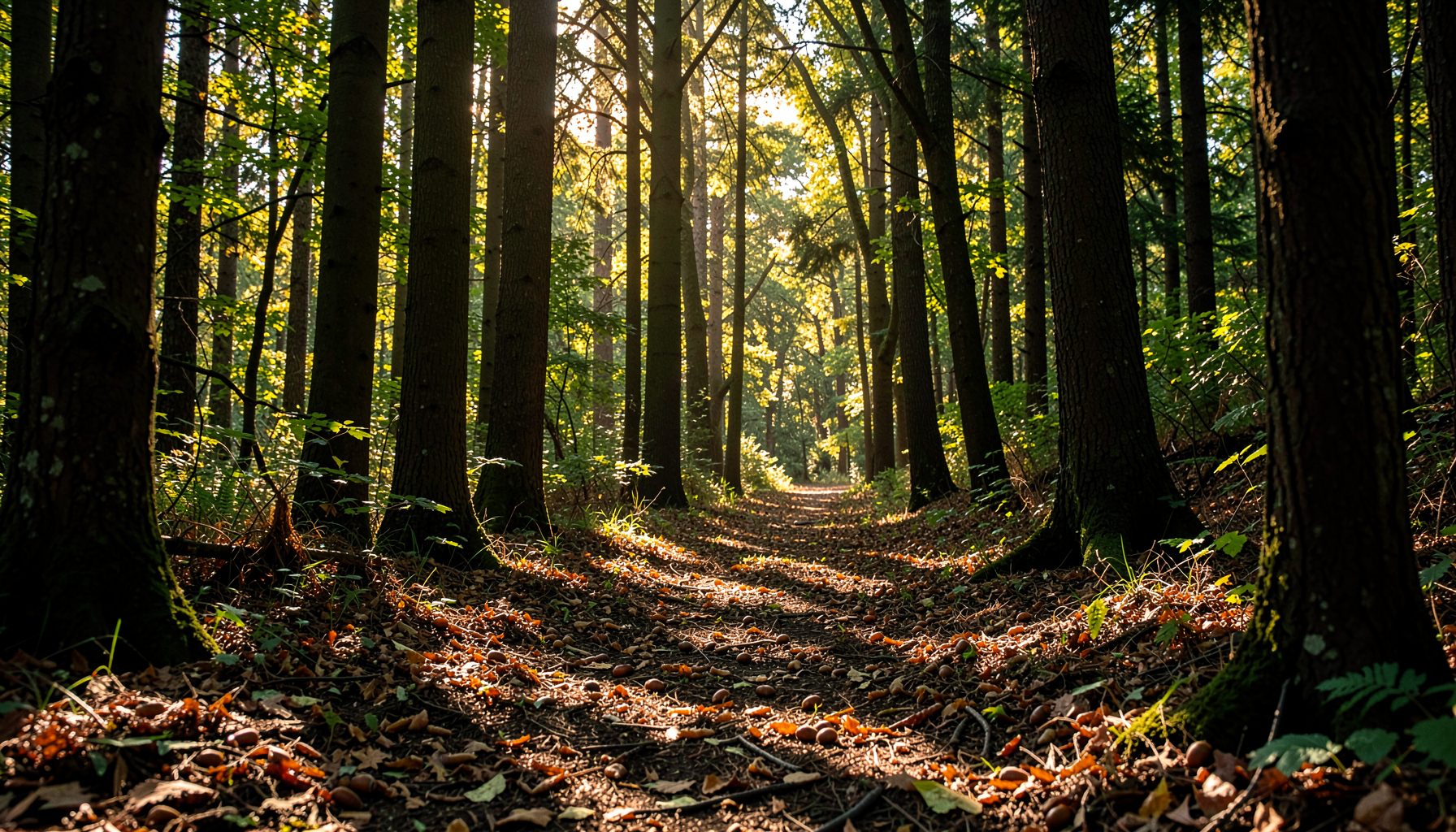
Why Oaks Matter in Streamside Reforestation
Along the Potomac River watershed, healthy forests begin with choices made long before a seedling reaches a restoration site. The tree species selected for streamside reforestation must tolerate changing moisture levels, stabilize soil, support wildlife, and grow into a durable forest community. Oaks consistently meet these needs, making them a central part of Growing Native’s seed collection and restoration work.
Streamside forests, also called riparian buffers, form a living boundary between land and water. Their roots hold riverbanks in place, their canopies cool streams, and their leaf litter feeds aquatic ecosystems. A diverse collection of native hardwoods strengthens these benefits, while oaks provide exceptional structure and ecological value within that mix.
Growing Native works with volunteers to collect acorns, walnuts, and other native seeds for state nurseries. Those seeds become locally appropriate seedlings that can support cleaner water, healthier habitat, and long-term forest stewardship throughout the watershed.
Oaks Build Strong Riparian Forests
Oaks are well suited to the varied conditions found beside streams. A single restoration site may include saturated soil near the water, seasonally wet ground farther upslope, and drier margins where the forest meets a road, farm field, or neighborhood. Different oak species occupy different positions across this gradient, allowing restoration planners to match trees to local conditions.
Their extensive root systems help anchor banks and reduce the movement of sediment during storms. As roots grow through the soil, they create channels that improve water infiltration and help stabilize the ground. This matters because excessive sediment can cover aquatic habitat, cloud the water, and interfere with the life cycles of fish, mussels, and aquatic insects.
Oaks also develop strong trunks and broad crowns that contribute to a layered forest over time. Once mature, they can become long-lived canopy trees, creating shade and shelter for other plants beneath them. A durable canopy is especially valuable along waterways, where cooler temperatures and stable moisture conditions support healthier aquatic ecosystems.
A Keystone Food Source For Wildlife
An oak’s ecological influence extends far beyond the area covered by its roots. Acorns are a dependable source of energy for deer, wild turkeys, squirrels, black bears, wood ducks, and many smaller mammals and birds. Because oaks produce large seeds rich in fats and carbohydrates, they help wildlife prepare for winter and support animals when other foods are scarce.
The timing and abundance of acorn production can vary from year to year, but a forest containing many oak trees is more likely to provide food across changing seasons. Different oak species also mature and release acorns at different times. This variation spreads food availability and reduces dependence on a single annual crop.
Oak trees support insects as well. Their leaves host numerous caterpillar species, which are essential food for nesting songbirds raising their young. In this way, an oak contributes to the food web in two distinct forms: its acorns feed larger wildlife, while its foliage supports insects that sustain birds and other insect-eating animals.
Native Genetics Begin With Careful Collection
Restoration success starts with collecting seeds from healthy, locally adapted trees. Volunteers learn to recognize native species, choose mature specimens, gather viable seeds, and handle them carefully so they remain suitable for nursery production. These steps protect the quality of the seed supply and help ensure that new trees are appropriate for the region.
Acorn collection requires attention to timing. Fresh, viable acorns are usually gathered soon after they fall, before they dry out or suffer extensive damage from insects, animals, or weather. Volunteers sort the harvest and follow guidance for storage and delivery. The collected seeds are then donated to state nurseries, where they can be grown into seedlings for future planting projects.
Tree identification is part of this process, particularly when species resemble one another. Volunteers can use a seasonal resource on identifying northern red oak to recognize important features when leaves are absent. Learning to identify bark, buds, twigs, and fallen leaves makes winter collection more accurate and builds practical forest knowledge.
How Oaks Compare With Other Native Trees
Oaks are not selected because every streamside site should become an oak woodland. Riparian restoration works best when it includes a diverse mix of trees and shrubs with different root patterns, growth rates, wildlife benefits, and moisture tolerances. Sycamores, river birches, maples, willows, dogwoods, viburnums, and walnuts can all contribute important functions.
The comparison below shows why oaks receive special attention while remaining part of a broader native planting strategy.
| Native tree or shrub | Primary streamside value | Typical contribution to restoration |
|---|---|---|
| Oaks | Acorns, long-lived canopy, deep structural roots | Wildlife food, bank stability, mature forest structure |
| Sycamore | Fast growth and broad canopy | Shade, large-tree habitat, floodplain recovery |
| River birch | Strong tolerance for wet soils | Bank reinforcement and streamside canopy |
| Willow | Rapid rooting and flexible stems | Early erosion control in moist areas |
| Dogwood | Fruit, flowers, and understory structure | Pollinator support and wildlife cover |
| Black walnut | High-value seeds and mature canopy | Food resources and species diversity |
| Viburnum | Dense shrub growth and berries | Low-bank stabilization and nesting habitat |
This mix illustrates an important principle: restoration is stronger when species complement one another. Oaks provide long-term structure, while faster-growing trees and shrubs can quickly occupy open ground, slow erosion, and create shelter during the early stages of forest development.
Long-Term Benefits For Water And Soil
A mature streamside forest acts as a natural filter. Rainfall moving across roads, lawns, fields, and construction areas can carry soil, nutrients, and pollutants toward nearby streams. Vegetation intercepts that runoff, and root systems help water soak into the ground before it reaches the channel. Oak-dominated portions of a diverse buffer contribute to this process through their long-lived roots and substantial canopy.
Leaves and woody debris also influence water quality. As leaves fall and decompose, they return organic matter to the soil and provide energy for insects and microorganisms. Some of that material enters the stream, where it supports the aquatic food web. Large fallen branches and tree roots can create pools, cover, and varied flow conditions for fish and other organisms.
The benefits increase as a restoration planting matures. Young seedlings may initially provide limited shade, but their roots begin stabilizing soil immediately. Over years and decades, the developing forest captures more rainfall, creates cooler stream conditions, and reduces the severity of erosion. Prioritizing oaks is therefore an investment in a watershed’s future rather than a short-term landscaping choice.
Planting For Diversity And Resilience
Oaks are valuable, but a healthy riparian forest should not depend on one genus. A varied planting is better prepared for pests, diseases, drought, floods, storms, and other pressures. Species diversity also creates a range of flowering periods, fruiting seasons, canopy heights, and shelter types for wildlife.
Restoration teams consider site history before planting. A former pasture may have compacted soil and heavy sunlight, while an urban stream corridor may face invasive plants, heat, and polluted runoff. The right combination of native trees and shrubs depends on soil texture, flood frequency, sunlight, available space, and nearby forest communities.
Follow-up care is equally important. Seedlings may need protection from deer, mowing, invasive vines, and competing vegetation during their first years. Monitoring helps identify gaps, mortality, and changing site conditions. Replanting where necessary keeps the buffer continuous, because breaks in streamside vegetation can reduce its ability to slow runoff and protect the channel.
Ways To Support Oak-Focused Restoration
Volunteers make the seed-to-forest process possible. Individuals can learn to identify native trees and collect acorns during the appropriate season. Families and schools can turn seed collection into a hands-on lesson about food webs, forest succession, and the connection between upland soil and stream health.
Community groups and workplaces can contribute through organized collection events, educational programs, or restoration support. Every activity strengthens public understanding of why native forests matter and helps build a larger network of people invested in the Potomac watershed.
Useful ways to participate include:
- Collect healthy native acorns and other approved seeds according to Growing Native guidance.
- Join a volunteer event focused on tree identification, seed gathering, or watershed education.
- Use native tree and shrub lessons in classrooms, youth programs, or community activities.
- Share information about riparian buffers and the role of forests in reducing erosion.
- Support long-term stewardship by helping monitor or care for restoration sites.
These actions connect seasonal volunteer work with lasting environmental results. A handful of viable acorns may eventually become a canopy tree that shades a stream, feeds wildlife, anchors a bank, and produces new acorns for another generation of restoration.
Oaks deserve priority in streamside reforestation because they combine longevity, wildlife value, root strength, and watershed benefits in one native tree group. When collected responsibly and planted alongside other species, they help create forests that are functional, diverse, and capable of enduring changing conditions.
Join Growing Native in caring for the Potomac River watershed by learning native tree identification, collecting seeds, and sharing the work with your family, school, community group, or workplace. Each volunteer effort helps turn local seeds into healthier forests and cleaner waterways.