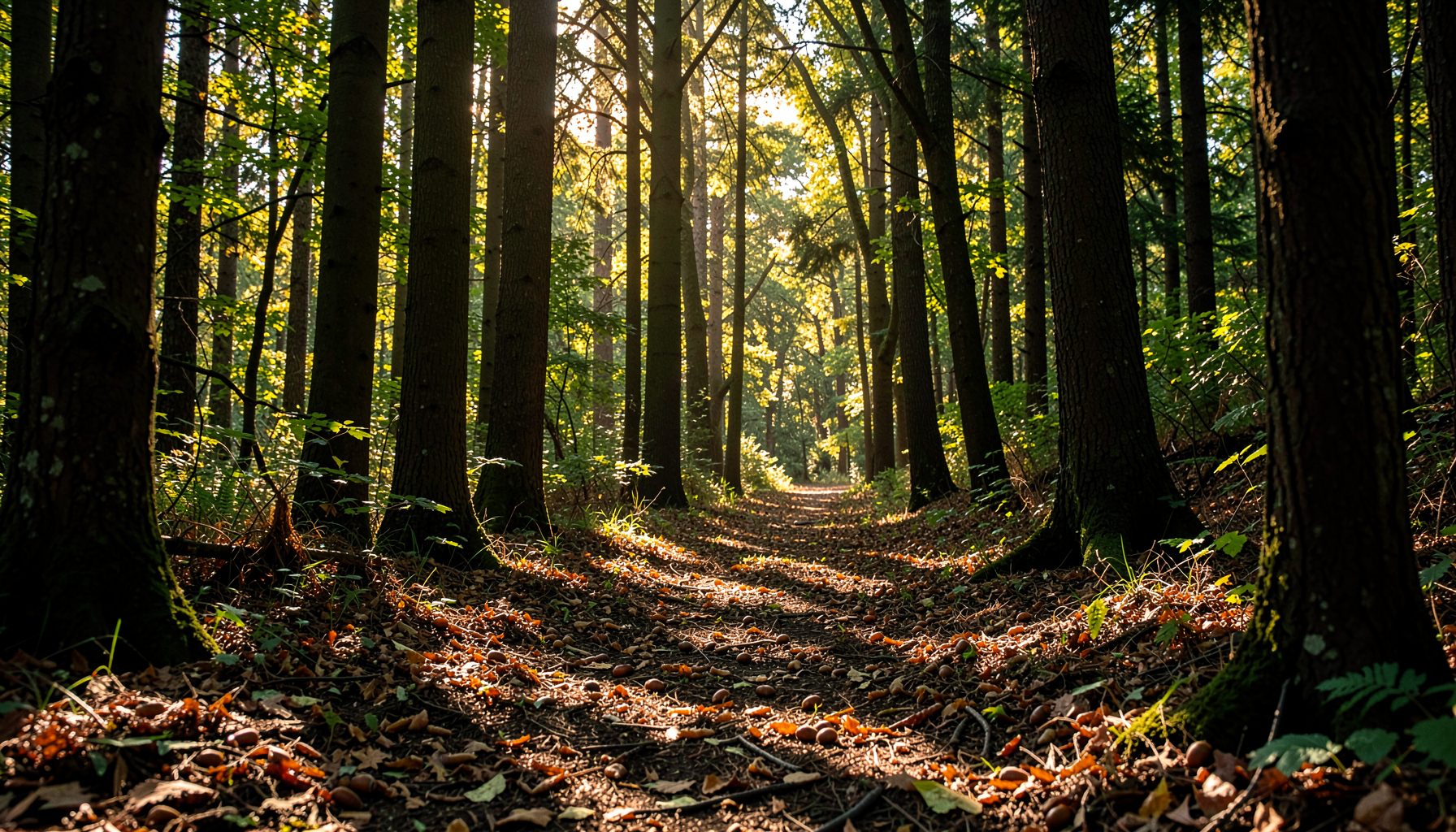
Why Native Dogwood Trees Are Disappearing and How Seeds Can Help
Once a defining flourish of spring across woodlands from Georgia to Maine, the flowering dogwood now slips quietly out of the landscape. Walk a forest track in Virginia during April and you may notice the absence before you notice anything else: no cloud of white and pink blossoms lighting the understorey, only the pale scars where these small trees once thrived. The same Cornus florida that inspired poets and shaded countless picnic tables is in retreat, and its cousins across the continent are following suit.
Australia does not host Cornus florida in the wild, yet gardeners from Hobart to Brisbane have long cherished imported dogwoods for their autumn colour and spring display. The country's own plants carrying the "native dogwood" label, including several Pomaderris and Cassinia species in the south-east, face parallel pressures: clearing for housing, fragmented habitat, and novel pathogens carried by trade and travel. Understanding why a beloved species fades on one continent can sharpen the response when a similar crisis unfolds on another, which is why programs dedicated to seed collection and propagation are drawing fresh attention from Sydney to the Potomac.
Growing Native sits at the centre of this effort within the Potomac River watershed, mobilising volunteers to gather hardwood and shrub seeds, including acorns and walnuts, that are grown into streamside seedlings by state nurseries. The approach is simple, replicable, and effective, and the lessons learned among the oaks and hickories translate surprisingly well to the dogwood's recovery.
The vanishing canopy of iconic bloomers
Flowering dogwoods anchor a unique layer of the eastern deciduous forest. They thrive in the dappled light beneath taller oaks and hickories, flowering before the canopy leafs out and fruiting in early autumn when migratory birds need every calorie they can find. A single mature dogwood can support dozens of pollinator species and feed autumn flocks of robins, tanagers, and waxwings during their southward journey.
That ecological role is now harder to fill. Surveys across the mid-Atlantic have documented steady declines in dogwood density over the past three decades, with some watersheds reporting losses exceeding forty percent. In Sydney's Royal Botanic Gardens, horticulturists have noted similar patterns in comparable understorey species, a reminder that even well-managed landscapes are not immune to systemic pressures.
The causes rarely act alone. Habitat fragmentation breaks the connectivity that allows seeds to travel and genetics to mix. Edge effects expose shallow-rooted dogwoods to wind and temperature swings they were never adapted to weather. As suburbs expand around Melbourne and Brisbane alike, the pressure on remaining green corridors intensifies in ways that echo the suburban sprawl encircling Washington, D.C.
Silent threats beneath the bark
The most publicised danger to dogwoods is dogwood anthracnose, a fungal disease caused by Discula destructiva. First identified in the late twentieth century, it has spread through Appalachian and Piedmont forests, leaving dead branches and thinning crowns in its wake. A second disease, powdery mildew, weakens trees already stressed by drought or poor soil, creating a slow squeeze that can take decades to play out.
Insects add their own toll. The dogwood borer tunnels into trunk tissue, and infestations have climbed as warming winters allow more larvae to survive. Across the Pacific, Australian growers watching myrtle rust devastate native Myrtaceae understand exactly how a single pathogen can rewrite the rules for an entire genus.
Climate change tightens the pressure further. Earlier springs coax dogwoods into bloom before their pollinators have emerged, while summer droughts stress saplings before their roots reach reliable moisture. In Perth, where urban heat islands regularly exceed forty degrees, researchers have documented how heat-loaded streets reduce seedling survival by half compared with parkland settings. The dogwoods of the Potomac face a comparable future unless intervention accelerates.
The quiet power of a single seed
When a tree is gone, its genetic legacy is not. Every acorn, every dogwood drupe carries within it a library of adaptations honed across centuries. Collecting those seeds, cataloguing them, and growing them out in nurseries is one of the most cost-effective tools conservationists have, and it scales beautifully when volunteers join in.
Genetic diversity matters as much as sheer numbers. Seeds gathered from a single mother tree produce offspring with limited resilience, while a thoughtful mix from many parents builds a population that can weather pests, drought, and disease. Australian seed banks run by groups like the Australian Seed Bank Partnership operate on the same principle, banking eucalypt and acacia collections against an uncertain future.
Timing also matters. Dogwood seeds require a period of cold stratification before they will germinate, a rhythm that volunteer collectors must respect. Walnuts drop in autumn and need similar handling. Programmes such as Growing Native teach these nuances so that well-meaning effort does not go to waste, and they pass that knowledge on through school groups and weekend gatherings alike.
Communities rolling up their sleeves
Restoration at scale happens one gloved hand at a time. In the Potomac watershed, families, school classes, and corporate teams fan out each autumn to gather seeds from designated sites, then return them to collection hubs where foresters assess viability and arrange dispatch to state nurseries. The seedlings raised from these donations return to the watershed within a year or two, planted along eroding streambanks where their roots will eventually stabilise soil and shade the water.
Australian communities have been building parallel movements for decades. Melbourne's Yarra Riverkeepers run volunteer planting days along the river's upper reaches, and Brisbane's council-supported habitat programs enlist schoolchildren in propagation work. Tasmania's Landcare networks focus on cool-climate species, and the lessons carry easily across hemispheres.
Schools are particularly powerful partners. A well-organised field trip turns a nature walk into a citizen-science moment, and a school field trip guide helps teachers link the activity to maths, biology, and geography outcomes. Children who collect a seed this term may return to the same site in five years to watch the seedling they helped raise shade the stream.
From acorn to canopy in your own patch
Bringing dogwoods, or their functional equivalents, back into the landscape does not require a professional forester. It requires curiosity, a little patience, and a willingness to learn from the ground up. Identifying a suitable parent tree, learning when its fruit ripens, and storing seeds correctly are skills anyone can develop with practice.
Backyards, school grounds, and community gardens all have a role. Even a single dogwood planted beside a rain garden in suburban Canberra will feed pollinators, slow runoff, and connect a neighbourhood to a wider web of life. Multiply that by hundreds of households and the cumulative effect begins to rival what a single program can achieve alone.
For those ready to dive deeper, Growing Native's main site offers resources on tree identification, watershed ecology, and volunteer scheduling. The Potomac may be half a world away, but the seeds gathered there and the seedlings grown from them travel in the form of knowledge that anyone can plant close to home.
Comparing seed collection targets
| Species | Seed type | Collection season | Stratification needed | Best planting use |
|---|---|---|---|---|
| Flowering dogwood (Cornus florida) | Drupe | Late summer to early autumn | 90–120 days cold | Understorey, streamside edges |
| Black walnut (Juglans nigra) | Nut | Autumn | 60–120 days cold | Riparian buffers, erosion control |
| White oak (Quercus alba) | Acorn | Early to mid autumn | Immediate sowing or short cold | Upland forest restoration |
| Hazel alder (Alnus serrulata) | Small catkin | Late summer | 30–60 days cool, moist | Wetland edges, nitrogen fixing |
| Native dogwood (Pomaderris, Australia) | Capsule with tiny seeds | Late spring | Variable, often smoke or heat cue | Bushfire recovery, gullies |
Practical steps for community groups
- Partner with a local landcare, catchment council, or equivalent body to identify priority sites before the first seed is gathered.
- Time collection to match each species' ripening window, and label every batch with location, date, and parent tree count.
- Store seeds in breathable bags in a cool, moist environment, and avoid letting them dry out or heat up in a car boot.
- Arrange cold stratification in a household fridge rather than a freezer, checking moisture levels every fortnight.
- Document everything with photos and notes, creating a record that future volunteers and scientists can build upon.
- Connect with schools, workplaces, and cultural groups to broaden the volunteer base and share the workload across seasons.
- Return to the same site each year, both to monitor planted seedlings and to refine collection practices for the next generation.
If a flowering dogwood once brightened a favourite woodland walk, that brightness can return. Volunteer with a seed collection drive, organise a school outing, or plant a native bloomer in a backyard and watch what arrives to visit. The trees that vanish today can return tomorrow, carried in the hands of people who decided that a missing canopy was one absence worth correcting.