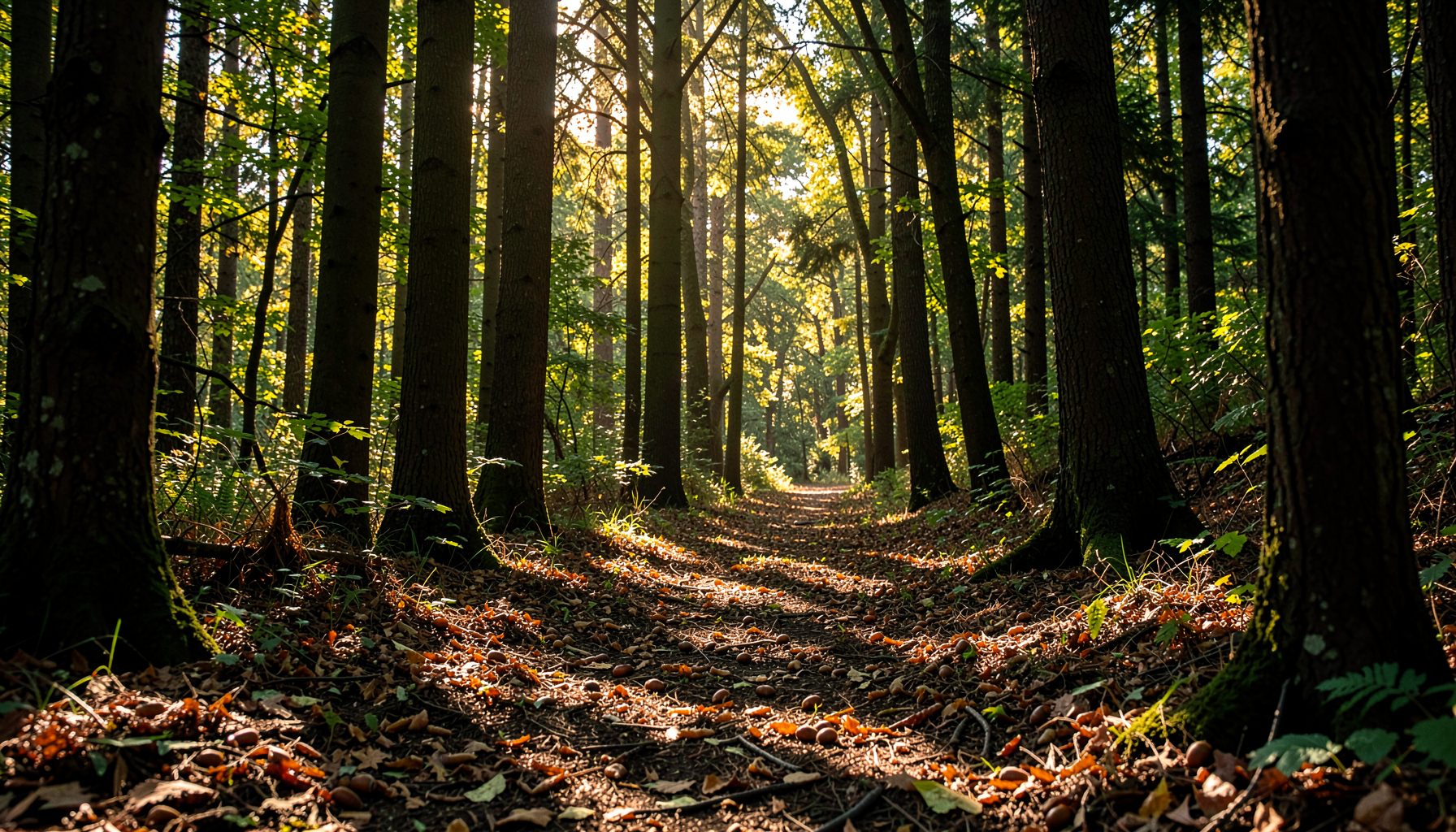
How Fallen Leaves Uncover Hidden Seed Piles Under Trees
A crisp carpet of autumn leaves often looks like nature's final sweep of the year, yet that very blanket of yellows and browns works as a living archive of where seeds lie buried. For bushland regenerators, volunteers, and curious walkers alike, learning to read the signals in leaf litter can reveal treasures hiding in plain sight. In backyards from Melbourne to the Blue Mountains, and in conservation sites across the Potomac watershed, the same quiet logic applies: where leaves gather thickly, seeds often follow.
Leaf fall is not simply the end of a growing season. It is a seasonal reshuffling that protects, hides, and occasionally broadcasts the location of the next generation of trees. Squirrels, birds, beetles, and wind currents all use the cover of fallen foliage as both storage facility and transport. Understanding why leaves lead you to seed caches transforms an ordinary autumn walk into a guided treasure hunt through the forest floor.
The forest floor as a natural seed vault
When deciduous trees drop their leaves in autumn, the resulting layer of organic debris does far more than return nutrients to the soil. It creates a microclimate of moisture and shade that seeds find irresistible for overwintering. Acorns dropped weeks earlier often become invisible once a heavy leaf fall settles over them, yet the very weight of that cover signals their presence to anyone who learns to look.
Decomposing foliage releases tannins and mild acids that slow fungal growth on dormant seeds, buying them extra months of viability. The leaves also trap heat close to the ground during cold nights, creating a buffer that prevents freeze-thaw cycles from rupturing seed coats. Beneath a thick oak or walnut canopy in late autumn, the soil stays several degrees warmer than bare ground just metres away. Animals that gather seeds rely on this stable pocket to keep their stores from rotting before spring.
In Australian bushland, a similar dynamic plays out beneath eucalyptus and acacia canopies, though the litter is finer and the seed casters are different. Local wattle species drop seeds that are quickly buried by currawongs and ants, while eucalypt capsules hold their payload high until fire or heat releases them. Even so, the principle remains constant: dense leaf cover means the ground beneath is worth investigating.
Reading clues in the leaf patterns
Not all leaf piles are equal, and experienced seed collectors learn to distinguish the random scatter of windblown debris from the tell-tale signs of a deliberate stash. A patch of disturbed leaves with a slight mounding shape often marks where an animal has pushed aside fresh litter to access older cached seeds. The edges of these spots tend to be sharper than natural wind drifts, and the leaves themselves may look freshly turned, revealing the paler underside of recently buried foliage.
Looking upward often confirms the suspicion. A mature oak, hickory, or walnut within throwing distance is usually the source. Seed-caching animals rarely travel far from productive trees, so a hidden pile of acorns is almost certainly paying tribute to the nearest canopy giant. Scanning the limbs for late-hanging fruit or bud clusters helps narrow down which species deposited the cache.
Australian readers walking the perimeter of a park in suburban Brisbane or the outer suburbs of Sydney can apply the same logic to local natives. Spotted gums and brush box trees drop small, dry capsules and winged seeds that ants and parrots carry short distances. A patch of disturbed leaf litter near the base of these trees often reveals buried banksia or hoptree seeds waiting out the dry season.
Wildlife partners in the hiding game
Squirrels and jays are the classic seed hiders in North American forests, but Australia has its own cast of characters performing the same quiet labour. Antechinus and small marsupials scratch through leaf litter for insects, inadvertently reburying fallen seeds in the process. Crimson rosellas and sulphur-crested cockatoos strip seed pods and drop fragments that quickly disappear into the duff layer beneath their perches.
Insects play a more active role than most people realise. Certain beetle species drag seeds underground for their larvae to feed upon, and if the larvae die or move on, the seed is left in a perfectly prepared germination bed. Ants collect elaiosome-bearing seeds from local wattles and bury them in shallow chambers, a behaviour so reliable that bush regenerators plant entire sites based on ant nest locations.
For those curious about the science behind how seeds survive buried under leaf litter for months at a time, winter seed stratification provides a detailed look at the cold period these caches endure. The same principles guide the volunteers who collect native seed for nursery propagation across the Potomac watershed and beyond.
Joining a volunteer effort to restore native forests
Translating this knowledge into conservation action is easier than most people think. Community groups across the United States, and equivalents such as Landcare networks throughout regional Australia, run seasonal seed-collecting days where families and schools gather nuts and pods from productive trees. The seeds are then donated to nurseries that grow them into seedlings for streamside planting and erosion control projects.
Growing Native organises much of this work around the Potomac watershed, coordinating volunteers who collect acorns and walnuts from local hardwoods each autumn. Participants learn seed identification, proper collection timing, and storage techniques during hands-on sessions. The program's reach extends well beyond Washington, D.C., since many of its educational resources apply to temperate forests globally, including the eucalyptus woodlands of Victoria and the temperate rainforests of Tasmania.
Those wanting to take part can register for sessions through the program's website, where families, school groups, and corporate teams find session dates suited to their schedules. Volunteers often describe their first seed hunt as a revelation, returning home with pockets full of acorns and a deeper appreciation for the forests just beyond their doorsteps.
Timing the search through the seasons
Finding buried seeds follows a rhythm that rewards patience and observation. In the Northern Hemisphere, the best window for uncovering caches runs from late October through early December, after the bulk of leaf fall has settled but before winter snow covers the ground. By midwinter, repeated freezing and thawing has often shifted or disturbed caches, making detection harder.
In Australia, where autumn arrives in March and winter rarely brings snow, the equivalent window shifts to April through June. Cooler temperatures and steady rainfall mark the period when leaf litter accumulates most thickly beneath deciduous ornamentals in southern cities, and when wattles and eucalyptus begin releasing their seeds in earnest. Bush regenerators in the Adelaide Hills and the Dandenong Ranges typically time their collection work for early morning sessions, when damp leaves hold their shape and footprints reveal the softest spots to investigate.
Caches that survive through to early spring often begin germinating underground, and disturbing them at that point can harm developing shoots. The sweet spot lies in the weeks following peak leaf drop, when seeds are fully formed but still dormant, and the leaf blanket is thick enough to hide them but not yet rotted into anonymity.
Comparing seed-hiding strategies by species
Different trees and their seed-dispersal partners use leaf litter in subtly different ways. The table below summarises how several common species compare.
| Tree species | Typical seed type | Primary hiding mechanism | Best time to search |
|---|---|---|---|
| White oak | Acorn | Squirrel burial under leaf mounds | Late October to early November |
| Black walnut | Nut in husk | Rodent caching in shallow soil | Early to mid November |
| Hickory | Thick-shelled nut | Jay and squirrel scatter burial | Mid to late October |
| Eucalyptus | Capsule with winged seeds | Gravity drop, wind dispersal into litter | Late summer to early autumn (Southern Hemisphere) |
| Acacia (wattle) | Hard-coated seed | Ant burial in shallow chambers | April through June in Australia |
Practical steps for successful seed hunting
- Walk slowly beneath mature trees during peak leaf fall, scanning for patches where leaves have been pushed aside rather than blown flat.
- Look for slight mounds or depressions in the litter, then brush aside the top layer gently to reveal what lies beneath.
- Check under overhanging branches first, since seeds rarely travel far from productive canopies.
- Bring a small soft brush and a paper bag to collect without damaging the seed coat, which affects germination success.
- Avoid searching after heavy rain, when wet leaves clump together and obscure buried material.
- Record the location and species of any cache you find, since this information supports larger restoration mapping projects.
Every handful of collected seed eventually becomes a seedling planted along a stream bank or beside a country road, working quietly for decades to stabilise soil and filter runoff. The journey from a hidden pile of acorns under autumn leaves to a thriving streamside grove is long, but each step begins with someone bending down to look. Take the first step this season, gather your family or team, and join a community of volunteers proving that small autumn gatherings can restore whole watersheds.