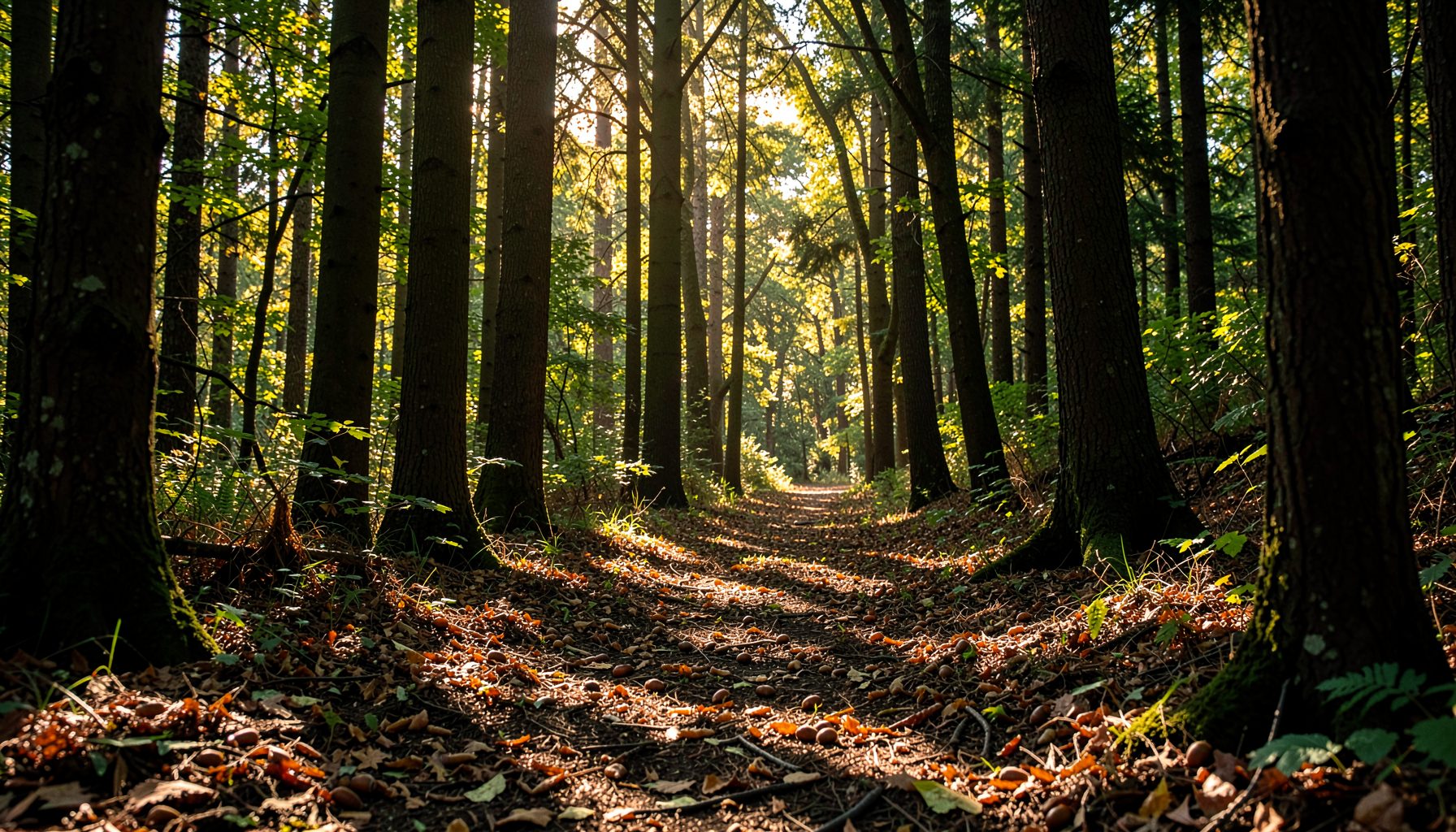
Deep-rooted trees offer a stronger path through drought
Drought resilience begins long before a young tree faces its first dry summer. It starts with the seeds chosen for propagation, the parent trees that produced them, and the conditions those trees have already survived. When seeds come from healthy, deep-rooted trees, they may carry useful adaptations for finding moisture, maintaining growth during dry periods, and recovering after heat and water stress. Learn more about Why Red Maples Thrive In Wet Areas And How To Collect Their Seeds 66ae.
Root depth is only one part of the picture. Soil type, rainfall patterns, tree age, local genetics, mycorrhizal fungi and early care all influence whether a seedling becomes drought tolerant. Still, parent trees growing successfully through seasonal dryness provide valuable clues for restoration projects, especially when forests and waterways are being replanted under a changing climate.
For Australian landholders, councils, schools and community groups, the idea has immediate relevance. Perth’s sandy soils, Melbourne’s increasingly hot summers, Brisbane’s intense rainfall followed by dry spells and the water restrictions experienced in many regions all place pressure on young trees. Selecting suitable seed can make restoration plantings more durable and reduce losses during establishment.
Growing Native applies a similar conservation principle in the Potomac River watershed. Volunteers collect native hardwood and shrub seeds, including acorns and walnuts, which are supplied to state nurseries for growing into streamside seedlings. The work connects careful seed collection with cleaner water, erosion control and long-term forest recovery.
How deep roots help trees withstand dry conditions
A deep-rooted tree can access moisture stored below the rapidly drying surface layer. After several rainless weeks, the topsoil may be too dry to support active growth, while deeper soil still holds water. Roots that explore these lower layers help a tree keep leaves hydrated and continue essential functions for longer.
Deep roots can also moderate temperature stress. A tree with access to deeper moisture is better placed to regulate leaf temperature through transpiration, provided it does not lose water faster than the soil can supply it. This can protect growing tissues during heatwaves and reduce the risk of premature leaf drop.
The benefit is especially important beside streams. Riparian trees with extensive root systems can draw on moist alluvial soils while binding the banks together. Their roots slow erosion, create habitat and help filter sediment before it reaches the waterway. The restoration value of these species is explained in this guide to stabilising stream banks.
Root architecture varies widely. Some species develop a strong central root in well-drained soil, while others form broad, deep networks. Compacted ground, shallow bedrock, prolonged flooding and competition from pasture grasses can all limit root development. A seed from a deep-rooted parent is useful genetic material, but it still needs a site where its roots can grow.
Why parent trees matter when collecting seed
Trees that remain vigorous through drought may possess heritable traits linked to water-use efficiency, root growth, leaf structure or the timing of seasonal growth. These traits are not guaranteed to appear in every seedling, because offspring inherit a mixture of genes. Collecting from several healthy parent trees increases genetic diversity and improves the chance of producing a population suited to future conditions.
The parent tree’s setting provides important information. A mature tree thriving on a dry slope, in sandy soil or at the edge of a seasonally wet channel may have different qualities from one growing in consistently damp, fertile ground. Recording the collection location, soil conditions and surrounding vegetation helps nurseries match the seed to an appropriate restoration site.
Seed collectors should choose mature trees with sound crowns, strong form and no obvious signs of serious disease. A single impressive tree should not supply an entire project. Gathering modest quantities from many individuals reduces genetic bottlenecks and supports a more adaptable seedling population.
Timing also affects seed quality. Acorns, walnuts, berries and pods need to be collected when mature, then handled according to the species’ storage requirements. Damaged, mouldy or insect-affected material should be separated. Good labels should include the species, date, location and parent tree or collection group, allowing nursery staff to maintain provenance.
For Australian projects, seed collection must follow local rules rather than relying on informal access. Collecting in national parks, council reserves or roadside vegetation may require permission, and state legislation can protect native plants or restrict the removal of plant material. In New South Wales, for example, the Biodiversity Conservation Act 2016 forms part of the framework governing native biodiversity. Private landholders should also obtain clear permission before collecting.
Building drought resilience through local provenance
Local provenance means using seed from a region with environmental conditions similar to the planting site. It does not always mean collecting from the nearest tree. A nearby population may come from a sheltered gully, irrigated garden or wetter soil and perform poorly on an exposed ridge. Comparing elevation, rainfall, soil texture and drainage can produce a more useful match.
Climate change complicates the idea of a strictly local seed source. A population suited to today’s conditions may face much hotter or drier seasons during the life of a restored forest. Restoration practitioners may therefore consider “climate-adjusted provenance”, using genetically diverse seed from nearby areas that already experience conditions expected at the planting site.
This approach needs care. Moving seed too far can disrupt local adaptation, flowering times or relationships with insects and fungi. It can also introduce pests or diseases. A practical strategy is to combine local material with carefully selected nearby sources, guided by ecologists, nurseries and regional seed networks.
Australian native plant nurseries increasingly promote provenance information because customers want plants suited to local gardens, habitat corridors and water-efficient landscaping. In cities such as Adelaide and Perth, demand for low-water native species reflects household water costs, summer heat and restrictions on garden irrigation. Healthy seed supply helps nurseries meet that market without treating drought tolerance as a simple label.
Seed collection can support genetic diversity at the landscape scale. When volunteers gather from multiple trees across a healthy population, they help preserve options for future restoration. Those options become valuable after bushfires, prolonged drought, floods or disease outbreaks have reduced the number of mature seed-producing trees.
Connecting drought-ready trees with waterways
Trees beside creeks and rivers face a difficult combination of stresses. Their roots may encounter saturated soil during floods, then dry conditions when rainfall declines. Species selected for these settings need to tolerate fluctuating moisture, establish in disturbed ground and hold soil together during high flows.
Deep-rooted riparian vegetation contributes to watershed health in several ways. Roots reinforce banks, leaf litter supports aquatic food webs and shade can lower water temperatures. Vegetation also intercepts nutrients and sediment moving across the land. These services make a well-chosen seedling valuable beyond its own survival.
The relationship between roots and water is not always straightforward. A tree planted directly in a frequently flooded channel may suffer from oxygen-poor soil, while a species adapted to upland dryness may fail on a wet bank. Restoration plans should identify the moisture gradient from channel edge to upper bank, then place species where their ecological requirements fit.
The same principle applies to Australian urban waterways. Creeks passing through Sydney, Canberra or outer Melbourne often experience hard surfaces, rapid stormwater flows and long dry intervals. Planting locally appropriate native trees and shrubs along these corridors can improve bank stability, habitat and shade, provided the species are matched to flood frequency and soil conditions.
Deep-rooted seedlings still need support during their first years. Mulch can reduce evaporation and weed competition, guards can limit browsing, and carefully timed watering can help roots extend downward rather than remaining concentrated at the surface. Watering deeply and less frequently, where local restrictions permit, encourages stronger establishment than small daily applications.
Making seed collection a community conservation practice
Seed collection offers a practical entry point into forest restoration. Families can learn to identify trees, schools can record seasonal changes and workplace groups can contribute to a shared conservation effort. The activity also teaches that a forest is built through many stages: flowering, seed development, collection, nursery propagation, planting and years of care.
Volunteers should collect ethically. Leave plenty of seed for natural regeneration and wildlife, avoid damaging branches or bark, and never remove material from protected places without authorisation. Clean equipment between sites to reduce the spread of pathogens. Gloves, eye protection and safe lifting practices are sensible when gathering heavy nuts or working around fallen branches.
A simple collection record can become an ecological dataset. Note rainfall before collection, the condition of the parent tree, the surrounding plant community and signs of drought stress. Over time, these observations can help identify which populations produce viable seed during difficult seasons. They also give nurseries and restoration managers better information than a species name alone.
Growing Native’s volunteer model shows how individual collections can contribute to a regional restoration system. Acorns and walnuts gathered by community members become part of nursery production for streamside planting across the Potomac watershed. Australian groups can apply the same spirit through local catchment organisations, Landcare networks, schools, councils and approved native seed programs.
Climate resilience is strengthened when communities protect mature seed trees as carefully as they plant new ones. Mature trees store carbon, shelter wildlife and provide the genetic material needed for the next generation. Collecting a portion of their seed responsibly turns existing forests into partners in future restoration.
Take part in responsible native seed collection through Growing Native, learn how to identify suitable parent trees, and support restoration efforts that connect healthy forests with healthy waterways. Every carefully labelled seed can contribute to a more diverse, better-rooted and more drought-ready landscape.