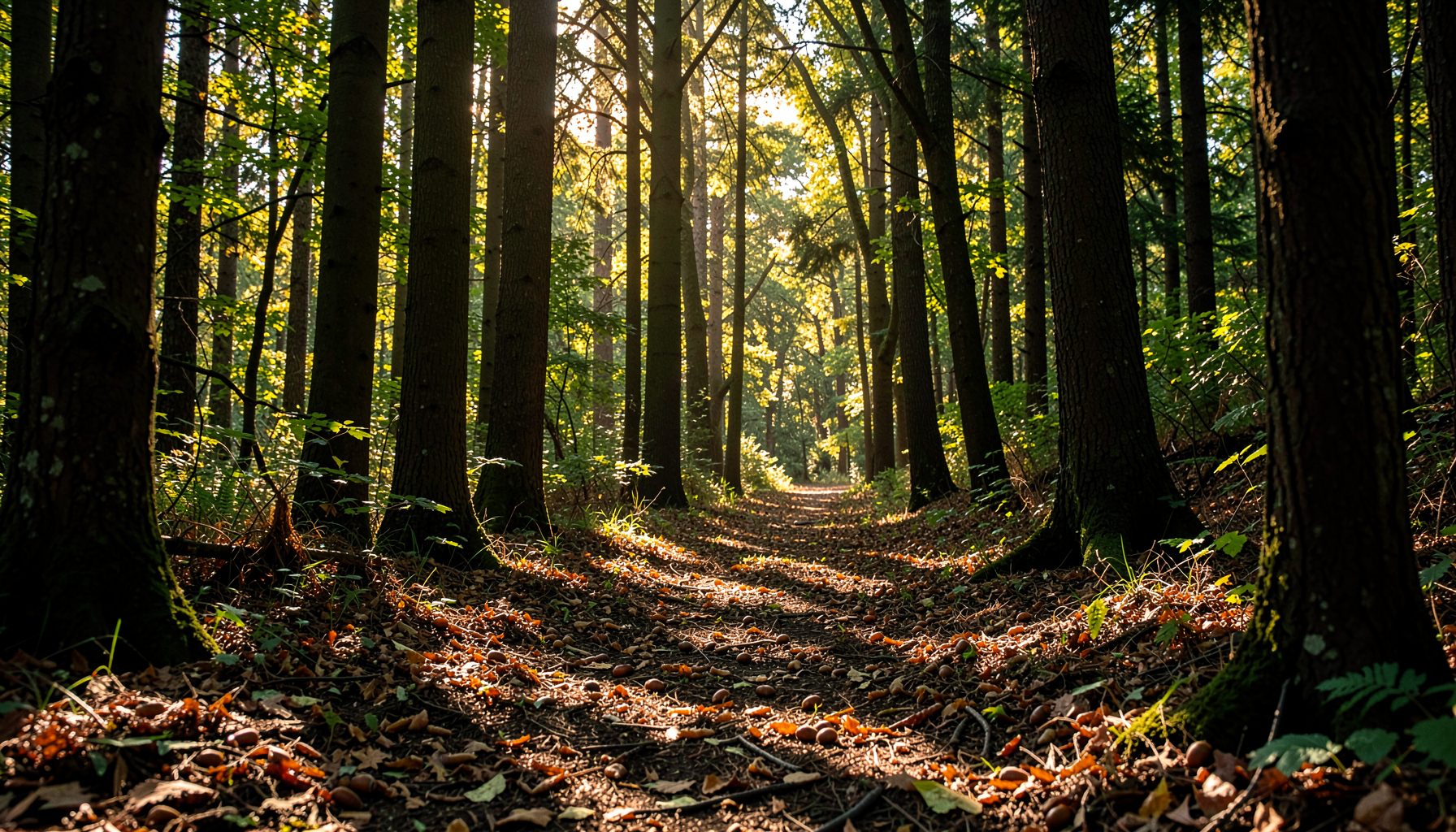
How Early-Successional Seeds Give Young Forests a Strong Start
A new forest rarely begins with towering trees. It starts with plants that can tolerate exposed soil, changing temperatures, strong sunlight and irregular moisture. These early-successional species stabilise a site, build organic matter and create the conditions that allow slower-growing woodland trees to establish later.
Collecting seed from these pioneers can therefore accelerate natural regeneration. Acacias, tea-trees, paperbarks, she-oaks and other hardy native plants often occupy disturbed edges, cleared land and recovering creek banks. Their seed can help restore the first layer of vegetation needed for a diverse forest community.
The principle applies across continents, although each region requires local knowledge. In Australia, a seed collector might work beside a Melbourne creek, on a Sydney bushland edge or around a Brisbane wetland. In the Potomac River watershed, volunteers gather acorns, walnuts and native shrub seed for state nurseries that raise streamside seedlings.
Growing Native connects community volunteers with this wider restoration process. Its work shows how a modest activity—identifying, collecting and donating viable seed—can support cleaner waterways, erosion control and long-term stewardship.
Early Succession Creates the First Layer of Recovery
Early-successional plants are adapted to colonise places where the original vegetation has been removed or disturbed. They often grow rapidly, produce abundant seed and cope with conditions that would challenge young canopy trees. Their roots bind loose soil, while stems and leaves reduce the force of rain striking bare ground.
This first vegetation layer can change a harsh site within a few seasons. Shade lowers soil temperatures, leaf litter helps retain moisture and decaying plant material feeds fungi and microorganisms. As the ground becomes more stable, seedlings of later-successional trees gain a better chance of surviving drought, grazing and competition from weeds.
The benefits extend beyond the planting site. Vegetation along a watercourse slows runoff and traps sediment before it enters a creek. It also provides shelter for insects, frogs and birds, creating ecological links between isolated patches of habitat. Seed collection aimed at early recovery is therefore a practical form of watershed protection.
In Australia, this pattern is visible after fire, flood, construction or intensive land clearing. Wattles may appear quickly on open ground, while paperbarks and tea-trees can help re-establish wet margins. The right species still depends on soil, rainfall, fire history and the original plant community.
Native Seed Supports Local Adaptation
A seed is more than a packet of genetic potential. It carries adaptations shaped by local rainfall, temperature, soils, pests and seasonal cycles. Seed gathered from a nearby healthy population is often better matched to the conditions of the restoration site than material sourced from a distant region.
Local provenance does not mean collecting from a single isolated tree year after year. A resilient seed supply usually represents many parent plants across an appropriate local area. This maintains genetic diversity and reduces the risk of producing seedlings that are poorly adapted or too closely related.
Good collection records are essential. Volunteers can note the species, date, location, habitat type, parent population and approximate quantity gathered. Photographs and basic weather observations can also help nurseries assess seed quality and plan germination work.
Australian restoration groups must be especially careful about moving seed between ecological regions. A plant suited to the wet forests of eastern Victoria may struggle in Perth’s dry summers, while a species from tropical Queensland may be unsuitable for a cool inland site. Landowner consent, collection permits and state biosecurity rules should be checked before any gathering begins.
Seeds Help Rebuild Streamside Forests
Riparian zones are among the most valuable targets for early restoration. Vegetation beside rivers and creeks filters runoff, shades water, reinforces banks and supplies fallen leaves that support aquatic food webs. When these strips are cleared, water temperatures rise and erosion can carry large sediment loads downstream.
Early-successional shrubs and small trees are well suited to the first stages of riparian recovery. Their dense root systems hold soil while their branches slow wind and shelter later plantings. Once established, they can create a cooler, more humid microclimate where larger canopy species are more likely to survive.
The same logic applies to urban waterways. Around Sydney’s increasingly developed catchments, narrow vegetated corridors can connect remnant bushland and reduce pressure on creeks after intense rain. In Brisbane, revegetated drainage lines and wetlands can help absorb stormwater while providing habitat between larger reserves.
Healthy streamside planting requires more than scattering seed. Nursery propagation, weed control, watering during establishment and protection from browsing animals may all be needed. Collecting appropriate seed is the first link in a chain that ends with a living, functioning forest edge.
Community Collection Turns Restoration Into Stewardship
Seed collecting gives people a direct role in ecological recovery. Families can learn to distinguish native trees from weeds, schools can connect fieldwork with science lessons, and workplace groups can contribute to a measurable conservation project. The activity also encourages participants to observe seasonal changes rather than treating nature as background scenery.
For schools planning a practical day outdoors, field trip guidance can help organisers prepare students, equipment and collection rules. Clear instructions are important because responsible gathering means taking only what is needed, leaving enough for natural regeneration and avoiding damage to parent plants.
Everyday Australian habits can support this kind of awareness. People walking dogs along a creek in Adelaide, visiting a weekend market in Melbourne or tending a backyard garden in Canberra may notice when pods, capsules or nuts are ready. Local native plant nurseries and community landcare groups often provide useful advice about seasonal timing and suitable species.
Collection events can also strengthen social ties. Volunteers share identification skills, compare observations and see how individual efforts contribute to a nursery order or revegetation project. That sense of visible progress helps turn occasional participation into continuing care for local habitat.
Careful Collection Protects Wild Populations
Seed collection must be conservative. Removing too much from one plant or one patch can reduce natural regeneration and deprive birds, insects and mammals of food. A sound approach spreads collection across many healthy individuals and leaves most available seed in place.
Timing matters as well. Some pods need to mature fully on the plant before they are gathered, while fleshy fruits may require prompt handling to prevent mould. Seeds should be kept cool and dry when appropriate, labelled accurately and delivered to the receiving nursery without unnecessary delay.
Collectors should avoid threatened plants, newly disturbed sites and areas exposed to chemical treatment or contamination. They should never gather on private or restricted land without permission. In Australia, requirements vary by jurisdiction: collecting on public land may require approval, and protected flora can be covered by state or territory conservation legislation.
The Commonwealth Environment Protection and Biodiversity Conservation Act can apply to nationally listed species and places, while state laws such as Victoria’s Flora and Fauna Guarantee framework and New South Wales biodiversity regulations may affect local activities. These laws are not obstacles to restoration; they help ensure that conservation work does not harm the populations it aims to support.
Nurseries Turn Small Collections Into Forests
A donated seed collection becomes valuable when a nursery can clean, test and propagate it successfully. Nurseries may use scarification, soaking, smoke treatment, cold storage or other methods suited to particular species. Accurate labels allow the resulting seedlings to retain their provenance and intended restoration purpose.
State nurseries, councils, community nurseries and specialist native plant businesses all play a role in the wider restoration market. Demand for indigenous plants is growing as councils invest in urban cooling, creek rehabilitation, biodiversity offsets and climate-resilient streetscapes. In Australia, buyers increasingly look for plants suited to local conditions rather than generic ornamentals.
This market creates an important connection between volunteering and practical outcomes. A handful of well-documented seed can eventually become hundreds of seedlings, while a reliable collection program gives growers confidence about supply and origin. The result is a pipeline from remnant forest, to nursery, to degraded creek bank or public reserve.
Growing Native describes this connection through its conservation work, which brings volunteers together to collect native hardwood and shrub seed for restoration in the Potomac watershed. The model is adaptable: local Australian groups can apply the same principles while following their own ecological knowledge, permits and seasonal calendars.
Collecting early-successional seed is a small action with a long biological reach. It helps secure the plants that protect soil, improve water quality and prepare difficult sites for a richer forest community. Individuals, schools, families and workplaces can support this work by joining authorised collection days, learning local species and recording every batch carefully. Each responsibly gathered seed is a practical investment in forests that will shelter wildlife, strengthen waterways and serve communities for decades.