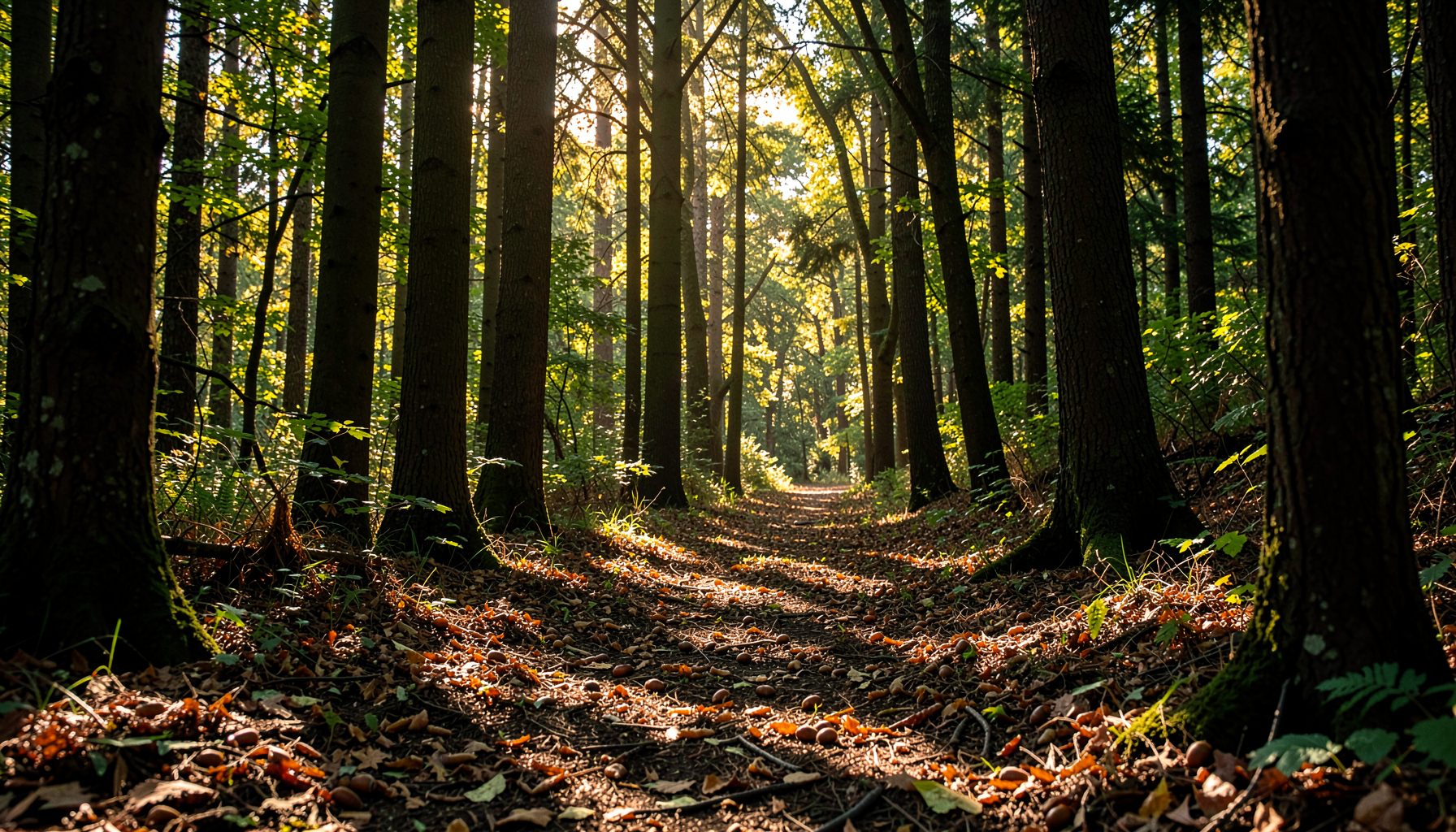
Collecting Seeds from Champion Trees Keeps Superior Forest Genes Alive
Walk through any old-growth patch on a misty autumn morning and you'll notice certain trees towering above the rest, trunks thick and canopies wide. These individuals are often called champion trees, and foresters have long recognised that their size and vigour are not random. Behind every magnificent specimen lies a genetic blueprint shaped by favourable mutations, strong roots, and an ability to convert sunlight and soil into wood with remarkable efficiency. Harvesting seeds from these outstanding parents is one of the most powerful, low-cost ways to pass winning traits to the next generation of forests.
In Australia, Landcare volunteers from the Dandenong Ranges to the hinterland of Brisbane have spent decades pulling weeds and planting tube-stock, much of it from generic nursery stock of unknown parentage. Champion tree seed collection shifts that approach, linking restoration work directly to the strongest, most adapted genetic stock available. It is a quiet revolution that ties community bushwalks to cutting-edge conservation genetics.
The principle has guided professional foresters for more than a century, but rarely with the urgency we see today. Climate shifts, prolonged droughts, and bushfire events are reshaping conditions long after the planters are gone. Seeds gathered from the toughest, most productive trees carry the genetic toolkit to handle those future stresses, whether beside a creek in the Yarra catchment or along a rural road outside Hobart.
How a Tree Earns the Champion Title
A champion tree is not simply the tallest or widest specimen in a stand, although size often catches the eye. Foresters, botanists, and community groups nominate individuals based on a points system that measures trunk circumference, height, and crown spread. Similar national registers exist in Australia through the National Trust and state-level big-tree registers.
Beyond measurements, a champion tree demonstrates proven survival. It has weathered storms, drought, disease, and pest outbreaks that felled weaker neighbours. When you collect acorns from a sprawling oak or walnuts from a vigorous black walnut beside a rural laneway, you sample decades of natural selection in that microclimate.
Because these trees have succeeded in real, often tough, conditions, their offspring inherit a head start. A seedling grown from a champion acorn carries roughly half of each parent's DNA, plus the accumulated advantages of every successful ancestor. Planting those seedlings gives restoration projects a genetic edge that ordinary nursery stock cannot match.
The Genetic Logic of Superior Offspring
The fittest individuals pass on favourable alleles at a higher rate, and over many generations those alleles become more common in the local gene pool. A champion tree that has grown faster than its peers likely carries alleles for rapid cell division, efficient nutrient uptake, and effective photosynthesis. One that resisted a fungal outbreak probably carries immune-response genes worth propagating.
Forests are not genetically uniform. Two acorns from the same mother oak can carry different allele combinations, producing seedlings with subtle differences in drought tolerance, leaf shape, or root architecture. Collecting from a wide range of champion trees across a region captures that diversity, spreading bets so that some offspring will thrive regardless of which stressors arrive next.
In practical restoration, this translates into forests that can adapt. A replanted riverside corridor with seedlings from twelve different champion parents will recover more predictably after a flood or pest incursion than a monoclonal planting that shares the same vulnerabilities. Volunteers at weekend working bees along the Murray often hear this point repeated: collect widely, plant widely.
Why Seeds Beat Clones for Long-Term Resilience
Modern nurseries can propagate trees through cuttings, tissue culture, or grafting, producing genetically identical copies called clones. Cloning guarantees predictable form, valuable in orchards and timber plantations. For ecological restoration, however, genetic uniformity is a liability. A stand of identical seedlings is vulnerable to a single disease or pest that can exploit shared weaknesses.
Seed-grown trees retain sexual recombination. Each seedling is a unique genetic individual, even when both parents are champions. That variation is the raw material for natural selection to act on, allowing future generations to evolve in response to new conditions.
This matters in Australia, where changing climate zones are pushing species ranges southward and uphill. River red gums planted from local seed sources have a better chance of handling altered rainfall than cuttings propagated from stock adapted to conditions that may no longer exist.
Climate Adaptation Through Champion Genetics
This is increasingly important given how rapidly Australian conditions are shifting. Champion trees that survived the 2019-2020 bushfires, the millennium drought, or recent floods carry alleles for heat tolerance, fire recovery, and water-use efficiency. Propagating from those survivors builds a genetic library suited to the climate our children will inherit.
The approach is already informing large-scale revegetation across the Murray-Darling Basin and the Mount Lofty Ranges, where restoration practitioners actively seek out older trees that have endured extreme events. Linking seed collection to climate adaptation makes it easier to pitch to funders and underwrite the resilience of landscapes yet to come.
Collecting, Storing, and Sowing Champion Seeds
Practical seed collection is more straightforward than beginners expect, but a few habits dramatically improve success rates. Timing matters: seeds must be mature but not yet predated by insects, birds, or rodents. Acorns darken and begin to drop in early autumn; walnuts split their husks later. Volunteers in cool-temperate regions of Australia often run collections from March through May, while subtropical brigades around Brisbane adjust their calendars accordingly.
Once collected, seeds need gentle handling. Removing husks, rinsing off debris, and floating-test acorns to discard non-viable ones are standard steps. Many hardwood seeds require cool, moist stratification to break dormancy. Some programs partner with state nurseries to handle germination and grow-out. For those keen to learn the ropes, Growing Native's educational resources walk through identification, collection timing, and basic handling techniques in clear, practical terms.
If you intend to keep seed on hand for longer than a season, labelling each batch with species, parent tree location, and collection date is essential. Good records become invaluable if you later want to compare the performance of seedlings from different champion parents.
Champion Seeds in the Australian Restoration Toolkit
Australian restoration has matured into a sophisticated discipline over the past thirty years, supported by community groups, state agencies, and national legislation such as the Environment Protection and Biodiversity Conservation Act 1999. Within that framework, the push toward using locally adapted, genetically diverse planting stock has grown steadily. Bushcare groups in suburban Sydney, Landcare networks across the Wheatbelt, and riparian restoration crews along the Murray-Darling Basin all benefit from seedlings grown from carefully selected parents.
Champion tree seed collection slots neatly into this movement. Restoration coordinators can request acorns or walnuts from nominated mother trees known for vigour, drought tolerance, or flood resilience. Engaging local schools and weekend volunteers adds labour and community ownership over the long-term restoration trajectory.
The practical upshot is that future forests will be better matched to the conditions they actually face. A replanted creekline in the Adelaide Hills using seed from a local champion river red gum will outperform generic plantings under hotter, drier conditions.
The Watershed Connection
Trees and water are inseparable. Deep roots stabilise stream banks, leaf litter feeds aquatic invertebrates, and canopy shade keeps water temperatures cool enough for native fish. Champion trees with proven vigorous root systems are valuable because they offer stronger anchoring against erosion during floods and better infiltration during dry spells.
This link between strong genetics and healthy waterways is at the heart of programs like Growing Native, which organises seed collection across the Potomac River watershed and channels material into streamside nurseries. The same logic applies wherever flowing water meets erodible banks, including gullies in the Hunter Valley, rivulets in the Grampians, and urban creeks threading through Melbourne's suburbs. The article on eastern hemlock shade benefits offers a useful case study on shade-dependent waterways.
When volunteers and partner nurseries grow champion-parent seedlings and plant them along vulnerable banks, they are doing more than beautifying a corridor. They are investing in shade, bank stability, and the long-term productivity of the aquatic food web.
Champion Tree Traits Worth Targeting
When scouting for mother trees in your local area, keep an eye out for these desirable characteristics:
- Above-average size and crown spread for the species and site
- Clean, undamaged bark with no major signs of canker, borer, or fungal infection
- Heavy annual seed crops suggesting reproductive vigour
- Resilience after recent stress events such as drought, flooding, or storms
- A location away from hybridising non-natives to keep offspring genetically pure
Field Habits That Protect Genetic Diversity
Volunteer collectors can boost the value of their harvest by following these simple field habits:
- Gather seed from at least ten to twenty widely spaced trees of the same species
- Avoid isolated roadside specimens that may have been stressed by pollution or compaction
- Skip any tree showing active disease, even if it looks otherwise impressive
- Mix collections from different sites only when the species is locally rare
- Record GPS coordinates, photos, and notes about each parent tree for future reference
Champion tree seed collection costs almost nothing, suits any age group, and leaves a measurable genetic legacy. Whether you spend a Saturday morning along a suburban creek, organise a school excursion to a heritage-listed tree, or coordinate a corporate Landcare day, every handful of acorns gathered from a champion parent is a small act of forward-thinking conservation. Reach out to Growing Native through the contact page to compare notes or find out how similar programs operate closer to home. The trees we plant from champion seed today will be the shade-giving, bank-stabilising giants of the next century.