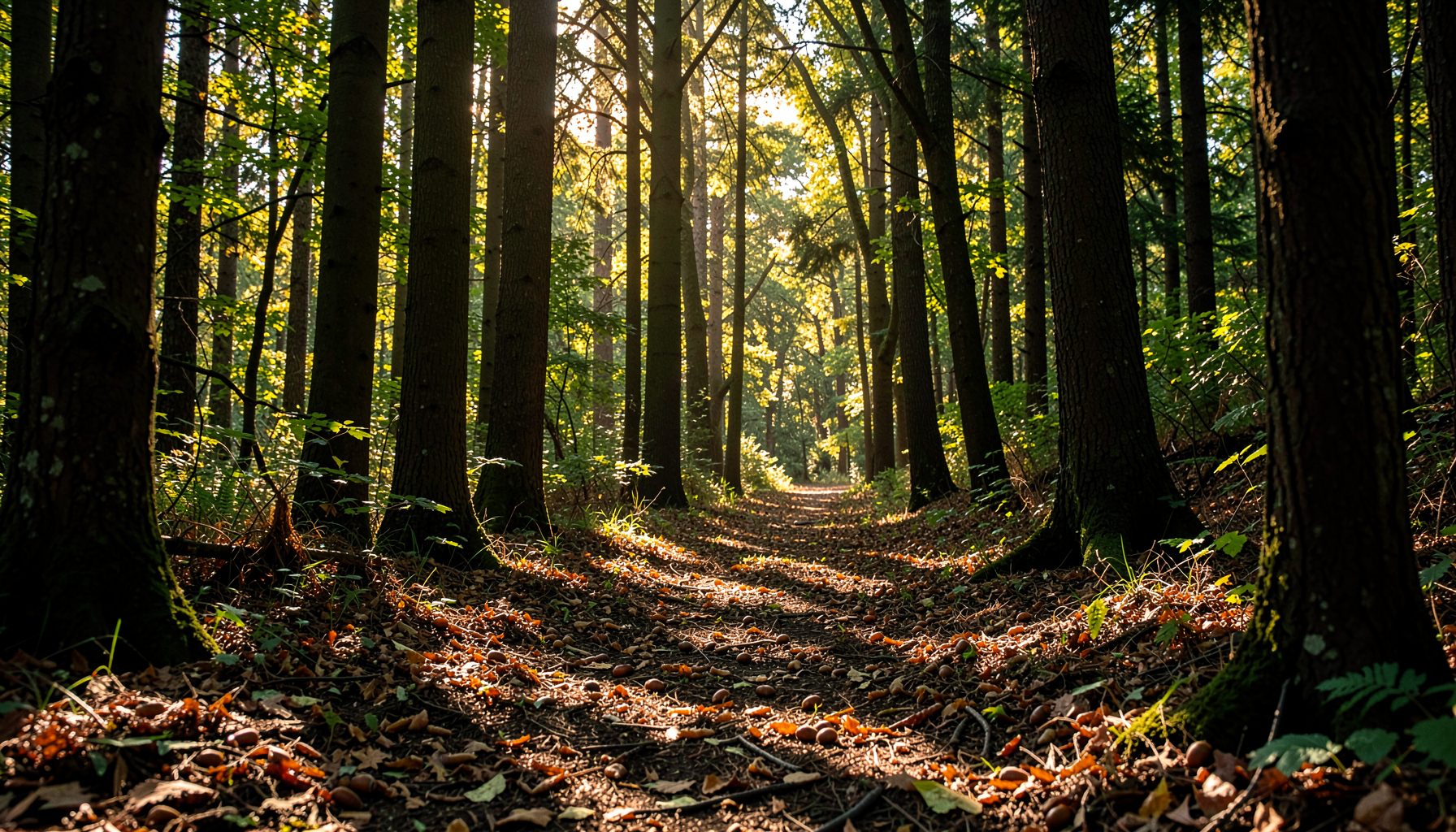
American Beech Trees: Forest Foundations For Wildlife
American beech trees are among the most influential hardwoods in eastern North America. Their smooth gray trunks, broad leaves, and distinctive beechnuts are familiar sights in mature forests from Maine to Florida and westward across the Ohio and Mississippi valleys. Yet the tree’s value extends far beyond its appearance. Beech trees help shape food webs, shelter wildlife, enrich forest soil, and support the ecological relationships that keep woodland communities functioning.
A keystone species has an ecological effect that is disproportionately large compared with its abundance. American beech does not feed every forest animal, and it is not equally common in every habitat. Still, when beech trees produce a heavy crop of nuts or develop cavities and decaying wood, many species benefit at once. Their influence is especially clear in older, diverse forests where trees of different ages create a range of food and shelter.
For communities working to restore forests and waterways, understanding beech ecology offers a useful reminder: healthy habitat depends on more than planting trees. It requires protecting native species, maintaining genetic diversity, and giving forests time to develop the layered structure wildlife needs.
A Reliable Food Source In Eastern Forests
Beechnuts are the American beech’s most important contribution to wildlife. These small, triangular nuts mature inside prickly husks and typically fall in autumn. They contain concentrated fats and carbohydrates, making them valuable fuel for animals preparing for winter. Squirrels and chipmunks gather them for storage, while wild turkeys, white-tailed deer, black bears, mice, and many other animals consume them directly from the forest floor.
Beech trees produce nuts irregularly, with abundant mast years separated by lighter crops. This variation affects wildlife populations across an entire woodland. When nuts are plentiful, animals may gain the energy needed for winter survival and reproduction. During poor mast years, competition increases, animals travel farther for food, and predators may find prey more easily because seed-eating species leave familiar territories.
The nuts also remain useful after they fall. Some become buried in soil and may germinate into new trees. Others are carried away and forgotten by squirrels or jays, helping disperse beech seedlings beyond the parent tree. In this way, the tree feeds wildlife while also influencing the future composition of the forest.
Shelter Above, Below, And Within The Trunk
A mature American beech offers more than seasonal food. Its large branches create nesting and resting sites, while its dense crown provides shade and cover. Birds such as woodpeckers, nuthatches, chickadees, and barred owls may use cavities in beech trees, particularly when branches break or the trunk begins to decay. Raccoons, squirrels, and other small mammals also take advantage of hollows.
The smooth bark of a living beech supports a range of insects, spiders, and other invertebrates. These small organisms become food for birds and other insectivores. As a beech ages, fallen limbs, snags, and logs add another habitat layer. Decaying wood supports fungi, beetles, salamanders, and microorganisms that recycle nutrients into the soil.
Beech’s role in forest structure is especially valuable because its shade tolerance allows seedlings to survive beneath an established canopy. Young trees can wait for an opening before accelerating their growth. This creates a continuous supply of different age classes, from seedlings and saplings to large trees and fallen logs. A forest with these layers can support more species than a stand made up of trees of one age.
How Beech Shapes Forest Food Webs
The ecological importance of beech becomes clearer when its relationships are viewed together. A single mature tree can produce food for mammals, nesting opportunities for birds, leaf litter for decomposers, and root competition that influences which plants grow nearby. Its presence affects both living communities and the physical conditions of the forest floor.
| Beech Feature | Wildlife And Ecological Benefits | Seasonal Importance |
|---|---|---|
| Beechnuts | Feed squirrels, deer, turkeys, bears, mice, chipmunks, and other seed consumers | Especially important in autumn and winter |
| Cavities and hollow limbs | Provide nesting, roosting, and denning sites for birds and mammals | Useful year-round |
| Broad canopy | Offers shade, cover, and a cooler woodland microclimate | Most pronounced in spring and summer |
| Fallen leaves | Support decomposers and help build soil organic matter | Important after autumn leaf fall |
| Roots and soil relationships | Stabilize soil and interact with fungi and microorganisms | Ongoing throughout the tree’s life |
| Snags and downed wood | Supply habitat for insects, fungi, amphibians, and cavity users | Increases as trees age and decay |
This network of effects explains why the loss of beech can be felt beyond the disappearance of one tree species. Fewer beechnuts may reduce a key food source, while fewer mature trunks can mean fewer cavities and less decaying wood. Changes in canopy shade can also alter understory plants, soil moisture, and the distribution of other tree seedlings.
Beech trees are therefore a useful indicator of forest continuity. A woodland that contains healthy young beech, mature seed-producing trees, and standing or fallen deadwood is more likely to provide habitat across multiple stages of the wildlife life cycle.
Beech And Healthy Watersheds
Although American beech is best known as an upland forest tree, it also contributes to watershed health. Its roots help hold soil in place, especially on slopes and along forest edges. Leaf litter slows rainfall at the ground surface, improves infiltration, and adds organic material as it decomposes. These processes can reduce erosion and help limit the amount of sediment entering nearby streams.
Streamside forests are particularly important because they connect terrestrial and aquatic ecosystems. Shade from trees helps moderate water temperature, while roots stabilize banks and create shelter for insects and other organisms. Leaves and small woody debris entering the water become part of the food web that supports aquatic life.
Beech should be part of a diverse riparian planting palette rather than used as a single-species solution. Native oaks, hickories, maples, birches, dogwoods, shrubs, and wetland plants each contribute different foods, root patterns, and growth habits. Tree identification resources can help volunteers and landowners recognize native species and understand where they fit within a forest or streamside restoration project.
Threats That Can Weaken Beech Forests
American beech faces several serious pressures. Beech bark disease, caused by an insect and fungal complex, can injure bark and create entry points for decay. Beech leaf disease has also spread through portions of the tree’s range, damaging leaves and potentially reducing growth and survival. The effects vary by location, tree age, weather, and local conditions, but widespread stress can reduce nut production and remove mature trees from the forest.
Fragmentation creates another challenge. Isolated forest patches may have fewer pollinators, less genetic exchange, and greater exposure to heat, drought, invasive plants, and browsing pressure. Deer can consume young seedlings faster than they can grow, preventing forests from replacing older trees. Poorly planned development and intensive land clearing further reduce the connected habitat that wildlife needs.
Climate change may amplify these pressures through warmer temperatures, altered rainfall, intense storms, and longer periods of drought. A resilient forest is more likely when it includes many native species, varied ages, healthy soils, and natural regeneration. Protecting existing mature beech trees is essential, while restoration projects can strengthen connections between remaining forest patches.
Stewardship That Protects Keystone Habitat
Conservation begins with recognizing the value of trees that may not look exceptional from a distance. A large beech with a full crown, cavities, broken limbs, or signs of decay may be a major wildlife resource. Removing every declining tree can eliminate nesting and denning habitat, even when the tree no longer appears useful for timber. Where public safety allows, standing deadwood and fallen logs should remain part of the ecosystem.
Forest management decisions should also account for long-term regeneration. Protecting seedlings from excessive deer browse, limiting soil compaction, controlling invasive plants, and preserving mature seed sources can help sustain beech populations. Landowners should monitor unusual leaf damage, bark injuries, and changes in tree vigor, then consult local forestry or plant health professionals when disease is suspected.
The history of forest management matters as well. Past logging, agricultural clearing, and changes in land use continue to influence which species dominate today. Learning from the legacy of silviculture can help communities consider how earlier practices shaped present-day forests and how careful stewardship can improve future habitat.
Practical Ways To Support Beech Wildlife
Individuals and community groups can contribute to healthier forests without managing large tracts of land. Small actions become more effective when they protect native diversity and are coordinated across a watershed.
- Preserve mature beech trees and avoid removing them solely because they have cavities, dead branches, or moderate natural decay.
- Keep fallen logs and standing snags where they do not threaten homes, roads, trails, or utility lines.
- Plant locally appropriate native trees and shrubs to connect isolated forest patches and strengthen streamside buffers.
- Reduce soil compaction and disturbance around tree roots, especially during construction or large outdoor events.
- Learn to identify beechnuts, beech seedlings, disease symptoms, and companion native species through guided programs or field resources.
Volunteer seed collection can connect people directly with the next generation of forest restoration. Collecting native hardwood seeds responsibly, documenting their source, and sending them to nurseries helps produce seedlings suited to regional conditions. Educational programs also give students and families a practical way to understand how a nut on the forest floor can become part of a future wildlife habitat.
American beech trees show how one native species can link animals, plants, soil, and water. Their nuts sustain wildlife when energy is scarce, their trunks provide shelter as they age, and their roots and leaf litter contribute to stable forest soils. Protecting beech is therefore part of protecting the larger forest community.
Growing Native welcomes individuals, families, schools, workplaces, and community groups to take part in native seed collection and watershed restoration. Join a local effort, learn the trees around you, and help gather the seeds that can grow into healthier forests for wildlife and cleaner waterways.