The legacy of silviculture in the Appalachian Piedmont
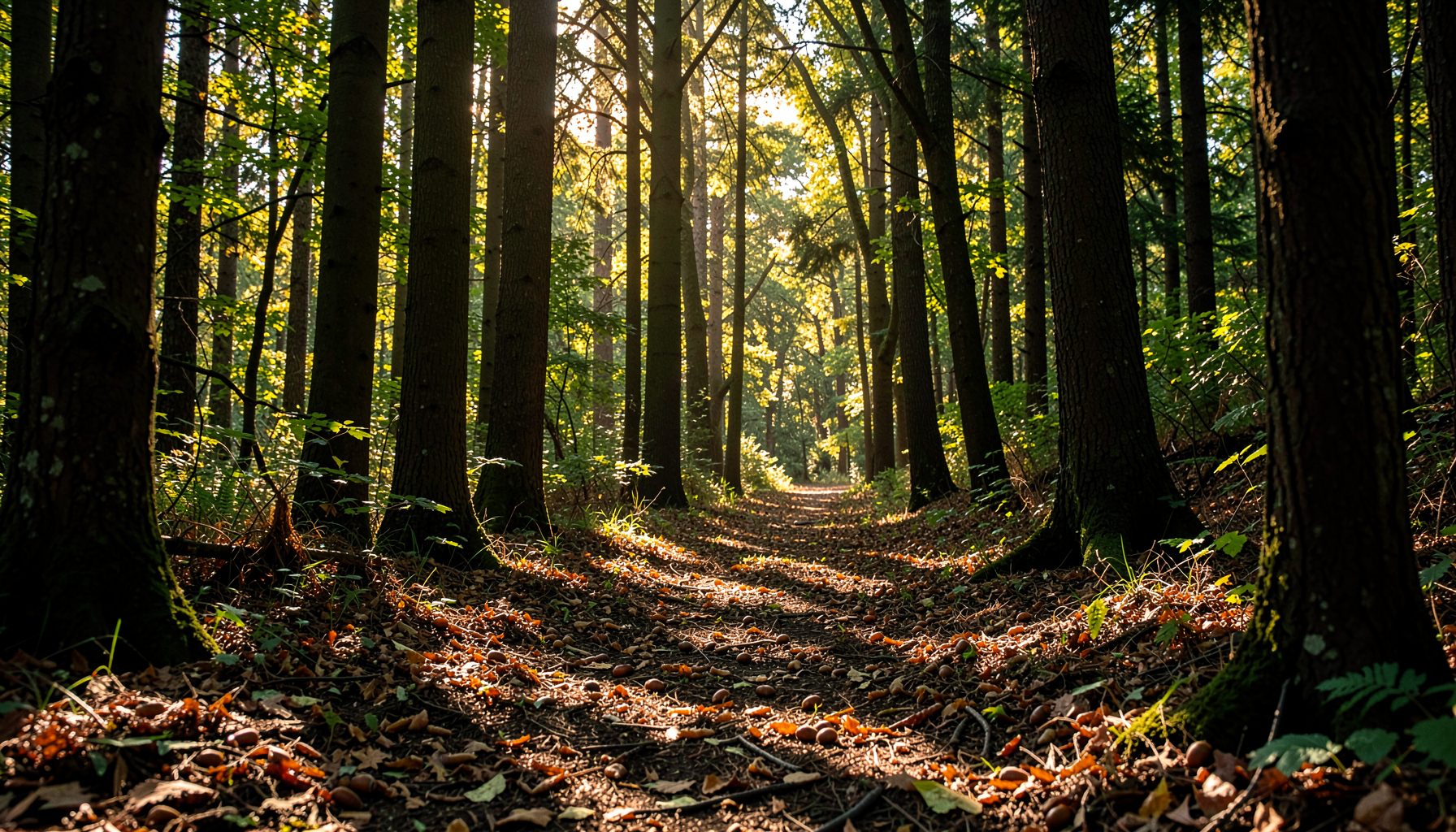
The Appalachian Piedmont is a meeting place between mountain forests and the flatter lands of the coastal plain. Its rolling hills, narrow valleys, rocky slopes, and productive stream corridors have supported forests for thousands of years. The trees growing there are part of a living history shaped by climate, wildlife, Indigenous stewardship, farming, industry, and changing ideas about conservation.
Silviculture—the science and practice of cultivating, regenerating, and caring for forests—offers a useful way to understand that history. It includes decisions about which trees remain, when a stand is harvested, how new growth is established, and how woodland structure can support water, soil, and wildlife. In the Piedmont, those choices have influenced both rural livelihoods and the condition of the Potomac River watershed.
Today, forest restoration draws from older knowledge while responding to modern pressures. Native seed collection, streamside planting, invasive species control, and careful woodland management connect the legacy of forestry with a future focused on resilient ecosystems.
A landscape shaped by trees and people
Before large-scale European settlement, forests across the Appalachian Piedmont were diverse mosaics rather than uniform walls of trees. Oak, hickory, chestnut, tulip poplar, sycamore, river birch, walnut, and many shrubs occupied different slopes, soils, and floodplain settings. Indigenous communities used fire, harvesting, cultivation, and selective clearing to influence vegetation patterns and create food-rich habitats. These practices varied by place and purpose, and they were part of active ecological stewardship.
European settlement brought fields, pasture, mills, roads, and towns. Forests were cleared for agriculture and cut for fuel, fencing, construction, charcoal, and commercial products. In many areas, the most accessible trees disappeared first, while steep slopes and wet ground retained more woodland cover. The resulting landscape was a patchwork of farms, young forests, mature stands, and wooded stream buffers.
This history matters because present-day forests are rarely untouched remnants. Their composition often reflects former land use, repeated cutting, grazing, abandoned fields, and the arrival of nonnative plants. Understanding those layers helps land managers interpret why a forest regenerates with tulip poplar in one location, red maple in another, or invasive vines along a disturbed edge.
From timber production to forest stewardship
Early American forestry often centered on usefulness: a woodland was valued for lumber, fuelwood, tannin, mast, or grazing. As demand increased, foresters began developing more systematic approaches to sustained yield and regeneration. Silviculture provided a vocabulary for managing stands over time rather than treating every harvest as a one-time removal of trees.
Different systems produced distinct forest structures. Clearcutting removed most or all trees from an area, allowing sun-loving species to establish. Selection cutting removed individual trees or small groups, maintaining a layered, uneven-aged stand when applied carefully. Shelterwood methods retained some mature trees to provide seed and moderated conditions for seedlings. Coppice systems relied on vigorous regrowth from stumps or roots, a practice suited to certain hardwoods and historic fuelwood production.
These methods were never neutral. A harvest can affect soil compaction, stream temperature, wildlife habitat, carbon storage, and the next generation of trees. The quality of silviculture depends on matching treatment to site conditions, forest goals, and ecological limits. A technically efficient harvest may still be damaging if it removes streamside shade or leaves a slope vulnerable to erosion.
The twentieth century brought stronger attention to forest pathology, fire, watershed protection, and public lands. The chestnut blight transformed eastern forests, while changes in agriculture allowed many abandoned fields to return to woodland. Contemporary forestry increasingly recognizes that a healthy forest is measured through several values at once: timber, biodiversity, clean water, habitat, recreation, carbon, and cultural meaning.
What the Piedmont teaches about regeneration
Regeneration is the central test of any forest management approach. A stand can look green and productive while failing to replace its mature canopy species. Deer browsing, invasive shrubs, compacted soil, altered fire patterns, pests, and a lack of seed-producing trees can all interrupt natural succession. When regeneration fails, the long-term result may be a simplified forest with fewer oaks, hickories, and other species that support extensive food webs.
The Piedmont also demonstrates the importance of seed sources. A seed is more than a potential tree; it carries genetic information adapted to particular temperature ranges, moisture conditions, soils, and seasonal patterns. Collecting from healthy local or regionally appropriate parent trees can strengthen restoration projects, especially when seedlings will be planted along creeks and rivers.
Good stewardship begins before planting. Volunteers need to identify species accurately, gather mature seed at the right time, keep collections clean and documented, and avoid spreading pathogens. Guidance on disease-free collection explains why the health of a parent tree matters when gathering acorns, walnuts, and other native material for restoration.
| Silvicultural concern | Historical expression | Restoration value today |
|---|---|---|
| Forest regeneration | Natural seeding, coppice, and managed harvests | Establishing diverse native seedlings |
| Stand structure | Even-aged or uneven-aged woodland | Providing layered habitat and resilience |
| Soil protection | Retaining trees on steep or wet ground | Limiting erosion and sediment runoff |
| Water quality | Protecting wooded stream margins | Cooling waterways and filtering nutrients |
| Seed provenance | Using locally available tree species | Improving adaptation and genetic fit |
| Disturbance management | Fire, grazing, cutting, and clearing | Restoring appropriate habitat conditions |
Forest cover and watershed health
Silviculture has always been connected to water, even when forest management plans focused primarily on wood products. Tree roots hold soil, trunks and leaf litter slow rainfall, and forest floors absorb water before it reaches a stream. These functions become especially important in the Piedmont, where intense storms can move sediment from exposed fields, construction sites, and degraded banks into tributaries.
Riparian forests form one of the clearest links between woodland care and watershed restoration. Trees along streams shade the water, stabilize banks, provide leaf litter for aquatic organisms, and create travel corridors for wildlife. Their roots also help intercept nutrients before those pollutants enter the channel. A mature buffer cannot be recreated instantly, but planting the right native species begins a long process of ecological repair.
This is where the older language of forest management expands into restoration ecology. The goal is not simply to maximize tree growth. It is to rebuild relationships among canopy, understory, soil, water, insects, fungi, birds, and people. A walnut or oak planted beside a tributary may take decades to reach maturity, yet its roots begin contributing to bank stability much sooner.
The Potomac River watershed benefits when many small restoration sites work together. A single streamside planting may be modest in area, but connected buffers, forest patches, and protected headwaters can improve habitat continuity and reduce the cumulative effects of runoff. Silviculture’s long view is particularly valuable here because watershed benefits often become clearer over years rather than seasons.
Native seeds as living infrastructure
Seed collection turns community participation into a practical form of forest restoration. Acorns, walnuts, hickory nuts, berries, and other native seeds can be gathered during seasonal windows and delivered to state nurseries. There, they may be cleaned, stored, stratified, germinated, and grown into seedlings suitable for future planting. The process links a local forest’s reproductive cycle to a larger restoration network.
Learning what happens after collection can make the work more meaningful; the state nursery journey follows the steps that turn gathered seed into planting stock. Each stage protects viability and improves the chance that a seed will become a healthy tree. Records about species, location, date, and parent-tree condition also help nurseries manage material responsibly.
Collection is most effective when it is organized around clear identification and safety practices. Volunteers should gather only from abundant, healthy trees, leave enough seed for wildlife and natural regeneration, and avoid collecting beside roads or contaminated sites. Respect for private property, protected areas, and seasonal conditions is equally important.
These practices reflect a modern interpretation of silviculture. Instead of viewing forests only as stands to be measured and harvested, restoration teams see them as seed-producing communities. Protecting genetic diversity, maintaining native species, and supporting natural regeneration are investments in future forest structure.
Knowledge grows through participation
The history of forestry can seem technical when reduced to harvest schedules and stand diagrams, yet practical knowledge often begins with observation. Volunteers learn to distinguish oak leaves from hickory leaves, recognize mature acorns, notice signs of fungal infection, and read how slope and soil influence tree growth. Those skills deepen the connection between ecological science and everyday stewardship.
Schools, families, workplaces, and community groups can use seed collection as an entry point to forest ecology. A seasonal project can include tree identification, mapping parent trees, recording weather conditions, discussing wildlife food sources, and tracing how runoff moves through a neighborhood. A community seed guide can help turn scattered interest into a consistent local effort.
Participation also creates continuity. A child who helps gather acorns may later recognize a planted oak beside a stream. A workplace team may return each autumn to monitor the same trees. A school can compare seed production across years and observe how drought, heat, or late frost affects forest reproduction. These experiences make long-term ecological change visible.
Growing Native’s volunteer model reflects this broader legacy. The work combines conservation service with education, giving people a direct role in reforestation, erosion control, cleaner water, and habitat recovery. It also honors the fact that successful restoration depends on many kinds of knowledge: nursery science, land management, local observation, and sustained community care.
Recommendations for carrying the legacy forward
- Prioritize healthy native parent trees and document species, location, collection date, and site conditions.
- Protect mature streamside forests while restoring gaps with locally appropriate hardwoods and shrubs.
- Match silvicultural treatment to slope, soil, watershed function, wildlife needs, and long-term forest structure.
- Use volunteer projects to teach tree identification, seed biology, invasive species awareness, and erosion prevention.
- Monitor planted areas over time so maintenance, watering, browse protection, and replacement planting can respond to real conditions.
The Appalachian Piedmont’s forest legacy is still being written. Its earlier chapters include Indigenous stewardship, agricultural clearing, industrial timber use, scientific forestry, and the return of woodland to abandoned land. The next chapter can join that history to a more connected vision of watershed health—one that values mature forests, diverse regeneration, living stream buffers, and informed community action.
A handful of seeds may appear small beside the scale of forest loss, yet each collection supports a chain of care that reaches from parent tree to nursery, from nursery to planting site, and from planting site to future habitat. Join Growing Native as a volunteer, learn the trees of your community, and help gather the native seeds that will shape healthier forests across the Potomac watershed.