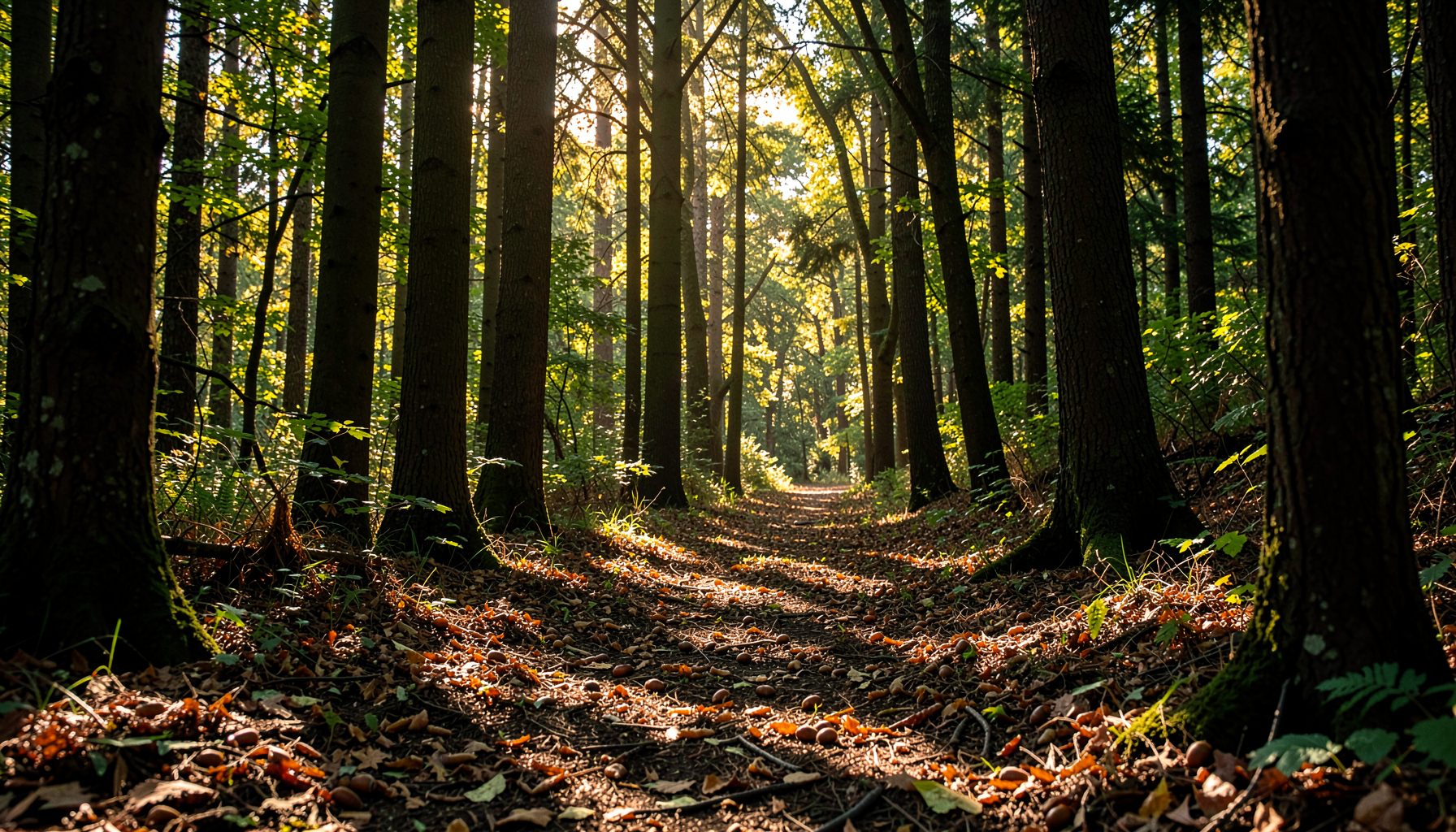
Finding productive, safe places for native seed collection
A successful seed collection begins well before anyone fills a bucket or spots the first acorn. The location determines which species are available, whether the seeds are mature and healthy, and how easily volunteers can work without damaging the surrounding habitat. Careful scouting turns a promising patch of forest into a dependable source of native tree and shrub seeds.
For Growing Native volunteers, this preparation supports a larger purpose across the Potomac River watershed. Collected acorns, walnuts, and other native seeds can become streamside seedlings that help stabilize eroding banks, filter runoff, improve water quality, and rebuild forest corridors.
A good collection site is more than a place with many trees. It should offer reliable seed production, safe access, appropriate landowner permission, and enough ecological value to justify returning year after year. A short scouting visit can reveal most of these qualities before a group arrives.
Start with the landscape and target species
Begin by identifying the habitat type you intend to visit. Upland oak stands, floodplain forests, forest edges, old fields, and streamside corridors produce different seed crops. Moist bottomlands may support river birch, sycamore, pawpaw, and walnut, while well-drained slopes can be productive for several oak species, hickories, and native shrubs.
Your target species should guide the search rather than the other way around. If the goal is to collect white oak acorns, look for mature trees with broad crowns and evidence of regular acorn production. For black walnut, search beneath large trees for green husks, fallen nuts, and a canopy with enough room to develop a strong crop. Record several possible trees instead of relying on a single individual.
The surrounding plant community also matters. A diverse native forest is generally a better source than an isolated ornamental planting or an area dominated by invasive plants. Observe whether seedlings and saplings are present, whether the canopy appears healthy, and whether the site forms part of a larger habitat corridor.
Check tree health and seed quality
Inspect the parent trees before examining the ground. Look for vigorous crowns, healthy leaves, sound bark, and a natural form suited to the species. Avoid trees with extensive dead limbs, major trunk wounds, signs of severe insect damage, or symptoms of disease. Seed collected from stressed trees may have low viability, and gathering beneath hazardous limbs creates an unnecessary risk.
Next, study the seeds already on the ground. Fresh, mature seeds usually have the expected color, weight, and firmness for their species. Acorns should feel solid rather than hollow, and walnuts should have intact husks or shells without extensive mold. Split or crush a small sample when appropriate to check for insect larvae, shriveled interiors, or other damage.
Timing affects what you see. A site may seem unproductive early in the season, then become valuable after a strong wind or rain event. Conversely, seeds may disappear quickly because of squirrels, deer, birds, flooding, or foot traffic. Note the collection window, recent weather, and approximate number of usable seeds per tree so future visits can be scheduled efficiently.
Evaluate access, ownership, and safety
A productive forest is not a suitable volunteer site if people cannot reach it safely. Check whether vehicles can park without blocking roads, gates, driveways, or emergency access. Consider the distance from parking to collection trees, the slope, stream crossings, footing, and the amount of equipment volunteers will carry.
Permission must be confirmed before a collection event is scheduled. Public land may still have rules about collecting natural materials, group size, parking, or seasonal access. Private property requires clear approval from the landowner or manager, preferably with an understanding of the target species, collection methods, dates, and route volunteers will use.
A rainy-day plan is especially important near waterways and on steep ground. Review rainy-day collection guidance before approving a site, then note drainage patterns, muddy areas, slippery roots, low branches, ticks, poison ivy, and possible flooding. A location that is manageable in dry weather may become unsafe within minutes after heavy rain.
Look beyond the busiest tree
The tree with the greatest number of fallen seeds is not automatically the best collection source. A heavily visited trail edge may experience repeated disturbance, soil compaction, and competition from nonnative plants. Seeds there may also be mixed with material from planted trees whose local origin is uncertain.
Search for multiple parent trees spread through the site. Gathering from several healthy individuals helps maintain genetic diversity and reduces the chance of collecting an unusually poor crop from one tree. Mark approximate locations with a map, field notes, or permitted digital coordinates, while avoiding unnecessary tags or damage to trunks.
Pay attention to how much can be collected without removing food and habitat for wildlife. A responsible collection leaves plenty of seeds in place for natural regeneration and animals. It also avoids stripping one tree or concentrating activity around a fragile streambank. If the ground is bare because wildlife has already used the crop, move to another area rather than intensifying pressure on that location.
Compare sites before choosing one
A simple scouting record makes it easier to compare several candidate locations. Note the dominant species, number of promising parent trees, seed maturity, estimated abundance, access conditions, ownership, and hazards. Photographs of the canopy, seeds, parking area, and route can help coordinators make decisions without revisiting every site immediately.
Use a consistent rating system, but leave room for professional judgment. A site with slightly fewer seeds may be preferable if it has excellent access, clear permission, a diverse group of parent trees, and low environmental impact. Another site may be worth saving for a later date if the species are promising but the crop has not matured.
| Scouting factor | What to inspect | Strong signs | Warning signs |
|---|---|---|---|
| Species suitability | Native trees and shrubs present | Several desired species in a natural community | Uncertain identity or mostly ornamental trees |
| Parent tree health | Crown, bark, leaves, limbs | Vigorous, mature trees with good form | Disease, major wounds, unstable limbs |
| Seed condition | Size, firmness, color, insect damage | Full, mature, clean seeds | Mold, holes, shriveling, widespread rot |
| Seed abundance | Crop beneath multiple trees | Enough seeds for collection and wildlife | Scattered seeds or heavy wildlife use |
| Access | Parking, trails, slope, terrain | Safe route and manageable walking distance | Flooding, cliffs, dense brush, unstable ground |
| Permission | Ownership and site rules | Written or clearly documented approval | Unclear authority or collection restrictions |
| Environmental sensitivity | Streambanks, rare plants, disturbance | Durable surfaces and low-impact routes | Erosion, fragile soils, nesting areas |
Plan a collection that protects the site
Once a location is selected, decide how volunteers will move through it. Establish gathering zones that use existing paths or durable ground, and set boundaries around steep banks, wetlands, restoration plots, and sensitive plant communities. A brief orientation can explain which seeds to collect, which ones to leave, and how to recognize look-alike species.
Collection tools should match the habitat. Gloves, buckets, breathable bags, hand rakes, and small tarps may be useful, but heavy equipment is rarely necessary. Avoid digging, breaking branches, shaking trees aggressively, or driving over roots. Seeds should be picked from the ground when possible, unless the land manager has approved another method.
Plan for sorting at or near the site. Keep different species and collection areas separate, label each container with the date and location, and remove obvious debris or damaged seeds. Accurate labels preserve the value of the collection because nurseries and restoration partners need to know what was gathered and where.
Build a repeatable scouting record
A new location becomes more useful when its conditions can be tracked over time. Record the date of each visit, weather patterns, flowering or fruiting observations, seed drop timing, and approximate yields. Over several seasons, these notes can show which trees produce consistently and which sites respond to drought, storms, or unusually warm weather.
Species identification is worth verifying before collection day. Compare leaves, bark, fruit, husks, and growth form, and use trusted field references when uncertain. Growing Native’s educational publications can support volunteer training and help groups connect seed collection with broader lessons about forest ecology and watershed health.
A clear record also helps with volunteer coordination. Include the meeting point, parking instructions, landowner contact, emergency access, expected terrain, restroom availability, and weather limits. These details reduce confusion and allow leaders to match the site with the age, mobility, and experience of the participating group.
Practical recommendations for field scouting
Use the following checklist before confirming a new collection location:
- Visit once before seed drop and again when seeds are beginning to mature.
- Identify several healthy parent trees and record the species and approximate locations.
- Confirm landowner permission, public-land regulations, parking, and group-size limits.
- Check slopes, stream crossings, weather exposure, invasive plants, wildlife activity, and overhead hazards.
- Leave enough seed for natural regeneration and wildlife while avoiding damage to soil, roots, and streambanks.
The best scouting decisions balance collection potential with stewardship. A site should provide enough viable native seed to support restoration without being treated as a source to exhaust. When volunteers observe carefully, record what they find, and adjust timing to local conditions, each visit strengthens both the nursery supply and the health of the forest community.
Take the next step by walking a potential site with a notebook, identifying its strongest native seed trees, and documenting access and safety conditions. Share the findings with your group or land manager, secure permission, and turn a carefully chosen location into a lasting contribution to healthier forests and waterways across the Potomac watershed.