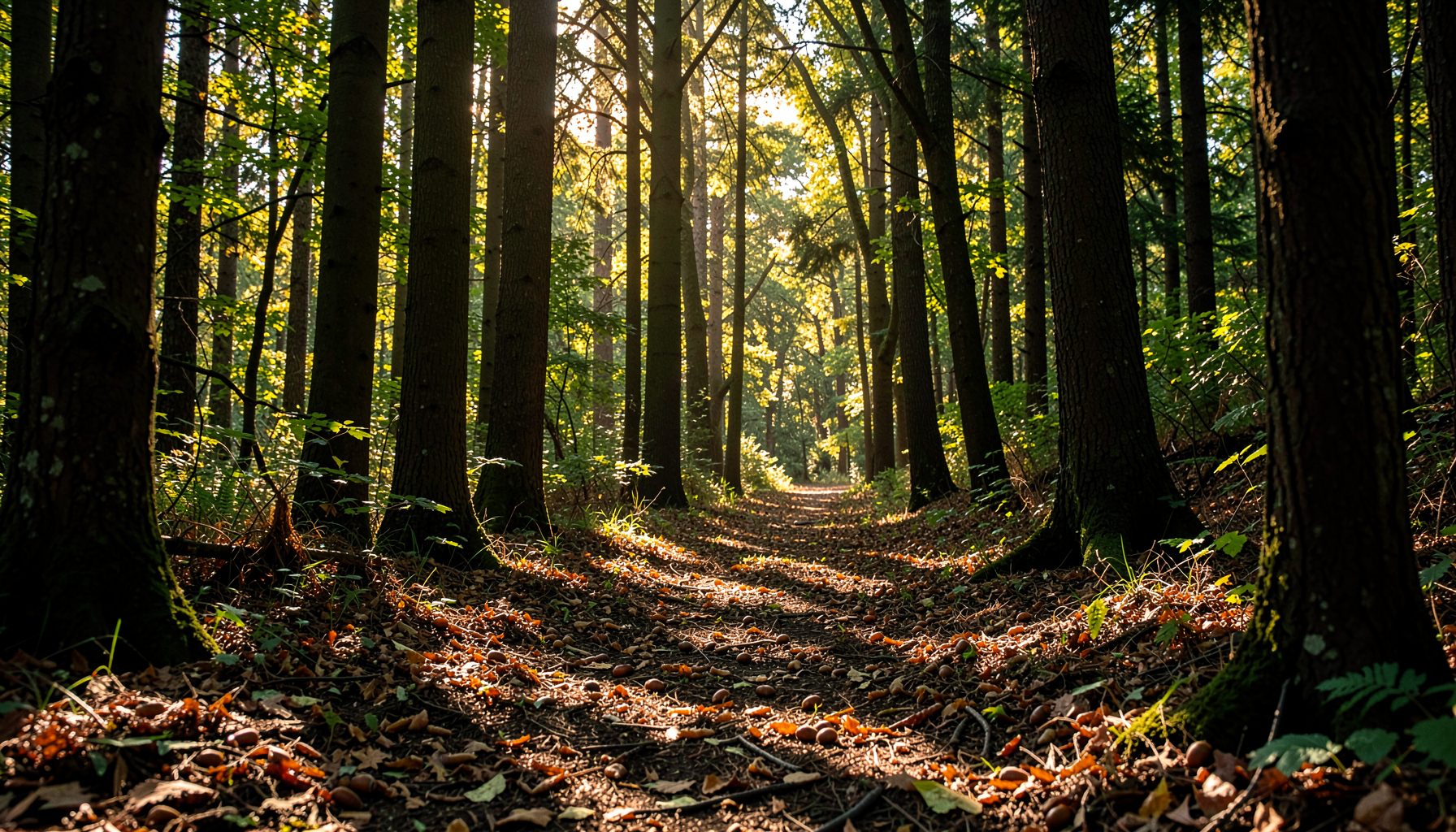
Why Oaks Produce Acorns in Mast Years
An oak forest can seem to follow a hidden calendar. For several years, branches may carry a modest crop of acorns, then a single autumn arrives with nuts covering trails, streambanks, and forest floors. This synchronized abundance is known as a mast year, and it is one of the most important reproductive patterns in eastern hardwood forests.
Masting is not simply a response to one warm spring or a particularly rainy summer. It reflects a complex interaction among tree age, stored energy, weather, pollination, genetics, insects, wildlife, and neighboring trees. Oaks adjust their reproductive effort over time, sometimes producing a heavy seed crop when conditions favor the survival of seedlings.
Understanding this cycle helps explain why collecting acorns requires careful timing and why a plentiful crop can support restoration far beyond the forest where it fell. For watershed programs, acorn production connects forest ecology with cleaner water, stronger streamside buffers, and long-term community stewardship.
What Mast Years Mean
A mast year occurs when many trees in the same population produce an unusually large seed crop during the same season. In eastern North America, the term often refers to acorns from white oaks, red oaks, and their relatives, though “mast” can include other tree nuts such as hickory nuts, beechnuts, and walnuts. Hard mast consists of nuts and seeds with protective shells; soft mast includes fruits such as berries.
The defining features are abundance and synchronization. A single mature oak may produce thousands of acorns in a productive year, but a true mast event involves many trees across a broad area. The exact pattern varies by species and region. Some oak populations produce heavy crops every two to five years, while others show weaker or less predictable cycles.
Scientists distinguish between annual seed production and the longer-term pattern of variation. An oak may produce some acorns every year, yet its average output can rise and fall sharply. These fluctuations are especially visible when neighboring trees respond to similar environmental cues.
How Oaks Build an Acorn Crop
Acorn production begins with flowering. Oaks are wind-pollinated and produce separate male and female flowers on the same tree. Male flowers hang in slender clusters called catkins, releasing pollen in spring. Small female flowers receive that pollen and develop into acorns, although the timing differs between oak groups.
White oak acorns generally mature during one growing season. Red oak acorns usually require two years, meaning the nuts seen in one autumn began developing after flowering in the previous spring. This difference affects how weather, drought, insects, and late frosts influence the crop. A poor harvest in one year does not always reflect conditions from that same year.
Producing seeds is expensive. An oak must invest carbohydrates, minerals, water, and protective compounds into each acorn. The tree also has to maintain leaves, roots, branches, and defenses against disease. During a light-crop year, resources can be directed toward growth and storage. In a heavy-crop year, more energy is allocated to reproduction, often at the expense of new vegetative growth.
Pollination itself can be a limiting factor. When many oaks flower at the same time, airborne pollen is more likely to reach female flowers on nearby trees. This may help explain why synchrony matters before acorns even begin to swell. Genetic differences, tree size, canopy position, and local soil conditions then shape how many flowers develop into mature nuts.
Weather, Resources, And Timing
Weather influences every stage of the reproductive process, but its effects are not always straightforward. A spring frost can damage flowers, while heavy rain during pollination may reduce the movement of pollen. Summer drought can cause developing acorns to drop early, especially on trees growing in shallow soils or exposed sites.
Warm, wet conditions may support acorn growth when moisture is adequate, yet excessive rain can encourage fungal disease or disrupt flowering. Good weather in one month cannot guarantee a large crop if conditions were poor during an earlier stage. For two-year acorns, the relevant weather window is even longer.
Tree resources also matter. Oaks with broad, healthy crowns usually have more capacity for flowering and fruit development than suppressed or stressed trees. Soil fertility, sunlight, root competition, and access to groundwater all influence the energy budget. However, a heavy acorn crop is not simply the result of the biggest or healthiest trees producing as much as possible every year. The irregular pattern appears to be an adaptive strategy shaped by ecological tradeoffs.
Climate change may alter these relationships. Earlier springs can shift flowering and leaf-out, potentially creating mismatches with temperature patterns or insect activity. More frequent heat waves, droughts, intense storms, and late frosts may make acorn production less predictable in some regions. Long-term monitoring is needed because oak responses differ by species, elevation, soil, and local climate.
Predators And The Mathematics Of Survival
Acorns are nutritious packages of fat, carbohydrates, protein, and minerals, which makes them valuable to deer, squirrels, mice, turkeys, jays, bears, and many other animals. In an average year, wildlife can consume or cache a large share of the crop before an acorn has a chance to germinate.
A mast year changes those odds through predator satiation. When acorns arrive in overwhelming numbers, seed-eating animals may be unable to consume them all. Some predators may reproduce more successfully after a heavy crop, but the population response usually takes time. The result is a temporary surplus of uneaten seeds that can escape immediate consumption.
Synchronization also improves the chances that enough seeds will remain across a landscape. If only one tree produces heavily, animals can concentrate their feeding there. When many trees fruit together, the abundance is spread across the forest, making it harder for wildlife to find and consume every acorn.
The strategy carries risks. A failed mast year can leave wildlife with less food after they have adjusted to recent abundance. A high rodent population may consume next year’s seeds more efficiently. Acorns can also be damaged by weevils, fungi, drying, flooding, or poor contact with suitable soil. Seedling establishment remains much rarer than seed production, even in a strong crop.
Reading An Acorn-Rich Forest
The number of acorns beneath one tree does not always reveal the size of the regional crop. A large tree with an open crown can drop many more nuts than a smaller tree nearby. Wind, squirrels, deer, birds, slope position, and canopy gaps redistribute acorns after they fall.
A useful field observation compares several trees and several locations. Look for differences among species, crown sizes, exposure, and soil moisture. Record whether acorns are sound, hollow, insect-damaged, cracked, or already sprouting. Repeating observations across weeks can show when the crop is falling and how quickly wildlife is removing it.
| Sign In The Field | What It May Indicate | Why It Matters |
|---|---|---|
| Many trees carrying full crowns | Regional or local mast event | Broad seed availability may support natural regeneration |
| Numerous empty acorn caps | Acorns have fallen or been eaten | Timing and wildlife pressure affect collection success |
| Pinholes or grubs inside nuts | Weevil or insect damage | Fewer viable seeds are available for planting |
| Acorns sprouting on moist ground | Favorable moisture and temperature | Seeds may be ready for immediate natural regeneration |
| Heavy crop on only a few trees | Individual tree conditions | The pattern may not represent a true mast year |
| Sound acorns disappearing quickly | Strong wildlife consumption | Collection may need to occur soon after drop |
A healthy acorn for restoration is usually firm, mature, and free from visible mold or extensive insect damage. Floating tests are sometimes used as a rough screening method, but they are not perfect because some viable acorns can float and some damaged nuts can sink. Species-specific handling and nursery guidance provide better results.
From Forest Floor To Streamside Seedling
The ecological value of an acorn extends beyond feeding wildlife. When a sound seed germinates and grows into an oak, it may eventually form part of a canopy that shades streams, anchors soil, stores carbon, and provides habitat. Oaks also contribute leaf litter and woody debris that support aquatic and terrestrial food webs.
Restoration programs collect native tree seeds so they can be grown under controlled conditions and planted where forest cover has been lost. Streamside plantings are especially important because tree roots help stabilize banks, while shade can moderate water temperature. Leaf litter and forest soils slow runoff, filter pollutants, and improve infiltration during storms.
Seed collection must still protect natural ecosystems. Volunteers should avoid stripping a single tree or removing nearly every acorn from one area. Leaving plenty of seed for wildlife and natural regeneration preserves the forest’s own reproductive cycle. Collectors also need to follow local permissions, species guidelines, and nursery requirements.
For people learning to identify several hardwood species, a seasonal hickory nut collection guide can provide useful context alongside acorn observations. Hickories and oaks differ in nut shape, maturity, and handling, yet both demonstrate how native seed collection links field knowledge with future forest growth.
Ways To Support Native Seed Stewardship
Community participation can make mast-year observations and seed collection more useful. A single volunteer may gather a modest amount, but coordinated efforts across parks, neighborhoods, schools, and workplaces can document crop timing over a large watershed.
- Learn to identify local oak species by leaves, bark, acorn shape, cap structure, and habitat.
- Monitor several trees from late summer through autumn, recording crop size, drop dates, and seed condition.
- Collect only where permission is granted and leave a substantial share of acorns for wildlife and natural regeneration.
- Keep different species and collection sites separate when requested by a nursery or restoration program.
- Share observations with educators, conservation groups, or seed-collection coordinators.
The most valuable data are consistent observations gathered over many years. Notes about flowering, drought, frost, insect damage, and acorn fall can help reveal how local oak populations respond to changing conditions. Families and students can turn these records into lessons about food webs, climate, genetics, and watershed health.
Organizations such as the Growing Native program connect volunteers with native seed collection and forest restoration across the Potomac River watershed. Their work helps move locally collected seeds from the forest floor toward state nurseries, streamside plantings, and healthier waterways.
Mast years remind us that forest renewal is measured in seasons, while restoration is measured in decades. The next time an oak-filled trail appears beneath a heavy canopy, look closely at the pattern: which trees produced, when the acorns fell, how wildlife used them, and which seeds might become tomorrow’s forest. Join a local collection effort, record what you see, and help transform a seasonal abundance into lasting habitat and cleaner water.