How Streamside Forests Filter Agricultural Runoff
Rain and snowmelt carry water across agricultural fields, roads, barnyards, and disturbed soil before reaching a creek. Along the way, that water can pick up sediment, fertilizer nutrients, pesticides, manure, and other pollutants. When these materials enter a stream in large amounts, they can cloud the water, fuel algae growth, reduce oxygen, and damage aquatic habitat.
Streamside forests, often called riparian buffers or wooded buffers, create a living transition zone between farmland and waterways. Their trees, shrubs, leaf litter, roots, and soils slow runoff and give pollutants time to settle, soak in, or break down. The effectiveness of a buffer depends on its width, plant diversity, soil condition, slope, and connection to the stream.
Across the Potomac River watershed, restoring these forested margins supports cleaner water and more resilient landscapes. Seed collection and community planting efforts help build the future canopy needed for erosion control, wildlife habitat, groundwater recharge, and long-term watershed health.
How Streamside Forests Intercept Runoff
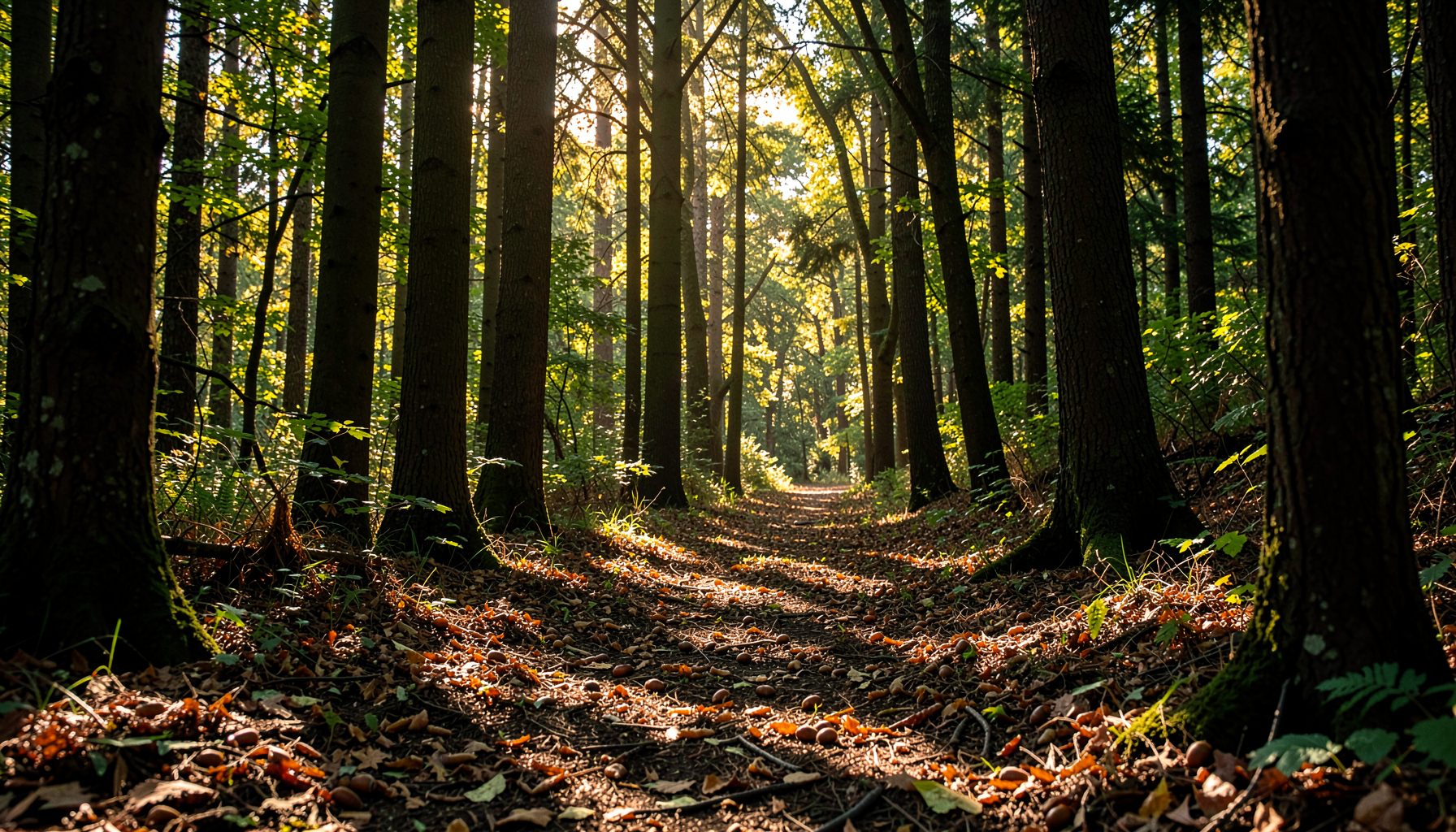
A healthy riparian forest works as a series of physical and biological filters. Dense stems and fallen branches reduce the speed of overland flow, while the uneven forest floor traps soil particles. Water that once moved rapidly toward a stream is redirected across a wider area, allowing sediment to settle before it reaches the channel.
Leaf litter and decaying organic matter add another layer of protection. This surface material absorbs rainfall, improves soil structure, and creates pathways for infiltration. Instead of flowing directly into a creek, a portion of the water enters the soil, where roots and microorganisms can capture or transform pollutants.
The canopy also softens the force of heavy rain and provides shade that helps regulate stream temperature. Cooler water generally holds more dissolved oxygen, which benefits fish, aquatic insects, and other organisms. Fallen leaves and woody debris contribute food and habitat when they enter the stream in moderate, natural amounts.
Roots Soil And Nutrient Capture
Plant roots stabilize stream banks and bind soil particles together. Deep-rooted trees such as river birch, sycamore, oak, and walnut can strengthen lower soil layers, while shrubs and grasses protect the surface. This layered root system helps resist bank collapse during high flows and limits the amount of sediment delivered downstream.
Nitrogen and phosphorus require particular attention in agricultural watersheds. Fertilizer and manure can move with runoff or seep through the soil into shallow groundwater. In a riparian buffer, plants absorb some of these nutrients for growth, while soil microbes convert nitrogen into less harmful forms through processes such as denitrification.
Phosphorus often attaches to eroded soil, so sediment control is a major nutrient-management strategy. Organic-rich buffer soils can also retain dissolved phosphorus under suitable conditions. However, a forested strip is not a substitute for responsible fertilizer application, cover crops, contour farming, or properly managed livestock access. The strongest results come from combining field practices with a functioning streamside corridor.
Seasonal Performance Along Farm Fields
Riparian buffers operate throughout the year, but their filtering mechanisms change with the seasons. During spring and summer, active vegetation takes up nutrients and dense foliage slows rainfall. In autumn, leaf fall replenishes soil carbon and supports decomposer communities. Winter roots remain in place even when aboveground growth is dormant, continuing to stabilize soil and protect the stream bank.
Heavy storms can overwhelm a narrow or poorly connected buffer. Concentrated flow through a ditch, gully, or wheel track may cut through vegetation and carry pollutants directly to the water. Regular inspection helps landowners identify these shortcuts and address them with level spreaders, grassed waterways, infiltration areas, or expanded buffer plantings.
Buffer performance also depends on plant composition. A single-species planting may provide short-term cover, but a diverse mix of canopy trees, understory trees, shrubs, and herbaceous plants offers stronger year-round protection. Native species are especially valuable because they are adapted to local conditions and support regional insects, birds, and other wildlife.
Comparing Riparian Buffer Designs
Different buffer designs serve different purposes. A forested buffer usually provides the greatest long-term shade, bank stability, carbon storage, and wildlife value, while a grass filter strip may be easier to establish in locations where agricultural access must remain flexible. In many settings, combining vegetation types creates the most reliable treatment zone.
| Buffer feature | Main runoff benefit | Additional watershed value | Best suited to |
|---|---|---|---|
| Grassy filter strip | Slows shallow sheet flow and traps sediment | Easy access and quick ground cover | Field edges with broad, even runoff |
| Shrub buffer | Intercepts low-growing runoff and binds soil | Pollinator habitat and wildlife cover | Narrow corridors and transitional zones |
| Forested riparian buffer | Filters sediment and nutrients while stabilizing banks | Shade, carbon storage, habitat, and cooler water | Perennial streams and flood-prone margins |
| Multi-zone buffer | Combines infiltration, nutrient uptake, and flow control | Stronger seasonal performance and biodiversity | Farms with varied slopes and runoff pathways |
| Restored wetland edge | Stores water and supports nutrient processing | Flood attenuation and exceptional habitat | Depressions, floodplains, and saturated soils |
Establishment should begin with a site assessment rather than a fixed planting formula. Soil moisture, flood frequency, invasive plants, deer pressure, existing regeneration, and nearby farm operations all influence the design. A qualified conservation planner can help determine where trees, shrubs, grasses, or wetland plants will perform best.
Restoration From Seed To Watershed
The long-term success of streamside restoration depends on a dependable supply of locally appropriate native plants. Collecting seeds from healthy regional trees preserves genetic diversity and connects community action to future forest recovery. Acorns, walnuts, hickory nuts, and native shrub seeds can eventually become seedlings planted along creeks and tributaries.
Volunteers who gather and sort seed may wonder how their contributions become part of a restoration project. The explanation in state nursery operations follows the process from donated material through cleaning, storage, germination, and seedling production. Understanding that pathway makes a single collection event feel connected to years of watershed improvement.
Once planted, young trees need protection and follow-up care. Mulching, invasive-species control, watering during establishment, and protection from browsing can determine whether a planting develops into a durable forest. Over time, the expanding canopy improves habitat and water quality while reducing maintenance needs.
Seed collection also offers an accessible way to teach forest ecology. Students can identify parent trees, observe seasonal cycles, record local conditions, and learn how a seed moves through a nursery system before returning to the landscape. These lessons make watershed stewardship tangible for families, schools, workplaces, and community groups.
Ways Communities Can Strengthen Buffers
Community participation can reinforce professional restoration work and build public understanding of agricultural water quality. Useful activities range from collecting native seed to monitoring stream conditions, removing invasive plants, and helping farmers share information about conservation practices.
- Organize seasonal seed collections for native trees and shrubs suited to local floodplains and stream banks.
- Pair volunteer events with lessons about nutrient runoff, soil erosion, tree identification, and watershed connections.
- Encourage farms to combine riparian buffers with cover crops, conservation tillage, livestock exclusion, and precise nutrient management.
- Inspect buffer zones after major storms to find rills, gullies, bare soil, invasive plants, or damaged fencing.
- Set up a clearly labeled community collection point by following guidance for a seed collection station.
These efforts are most effective when they continue beyond a single planting day. A community group can adopt a short stream segment, maintain records of collected seed, revisit restoration sites, and coordinate with nurseries or conservation organizations. Consistent attention helps young plantings mature into connected habitat rather than isolated patches.
Agricultural producers should remain central to buffer planning because they understand field access, drainage, equipment movement, and seasonal workloads. Practical designs that protect productive acreage while addressing runoff pathways are more likely to receive long-term care. Collaboration can also identify funding, technical assistance, and planting resources before installation begins.
Clean waterways begin with choices made across the watershed, from the edge of a cultivated field to the roots of a mature streamside tree. Join Growing Native by collecting native seeds, bringing a school or workplace into a volunteer project, or helping restore a local riparian corridor so today’s community effort can become tomorrow’s healthier forest and river.