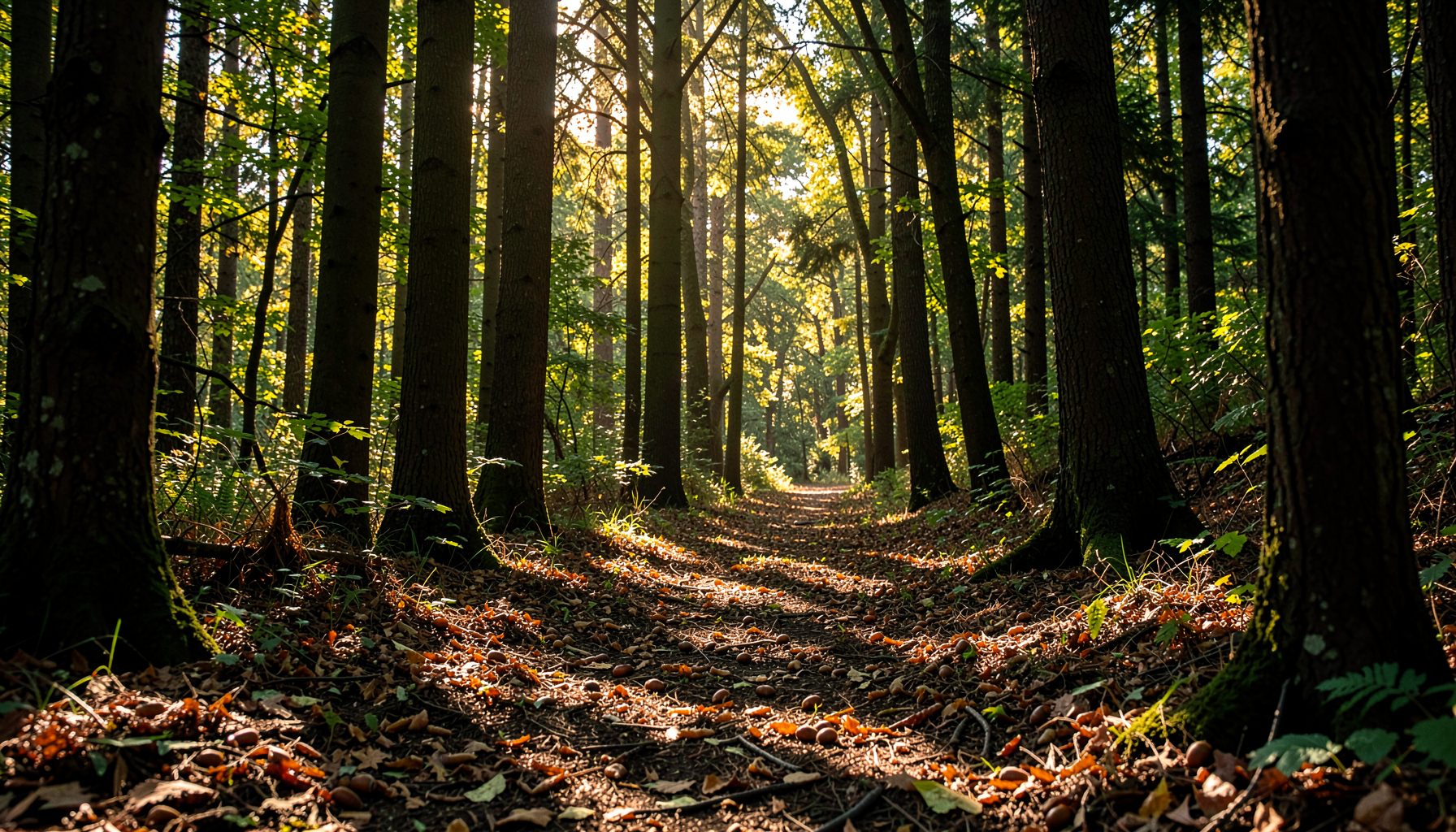
How State Nurseries Bring Growing Native Seeds to Life
Healthy forests begin long before a seedling is planted beside a stream. They begin with a mature tree producing viable seed, a volunteer recognizing the right species, and a careful process that moves acorns, walnuts, and other native seeds into cultivation. Within the Potomac River watershed, each stage contributes to cleaner water, stronger stream banks, and more resilient forest habitat.
State nurseries are a crucial part of this process. They provide the specialized facilities, staff expertise, and growing conditions needed to turn locally collected seed into sturdy native trees and shrubs. Their work connects community participation with long-term restoration goals.
The Growing Native program helps build that connection by organizing people to collect native hardwood and shrub seeds for donation to state nurseries. The result is a practical conservation partnership: volunteers support the earliest stage of restoration, nurseries raise healthy plants, and future projects receive trees suited to the region.
Where Community-Collected Seed Enters the Restoration Process
State nurseries serve as the production center between seed collection and field planting. When volunteers gather acorns, walnuts, or other appropriate native seed, the material must be sorted, inspected, cleaned, stored, and prepared for germination. Nursery professionals understand how each species behaves and which conditions support successful growth.
That expertise matters because native seeds are not interchangeable. Some need a period of cold, moist storage before they will germinate. Others lose viability quickly if they dry out or are held too long. Nursery staff can identify damaged seed, manage seasonal timing, and use propagation methods that increase the number of healthy seedlings available for restoration.
The nursery phase also provides consistency. A seed collected by a family, school, or workplace group may be one small contribution, but state facilities can combine suitable donations with other sources and raise them under controlled conditions. This turns many individual acts of stewardship into a dependable supply of planting stock.
Why Local Native Seed Supports Watershed Health
Native trees and shrubs are adapted to the climate, soils, insects, and seasonal patterns of their region. Once established, they can form plant communities that provide food and shelter for wildlife while contributing to the structure of a healthy forest. Their roots also help hold soil in place, especially along streams and drainage areas where heavy rain can cause erosion.
A diverse mix of species is important because watersheds face varied conditions. A tree that performs well on a moist floodplain may not thrive on a dry slope, while a shrub suited to a stream edge may be unsuitable for an upland site. State nurseries can raise several native species so restoration managers have options for different landscapes.
Using locally collected material can also reinforce the relationship between restoration and place. Seeds gathered within or near the Potomac watershed carry a connection to the ecological setting where future seedlings may be planted. This does not remove the need for careful genetic and site planning, but it supports a conservation model grounded in regional biodiversity.
Healthy nursery stock has benefits beyond the planting site. Trees established along waterways can shade streams, moderate water temperatures, intercept rainfall, and slow runoff. Over time, restored vegetation helps protect aquatic habitat and improves the watershed functions that communities depend on.
The Path From Forest Floor to Nursery Bed
A collected seed begins a carefully managed journey. Volunteers first learn to identify target species and gather mature, viable seed during the appropriate season. Collection guidelines help prevent damage to parent trees and reduce the chance of mixing unsuitable materials. After collection, seeds are delivered according to program instructions so they can enter the nursery system while still in useful condition.
At the nursery, staff may record the seed source, assess its quality, remove debris, and apply species-specific treatment. Some seeds are planted directly, while others are stored or stratified until environmental conditions signal that germination should begin. Once seedlings emerge, they receive water, light, nutrients, and protection from pests and disease.
The scale of this work is easier to understand through a single seed. The single acorn journey illustrates how collection, handling, cultivation, and eventual planting are connected. Each step affects whether a seed becomes a vigorous tree capable of contributing to forest recovery.
| Stage | Main responsibility | Conservation value |
|---|---|---|
| Seed collection | Volunteers gather suitable native seed | Builds public involvement and supplies regional material |
| Sorting and preparation | Nursery staff inspect, clean, and condition seed | Improves germination and reduces wasted seed |
| Propagation | State nurseries grow seedlings under managed conditions | Produces consistent, healthy planting stock |
| Distribution | Restoration partners receive trees and shrubs | Matches plants with streamside and forest projects |
| Establishment | Crews plant and care for seedlings in the field | Supports erosion control, habitat, and cleaner water |
| Long-term growth | Forests mature and reproduce naturally | Extends restoration benefits across the watershed |
State Nurseries Add Capacity and Technical Skill
A state nursery can do work that would be difficult for a volunteer group or small restoration project to manage alone. Specialized equipment, growing beds, irrigation systems, storage areas, and trained personnel allow thousands of seedlings to be handled efficiently. This capacity is essential when conservation programs are working across a broad watershed rather than at a single site.
Nursery staff also monitor plant health during a vulnerable stage of development. Seedlings need balanced moisture, appropriate temperatures, and protection from competition. Problems identified early can be addressed before they reduce the supply of trees available for restoration. Stronger plants are more likely to survive transport, planting, and the first difficult seasons in the field.
This technical role complements volunteer effort rather than replacing it. Community members contribute time, local knowledge, and enthusiasm at the collection stage. Nursery professionals apply horticultural knowledge to make those contributions useful at scale. The partnership gives each group a clear role in a shared restoration chain.
State nurseries can further support planning by producing species in quantities that match expected projects. Restoration organizations may need a mix of canopy trees, understory species, and shrubs for stream buffers. A dependable nursery partner makes it easier to plan planting dates, site preparation, maintenance, and follow-up monitoring.
Learning Through the Seed-to-Seedling Connection
Growing Native’s volunteer activities provide an accessible way to learn about tree identification, forest ecology, and watershed health. Collecting seed encourages participants to look closely at trees and notice differences in leaves, bark, fruit, and growth form. These observations can turn an ordinary walk into a lesson about seasonal cycles and forest diversity.
The connection to a state nursery makes that lesson tangible. Participants can understand that an acorn is not simply something found on the ground; it is living material with specific needs and potential value. Learning how seeds are handled helps people appreciate why collection timing, species accuracy, and careful storage matter.
Schools and youth groups can use the process to connect biology with civic responsibility. Students can study germination, measure seedling growth, map local trees, or discuss how vegetation affects streams. Families and workplaces can participate in a service activity that has a visible ecological purpose, even when the final planting occurs months or years later.
This educational dimension strengthens stewardship. People who understand how a forest supports water quality are more likely to value mature trees, protect streamside vegetation, and support responsible land management. The nursery partnership gives conservation an understandable storyline, from a seed in a volunteer’s hand to a tree rooted in a recovering watershed.
Making Nursery Production Serve Real Restoration Needs
Growing trees is only part of successful reforestation. Seedlings must ultimately be matched with appropriate sites, planting designs, and maintenance plans. Streamside projects may require species that tolerate periodic flooding, while other sites need plants suited to slopes, compacted soils, or partial shade. Site conditions should guide the selection and placement of nursery stock.
Restoration teams also need to consider diversity. Planting a broad range of native trees and shrubs can create a more stable community than relying heavily on a single species. Diversity may improve habitat value and help forests respond to pests, disease, drought, and changing weather patterns.
The link between seed collection and field performance is therefore important. Records about collection locations, species, and quantities can help nurseries and restoration partners make informed decisions. Clear communication also reduces delays and ensures that available plants are used where they have the best chance to thrive.
A seedling’s first years in the ground require attention. Watering during dry periods, controlling competing vegetation, protecting plants from browsing, and replacing losses may all be necessary. State nurseries provide the starting material, while local restoration groups and land stewards help seedlings become established forests.
Practical Ways to Support the Nursery Partnership
Volunteers do not need advanced botanical training to make a meaningful contribution. Programs can provide identification resources, collection instructions, and guidance about where and when to gather seed. Following those instructions protects both the quality of the donation and the health of the forest where it was collected.
Groups can also make seed collection a recurring activity rather than a single event. Annual participation builds familiarity with native species and creates a continuing supply of material for nursery production. A school might track seasonal changes, a neighborhood group might organize a collection day, and an employer might include watershed stewardship in its community service program.
Useful ways to participate include:
- Learn to identify the native trees and shrubs requested by the program before collecting.
- Gather only mature, healthy seed from approved locations and follow collection limits.
- Keep different species or collection areas separated and label them clearly.
- Deliver donations promptly and in the condition specified by program coordinators.
- Share what you learn so more people understand how nursery production supports watershed restoration.
These actions support a system that depends on reliability at every stage. Careful collection improves nursery outcomes, healthy nursery stock improves planting success, and successful plantings strengthen forests and waterways. The contribution may begin with a few seeds, yet its benefits can continue for decades as trees grow, reproduce, and shape the landscape.
State nurseries give the Growing Native effort a durable bridge between public participation and ecological restoration. They transform seasonal seed donations into living plants that can stabilize stream banks, filter runoff, provide wildlife habitat, and rebuild forest cover across the Potomac River watershed.
To take part, explore current volunteer opportunities, educational resources, and seed-collection guidance through the Growing Native website. Every correctly identified seed placed into the restoration pipeline helps move the watershed toward healthier forests and cleaner water.