From forest floor to streamside: the journey of a nursery seedling
Walking through a healthy woodland in autumn, you might step over a carpet of acorns and overlook their quiet significance. Every mature streamside forest begins with a single seed, and every successful planting traces back to the volunteer who bent down to collect it. The full life cycle of a nursery seedling, from collection in the forest understorey to roots anchoring soil beside a creek, is a story of timing, patience, and careful stewardship.
It is also a story that resonates beyond the Potomac watershed. Landcare groups in the Yarra Valley and Bushcare teams restoring bushland on the Mornington Peninsula follow much the same harvest rhythms, with one key difference: the parent trees are different species suited to Australian soils. Whether in the mid-Atlantic or in Victoria, the principle holds — the healthier the source tree, the sturdier the eventual seedling.
Understanding the stages helps donors, collectors, and planters appreciate where their effort fits in the chain. It also reveals the small choices — when to sow, how long to grow on, when to harden off — that decide whether a seedling survives its first summer outdoors.
Seed collection in healthy forests
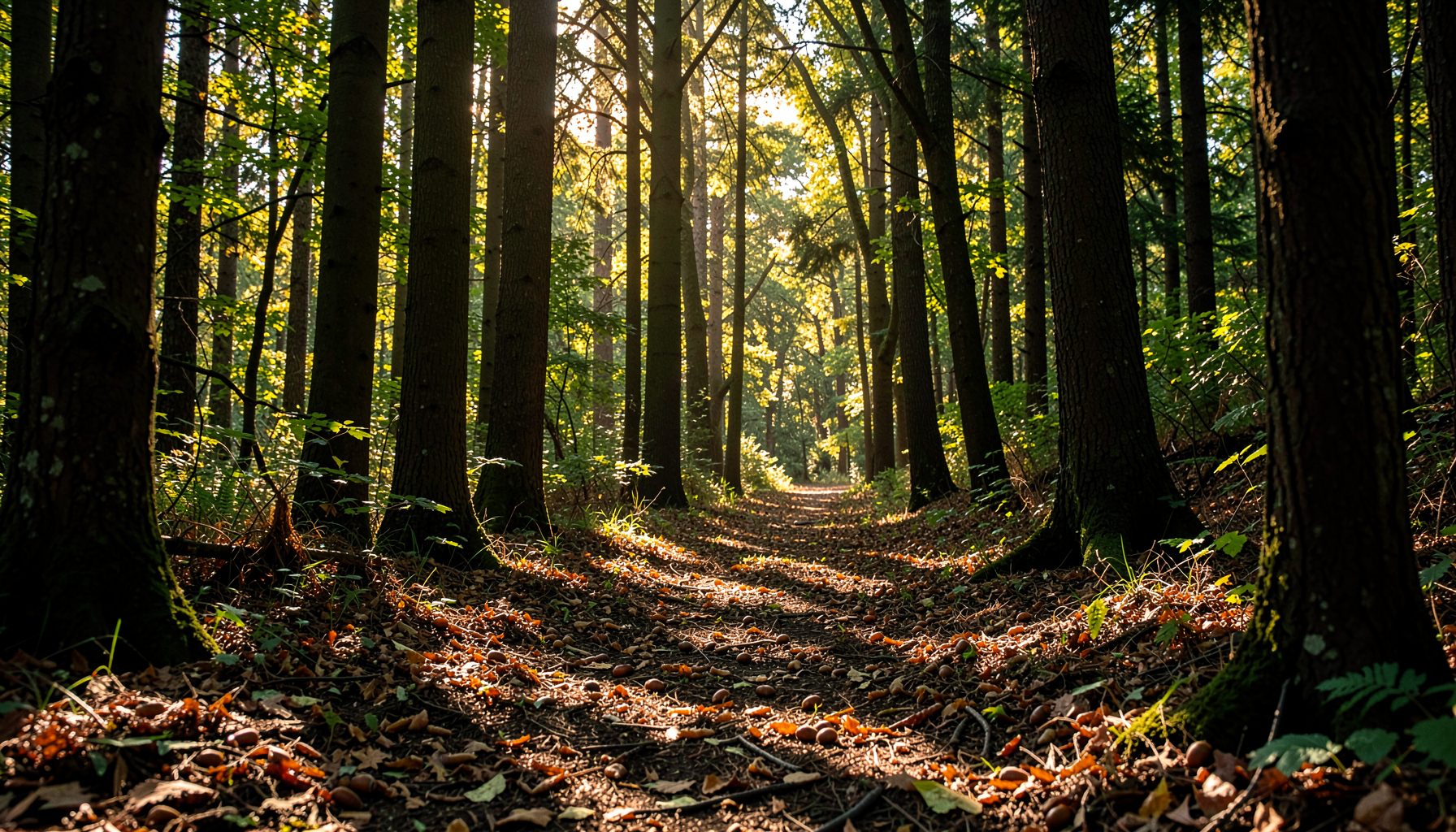
Seed collection begins in autumn when mature hardwoods release their crop. Volunteers gather acorns, walnuts, and other fruits from vigorous parent trees, ideally from multiple trees within the same area to preserve genetic diversity. Pickers avoid trees showing disease or storm damage, instead selecting specimens with full canopies and good seed production. The work is meditative: walkers scan the leaf litter, bend to inspect fallen nuts, and reject anything mouldy or undersized.
This first step shapes everything downstream. A seed collected too early may not be viable; one left too long may already have been predated by insects or small mammals. Experienced collectors learn the colour, weight, and cap-firmness that signal readiness. In Melbourne's Dandenong Ranges, Bushcare volunteers gather seed from indigenous trees for community nurseries, and they speak of the same harvest rhythms shaped by rainfall and the previous summer's heat.
Seeds go straight into breathable cotton or mesh bags, never sealed plastic, which traps moisture and rots the crop. Each bag is labelled with species, date, and site. This metadata lets nurseries track provenance and match seedlings to suitable planting zones.
Cleaning, sorting, and dormancy
Once collected, seeds move quickly into processing. Fleshy fruits need their pulp removed and the seed rinsed, while acorns are floated in water to separate sound nuts from duds. Sound acorns sink; hollow or weevil-infested ones float. This simple trick, familiar to anyone who has sorted chestnuts for a Bunnings community sausage sizzle side dish, dramatically improves germination rates and saves valuable nursery space.
Many temperate hardwood seeds then enter cold, moist stratification, mimicking winter to break internal dormancy. Walnut seeds often spend several months in damp sand or vermiculite in a cool shade house or refrigerator. Australian parallels are easy to draw: many wattle species benefit from smoke treatment or hot-water soaking to cue germination. Whichever technique is used, the goal is the same — synchronise germination so nursery beds emerge evenly.
Sorting by size also helps. Larger seeds tend to produce more vigorous seedlings, and grouping by size means a sowing bed grows on at a similar pace. The processing stage can feel unglamorous, but it is where future survival is quietly decided.
Sowing in community and state nurseries
Cleaned, stratified seeds arrive at the nursery in late winter or early spring, ready to be sown into raised beds, native tubes, or root training cells. Community nurseries, like those run by Landcare groups in suburban Adelaide or by Greening Australia's state teams, follow similar protocols to state facilities donating seedlings to public planting projects. Depth matters: most acorns are tucked roughly twice their own diameter below a sandy-loam surface, then firmed and lightly top-dressed with grit.
Nursery managers keep detailed records linking each sowing tray back to its seed source, because provenanced seedlings are increasingly prized for restoration. A seedling grown from local parents is far more likely to thrive on a nearby creek bank than one imported from a distant seedlot. This is true in the Potomac watershed and equally true in the catchment of the Brisbane River, where council planting schemes now require locally-sourced tubestock.
Watering is tuned carefully: too much and seeds rot, too little and germination stalls. Many nurseries use drip or mist systems timed for early morning, mimicking a gentle forest floor dampness. Some apply a slow-release native fertiliser designed to support steady growth without forcing soft, lush foliage that will struggle once planted out.
Growing on: from germination to sapling
After germination, seedlings enter a long formative period of one to three years. They are potted up into larger containers as roots develop, with air-pruning containers used to prevent circling. The aim is a balanced seedling with a sturdy stem, healthy fibrous roots, and a root collar just at the surface. A rushed seedling, or one that becomes root-bound, rarely establishes well.
Seedlings are also monitored for pests and diseases. Aphids, fungal leaf spot, and root pathogens can sweep through a crowded nursery if not caught early. Volunteers learn to read the leaves — slight yellowing, stippling, or wilting all tell a story. In humid Australian summers, similar issues trouble eucalyptus and melaleuca tubestock, and nurseries there rely on the same integrated pest management approaches: beneficial insects, hygiene, and good airflow between benches.
By the end of this phase, a quality seedling should be roughly pencil-thickness at the stem base, with a balanced canopy and roots reaching the drainage holes. This is the size at which it can withstand the shock of transplanting and the drying winds of an open streambank. Anything smaller is held over for another season; anything larger risks becoming root-deformed in its pot.
Hardening off and quality checks
Before seedlings leave the nursery, they undergo a hardening-off period that prepares them for real-world conditions. Watering is gradually reduced, shelter is removed, and seedlings are exposed to full sun and wind. This toughens the cuticle on leaves and encourages roots to seek moisture more aggressively. A hardened seedling transplants with far less shock and survives its first drought far better than one raised under shade cloth.
Quality checks at this stage are rigorous. Nursery staff and experienced volunteers assess each seedling for vigour, balance, root health, and freedom from pests. Substandard seedlings are culled or held back for less demanding sites like backyard plantings. Some programs also involve community auditors, drawing on the tradition of National Tree Day audits where planting sites are revisited years later to measure survival and refine nursery protocols.
This quality control does more than filter out weak stock; it builds trust between nursery, donor volunteers, and planters. When a seedling arrives at a planting site in peak condition, the planting team can focus on technique rather than rescue. That preparation has a measurable effect on survival, particularly on tough sites like eroding riverbanks.
Transport, site preparation, and planting day
Logistics matter in the final stretch. Seedlings are lifted from nursery beds, bagged in groups, and delivered to sites where they have often been pre-ordered months in advance. The trail from potting bench to creek bank is short but vital: roots must stay moist and cool, and trays should be shaded even on overcast days. Australian planting crews, from those working on the Yarra River to smaller projects around Hobart's rivulets, follow similar handling protocols learned through decades of trial and error.
Site preparation begins weeks earlier. Crews identify healthy existing vegetation and plan around it, recognising what already counts as a healthy buffer before disturbing the ground. Holes are pre-dug to the right depth, often with a ripping bar to break up compacted subsoil. On the day, seedlings are placed, backfilled, watered in deeply, and mulched with composted bark or leaf litter.
Planted trees then need aftercare — watering during dry spells, weed control, and protection from grazing animals or mowers. Some programs install tree guards; others rely on thick mulch and watchful volunteers. Each decision is a long-term investment in the streamside forest of the future.
Caring for seedlings long after the trowel is put away
Planting is the beginning of stewardship, not the end. Newly planted seedlings face their toughest year before root systems reach moisture deep enough to ride out dry periods. Regular check-ins through the first two summers make the difference between a forest and a graveyard of stakes.
Australian restoration projects have learned this the hard way. Volunteer teams who return to plantings in the Yarra Ranges or along the Cooks River in inner Sydney often find that fewer than half their seedlings survived without follow-up care. The survivors, though, grow into the sort of mature trees whose seed drop will start the whole cycle again.
For those keen to extend the benefits at home, complementing streamside efforts with features like building a rain garden broadens the impact to stormwater, pollinator habitat, and garden biodiversity.
Recommended practices for collectors and sponsors
- Choose vigorous, healthy parent trees free from obvious disease or dieback.
- Label every bag with species, date, and collection site to preserve provenance.
- Keep seeds cool and breathable from the moment they leave the ground.
- Support nurseries that air-prune roots and harden seedlings before sale.
- Volunteer for aftercare shifts during the first and second summer after planting.
- Adopt a nearby streamside site for ongoing weed control and watering.
- Connect planting work to broader yard-level projects that capture runoff and shelter wildlife.
Be part of the chain: sign up for the next seed collection walk in your local area, sponsor a tray of seedlings at a community nursery, or bring a school or workplace team to a planting day. Every acorn you help gather, every tube you tend, and every sapling you heel in carries the same quiet promise — cleaner water, cooler streams, and a forest that will outlive the hands that planted it.