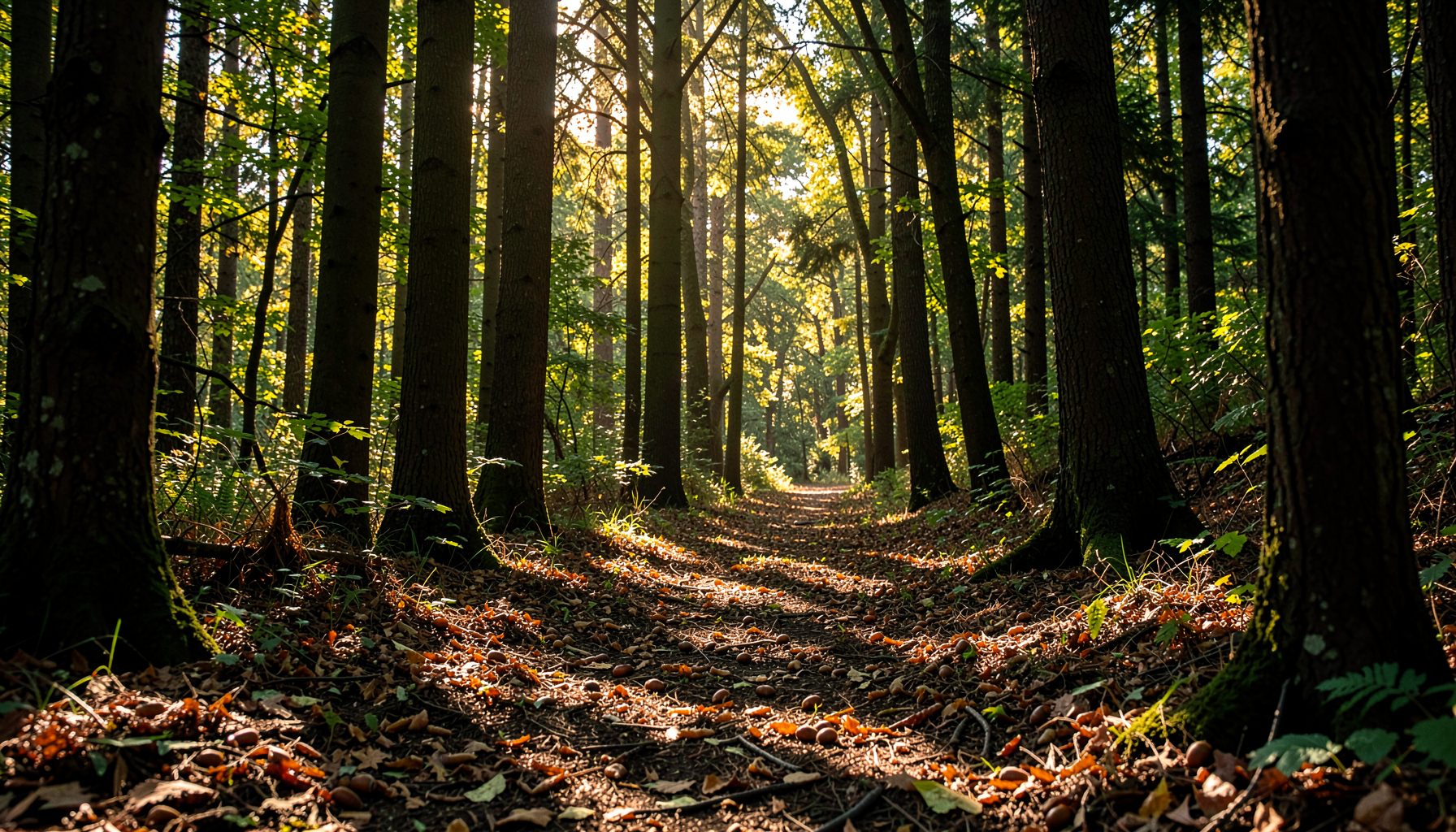
From forest floor to future streamside tree
An acorn or walnut gathered during a Growing Native volunteer event may look like a small, ordinary piece of woodland debris. At a state nursery, however, it becomes part of a carefully managed process that can eventually produce thousands of native trees and shrubs. Each seed carries the possibility of stabilizing a streambank, shading a creek, feeding wildlife, and strengthening a forest corridor.
The journey from collection bag to nursery bed involves several stages. Nursery staff must identify the species, assess the condition of each seed, store it under the right conditions, and encourage it to germinate at the appropriate time. Some seeds can be planted quickly, while others require months of cold, moist storage before they will sprout.
Understanding this process helps volunteers see why careful collection matters. Clean containers, accurate records, gentle handling, and responsible gathering all improve the chance that native hardwood and shrub seeds will become healthy seedlings for the Potomac River watershed.
Arrival and intake at the nursery
Collected seeds are generally delivered to a state nursery according to a planned schedule. The nursery may receive separate lots from different collection sites, dates, species, or volunteer groups. Keeping those lots identifiable is important because seed sources can influence how well young trees adapt to local soil, climate, moisture, and seasonal conditions.
At intake, staff inspect the shipment for obvious problems. They may check whether the seeds are mature, damaged, moldy, excessively dry, or mixed with leaves and other debris. Notes about the collection location and date help nursery personnel decide how to handle each batch and maintain a record of its origin.
The condition of a seed often reflects what happened before it reached the nursery. Seeds left in hot vehicles, sealed while damp, or carried in dirty containers may deteriorate quickly. By contrast, seeds collected at the right stage of maturity and kept cool and breathable are more likely to remain viable.
Identification and sorting
Correct identification is one of the first essential steps. Different native species have different requirements for storage, dormancy, germination, and planting. An acorn from a white oak group, for example, may behave differently from a walnut, hickory nut, or shrub seed. A mistaken label can lead to unsuitable treatment and an inaccurate planting record.
Volunteers can reduce uncertainty by learning local tree characteristics before entering the field. Growing Native’s tree identification resources help participants compare leaves, bark, twigs, fruit, and growth habits so that collection records are more reliable. When identification remains uncertain, preserving a sample of leaves, fruit, or a photograph can give nursery staff useful context.
Sorting may also separate sound seeds from those with insect holes, cracks, soft spots, or signs of decay. Some damaged seeds are removed immediately, while others may be evaluated through additional testing. The objective is not to make every seed look perfect; it is to direct limited nursery space toward seeds with a reasonable chance of producing vigorous plants.
| Nursery stage | What happens | Why it matters |
|---|---|---|
| Intake | Seed lots are received, labeled, and inspected | Protects traceability and reveals immediate problems |
| Cleaning | Leaves, stems, soil, and damaged material are removed | Reduces decay and improves handling |
| Viability assessment | Staff examine or test representative seeds | Estimates how many may germinate |
| Dormancy treatment | Seeds receive suitable moisture and temperature conditions | Helps trigger natural germination processes |
| Sowing | Seeds are planted in beds, containers, or field rows | Gives emerging seedlings space and care |
| Seedling development | Plants are watered, weeded, monitored, and protected | Builds a strong root system and healthy top growth |
| Distribution | Young trees are supplied for restoration projects | Connects nursery work with watershed recovery |
Cleaning and evaluating viability
Before seeds enter storage or propagation, nursery staff may remove soil, husks, leaves, stems, and other organic material. Cleaning reduces opportunities for fungi and pests to spread. For some species, the fleshy outer covering must be removed because it can hold moisture, attract insects, or interfere with germination.
Viability means that a seed is alive and capable of developing under suitable conditions. A nursery may estimate viability by examining seeds, cutting open a sample, using a float test where appropriate, or conducting a controlled germination test. No single method works equally well for every species, so procedures are adapted to the kind of seed being handled.
A low viability result does not necessarily mean the collection was unsuccessful. Native seed production naturally changes from year to year, and some species produce abundant crops only under particular weather conditions. A large collection with a modest germination rate may still provide many useful seedlings, while a smaller collection of highly viable seed can also be valuable.
Storage and the breaking of dormancy
Many native seeds have built-in dormancy. In a forest, this prevents them from germinating at the wrong time, such as immediately before winter. Nursery staff recreate parts of that natural cycle by controlling temperature and moisture. The treatment is often called stratification, especially when seeds are kept in a moist medium through a period of cold.
Acorns from some oak species are sensitive to drying and may be sown or stored soon after collection. Other seeds tolerate drying better and can be held until a later planting window. Walnuts, hickories, cherries, shrubs, and other native plants each have their own requirements, which is why a mixed bag of seeds cannot be processed as a single uniform crop.
Storage conditions must balance several risks. Excess moisture can encourage mold, while excessive dryness can kill seeds that need to remain hydrated. Temperatures that are too warm may cause premature sprouting or accelerate deterioration. Labels, inventory records, and regular inspections help staff track these changing conditions.
Sowing and early seedling care
When seeds are ready, nursery workers place them in prepared beds, containers, or outdoor production rows. Planting depth depends on seed size, species, soil texture, and the nursery’s method. Large nuts may be planted deeper than small shrub seeds, while some species require surface sowing or light contact with the growing medium.
Germination may happen unevenly. Some seeds sprout within weeks, while others take much longer or emerge after seasonal temperature changes. Nursery personnel monitor moisture, temperature, weed competition, disease, and animal damage. Even after a shoot appears above ground, its root system remains vulnerable to drought, compaction, and disturbance.
The goal is a balanced seedling rather than the fastest possible growth. A sturdy stem, healthy foliage, and well-developed roots give a young tree a better chance of surviving after outplanting. Depending on the species and restoration need, seedlings may remain at the nursery for one or more growing seasons before they are ready for a conservation project.
Where the young trees go
Once seedlings reach an appropriate size and condition, they can be distributed for streamside planting, reforestation, erosion control, habitat improvement, or other restoration work. The final destination may depend on landowner needs, watershed priorities, species suitability, and seasonal planting conditions.
Native trees beside streams can provide shade that helps moderate water temperature. Their roots hold soil in place, while fallen leaves contribute organic matter and food for aquatic organisms. Along wider forest edges, young trees create wildlife habitat and help reconnect fragmented woodland. These benefits develop gradually, often long after the original volunteers have finished collecting seeds.
A seed’s collection site can also inform restoration decisions. Local or regionally appropriate genetic material may be favored when it is available, especially where long-term adaptation is important. Nursery records make it easier to understand where planting material came from and how it moved through the restoration system.
How volunteers improve the outcome
A successful nursery crop begins with practical choices in the field. Volunteers do not need specialized equipment to make a meaningful difference, but they do need to follow collection guidance and avoid treating every forest floor seed as suitable for gathering.
Useful habits include:
- Collect mature, healthy-looking seeds from the species requested by the program.
- Keep different species and collection locations separated and clearly labeled.
- Use breathable bags or containers and avoid leaving damp seeds in direct sun or heat.
- Gather responsibly, leaving enough food and natural regeneration material for wildlife and the forest.
- Deliver collections promptly and include the date, location, species, and any relevant observations.
Education also continues after the collection event. Learning about forest ecology, watershed health, and native plant propagation helps volunteers understand why a nursery may reject some seeds, delay planting, or request more information. Growing Native’s publications library provides additional conservation material for schools, families, community groups, and workplace teams.
Every collection has a role in a larger chain of care. Volunteers protect the first link by gathering responsibly; nursery staff protect the next links through testing and propagation; restoration partners complete the process by planting and tending the seedlings in the watershed.
The next time you collect an acorn, walnut, or native shrub seed, handle it as future habitat rather than a simple object from the forest floor. Join a Growing Native collection event, share accurate collection information, and help move native seeds through the nursery process toward healthier forests and cleaner Potomac River tributaries.