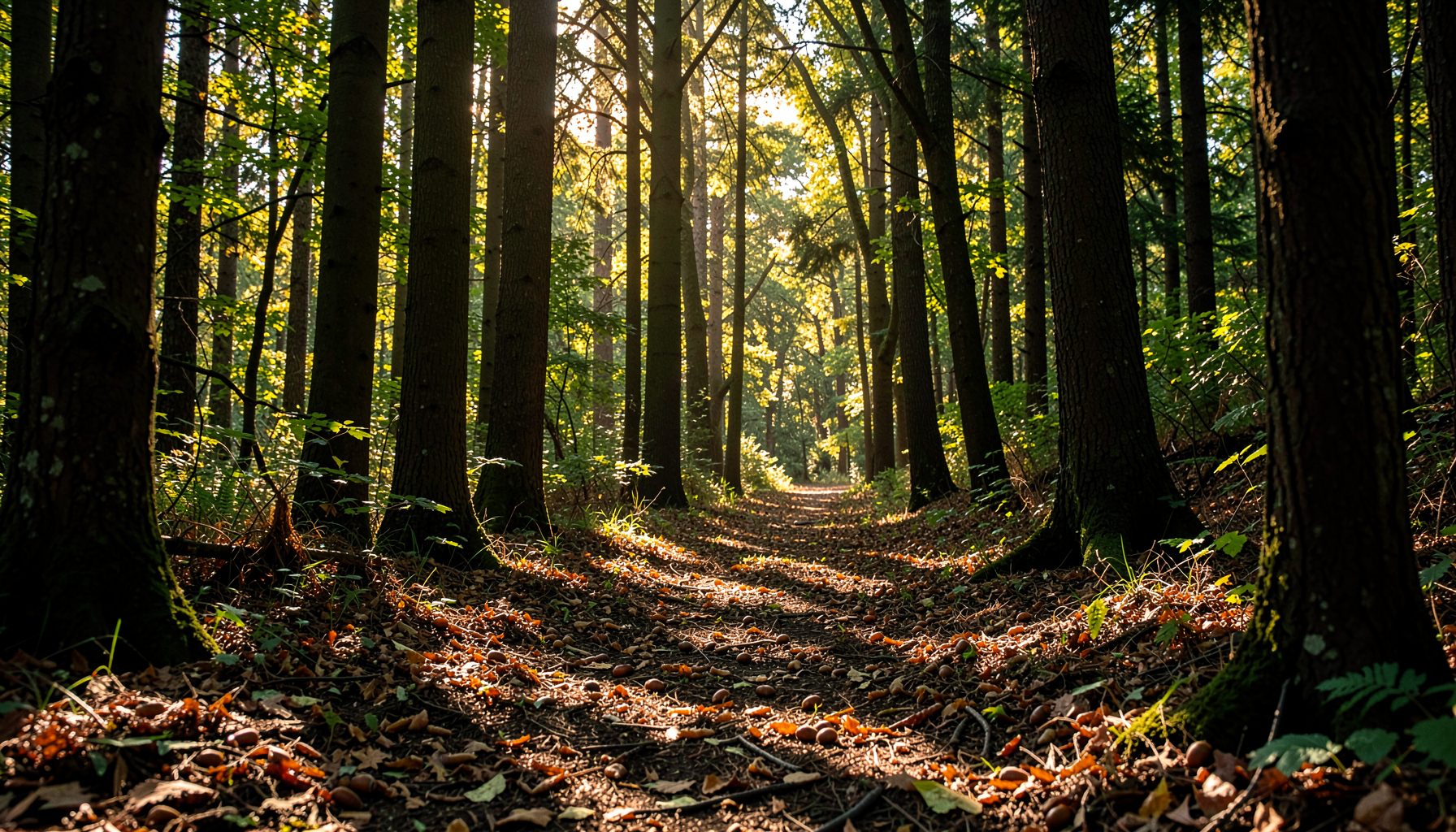
The Legacy of American Chestnut and the Work of Restoration
For thousands of years, the American chestnut (Castanea dentata) shaped forests from Maine to Georgia and westward through the Ohio Valley. Its tall, straight trunk rose above mixed hardwood stands, while its abundant nuts fed deer, wild turkey, squirrels, black bears, and rural communities. The species also supplied durable, lightweight wood for houses, barns, fences, furniture, and utility poles.
That forest legacy changed rapidly after chestnut blight arrived in North America. A fungus first documented in New York City in 1904 spread through eastern forests with remarkable speed, killing mature chestnuts across much of their native range within a few decades. The loss altered forest ecology, rural economies, wildlife food sources, and the cultural identity of many Appalachian communities.
Modern restoration efforts are rebuilding knowledge, genetic resources, and living populations rather than simply replacing lost trees. Scientists, land managers, nurseries, volunteers, and watershed organizations are combining breeding, field research, habitat restoration, and public education to give American chestnut a stronger future.
A Tree That Held Forests Together
American chestnut was exceptionally well suited to eastern forests. It grew quickly, tolerated a range of soils, and produced reliable nut crops. Its leaves decomposed into soil-enriching litter, while its deep root system helped stabilize slopes. Because chestnut wood resisted decay, fallen trunks remained part of forest ecosystems for years, creating shelter and nutrients for fungi, insects, amphibians, and small mammals.
The tree was valuable to people for practical reasons as well. Chestnut lumber was easy to split and work, yet strong enough for structural uses. Its nuts could be eaten fresh, dried, or ground into flour. In many Appalachian areas, chestnut mast was a dependable seasonal resource that connected household economies with surrounding forests.
This combination of ecological and cultural importance made the blight especially disruptive. The American chestnut was not a rare tree at the edge of its habitat; it was a major canopy species whose disappearance changed the composition and function of entire landscapes.
How Blight Reshaped Eastern Forests
Chestnut blight is caused by the fungus Cryphonectria parasitica. The pathogen enters through wounds in bark and forms cankers that interrupt the flow of water and nutrients. Mature trees generally die after the infection girdles their trunks, often within several years. Spores can spread through wind, rain, animals, and the movement of infected plant material.
By the middle of the twentieth century, billions of American chestnuts had been killed. The tree did not vanish entirely because its roots often survived underground. Stumps and root systems continued to send up shoots, creating young stems that could flower and produce nuts before the blight returned. These sprouts preserved fragments of the species’ genetic diversity, but they rarely grew large enough to restore the original canopy.
The forest vacancy was filled by a changing mix of oaks, maples, tulip poplars, hickories, and other hardwoods. Those species provide important habitat, yet each has different effects on soil, wildlife, carbon storage, and water quality. The disappearance of chestnut therefore represents a shift in forest structure rather than a simple loss of one familiar tree.
Why Restoration Requires More Than Planting Trees
A successful restoration program must address genetics, disease resistance, habitat conditions, and long-term survival. Planting a few seedlings in a park can raise public awareness, but landscape-scale recovery requires trees that can compete in natural forests and reproduce across generations.
Researchers have pursued several strategies. Traditional breeding crosses American chestnuts with blight-resistant Asian species, then repeatedly backcrosses offspring with American chestnuts to recover the original form and ecological traits. Other projects search surviving American trees for natural resistance and preserve their seeds, pollen, and tissues. Scientists have also studied biological control, including weakened fungal strains that may reduce the severity of blight cankers.
Genetic diversity is essential. A restoration population based on a narrow set of parent trees could be vulnerable to future diseases, climate stress, or changing forest conditions. For that reason, conservationists maintain seed orchards, document wild survivors, test families in different regions, and track performance over time. The goal is a self-sustaining American chestnut population, not a short-lived display of transplanted seedlings.
| Restoration Approach | Primary Strength | Key Limitation | Role in Recovery |
|---|---|---|---|
| Traditional breeding | Uses established forestry methods and combines resistance with American chestnut traits | Requires many generations and extensive field testing | Develops disease-resistant trees with broad genetic backgrounds |
| Wild-tree conservation | Protects surviving genes from native-range trees and isolated groves | Natural resistance may be uncommon or incomplete | Preserves genetic resources for future breeding |
| Biological control | Targets the blight fungus rather than replacing the host tree | Results can vary by site, climate, and fungal strain | May improve survival of mature trees and restoration plantings |
| Transgenic research | Can introduce a specific resistance trait efficiently | Requires regulatory review, public engagement, and ecological assessment | Tests additional pathways to durable blight resistance |
| Habitat restoration | Improves soils, light, stream buffers, and forest structure | Cannot remove the disease by itself | Creates conditions where restored trees can survive and reproduce |
Connecting Chestnut Recovery With Watershed Health
Forest restoration has consequences beyond the tree canopy. Healthy streamside forests filter sediment, slow stormwater, shade waterways, and stabilize stream banks. Their roots reduce erosion, while fallen leaves and woody debris support aquatic food webs. These services are especially important in the Potomac River watershed, where land use, severe storms, and development can place pressure on clean water.
Organizations such as Growing Native connect local stewardship with long-term forest recovery by involving residents in the collection of native hardwood and shrub seeds. Acorns, walnuts, and other locally adapted seeds are donated to state nurseries, where they can be grown into seedlings for streamside and upland planting projects. Although chestnut restoration often depends on specialized breeding programs, the same volunteer network helps communities understand native trees, seed cycles, forest succession, and watershed protection.
Species identification is a practical part of this work. Volunteers learning to distinguish hickories, oaks, walnuts, and other native trees gain skills that support responsible collection and monitoring. A field resource on identifying shellbark hickory can help participants recognize one of the native hardwoods associated with fertile bottomlands and rich forest habitats.
The Role of Communities and Seed Stewards
Restoration science depends on careful field practices. Seeds should be collected from healthy, locally appropriate trees, kept separate by source, and documented with dates and locations. Good records allow nurseries and researchers to evaluate regional adaptation and avoid confusing one species with another. They also give volunteers a direct connection to the life cycle of a forest.
Permission is equally important. Public land agencies may limit collection to protect wildlife, preserve natural regeneration, or prevent the spread of pests and pathogens. Before gathering seeds on public property, volunteers should review permits for seed collection and follow the requirements of the relevant agency. Responsible collection takes only a portion of available seed and leaves enough for wildlife and natural regeneration.
Schools, families, workplaces, and community groups can contribute in different ways. A classroom may learn tree identification and germination, while a workplace team can help sort and package collected seed. A family visit to a local forest can become an opportunity to observe mast production, leaf litter, stream buffers, and signs of wildlife.
Building a Durable Restoration Culture
The American chestnut story teaches that ecological damage can spread across regions and generations. It also shows why prevention, monitoring, and genetic conservation matter. New pests and pathogens can move through nursery stock, firewood, landscaping materials, and global trade, making early detection and careful plant movement essential.
Climate change adds another layer of uncertainty. Warmer temperatures, altered rainfall, drought, intense storms, and shifting pest ranges may affect where chestnut and other native trees can thrive. Restoration planners must therefore evaluate planting sites carefully and preserve genetic diversity that may help future forests respond to new conditions.
Public support will remain central. A disease-resistant tree cannot restore an ecosystem by itself if its habitat is fragmented, stream banks are unstable, or invasive plants dominate the understory. Chestnut recovery belongs within a broader effort to protect native forests, improve watershed function, and maintain connected habitat.
Everyday Actions That Strengthen Native Forests
People do not need to be geneticists or professional foresters to take part in restoration. Small, consistent actions create better information and more planting material for nurseries and conservation partners. The most useful contributions are careful, local, and guided by land-management rules.
Volunteers can support native tree recovery by:
- Learning to identify common hardwoods before collecting any seed.
- Recording the tree species, collection location, date, and approximate quantity.
- Following agency rules and obtaining permission before collecting on public or private land.
- Joining seed collection, sorting, planting, or stream restoration events through a local conservation program.
- Sharing accurate information about invasive pests, native forests, and the importance of genetic diversity.
These activities support chestnut restoration indirectly by strengthening the networks that make forest conservation possible. They also help ensure that future planting projects use healthy, well-documented native material suited to local conditions.
The American chestnut may never return to exactly the forests that existed before blight, but restoration can still recover much of its ecological role. Each preserved genetic line, tested seedling, protected stream buffer, and educated volunteer adds resilience to the next generation of woodland.
Growing Native offers practical ways to participate in that future across the Potomac River watershed. Join a seed collection or restoration activity, bring a school or community group into the field, and help turn local stewardship into healthier forests and cleaner waterways.