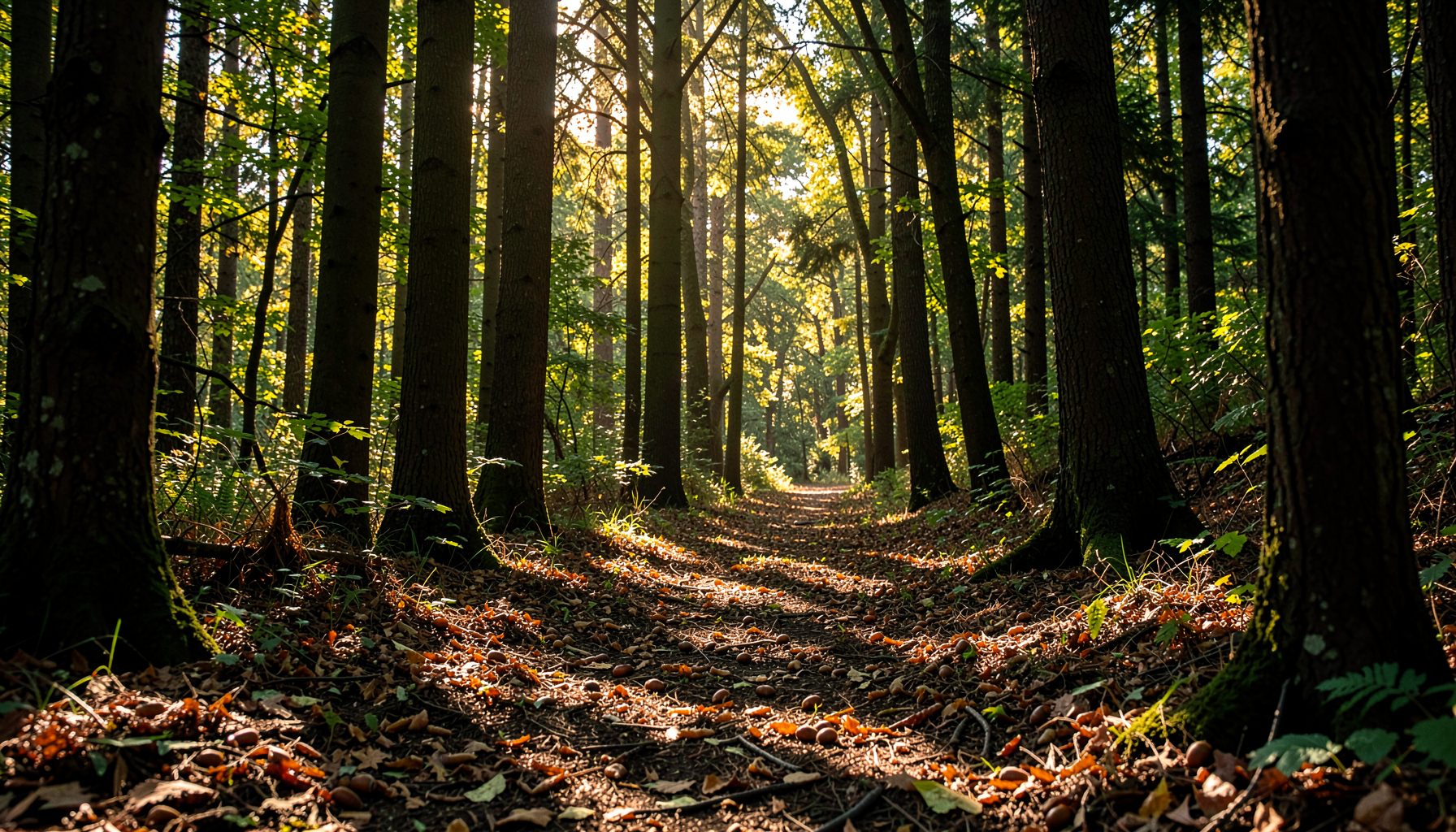
Why genetic diversity matters when sourcing native tree seeds
Healthy forests begin long before a seedling reaches a streambank. They begin with decisions about which trees produce seed, where those trees grow, and how many individuals contribute to the next generation. These choices shape the genetic resources available to forests for decades or even centuries.
Genetic diversity in seed sourcing means collecting from a broad range of healthy parent trees rather than relying on a small number of individuals or a single location. A diverse seed supply gives planted forests more traits to draw on, including differences in drought tolerance, disease resistance, seasonal timing, root development, and ability to withstand changing conditions.
For restoration work in the Potomac River watershed, careful seed collection connects local stewardship with long-term ecological resilience. Volunteers who gather acorns, walnuts, and other native seeds help state nurseries grow trees that can support cleaner water, stronger streamside habitats, and more stable forest communities.
Diversity gives forests room to adapt
Every tree species contains genetic variation. Two white oaks may belong to the same species, yet differ in how early they leaf out, how deeply their roots grow, or how well they tolerate heat and dry soil. Those differences are easy to overlook when collecting seed, but they become valuable when weather patterns, pests, and diseases shift over time.
A restoration planting with limited genetic representation may look successful at first. Its trees can establish evenly and grow well under current conditions, but a narrow genetic base leaves fewer options for responding to future stress. If a disease affects one inherited trait or a severe drought exposes a shared weakness, many trees may struggle at once.
A genetically varied population has a stronger chance that some individuals will thrive under unfamiliar conditions. Those trees can mature, reproduce, and pass useful traits to future generations. This process takes time, which is why seed-sourcing decisions should account for the forest that will exist decades after a planting project is complete.
Local seed connects trees to place
Genetic diversity must be balanced with ecological fit. Seeds collected from a distant region may carry traits suited to a different winter length, rainfall pattern, soil type, or growing season. When possible, restoration programs use local or regionally appropriate seed sources so that new trees are compatible with the conditions of the watershed.
The idea of “local” is broader than a single park or neighborhood. A seed source should reflect the planting environment while providing enough geographic and genetic breadth to avoid excessive inbreeding. Collecting from several nearby sites and many unrelated parent trees can create a stronger balance between local adaptation and population diversity.
This relationship between upland forests and downstream communities is especially important in the Potomac basin. Readers can explore why upstream forests matter to people and ecosystems far from the collection site. Trees established in one part of the watershed can influence water quality, erosion, habitat, and community well-being downstream.
Seed sourcing requires more than geographic labels
A county name or state boundary does not fully describe a seed source. Elevation, slope, aspect, soil moisture, flood frequency, and surrounding plant communities can all affect which trees are best suited to a restoration site. Recording these details helps nurseries and land managers make informed decisions about where the resulting seedlings should be planted.
Collectors should also look at the parent population itself. A group of trees that appears abundant may be made up of a few closely related individuals, especially where development, agriculture, or past logging has fragmented the forest. Gathering from many mature trees across a broad area helps represent more of the species’ natural variation.
| Seed-sourcing consideration | Why it matters for restoration | Practical approach |
|---|---|---|
| Number of parent trees | Reduces the risk of collecting from a narrow genetic line | Gather modest amounts from many healthy trees |
| Distance between collection sites | Captures variation across local conditions | Use several sites within the appropriate region |
| Habitat and soil conditions | Helps match seedlings to future planting locations | Record slope, moisture, elevation, and forest type |
| Tree health and maturity | Favors strong reproductive material | Avoid diseased, damaged, or unusually stressed parents |
| Collection records | Supports responsible nursery use and future monitoring | Label species, date, site, and collector information |
These practices also improve accountability. When seed lots are clearly labeled, a nursery can keep sources separate, select appropriate material for different projects, and learn which populations perform well after planting. Good records turn individual volunteer collections into useful ecological information.
Responsible collection protects future forests
Collecting seed is a form of intervention, even when it takes place in a healthy forest. Removing too much from one tree can reduce food available to wildlife, while repeated collection from the same easy-to-reach trees can gradually narrow the genetic sample. A responsible approach takes a small amount from many trees and leaves plenty for natural regeneration.
Timing matters as well. Seeds should be collected when mature and viable, then handled according to the needs of each species. Acorns, walnuts, hickory nuts, and shrub fruits differ in their storage requirements, moisture content, and susceptibility to insects or mold. Careful handling preserves the genetic material that the collection effort was intended to save.
Correct identification is another essential safeguard. Many native trees have similar-looking leaves, bark, or nuts, particularly during parts of the year when identification features are less obvious. A field guide such as this resource on identifying a bitternut hickory can help volunteers distinguish species before gathering seed.
Nurseries turn variation into living restoration
State nurseries play a central role in converting collected seed into restoration-ready seedlings. They provide controlled conditions for germination and early growth, while preserving information about where each seed lot originated. This partnership allows volunteer-collected material to become part of larger reforestation efforts.
A nursery may grow seedlings from multiple sources separately or combine compatible material according to project goals. Either way, genetic diversity gives land managers more choices. They can select trees for streamside buffers, floodplain forests, upland slopes, wildlife corridors, or other settings where conditions vary across a relatively small area.
The value of diversity becomes clearest after planting. Seedlings face browsing, competition, flooding, heat, invasive plants, and occasional disease. A mixed population is more likely to include individuals with traits that fit each challenge. Over time, surviving trees can reproduce locally and strengthen the genetic foundation of the restored forest.
The broader mission of Growing Native brings together seed collection, education, nursery partnerships, and watershed restoration. This integrated approach recognizes that a seed is both a potential tree and a small part of a living genetic legacy.
Volunteers can strengthen the seed supply
Volunteer collectors do not need advanced genetics training to support diverse seed sourcing. They do need clear instructions, careful observation, and a willingness to follow collection guidelines. Small actions become meaningful when many people gather responsibly across different neighborhoods, parks, schools, and workplaces.
Useful habits include:
- Collect from many healthy parent trees rather than taking heavily from one convenient tree.
- Leave enough mature seed for birds, mammals, and natural forest regeneration.
- Record the species, collection date, location, habitat, and any relevant site conditions.
- Keep seed from different sites clearly separated unless program guidance says otherwise.
- Ask for identification help before collecting unfamiliar nuts, fruits, or seeds.
Schools and community groups can add an educational dimension by mapping collection sites, comparing forest conditions, and observing which species produce seed in different years. Families can learn how tree populations vary across a watershed, while workplaces can organize seasonal service days that connect employees with local conservation.
The work also encourages a deeper understanding of time. A volunteer may collect an acorn in autumn, while the resulting oak spends years in a nursery and decades becoming a mature part of a streamside forest. Genetic diversity ensures that the tree’s future is not determined by a single narrow set of inherited traits.
Building resilience one seed at a time
Seed sourcing is one of the earliest and most influential decisions in forest restoration. Choosing diverse, well-documented, ecologically appropriate material helps create plantings that are better prepared for environmental change while preserving the character of native populations.
The benefits extend beyond individual trees. Diverse forests can stabilize streambanks, filter runoff, shade waterways, provide wildlife food and shelter, and store carbon. Their genetic breadth supports continued adaptation as conditions change, giving future forests a stronger foundation for recovery.
Volunteer with Growing Native, learn to identify local trees, and take part in responsible seed collection across the Potomac River watershed. Every carefully gathered seed contributes to a more resilient forest and a healthier waterway for generations to come.