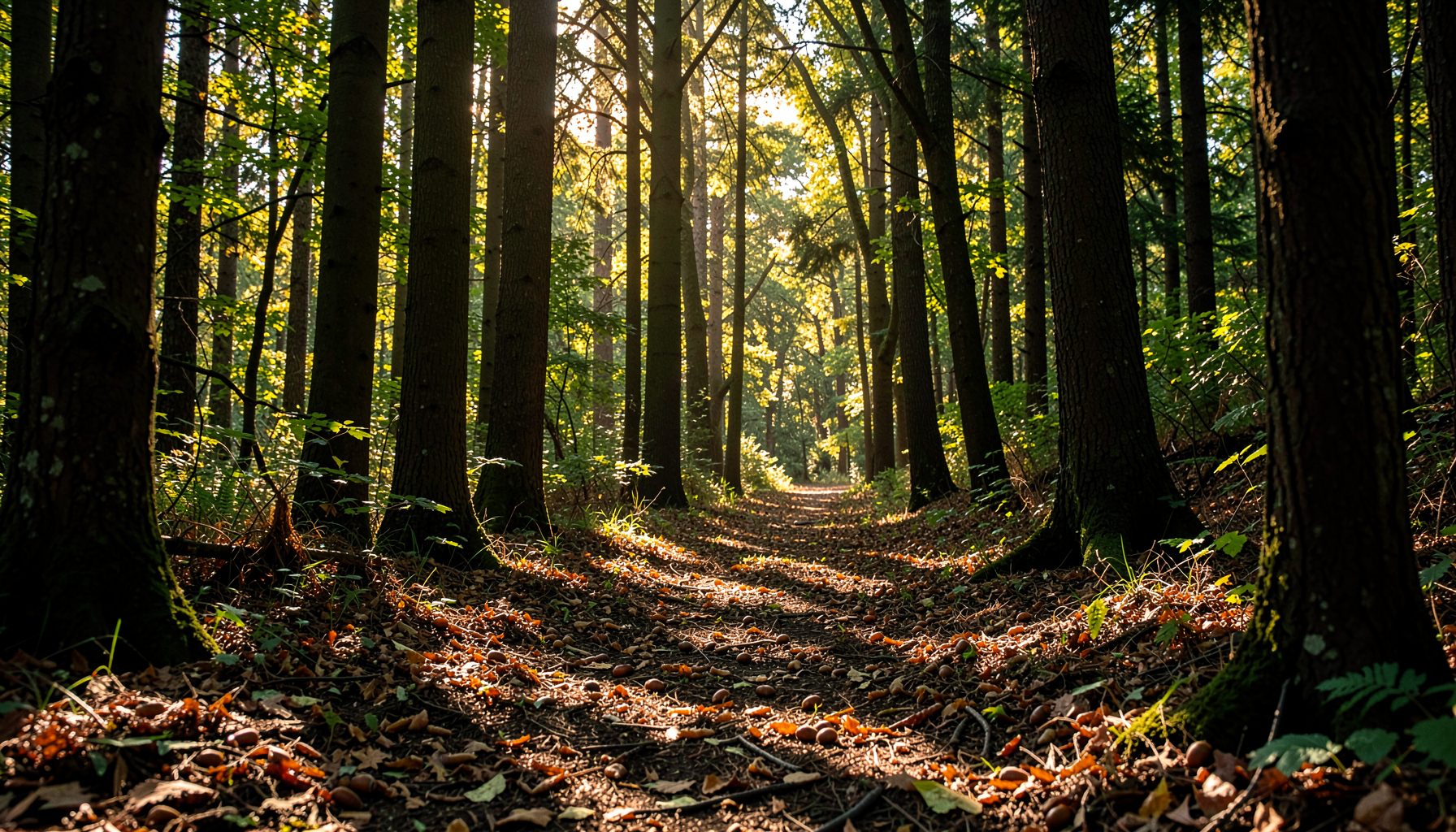
How deer overpopulation changes forest regeneration
Healthy forests depend on a steady cycle of seed production, germination, seedling growth, and replacement of older trees. When deer populations become too large for the available habitat, that cycle can break down. Deer browse on young trees and shrubs, often removing the very plants needed to form the next generation of forest.
The effect of deer overpopulation on forest regeneration is gradual, which can make it difficult to recognize at first. Mature trees may continue to shade streams and hold soil in place while few young trees survive beneath them. Years later, the forest may have an age gap, with aging trees and sparse understory growth but little replacement.
This issue matters across the Potomac River watershed, where forested stream corridors help filter runoff, reduce erosion, and protect water quality. Supporting native seed collection, restoration planting, and informed volunteer stewardship can help communities respond to deer pressure while rebuilding resilient woodland habitats.
Why deer pressure matters
Deer are natural parts of eastern forests, and moderate browsing can shape plant communities without preventing recovery. The problem arises when deer numbers exceed what the landscape can support. In a heavily browsed forest, each deer may find less food, so animals spend more time feeding on woody plants, wildflowers, and tree seedlings.
Young trees are especially vulnerable because they grow slowly and remain within browsing height for several years. A seedling may emerge after an acorn germinates, produce a few leaves, and then be repeatedly clipped before it can reach a height that protects it from deer. Repeated damage weakens the plant and can eventually kill it.
Deer also feed selectively. They often favor nutritious native species such as oak, maple, dogwood, viburnum, and many wildflowers. Less palatable plants may remain, creating an understory dominated by a small number of browse-resistant species. This shift reduces forest diversity and limits the range of food and shelter available to wildlife.
How regeneration gets interrupted
Forest regeneration begins when mature trees produce viable seeds. Acorns, walnuts, and other seeds must reach suitable soil, survive weather and animals, germinate, and develop roots and shoots. Even when seed production is strong, young plants cannot establish a new canopy if browsing removes them faster than they grow.
Deer damage can occur at several stages. Animals may eat freshly emerged seedlings, strip leaves from saplings, rub antlers against young trunks, or trample plants in frequently used travel areas. Browsing may also force seedlings to grow sideways, produce multiple weak stems, or remain permanently stunted beneath the canopy.
The result is often called a regeneration failure. A forest may appear green from a distance, yet close inspection reveals that most plants are short, damaged, or composed of unpalatable species. Without intervention, canopy openings created by storms, disease, or tree harvests may be filled by invasive plants rather than native trees.
Repeated browsing also changes competition on the forest floor. When deer remove preferred native seedlings, invasive shrubs, vines, and aggressive herbaceous plants can gain an advantage. These plants may form dense cover that blocks sunlight, occupies soil space, and makes it harder for native tree seedlings to establish.
Reading signs in the woods
A browse line is one of the clearest signs of heavy deer pressure. It appears when vegetation is noticeably taller above the height deer can reach, while branches and leaves below that level are sparse. In an affected forest, the lower layers may look unusually open, with little variation in height and few flowering plants.
Other clues include seedlings with clipped stems, ragged leaf edges, stripped branches, and repeated branching close to the ground. Tracks, droppings, and worn trails can confirm deer activity, but these signs must be interpreted alongside vegetation conditions. A few deer sightings do not automatically indicate a population problem.
Comparing protected and unprotected areas provides stronger evidence. A small fenced exclosure can show how vegetation grows without browsing, while nearby unfenced plots reveal the pressure deer create. If native seedlings, shrubs, and wildflowers flourish inside the enclosure but remain scarce outside it, deer are likely a major factor.
Monitoring should track more than the number of seedlings. Volunteers and land managers can record species, height, stem condition, browsing damage, canopy cover, invasive plant abundance, and survival over time. Repeated observations reveal whether a restoration project is producing lasting regeneration or simply adding plants that deer later remove.
Effects beyond tree seedlings
The consequences extend through the entire forest ecosystem. A reduced understory leaves less cover for ground-nesting birds, small mammals, reptiles, and amphibians. Fewer native flowers and shrubs also mean fewer sources of nectar, fruit, and seeds for insects and wildlife.
Sparse vegetation can expose soil to rainfall and surface runoff. Along streams, the loss of woody roots and low-growing plants may increase bank erosion and allow sediment to enter the water. Warmer, less shaded stream edges can affect aquatic habitat, while added nutrients and pollutants move more easily through degraded riparian zones.
A strong forest canopy still provides important benefits, even when regeneration is weak. Healthy watershed forests can lower water treatment costs, protect property, support recreation, and strengthen local economies; the forest economic value of these services makes long-term regeneration an environmental and community concern.
| Forest condition | Common signs | Likely ecological effects | Useful responses |
|---|---|---|---|
| Low deer pressure | Seedlings of many species, layered understory | Continuous forest renewal and diverse habitat | Routine monitoring and native planting |
| Moderate pressure | Some browsing, uneven seedling survival | Reduced diversity in the understory | Protect priority seedlings and track trends |
| High pressure | Browse line, clipped stems, few saplings | Regeneration failure and invasive plant expansion | Deer management, fencing, invasive control |
| Long-term overbrowsing | Aging canopy, nearly empty understory | Canopy gaps fail to replace mature trees | Coordinated restoration and multi-year evaluation |
Restoring a diverse forest
Effective restoration usually combines several methods rather than relying on planting alone. Deer population management may be needed where local numbers are consistently above the habitat’s capacity. Depending on land ownership and local regulations, this can include regulated hunting, professional wildlife management, or other carefully planned approaches.
Physical protection is useful when managers need to safeguard specific planting areas. Tall fencing can exclude deer from larger restoration plots, while tree shelters or wire cages can protect individual seedlings. Barriers must be high and securely installed, and they require maintenance so that plants do not become trapped or damaged.
Plant selection also matters. Native species suited to local soils, moisture, and light conditions are more likely to survive once established. However, choosing plants that deer avoid should not become a reason to abandon preferred species altogether. A healthy forest needs oaks, hickories, maples, shrubs, and herbaceous plants with different ecological roles.
Seed collection programs can contribute to restoration at a landscape scale. Volunteers who collect native hardwood and shrub seeds support nurseries that grow locally appropriate seedlings for streamside planting and other conservation projects. Protecting those seedlings after planting is essential, especially during the first few years when roots and stems are still developing.
Community actions that help
Individuals, schools, families, workplaces, and community groups can support forest recovery by combining observation with practical conservation. Seed collection, tree identification, invasive plant monitoring, and streamside planting all help people understand how deer, forests, and water quality are connected.
Local projects should set realistic goals and measure results. A planting day can create a valuable start, but long-term care determines whether seedlings survive. Follow-up visits can identify browsing, drought stress, invasive competition, broken shelters, or signs that a site needs additional protection.
Useful steps for volunteer and community projects include:
- Learn to identify native tree and shrub seedlings before collecting or planting.
- Record browsing damage and compare protected plots with nearby unprotected areas.
- Use sturdy shelters or fencing where deer pressure threatens young plants.
- Plant a mix of native trees, shrubs, and ground-layer species suited to the site.
- Return regularly to remove invasive growth, repair protection, and measure survival.
These actions are most effective when shared with landowners, watershed groups, wildlife professionals, and local agencies. Deer management can be sensitive, and decisions should follow local laws, public-safety requirements, and sound population data. A cooperative approach helps align forest restoration with broader watershed goals.
Native plants and watershed resilience
Native shrubs are especially valuable along creeks because they stabilize banks, provide cover, and support insects and birds. Species selection should reflect soil moisture, flood frequency, sunlight, and the level of deer pressure at each site. Information about native shrubs for pollinators can help guide planting plans that support both stream health and wildlife.
A diverse riparian planting can include deep-rooted shrubs near the bank, flexible trees farther from frequent flooding, and herbaceous plants that cover exposed soil. When these layers mature together, they slow runoff, intercept sediment, shade the stream, and create habitat corridors. Protection from deer gives the plants time to establish the structure needed to provide those services.
Restoration should also account for the surrounding landscape. A fenced patch may regenerate successfully while nearby forests continue to lose young trees. Connecting protected areas, monitoring deer impacts across multiple properties, and coordinating seed collection with planting schedules can produce stronger results than isolated efforts.
Forest regeneration is measured in decades, but the choices made each season influence that future. A healthy watershed needs mature trees and a dependable understory of younger trees ready to replace them. By joining seed collection, monitoring, planting, and responsible deer management, communities can help restore forests that remain productive for wildlife, clean water, and future generations.
Growing Native offers practical ways to take part in that work across the Potomac River watershed. Volunteers can help collect native seeds, learn about forest ecology, and support the streamside seedlings that become tomorrow’s forests. Visit the program, find an opportunity suited to your group, and turn local stewardship into lasting regeneration.