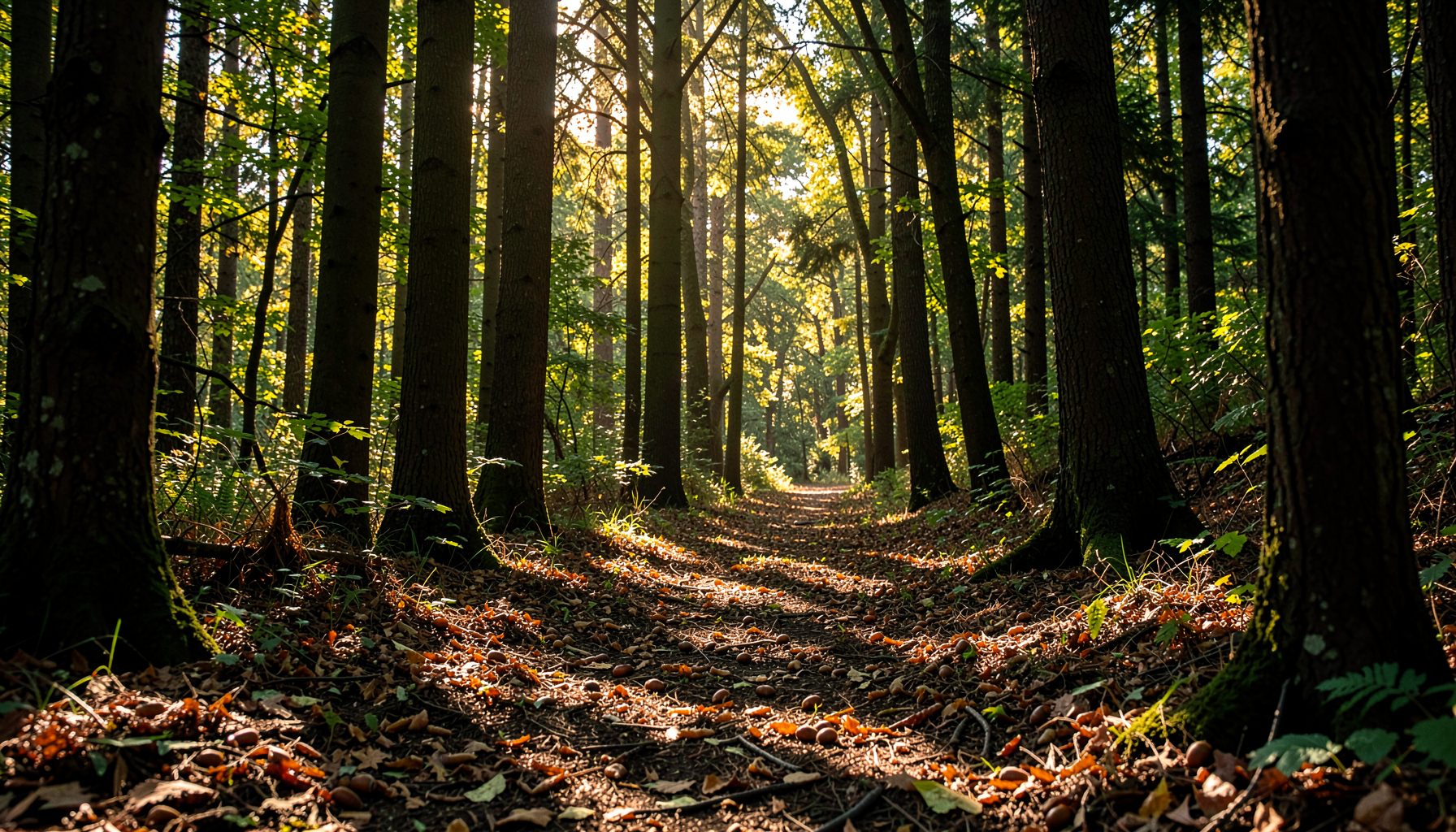
How seed collection supports carbon sequestration
A forest begins long before a seedling is planted. It begins with the collection of viable seeds, the protection of genetic diversity, and the careful movement of native plants into places where they can grow. In the Potomac River watershed, these steps connect volunteer action with healthier forests, cleaner streams, and the long-term removal of carbon dioxide from the atmosphere.
Carbon sequestration is the process of capturing carbon and storing it in living organisms, dead organic matter, soils, and other reservoirs. Trees are especially valuable because they draw carbon dioxide into their tissues through photosynthesis and can hold that carbon for decades or centuries. Seed collection is an early link in this natural carbon cycle.
The connection between seed collection and carbon sequestration is therefore indirect but essential. Gathering acorns, walnuts, and shrub seeds does not immediately remove a measurable amount of carbon from the air. It creates the supply of locally adapted native plants needed to restore forests that can capture carbon, stabilize soil, shade waterways, and continue regenerating over time.
Seeds are the starting point for future carbon storage
Native seeds carry the biological potential to become trees and shrubs suited to local soil, climate, and watershed conditions. When collected from healthy parent plants, they can help nurseries produce seedlings with a strong chance of surviving after planting. Survival matters because a tree that reaches maturity stores far more carbon than a seedling that fails during its first summer.
Hardwood species such as oaks and walnuts can become substantial long-lived trees. Their trunks, branches, roots, and leaves hold carbon as they grow. Shrubs contribute on a smaller scale, yet they are important in dense streamside plantings, forest edges, and areas where large trees may take longer to establish.
A reliable seed supply also allows restoration programs to plant more native vegetation across larger areas. Every successful seedling adds a small amount of future carbon storage. As many seedlings grow together, their combined biomass and root systems create a meaningful ecological benefit.
From collection bag to forest floor
The carbon benefits of seed collection depend on what happens after volunteers gather the seeds. Collection must be followed by identification, sorting, storage, germination, nursery care, transportation, and planting. Each step protects the possibility that a seed will become a healthy plant rather than being lost to disease, drying, predation, or unsuitable conditions.
State nurseries can grow collected seeds into streamside seedlings that are ready for restoration projects. These young plants are then placed along waterways, where their roots can hold soil and their canopies can eventually shade streams. The restoration process turns a seasonal volunteer activity into a long-term investment in forest structure and watershed resilience.
The program’s native seed collection work shows how community participation can support this larger chain of care. Volunteers are not simply gathering natural materials; they are helping supply the next generation of plants for forests that will continue absorbing and storing carbon as they mature.
How restored forests hold carbon
Trees store carbon in several connected places. Aboveground wood is the most visible reservoir, but roots, leaf litter, fallen branches, and organic soil matter also play important roles. A restored forest gradually develops layers of living and decaying material, allowing carbon to move from the atmosphere into biomass and soil.
Young forests often accumulate carbon quickly as seedlings and saplings grow. Older forests may add carbon more slowly, but they can hold large quantities in thick trunks, deep roots, standing dead wood, and rich soil. A diverse forest containing trees of different ages can combine rapid growth with long-term storage.
Native species support this process because they are part of the local food web and ecological community. They provide habitat for insects, birds, and mammals while contributing leaf litter and root growth to the soil. This broader ecological function can improve forest stability, helping carbon remain stored through changing weather and natural disturbances.
Riparian planting strengthens the watershed
Streamside forests, also called riparian buffers, connect carbon storage with water quality. Their roots reinforce stream banks and reduce the amount of soil that washes into the water. Their leaves and branches slow rainfall, while forest floor vegetation helps water soak into the ground instead of rushing across bare surfaces.
Erosion control has a climate connection. When soil remains in place, carbon-rich organic matter is less likely to be carried downstream or broken down after exposure. Stable stream banks also protect growing trees, giving seedlings a better chance to survive and develop substantial root systems.
Shade from riparian trees can lower stream temperatures, which benefits aquatic organisms and supports healthier waterways. Cleaner, cooler streams are part of a resilient watershed, and watershed resilience matters because extreme rainfall, drought, and heat can threaten newly restored forests. Seed collection supports the availability of plants needed to create these protective corridors.
| Restoration stage | Carbon-related contribution | Broader watershed benefit |
|---|---|---|
| Collecting native seeds | Preserves the supply of future trees and shrubs | Supports locally appropriate restoration |
| Growing nursery seedlings | Increases survival compared with unmanaged planting | Produces plants ready for streamside projects |
| Planting riparian buffers | Builds future biomass and root carbon | Reduces erosion and filters runoff |
| Maintaining diverse forests | Stores carbon in wood, roots, litter, and soil | Provides habitat and improves stream conditions |
| Protecting mature stands | Keeps accumulated carbon in place | Strengthens long-term watershed stability |
Volunteer collection makes climate work tangible
Seed collection gives people a clear way to participate in climate and conservation work. A family, school class, workplace, or community group can learn to identify native trees, gather mature seeds responsibly, and understand how seasonal observations connect to forest regeneration.
The activity also teaches that environmental change often depends on patient, repeated care. Seeds may be collected in autumn, grown in a nursery over time, planted during a suitable season, and monitored through several years of weather and competition. This extended timeline helps volunteers see carbon storage as a living process rather than a single event.
A family field experience can make that process especially memorable. The account of a family volunteer day illustrates how collecting seeds can combine outdoor learning with practical stewardship. Children and adults can observe parent trees, handle native seeds, and recognize that their work may benefit forests they will not see fully grown.
Measuring benefits beyond a single tree
Carbon sequestration estimates are shaped by species, growth rate, soil, moisture, planting density, survival, and forest age. For that reason, it is misleading to assign one fixed carbon value to every collected seed or planted seedling. A walnut or oak may eventually store considerable carbon, while a seed that does not germinate has no lasting contribution to forest biomass.
Restoration programs can improve outcomes by tracking seed sources, planting locations, survival rates, and maintenance needs. Monitoring helps identify which species perform well in different sites and whether additional protection is needed from deer, invasive plants, drought, or flooding. Better survival means more of the original restoration effort becomes enduring forest.
Carbon is also just one measure of success. Native seed collection supports biodiversity, stream health, erosion reduction, wildlife habitat, and public understanding of ecology. These benefits reinforce one another. A diverse, well-rooted forest is generally better positioned to keep carbon stored and continue providing services to the watershed.
Practices that increase long-term impact
The most effective collection efforts connect careful harvesting with responsible restoration. Volunteers should gather only the amount requested by the program, leave enough seeds for natural regeneration and wildlife, and follow guidance about species, timing, identification, and collection sites. Quality is more useful than indiscriminate quantity.
Restoration teams can also improve climate benefits by selecting appropriate planting locations and protecting young plants during establishment. A seedling placed in a suitable riparian zone, protected from browsing, and surrounded by compatible native vegetation has a better chance of reaching the size at which carbon storage becomes substantial.
Useful practices include:
- Collect mature, healthy seeds from correctly identified native species.
- Follow program guidance on quantities, storage, labeling, and delivery.
- Prioritize restoration sites where native trees can survive and expand.
- Protect seedlings from deer, invasive plants, drought, and severe competition.
- Monitor planted areas so losses can be replaced and successful methods repeated.
These actions support a complete pathway from seed to forest. They also make carbon sequestration more durable by improving the likelihood that stored carbon remains in living biomass, roots, and soil over many years.
When people collect native seeds, they are helping prepare the biological foundation for future forests across the Potomac River watershed. The result is measured over seasons and generations: more trees rooted along streams, stronger soils, cleaner water, richer habitat, and steadily increasing carbon held in the landscape.
Individuals, families, schools, community groups, and workplaces can take part in this work through Growing Native’s volunteer opportunities and educational resources. Begin by learning which native seeds are ready in your area, join a collection event, and help turn a handful of acorns or walnuts into a lasting contribution to forest recovery.