How Forests Protect Clean Drinking Water
Clean drinking water begins long before it reaches a treatment plant or flows from a household tap. Across the Potomac River watershed, rain moves through forest canopies, soil, wetlands, streams, and reservoirs before becoming part of a community’s water supply. The condition of each part of that system influences how much pollution enters the water and how much effort is needed to remove it.
Healthy forests act as living infrastructure. Their leaves slow rainfall, roots hold soil in place, and layers of organic material absorb water like a sponge. These natural processes reduce erosion, filter pollutants, support groundwater recharge, and help streams remain cool enough for aquatic life.
Protecting forest cover is therefore a practical part of public health and watershed management. Reforestation, native plant conservation, and volunteer seed collection can strengthen water quality for communities today while creating resilient forests for future generations.
Forests Begin Water’s Journey
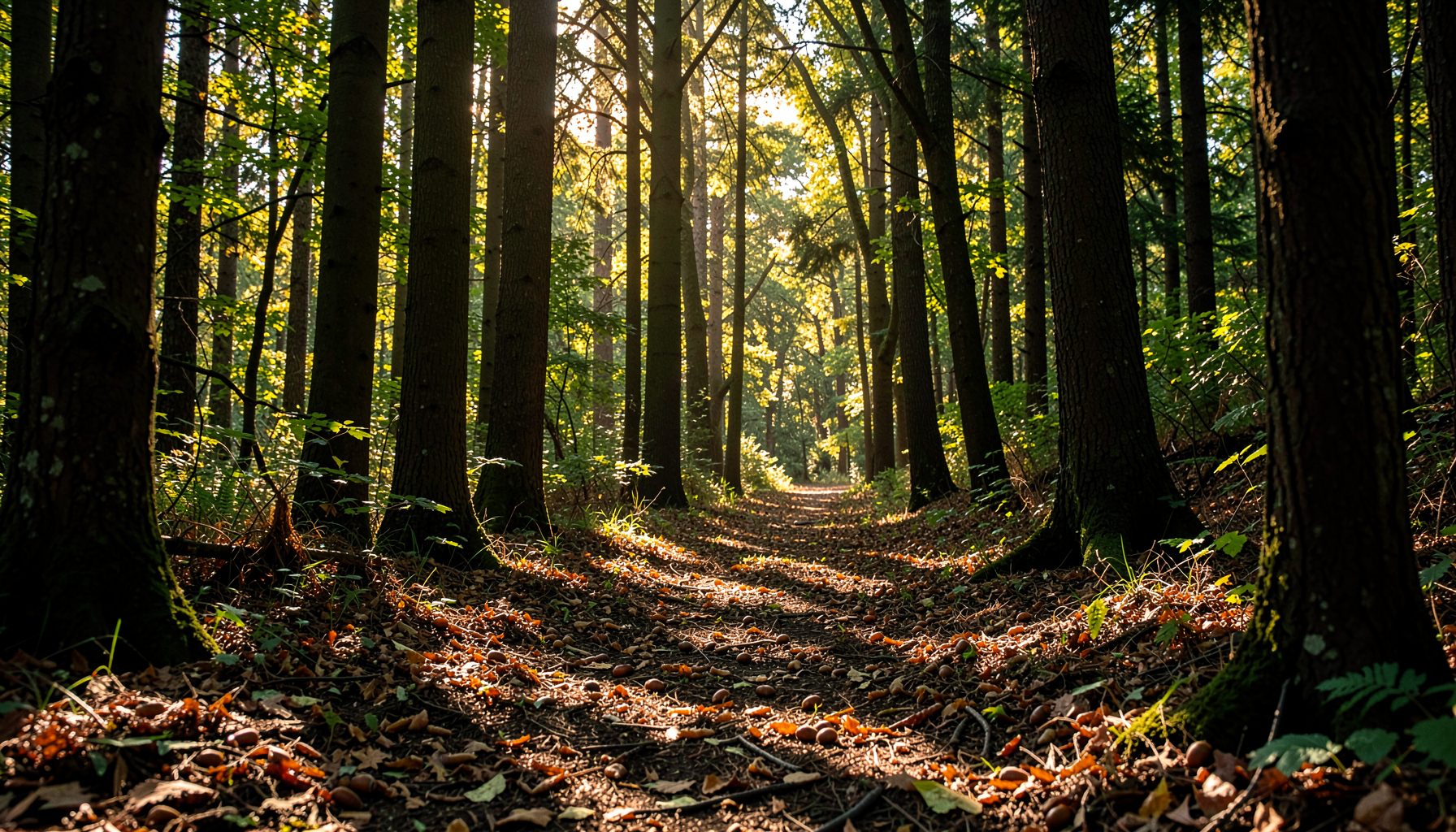
When rain lands on a forest, it rarely strikes bare ground at full speed. Leaves and branches intercept some of the water, while fallen twigs, leaf litter, and humus cushion the soil surface. Rain then moves gradually through the forest floor instead of rushing across compacted ground. This slower movement gives water time to soak into the soil.
Tree roots create channels that improve infiltration. Water that enters these pathways can replenish groundwater, feed springs, and sustain streamflow during dry periods. A forested watershed often releases water more steadily than a heavily developed area, where pavement and rooftops send large volumes of runoff into drainage systems within minutes.
The seasonal life of native trees supports this cycle in subtle ways. Acorns, walnuts, and other seeds become future trees that deepen roots and expand forest cover. The acorn’s life cycle illustrates how a small seed can connect wildlife, soil, forests, and the long-term health of the watershed.
Roots Reduce Erosion And Pollution
Erosion is a major pathway through which sediment reaches streams and reservoirs. Exposed soil can be carried away by storms, making water cloudy and covering aquatic habitat with layers of silt. Sediment may also transport attached nutrients, metals, and other contaminants into waterways.
Trees and shrubs reduce this risk from several directions. Their roots bind soil particles, while stems and leaf litter slow the movement of runoff. Along stream banks, native vegetation creates a protective buffer that absorbs water before it reaches the channel. This living barrier can trap sediment and capture nutrients from fertilizers, animal waste, and decaying organic matter.
Streamside forests also help prevent banks from collapsing during floods. Their roots reinforce the soil, and their shade keeps water temperatures lower. Cooler streams generally hold more dissolved oxygen, supporting fish, insects, and microorganisms that contribute to a balanced aquatic ecosystem.
Natural Filtration Supports Drinking Water
Forest soils contain a complex community of fungi, bacteria, insects, and other organisms. As water passes through this living filter, some pollutants are absorbed, transformed, or broken down. Organic matter can retain nutrients, while soil particles capture suspended material. These processes reduce the amount of contamination moving downstream.
This filtration is especially valuable before water enters reservoirs or public water intakes. When less sediment and fewer nutrients reach a source, treatment facilities may face lower operating demands. Clearer source water can also reduce the formation of certain treatment byproducts and help protect the infrastructure used to deliver drinking water.
Forest protection cannot replace careful wastewater management, agricultural practices, or modern treatment systems. It complements them by reducing pollution at its origin. A watershed with extensive native vegetation gives engineered systems a cleaner starting point and provides additional protection during intense storms.
| Watershed condition | Movement of rainfall | Likely effect on water quality | Benefit to communities |
|---|---|---|---|
| Mature native forest | Slow infiltration through canopy, leaf litter, and soil | Lower sediment and nutrient runoff | More stable streamflow and lower treatment pressure |
| Reforested stream buffer | Roots and vegetation intercept runoff near waterways | Reduced bank erosion and pollutant delivery | Cooler streams and improved aquatic habitat |
| Heavily paved area | Rapid surface runoff through streets and drains | Greater pollutant and sediment pulses after storms | Higher flood and water-treatment costs |
| Bare or compacted soil | Limited infiltration and high overland flow | Severe erosion and cloudy water | Greater reservoir sedimentation and infrastructure wear |
| Invasive-dominated or degraded woodland | Uneven cover and weaker ecological function | Variable filtration and poor regeneration | Less reliable long-term watershed protection |
Forests Moderate Floods And Drought
A healthy forest helps manage both ends of the water cycle. During heavy rain, the canopy and soil absorb part of the storm’s force, reducing sudden runoff. This can lower the volume and speed of water entering streams, which reduces flood stress on banks, bridges, and nearby communities.
During dry weather, stored soil moisture and groundwater recharge can sustain baseflow. Trees do use water, so forest hydrology is not as simple as “more trees always means more streamflow.” Yet well-structured forests improve infiltration and reduce the rapid loss of water from bare, compacted landscapes. Their value lies in regulating movement through the watershed rather than creating water from nothing.
Climate change makes this regulating function increasingly important. More intense downpours can wash pollutants into drinking-water sources, while longer dry periods can warm streams and reduce available water. Diverse native forests, with trees and shrubs suited to local conditions, are better positioned to recover from disturbances and maintain ecological functions over time.
Restoration Builds A Living Water Filter
Forest restoration often begins with practical actions: protecting existing trees, stabilizing stream banks, controlling invasive plants, and planting native species where cover has been lost. In some places, restoration also depends on a reliable supply of locally adapted seedlings. Collecting native seeds helps nurseries grow trees that belong to the region’s ecological community.
Volunteer seed collection connects people directly to this work. Individuals, families, schools, and community groups can learn to identify native hardwoods and shrubs, gather mature seeds responsibly, and contribute them to restoration efforts. Those seeds may eventually become trees along a stream, on a degraded slope, or near a headwater that feeds a larger drinking-water system.
The process takes patience. A seed collected in autumn may spend months in storage or stratification before germinating. A seedling may require years of care before it offers substantial shade, root reinforcement, and filtration. This long timeline is precisely why watershed conservation requires planning beyond a single season.
Practical Ways To Strengthen Water Protection
Healthy forests depend on both large-scale conservation and everyday choices. Landowners, municipalities, schools, and businesses can protect water quality by preserving mature trees, limiting soil disturbance, and restoring native vegetation where runoff concentrates. Even small parcels can provide valuable habitat and reduce the movement of sediment toward nearby drains and streams.
Volunteer programs make this work accessible to people who do not own land or have specialized equipment. Participants can support restoration while gaining a clearer understanding of tree identification, forest ecology, and the connection between local actions and downstream drinking water.
Useful ways to contribute include:
- Collect native acorns, walnuts, and shrub seeds during the appropriate season and follow local collection guidance.
- Join streamside planting, invasive-plant removal, or forest monitoring activities with a conservation organization.
- Keep leaves, soil, mulch, and yard chemicals out of storm drains and roadside ditches.
- Encourage schools and workplaces to organize watershed education or native-seed collection days.
- Support land-use decisions that preserve forested buffers, wetlands, and headwater areas.
These actions reinforce one another. A protected forest reduces runoff today, while seed collection and planting prepare the watershed to remain productive decades from now. Education helps communities recognize why a wooded slope or streamside thicket has value beyond its appearance.
Shared Stewardship Protects Downstream Communities
Water flows across property lines and municipal boundaries, so forest conservation is a shared responsibility. A small tributary may begin beside a neighborhood, pass through farmland, and eventually join a river that supplies water to thousands of people. Decisions made near the headwaters can affect communities many miles downstream.
This shared connection gives watershed work a strong civic dimension. Residents can advocate for riparian buffers, support conservation funding, and participate in local monitoring. Teachers can use nearby forests and streams as outdoor classrooms. Employers and community groups can offer volunteer time for projects that produce measurable environmental benefits.
The Growing Native program offers a way to connect these efforts with native seed collection and watershed education in the Potomac River region. By taking part, volunteers help turn seasonal seeds into future forests while learning how forest structure, soil, wildlife, and water quality depend on one another.
A clean glass of water reflects an entire landscape working together: tree roots holding soil, fungi processing nutrients, wetlands slowing runoff, streams carrying oxygen, and people choosing to protect the systems that sustain them. Explore a local seed-collection or restoration opportunity, gather others around the work, and help grow the forests that will keep the Potomac watershed healthier for years to come.