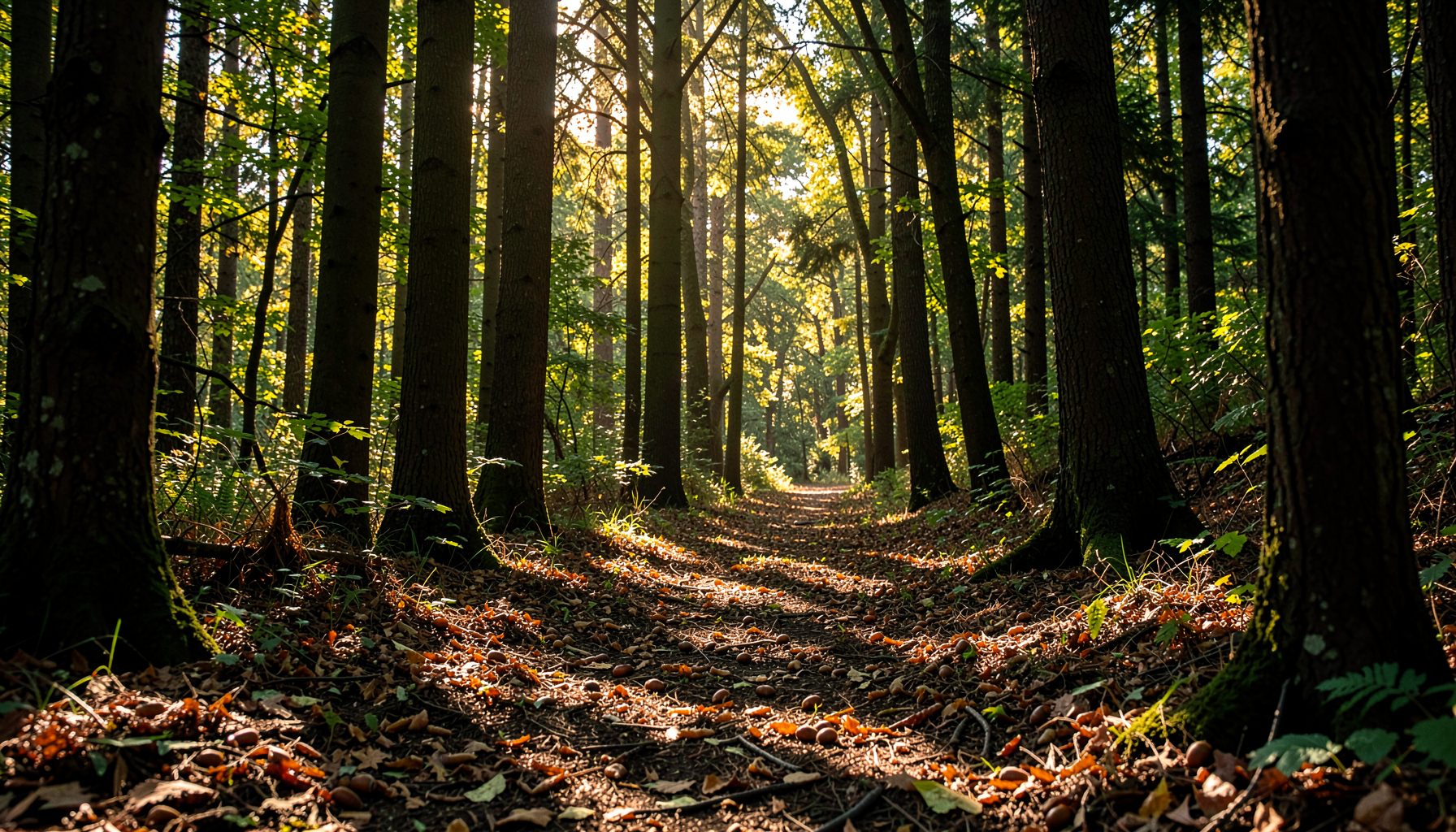
Reading Winter Seeds Through a Field Guide
Winter may seem like a quiet season for tree identification, but the forest floor is full of useful evidence. Fallen acorns, winged fruits, nut husks, pods, and persistent berries can reveal which trees grew nearby, even after leaves have disappeared. A field guide helps turn these small objects into reliable clues.
Learning to identify tree seeds in winter is valuable for more than personal knowledge. Native hardwoods and shrubs support wildlife, stabilize streambanks, filter runoff, and contribute to healthier watersheds. When volunteers recognize and collect suitable seed, they can help expand the supply of locally adapted trees for restoration projects.
The most accurate identification comes from combining several observations rather than relying on a single shape. Examine the seed itself, study the husk or fruit around it, look at the nearby tree and habitat, and use the guide’s range maps and seasonal notes to test your first impression.
Begin With the Whole Seed Package
A field guide may organize entries by seed, fruit, tree, or botanical family. Before turning pages, decide what you have actually found. Is it a bare nut, a winged seed, a berry-like fruit, a pod, or a seed enclosed in a cup or husk? The surrounding structure often provides a stronger clue than the seed alone.
For example, an acorn is technically a nut, but its cup distinguishes oak species from other nut-producing trees. A walnut has a thick outer husk and a deeply ridged shell, while a hickory nut is often enclosed in a smoother or more textured husk that splits in sections. A maple seed has a recognizable wing, yet the angle and pairing of the wings can help narrow the identification.
Check whether the object is fresh, weathered, chewed, moldy, or partly decomposed. Squirrels and birds may remove husks or open shells, leaving misleading fragments. Several seeds from the same location are more useful than one damaged specimen because they show the normal range of size, color, and form.
Prepare for Winter Fieldwork
Choose a guide that covers the trees native to your region and includes clear drawings or close photographs of fruits and seeds. A guide devoted only to leaves may be less useful in winter. Look for information about bark, buds, twigs, habitat, fruiting season, range, and similar species. A regional guide is usually more precise than a general guide covering an entire continent.
Bring a small hand lens, pencil, paper bags, a ruler, a phone or camera, and a field notebook. Paper bags allow damp material to breathe; sealed plastic bags can encourage mold. Keep samples from different trees separate and label each one with the date, location, habitat, and any notes about the parent tree.
Winter conditions make simple preparation important. Wear waterproof footwear and warm layers, and avoid collecting from roadsides or private land without permission. If you are working near a stream, stay aware of slippery banks and rising water. The goal is careful observation, not covering a large distance.
A useful field note might read: “Three large brown nuts beneath a mature tree on a moist floodplain; husks thick, ridged, and partly split; shell dark with deep grooves.” That description gives the guide several traits to compare and remains useful when the specimen changes after drying.
Read Shape, Texture, and Arrangement
Start with the most visible characteristics. Record the seed’s length, width, symmetry, surface texture, color, and weight. Notice whether it is round, oval, flattened, triangular, ridged, pointed, or winged. If a husk, cup, pod, or cone remains attached, describe how it opens and whether it has hairs, scales, spines, or a distinctive pattern.
Arrangement can be just as informative. Some trees produce paired winged seeds, while others produce clusters, dangling fruits, or single nuts. A samara from a maple may be attached to another samara in a characteristic angle. Tulip poplar produces narrow winged seeds arranged around a central cone-like structure. Sycamore fruits often persist as round balls hanging from long stalks.
Use the tree and site as supporting evidence. A seed found in a wet floodplain may belong to a different group of species than one found on a dry ridge, though wind and animals can move seeds. Look upward for remaining fruits, bark patterns, branching habits, or persistent buds. Nearby leaves may be absent, but the trunk and twigs can still confirm or challenge a seed-based identification.
A field guide’s identification key is most effective when you follow it in order. Do not skip directly to a picture that looks familiar. Compare the diagnostic traits listed in the text, then read the descriptions of similar species. If the guide says a feature is variable, treat it as supporting evidence rather than a final answer.
Compare Common Winter Finds
The following reference can help organize observations before you consult a full regional guide. Seed appearance varies with maturity, weather, and species, so use these descriptions as starting points rather than absolute rules.
| Winter find | Distinctive clues | Trees or groups to compare | Useful habitat notes |
|---|---|---|---|
| Acorn | Nut partly enclosed by a cup; cup scales and nut shape vary | White, red, and chestnut oak groups | Uplands, slopes, mixed forests, and stream corridors |
| Walnut | Thick green-to-brown husk; hard, dark, deeply grooved shell | Black walnut and related walnut species | Rich bottomlands, floodplains, and open woodland |
| Hickory nut | Usually enclosed in a husk that splits into sections; shell may be smooth or ridged | Shagbark, shellbark, pignut, and mockernut hickories | Well-drained forest soils and mature hardwood stands |
| Maple samara | Paired winged seeds, often forming a V or U shape | Red, silver, and sugar maple groups | Moist woods, stream edges, and disturbed areas |
| Beech nut | Small triangular nut, commonly inside a prickly husk | American beech | Mature, shaded hardwood forests |
| Tulip poplar fruit | Cone-like central structure with many narrow winged seeds | Tulip poplar | Moist, fertile forests and lower slopes |
| Sycamore fruit | Round, bristly seed ball on a long stalk | American sycamore | Riverbanks, floodplains, and wet bottomlands |
When a specimen does not fit neatly into one row, that is a signal to slow down. A damaged acorn cup may disappear, a walnut husk may be eaten away, and a maple samara may lose one of its wings. Photograph the object in place before moving it, then compare several intact examples.
Confirm Before You Collect
Misidentification is common when a collector focuses on color alone. Brown is shared by many mature seeds, and green may indicate freshness rather than species. Size also changes with growing conditions, so it should be measured and compared with other traits rather than treated as decisive.
Look for repeated evidence from multiple specimens and, whenever possible, from the parent tree. Check the guide’s distribution map to see whether the species occurs in your county or watershed. If two species remain possible, record both and seek a second reference or knowledgeable confirmation rather than assigning a confident name too soon.
Collection quality matters when seeds are intended for restoration. Avoid shriveled, cracked, insect-damaged, or moldy specimens unless a nursery specifically requests them for educational purposes. Do not remove every seed from a single tree; wildlife depends on this food, and natural regeneration needs a supply left on the ground.
Community projects benefit from shared standards. A neighborhood seed drive becomes more dependable when volunteers use the same labels, collection dates, and basic identification process. Growing Native explains practical ways to engage neighbors while keeping local conservation work organized and welcoming.
Link Seed Knowledge With Watershed Health
Many native tree seeds collected in the Potomac River watershed eventually support projects far from the original collection site. State nurseries can grow acorns, walnuts, and other locally sourced material into seedlings for streamside planting. Those young trees shade waterways, reduce erosion, slow stormwater, and create habitat as they mature.
This connection gives winter fieldwork a larger purpose. Identifying a seed correctly helps protect genetic and ecological fit, while documenting its source preserves information about where the material came from. A simple label can connect a handful of nuts on a forest floor to future restoration along a creek.
Schools and youth groups can use seed identification to combine biology, outdoor observation, and civic responsibility. Families can compare seeds found in different habitats, and workplaces or community organizations can turn a seasonal collection day into a practical conservation event. The activity is accessible because it begins with ordinary objects rather than specialized equipment.
A field guide also encourages patience. The more carefully volunteers observe small differences, the better they understand forest communities. Over time, seed shape, bark, habitat, and seasonal timing become part of a connected picture of watershed ecology rather than isolated facts to memorize.
Make Each Field Visit More Reliable
Use these habits to improve identification and collection quality:
- Photograph the seed, husk, and nearby tree before collecting anything.
- Gather several intact examples from the same tree and keep them separate from other samples.
- Record the date, location, habitat, parent tree, and identifying features in a notebook.
- Compare at least two similar species in the guide instead of choosing the first visual match.
- Leave enough seed for wildlife and natural regeneration, and follow local collection rules.
Review your notes soon after returning home, while the habitat and tree details are still fresh. If a specimen changes color or dries out, your photographs and written observations will preserve the original evidence. You can also compare your findings with herbarium resources, nursery guidance, or an experienced naturalist.
Turn Winter Observations Into Action
Careful seed identification is a small skill with a lasting reach. It helps volunteers recognize native species, collect responsibly, and understand why healthy forests are essential to clean water and stable streambanks. Each accurate observation adds value to restoration work across the watershed.
Those ready to take the next step can register to volunteer with Growing Native and bring field-guide skills into a community seed collection effort. A winter walk, a labeled paper bag, and a willingness to look closely can become part of a larger effort to grow and protect native forests for years to come.