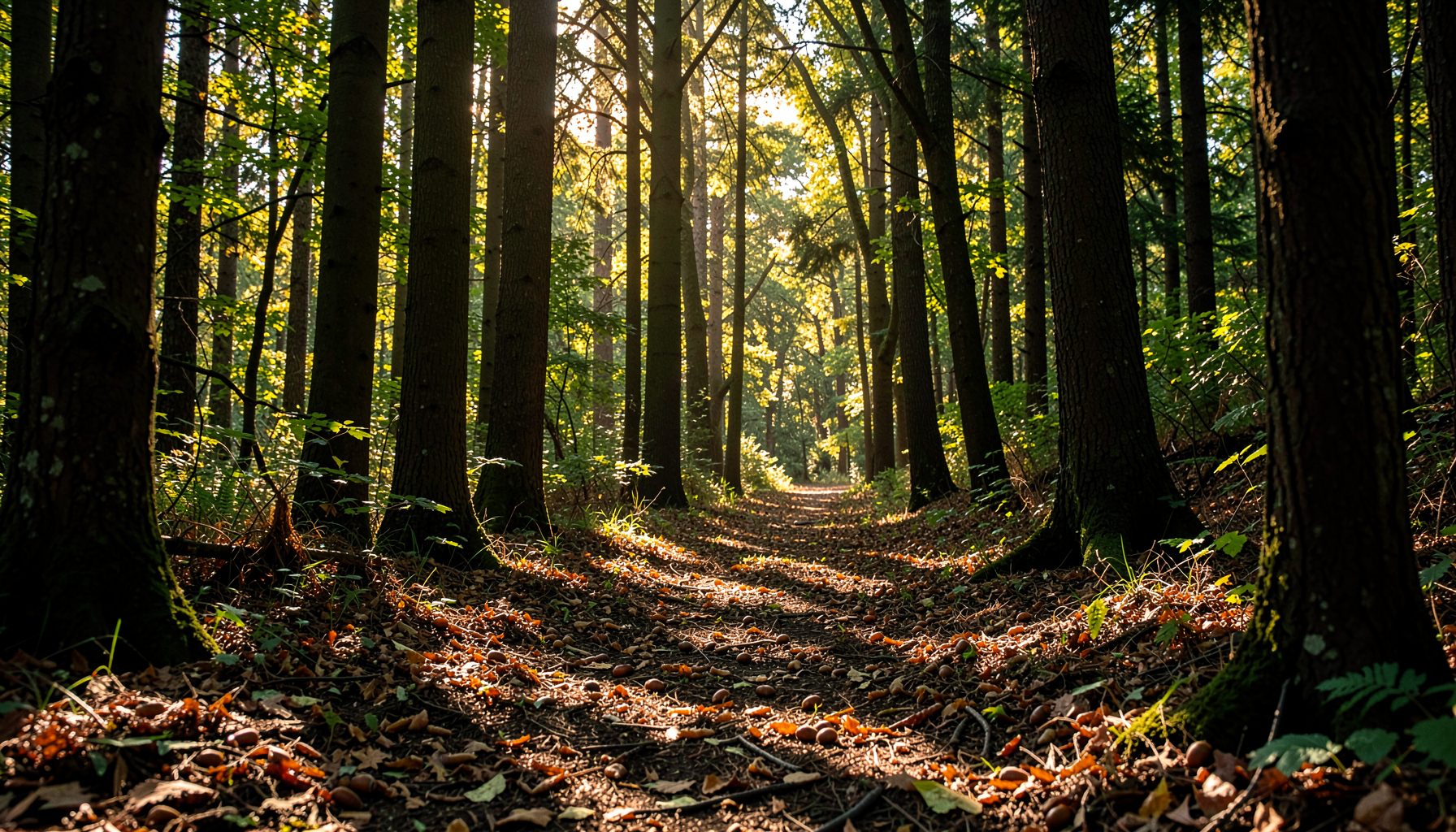
Identify a Swamp White Oak by Leaves and Acorn Caps
The swamp white oak, Quercus bicolor, is a deciduous tree of wet forests, floodplains and stream margins in eastern North America. Its foliage can resemble several other white oak species, so reliable identification comes from combining leaf shape, underside colour, twig details and the structure of its acorn cap.
For Australian readers, the species is most likely to appear in botanical collections, specialist gardens, arboreta or imported tree references rather than in a typical bushland reserve. Learning its features is still useful for understanding oak diversity, reading tree-identification guides and recognising the seed characteristics that matter in restoration work. The Growing Native’s mission offers a helpful example of how careful seed knowledge can support healthier forests and waterways.
Where Swamp White Oak Naturally Grows
Swamp white oak is native to the eastern United States and parts of southeastern Canada. It commonly grows on rich, moist soils beside rivers, creeks, swamps, floodplain depressions and seasonally wet woodland. The tree tolerates occasional flooding better than many upland oaks, although it does not require permanently waterlogged ground.
A mature tree can reach roughly 20–30 metres, sometimes more, with a broad, rounded crown. Its grey-brown bark develops loose, irregular ridges as it ages. Young branches may look slightly fuzzy, while older twigs become smoother and greyish-brown.
Its streamside habitat explains why the species is valuable in discussions about water quality. Trees rooted near waterways can slow surface runoff, hold soil and provide shade. Growing Native’s streamside buffer guide shows how vegetation along a watercourse functions as part of a living protective system.
Reading the Leaf Shape
Swamp white oak leaves are alternate rather than opposite along the twig. They are usually about 12–20 centimetres long and 7–12 centimetres wide, with an oval to obovate outline. “Obovate” means the leaf is broader towards the tip than the base, giving it a gently top-heavy shape.
The margins are divided into rounded lobes, usually five to ten on each side. These lobes are shallow to moderately deep and do not form the sharp, bristle-tipped points seen on many red oak relatives. The tip is broadly rounded or short-pointed, while the leaf base may be wedge-shaped, rounded or slightly heart-like.
The upper surface is medium to dark green during the growing season. In autumn, leaves can turn yellow, russet, bronze or reddish-brown before falling. Because Australian seasons are reversed, a tree cultivated in Canberra or Melbourne may display its autumn colour at a different time from specimens pictured in North American field guides.
Checking the Leaf Underside
The underside is one of the most useful clues. Swamp white oak leaves are noticeably paler below, often silvery, grey-green or whitish. Fine hairs give the underside a soft texture, especially along the veins and in the area where the veins branch from the midrib.
Turn over several leaves rather than relying on one. Sun exposure, age and weather can make a leaf look unusually pale or dark. Young leaves may also have more obvious hair than fully mature foliage. A strong contrast between a green upper surface and a pale, softly hairy underside supports an identification, especially when paired with rounded lobes.
The petiole, or leaf stalk, is generally short to medium in length, commonly around 1–3 centimetres. Leaf arrangement is also important: leaves emerge singly along the twig in an alternating pattern. A specimen with opposite leaves is not a swamp white oak, even if the leaf colour appears similar.
Identifying the Acorn Cap
Swamp white oak acorns mature during the same growing season in which they develop. They are typically oval to egg-shaped, brown when ripe and around 2–3 centimetres long, though size varies with growing conditions. The nut is held in a shallow to moderately deep cup attached to a relatively long stalk.
The cap usually encloses about one-third to one-half of the acorn. Its surface may look scaly, knobbly or finely hairy, with overlapping scales that create a textured appearance. The edge is rounded rather than dramatically fringed. When several acorns are present, examine the attachment: swamp white oak often produces acorns on noticeable stalks, a useful feature in combination with the wetland habitat.
Look at both the cap and the nut. A loose cap found beneath a tree may have dried, darkened or lost some of its fine hairs, so it should be assessed alongside fresh material when possible. An acorn cap alone is rarely enough for a confident identification because several white oak species produce superficially similar cups.
Separating Similar White Oaks
The common white oak, Quercus alba, has leaves with rounded lobes too, but its leaves are often more deeply divided and may have a more balanced oval outline. Its acorns are usually borne on shorter stalks. Habitat can help: white oak is strongly associated with well-drained upland soils, while swamp white oak favours low-lying wet ground.
Bur oak, Quercus macrocarpa, is easier to distinguish once its unusually large, fringed cap is visible. Its leaf lobes may be deeply cut, and the acorn cup often has a conspicuous hairy fringe around the rim. Swamp white oak lacks that dramatic fringe.
Chestnut oak has coarse, rounded teeth rather than classic deep lobes, while swamp chestnut oak generally has larger, more elongated leaves with tooth-like margins. Pin oak can occur in wet sites, but its leaves have narrow, sharply pointed lobes and its acorns are usually smaller than those of swamp white oak.
A useful field method is to record four features together: the moisture of the site, leaf lobe shape, colour and hairiness beneath the leaf, and acorn-cap size and attachment. Identification becomes more dependable when all four point in the same direction.
Timing Observations in Australia
In the Northern Hemisphere, swamp white oak generally leafs out in spring, holds foliage through summer and drops leaves in autumn. In Australia, those seasons are shifted by roughly six months. A cultivated tree in Sydney, Adelaide or Perth may also respond to local temperatures, irrigation and day length rather than following a textbook calendar exactly.
Autumn leaf litter can be valuable for observation. Look for intact leaves beneath the crown, then compare them with leaves still attached to a branch. Fallen leaves can curl, fade or break along the lobes, while attached leaves show the natural outline more clearly. A hand lens helps reveal fine hairs on the underside and the texture of the acorn cup.
Everyday Australian habits can affect what you see. Council mowing, leaf blowing and garden clean-ups may remove fallen acorns quickly, while dry summers can cause premature browning. Photographing a leaf beside a ruler and recording the tree’s location, date and habitat creates a better reference than relying on colour alone.
Handling Seeds Responsibly
Swamp white oak acorns are living seeds, not decorative nuts. They can lose viability if allowed to dry excessively, and mould or insect damage can spread through a stored collection. Healthy acorns are generally firm, heavy for their size and free from holes, soft patches and strong decay smells.
Do not collect plant material from public land, reserves or parks unless the responsible authority allows it. In Australia, collection rules vary between states and land managers, and national parks commonly require permission for removing seeds or other natural materials. Biosecurity requirements under Australian and state legislation also matter when moving plant material between regions or bringing seed into the country.
For restoration programmes, provenance is essential. Seeds should be labelled with the species, collection date, location, habitat and collector details. A swamp white oak acorn from a cultivated specimen should not be presented as local Australian provenance, and it should never be mixed casually with native seed intended for a restoration project.
The Growing Native volunteer programme demonstrates a careful model: volunteers learn to identify native hardwoods, collect appropriate seeds and support nursery-grown seedlings for streamside planting. That kind of organised approach is especially important when the aim is ecological restoration rather than private gardening.
Practical Identification Recommendations
Use a repeatable process whenever you examine a possible swamp white oak. Compare several leaves, inspect both sides, search beneath the canopy for acorns and note whether the ground is seasonally wet or well drained. A single unusual leaf can mislead you.
- Confirm that the leaves are alternate and simply shaped, not divided into separate leaflets.
- Check for rounded lobes without sharp bristle tips.
- Look for a pale, grey-green or silvery underside with fine hairs.
- Examine the acorn cap for shallow-to-moderate depth, textured scales and a noticeable stalk.
- Compare the specimen with white oak, bur oak, chestnut oak and pin oak references.
- Record the tree’s habitat, location, season and photographs before making a final identification.
Learning the species through leaves and acorn caps builds a broader skill: recognising how tree form, seed structure and habitat fit together. That same attention helps volunteers identify native seed sources accurately and understand why healthy vegetation matters along streams.
If you encounter a cultivated swamp white oak in Australia, document it carefully and share observations with a local botanic garden, horticultural group or qualified plant-identification service. To support restoration beyond identification, explore Growing Native’s resources and find a suitable way to contribute to seed collection, environmental education or watershed care.