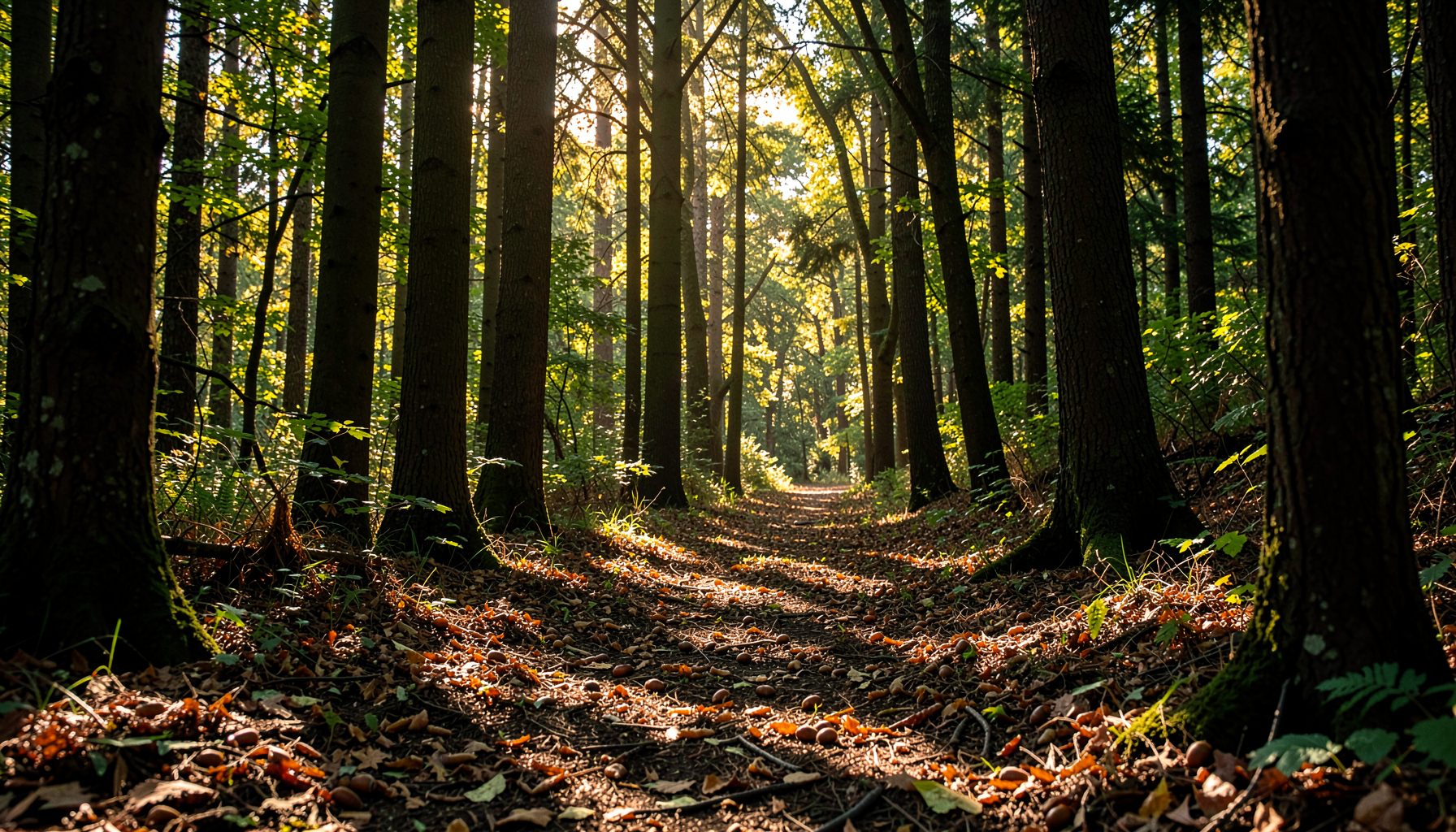
Identify a Pignut Hickory Through Its Nuts And Bark
Pignut hickory (Carya glabra) is an eastern North American hardwood that rewards close observation. Its fruit is modest rather than showy: small, pear-shaped nuts sit inside thin husks, while the mature trunk develops a firm, ridged texture instead of the loose, peeling plates associated with shagbark hickory.
For Australian readers, this species is most likely to appear in a botanic garden, arboretum, specialist collection or imported landscape planting rather than in ordinary bushland. Knowing the nut, bark, leaves and habitat together is more reliable than relying on a single feature, especially when identifying an unfamiliar tree during a school activity or bushwalking excursion.
| Feature | Pignut hickory | Useful field clue |
|---|---|---|
| Nut | Small, pear-shaped and usually thin-shelled | Often less than 4 cm long, with a bitter taste |
| Husk | Green when immature, becoming brown at maturity | Thin husk generally separates into four sections |
| Bark | Grey-brown with tight ridges and shallow furrows | Does not peel into long, loose strips |
| Leaves | Compound leaves with usually five, sometimes seven leaflets | The end leaflet is commonly the largest |
| Habitat | Upland woods, slopes and well-drained soils | Frequently associated with mixed hardwood forest |
Start With The Small Nut
The fruit is the quickest way to narrow down a possible pignut hickory. Look beneath the canopy in late summer or autumn for small nuts enclosed by a thin, green-to-brown husk. The fruit is commonly pear-shaped, with a slightly tapered end, rather than the round, heavy appearance of some other hickories. At maturity, the husk may split into four parts, although it can remain partly attached around the shell.
The name “pignut” reflects the nut’s limited appeal as human food. The shell is relatively thin, but the kernel is usually bitter, so it is not the sweet, easily cracked nut sold as a snack. Never identify a wild nut by taste alone. Fallen fruit may carry mould, animal contamination or chemical residue, and unfamiliar tree nuts can cause serious allergic reactions.
Size helps, but it should not be used in isolation. A pignut hickory nut is generally smaller than the fruit of mockernut hickory and lacks the thick husk often associated with larger hickory species. Gather several fallen examples if local rules permit, because a single immature nut can be misleading. A well-run seed collection project such as the Growing Native program also treats identification, provenance and handling as connected parts of responsible restoration work.
Read The Bark Texture
Young pignut hickories often have relatively smooth grey bark, so a sapling may not display the mature pattern shown in field guides. As the tree ages, the trunk becomes grey-brown and develops narrow ridges separated by shallow to moderate furrows. The ridges tend to remain tight against the trunk and may form an interlacing or subtly diamonded pattern.
This texture is a useful contrast with shagbark hickory. Shagbark develops long, loose strips that curl away from the trunk, creating a distinctly shaggy appearance. Pignut bark generally stays attached in firm plates and ridges. It also differs from shellbark hickory, whose broad, peeling plates are usually much more dramatic.
Examine bark at eye level on the main trunk rather than on a rough branch or damaged base. Fire scars, climbing damage, age, lichens and wet weather can alter the surface. A hand lens or close photograph can reveal whether the ridges are tightly held and finely textured, but avoid scraping the bark. Tree identification should leave the specimen unharmed.
Check Leaves, Twigs And Habitat
Pignut hickory has alternate, compound leaves. A typical leaf carries five leaflets, though seven may occur, with the largest leaflet at or near the tip. The leaflets are usually lance-shaped to oval-lance-shaped, green above and somewhat paler beneath. Margins are finely toothed, and the whole leaf can look airy compared with the broader foliage of some hickories.
Twigs provide additional clues when the tree is leafless. They are slender and brown to grey, with pointed buds and leaf scars that help confirm the hickory group. The bark and fruit remain more dependable for beginners, since leaf shape can vary with age, sun exposure and position within the crown.
In its native range, pignut hickory favours upland forests, dry slopes and well-drained soils. It commonly grows among oaks and other eastern hardwoods rather than in permanently waterlogged ground. That habitat preference matters in restoration planning: a species suited to an upland forest should not automatically be selected for a stream margin simply because it is a native tree somewhere in the watershed.
Seed source matters as well as species name. Populations can differ in timing, growth and adaptation, which is why genetic diversity in seed sourcing is relevant to long-term forest resilience. For Australian students comparing northern and southern hemisphere ecology, this is a useful reminder that “native” describes geographic origin, not a universal planting recommendation.
Separate It From Similar Trees
Mockernut hickory is a common source of confusion. Its nuts are generally larger and rounder, with a thicker husk, while its leaves often carry seven to nine leaflets. Shagbark is easier to recognise once mature because of its loose bark strips, but young trees can look quite ordinary. Bitternut hickory may have smaller fruit, yet its yellow buds and more slender, elongated nut are valuable distinguishing features.
Black locust can also create confusion when a broad view of the tree is all that is available. It has compound leaves, rough furrowed bark and hanging seed pods, but it does not produce hickory nuts. Mature black locust may also show paired spines on young branches. Its behaviour in riparian settings is worth understanding through this explanation of black locust risks, particularly when assessing introduced trees near waterways.
Australian observers should be especially cautious about assuming that every tree with compound leaves belongs to the same family. Eucalypts dominate many local landscapes, while wattles, jacarandas, silky oaks and blackwoods can produce very different leaf structures that seem unfamiliar when viewed from a distance. Australian nurseries generally prioritise local native species, so a genuine pignut hickory is more likely to be found through an arboretum, heritage planting or specialist supplier than in a standard garden centre.
Build A Reliable Field Record
The best identification combines several observations recorded at the same time. Note the tree’s approximate height, trunk diameter, bark pattern, leaf arrangement, nut size and surrounding vegetation. Photograph the whole tree, a close section of bark, one leaf and several fallen fruits beside a ruler or familiar object. In Australia, remember that hickory fruiting seasons follow the northern hemisphere calendar: a tree in North America may shed nuts around September to November, while an Australian-grown specimen can respond differently to its local climate.
A field record is particularly valuable for schools, community groups and workplace volunteering days. It turns a quick “what tree is that?” moment into a lesson about forest structure, seed dispersal, wildlife food and watershed protection. If collecting material, check landholder permission, park rules and biosecurity requirements first. Seeds or plant material should never be moved across borders or waterways without understanding Australian quarantine controls.
A Practical Identification Checklist
- Find several small, pear-shaped nuts beneath the canopy rather than relying on one fruit.
- Check whether the thin husk is green or brown and beginning to separate into sections.
- Examine mature bark for tight grey-brown ridges, shallow furrows and no long peeling strips.
- Count the leaflets, looking for five as the usual number and a larger terminal leaflet.
- Compare the tree with shagbark, mockernut and bitternut hickories before recording an identification.
- Photograph the tree and its habitat, and document the location without damaging the specimen.
Use local expertise when the identification will affect planting or seed collection. Australian botanic gardens, state herbariums, council arborists and native plant societies can help verify an exotic specimen, while North American restoration groups can advise on regional seed zones and suitable collection practices. A confident name is useful, but a documented name linked to location, season and source is much more valuable.
When a pignut hickory is correctly recognised, its small nut and textured bark become entry points to a larger conservation story. Explore the educational resources at Growing Native and use what you learn to support careful observation, sound seed stewardship and healthier forests and waterways across the places where you live and volunteer.