How to identify a pawpaw tree by its leaves and fruit
Pawpaw trees are among the easiest native trees to recognize once you know what to look for. Their unusually large leaves, smooth edges, tropical appearance, and sweet, aromatic fruit set them apart from many other plants in eastern forests. The species, Asimina triloba, grows naturally across much of the eastern United States, especially in moist bottomlands, stream corridors, and rich woodland soils.
Pawpaw identification becomes more reliable when several clues are used together. A single leaf can resemble those of other trees, and fruit may be absent for much of the year. By examining the tree’s growth habit, leaf arrangement, bark, seasonal color, flowers, and fruit, you can make a confident identification while exploring a forest or watershed.
Where pawpaw trees grow
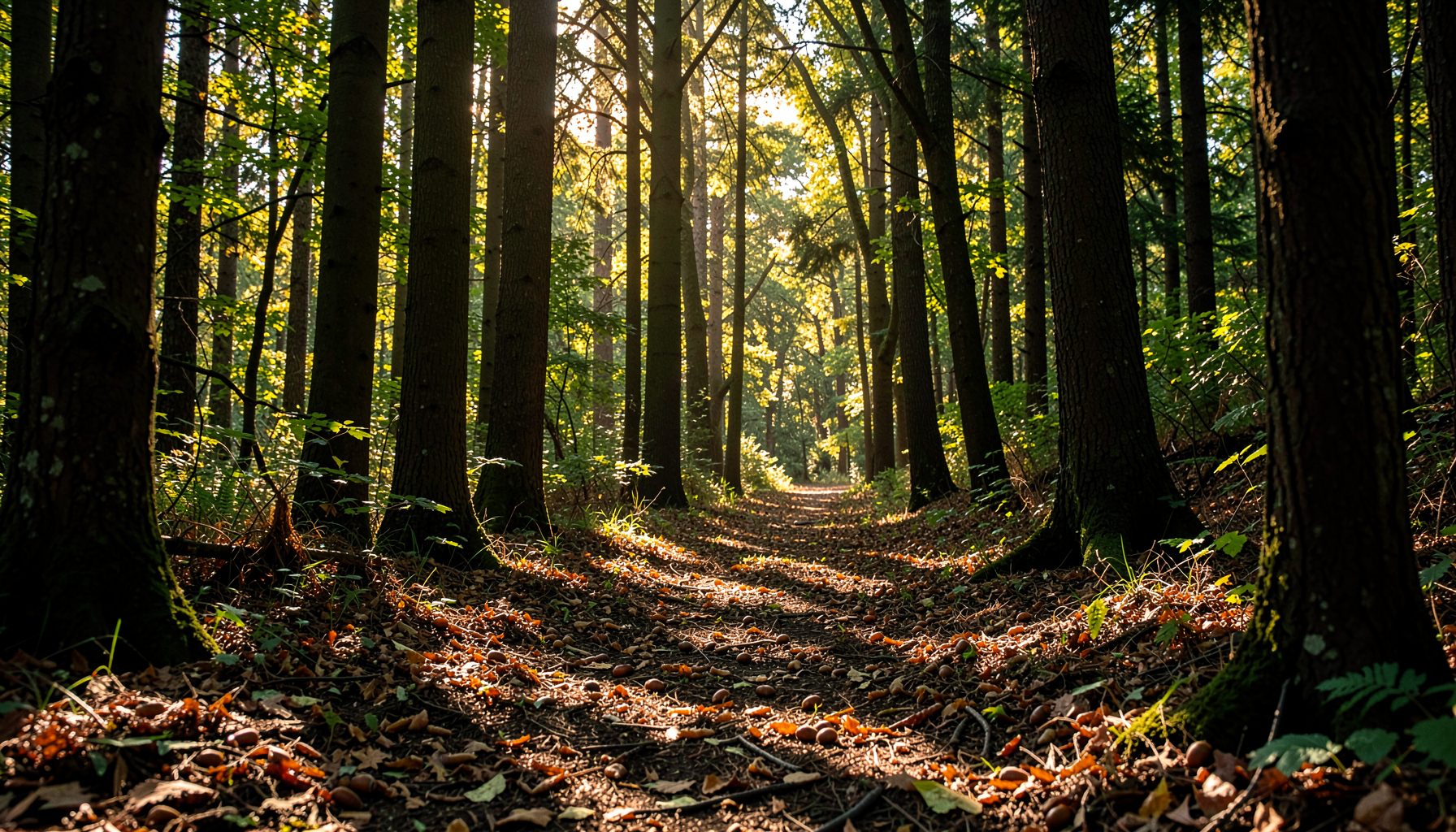
Pawpaw commonly grows in fertile, moist soils near creeks, rivers, floodplains, and forested ravines. It can also appear on lower slopes where water moves through the soil but does not remain permanently saturated. In natural settings, pawpaw trees often form patches or thickets because new stems can sprout from underground roots.
The species prefers partial shade when young. In a mature forest, its long leaves may be found beneath taller trees, along woodland edges, or in openings with filtered sunlight. Pawpaw can tolerate deeper shade than many fruit-producing trees, but trees exposed to more light generally flower and fruit more successfully.
This connection with streamside forests makes pawpaw relevant to watershed restoration. Programs such as Growing Native involve communities in collecting native tree and shrub seed and supporting the future health of forests, waterways, and wildlife habitat. Learning to recognize local trees is a practical part of that stewardship.
Recognizing the leaves
Pawpaw leaves are simple rather than divided, and they grow alternately along the stem instead of directly opposite one another. They are usually elongated and oval, with the widest part closer to the tip. This shape is often described as oblong, elliptic, or obovate. Mature leaves commonly measure between 6 and 12 inches long, although size varies with sunlight, moisture, and the age of the tree.
The leaf margin is smooth, with no teeth, lobes, or deep indentations. The tip is sharply pointed, while the base narrows gradually toward the stalk. The upper surface is medium to dark green and fairly smooth. The underside is usually paler, with a network of clearly visible veins. Leaves often droop slightly, giving the tree a relaxed, layered appearance.
A useful field clue is the way leaves gather toward the ends of branches. Because the leaf stalks are relatively short and the blades are large, a pawpaw branch can look almost tropical. When crushed, the foliage may produce a faint, unpleasant odor that some people compare with green pepper or asphalt. Smell should support visual identification rather than replace it.
Using fruit, flowers, and bark as clues
Pawpaw fruit develops in late summer or early fall. It is generally oval, cylindrical, or slightly curved, and often measures 2 to 6 inches long. Immature fruit is green and firm. As it ripens, the skin may turn yellow-green, and the fruit becomes soft enough to yield under gentle pressure.
A ripe pawpaw has creamy yellow flesh with a custard-like texture. Its flavor is often described as a blend of banana, mango, melon, or vanilla. Several large, flat, dark brown seeds are arranged through the flesh. The fruit may hang singly or in small clusters, and it often falls to the ground when fully ripe. Handle fallen fruit carefully because it bruises quickly and can ferment within a short time.
Pawpaw flowers appear in spring before or as the leaves expand. They are relatively large, three-quarter-inch to two-inch blooms with three outer and three inner petals. Their color changes from greenish to maroon or deep purple. The flowers can have a yeasty or faintly rotten odor, which helps attract flies and beetles rather than the bees commonly associated with many flowering trees.
The bark is usually smooth and gray, sometimes with a slightly mottled appearance. Young twigs may be green or reddish brown. Bark alone is not the strongest identification feature, but smooth gray bark combined with large, toothless leaves and a moist woodland habitat points strongly toward pawpaw.
Distinguishing pawpaw from similar trees
Several native trees can cause confusion, especially when fruit is absent. Catalpa leaves are also large and may have smooth edges, but catalpa leaves are often heart-shaped or broadly lobed and commonly occur in opposite or whorled arrangements. Catalpa trees also produce long, slender seed pods that remain conspicuous after flowering.
Magnolia species have alternate leaves, but many magnolia leaves are thicker, shinier, or more leathery. Southern magnolia is evergreen in much of its range, while cucumber magnolia has a more pointed, often larger leaf and different fruiting structures. Pawpaw leaves are generally softer and more drooping, with a distinctive tapered base and a paler underside.
Persimmon leaves are alternate and smooth-edged, yet they are usually smaller, thicker, and more glossy. Persimmon fruit turns orange or reddish orange when ripe, rather than remaining yellow-green with large dark seeds. Young hickory leaves may also look elongated, but hickory foliage is compound, meaning several leaflets are attached to one central stalk.
| Feature | Pawpaw | Catalpa | Persimmon | Magnolia |
|---|---|---|---|---|
| Leaf arrangement | Alternate | Often opposite or whorled | Alternate | Alternate |
| Leaf structure | One simple leaf | One simple leaf | One simple leaf | One simple leaf |
| Leaf edge | Smooth | Smooth or slightly wavy | Smooth | Usually smooth |
| Typical leaf shape | Long, oval, pointed | Broad, heart-shaped or lobed | Smaller, oval, pointed | Thick, oval or elongated |
| Fruit | Soft yellow-green fruit with large dark seeds | Long, bean-like pod | Orange fruit with several seeds | Cone-like aggregate fruit |
| Common habitat | Moist forest and stream corridors | Open areas and rich soils | Woodlands, fields, and edges | Species-dependent, often rich forests |
Identifying pawpaw through the seasons
In spring, look for maroon flowers on bare or partly leafed branches. The flowers are a valuable clue because few eastern woodland trees produce blooms with the same dark color and unusual scent. New leaves then emerge as folded, reddish or bronze-green structures before expanding into their full size.
During summer, the large leaves are the clearest sign. Check their alternate arrangement, smooth margins, pointed tips, and pale veined undersides. If the tree grows in a patch near water and several stems share the same distinctive foliage, pawpaw becomes especially likely.
Late summer and early fall offer the best opportunity to confirm the identification through fruit. Search beneath the canopy as well as in the branches, since ripe pawpaws may drop before they are noticed. In autumn, leaves can turn yellow before falling. Once the leaves are gone, the tree is more difficult to identify, so record its location or photograph the foliage during the growing season.
Exploring pawpaw habitat responsibly
Pawpaw fruit is edible for many people, but individual reactions can vary. Do not eat fruit unless the tree has been identified confidently and the fruit is clean, fully ripe, and free from mold. Remove the large seeds, which should not be swallowed. Wildlife also depends on fallen fruit, so take only a modest amount from abundant trees.
Responsible observation matters in natural areas. Avoid breaking branches to reach leaves or fruit, and do not dig up plants from public land. Pawpaw colonies can be locally important, especially along small streams where their roots help stabilize soil and their foliage contributes to layered habitat.
For volunteers who want a stronger foundation in tree identification, tree identification resources can help connect field observations with broader lessons about native plants and forest restoration. A notebook with dates, photographs, leaf details, habitat notes, and fruit observations can turn a casual walk into useful ecological documentation.
Connecting tree identification with watershed care
Pawpaw is one part of a diverse streamside forest. Along with maples, sycamores, oaks, willows, dogwoods, shrubs, and herbaceous plants, it contributes to a living corridor that shades water, slows runoff, supports wildlife, and protects stream banks. Healthy forests also help rainfall soak into the ground instead of rushing across bare soil and carrying sediment into waterways.
Understanding these relationships makes individual tree identification more meaningful. A pawpaw growing beside a creek is not simply a recognizable fruit tree; it is also evidence of a particular habitat and a potential resource for insects, mammals, and people. Native plants suited to local soil and climate generally require fewer inputs once established and strengthen the ecological fabric of the watershed.
Educational materials such as this forest ecology guide explain how trees, soil, water, wildlife, and human activity interact. Those connections are especially important when collecting native seed or helping restore streamside vegetation, where the right species and careful handling can influence conditions for decades.
Practical field habits for accurate identification
Use several characteristics before labeling a tree. Leaf shape is helpful, but habitat, arrangement, flower color, fruit structure, and seasonal timing provide confirmation. Compare multiple leaves from the same tree because shade leaves and sun leaves may differ in size and thickness.
Keep these habits in mind during a woodland survey:
- Check whether the leaves are alternate, simple, smooth-edged, and unusually large.
- Look beneath the canopy for soft yellow-green fruit and large dark seeds.
- Note moist soil, streamside location, ravine habitat, or a spreading root-suckering patch.
- Photograph flowers, leaves, bark, and fruit at different times of the year.
- Record the location without disturbing the tree or removing more plant material than necessary.
A careful observer can often identify pawpaw without specialized equipment. A hand lens may help examine veins and leaf surfaces, while a field guide or regional plant identification app can provide a second comparison. When documenting trees for volunteer or restoration work, include the date and habitat so that the observation remains useful after the leaves have fallen.
Once you recognize the long leaves, smooth margins, maroon flowers, and custard-like fruit, pawpaw becomes a familiar presence in eastern forests. Spend time looking for it along healthy stream corridors, share accurate observations with local conservation efforts, and support the restoration of native trees that keep the Potomac watershed shaded, stable, and alive.