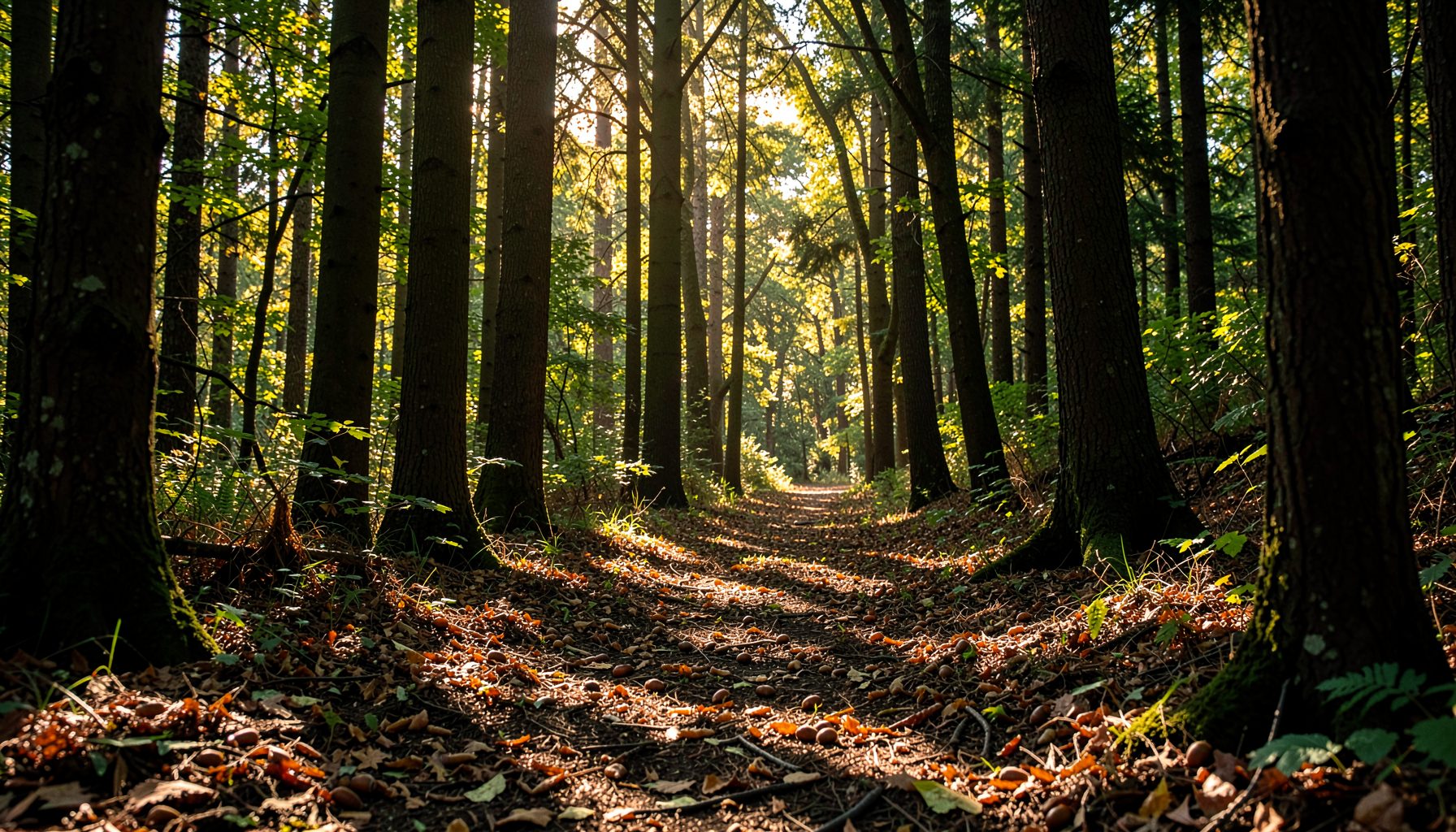
Identifying black cherry by dark bark and serrated leaves
Learning how to identify a black cherry tree by its dark bark and serrated leaves can prevent confusion in cool-temperate parts of Australia. The species commonly called black cherry, Prunus serotina, is native to eastern North America rather than Australia, but it has naturalised in parts of the south-east and may be managed as an environmental weed. A careful observation can help landholders, nursery staff and local councils distinguish an introduced tree from native vegetation.
Start with a combination of features rather than bark alone. Check whether the leaves alternate, whether their teeth are fine and regular, and whether flowers hang in elongated clusters. Record the date, exact location, tree size and any fruit, then compare the plant with regional herbarium records or advice from a council weed officer.
Reading the bark and trunk
Young black cherry stems have smooth reddish-brown bark. As the trunk thickens, the surface becomes dark grey-brown to nearly black, with shallow fissures, scaly plates and pale horizontal lenticels. Older bark can look rough and blocky, while sheltered sections may retain a smoother rusty tone. Trunk colour depends on age and exposure, so a young tree may look very different from a mature specimen.
Mature plants usually develop a straight trunk and a fairly narrow, upright crown. They may occur as a large shrub or small tree, and stressed plants can have several stems. Look for the transition from smooth young bark to dark, scaly bark on the same branch or trunk. This combination is more useful than calling any dark-barked tree a black cherry.
Tree identification also has a habitat purpose. In the Potomac River watershed, Growing Native explains how shade and stream health depend on careful choices about streamside trees; the same need to distinguish native vegetation from escapees exists along Australian creeks and bushland edges.
Checking the serrated leaves
Black cherry leaves are simple and alternate, not opposite. A mature leaf is usually 5 to 15 centimetres long, narrow oval to lance-shaped, and edged by many fine, sharp teeth. The upper surface is dark green and often glossy, while the underside is paler. In cool districts, the foliage can turn yellow or red before falling, although leaf colour alone is not a dependable identification feature.
Check the margin closely on an undamaged leaf. The teeth are much finer than the large, irregular teeth often seen on sweet cherry, and each leaf joins the twig one at a time. Also note the long, pointed tip and the prominent central vein. A phone photograph showing one full leaf, the edge in close-up and the twig attachment can settle many questions.
Do not taste a leaf, shoot or wild fruit to confirm an identification. Black cherry belongs to a group of Prunus plants that contain cyanogenic compounds, and damaged or wilted foliage can be hazardous to people, livestock and pets. Keep children and animals away, wash hands after handling, and place uncertain prunings where they cannot be chewed. An odour description in a field guide is safer than making a taste test.
Following flowers and fruit through the seasons
Flowers provide a strong clue when they are present. Black cherry bears many small white flowers in elongated, slightly drooping flower sprays called racemes, sometimes 10 to 15 centimetres long. Each flower has five narrow petals and appears along a central stalk. This differs from the shorter, rounder flower clusters of sweet cherry. In Australia, flowering may extend from late spring into summer, with timing shifted by local climate.
The fruit is a small round drupe, or stone fruit, that changes from green to red and then dark purple or almost black. It resembles a miniature sweet cherry but is usually smaller, and mature fruit may remain on the tree after the leaves have dropped. Birds readily eat the fruit and distribute the seed, so repeated seedlings beneath a parent tree are a useful clue. Look for fruits along twigs and on the ground, but do not transport them.
Australian sites can offer useful contrasts. In Melbourne, Hobart, Canberra, Sydney and coastal New South Wales, an escaped Prunus may stand near a creek, on a road verge, around an old farm shelterbelt or in a suburban garden. Cooler, wetter conditions suit seedlings in disturbed soil, while nearby mature trees provide shelter. Do not assume that a tree beside a stream is a local native; stream position indicates habitat, not origin.
Comparing similar cherry names and species
Common names are particularly slippery in the Australian plant market. Sweet cherry trees are familiar in Victorian and Tasmanian nurseries and home orchards, while ornamental plums and cherry laurels appear in garden centres and online marketplaces. Labels may use “cherry” loosely, and seedlings also turn up at community plant sales or through exchanges among backyard growers. Check the botanical name and provenance rather than relying on a common name alone.
| Feature | Black cherry, Prunus serotina | Sweet cherry, Prunus avium | Cherry laurel, Prunus laurocerasus | Australian native cherry, Exocarpos cupressiformis |
|---|---|---|---|---|
| Bark and habit | Dark grey-brown to blackish, scaly, with pale horizontal lenticels; upright tree | Reddish-brown and often peeling in horizontal strips; broad deciduous tree | Dark grey-brown, smoother on young plants; dense evergreen shrub or tree | Grey-brown stems with many fine, drooping branchlets; native shrub or small tree |
| Leaves | Alternate, narrow oval, finely serrated, usually 5–15 cm; deciduous | Alternate, broader oval and more obviously toothed; deciduous | Large, leathery and mostly smooth-edged; evergreen | Tiny, narrow or scale-like leaves along drooping branchlets |
| Flowers | White five-petal flowers in long drooping racemes | White flowers in short, rounded clusters | White flowers in short racemes | No conspicuous cherry blossom; small flowers are usually inconspicuous |
| Fruit | Small dark purple or black drupe | Larger red, dark or yellow cultivar fruit | Small purple-black berry-like drupe | Yellow or red fleshy receptacle carrying a single hard seed |
| Australian context | Naturalised in some south-eastern areas; regional status must be checked | Widely cultivated, and it can volunteer outside orchards | Common ornamental escape in suitable wet, mild districts | A genuine Australian native; familiar across much of eastern and southern Australia |
The strongest black-cherry pattern is dark scaly bark, alternate narrow leaves with fine teeth, long white flower racemes and small black fruit seen together. Bark without leaves can support only a tentative identification, while leaves without flowers may still overlap with other Prunus species. When fruit is absent, seek confirmation from a regional herbarium, botanic garden or qualified council weed officer rather than removing a potentially valuable native tree.
A useful field note distinguishes the trees people encounter most often. Sweet cherry has broader leaves and clustered blossoms; cherry laurel is evergreen with heavy leaves; and native cherry has fine, drooping foliage rather than broad toothed blades. Photograph the whole tree before collecting close-up images, because growth form and the setting provide evidence that a single leaf cannot.
A practical identification and action checklist
Australian plant controls operate through state and territory laws combined with local council and regional programs. The New South Wales Biosecurity Act 2019, Queensland’s Biosecurity Act 2015, Victoria’s Catchment and Land Protection Act 1997 and Tasmania’s Biosecurity Act 2019 are among the relevant frameworks, but they do not assign the same category to every species in every district. Check the current council weed list and regional pest plan before removing a suspected black cherry; a listed, restricted or merely naturalised plant can carry different duties.
- Verify several traits together: dark scaly bark, alternate finely serrated leaves, long drooping flower racemes and small dark fruit.
- Record the street or reserve, date, tree dimensions, nearby water or woodland, and clear photographs of the trunk, leaf edges, twig arrangement, flowers and fruit.
- Compare the observation with a state herbarium, botanic garden or local weed officer, especially when only one or two features are visible.
- Do not move seedlings, fruit, soil or prunings to another site, and do not place suspect material in home compost unless local instructions explicitly allow it.
- Keep children and pets from unfamiliar Prunus foliage and fruit, and ask a council officer how confirmed black cherry material should be removed or contained.
Growing Native organises native seed collection and streamside planting in the Potomac River watershed, and its volunteer opportunities show how individuals, families, schools and workplaces can contribute. Australian readers can apply the same careful cycle of identification, native planting and habitat care through Landcare groups, council nurseries, school gardens and riparian planting days.
Begin with one suspect tree: capture the trunk and both sides of a leaf, note the exact location and date, check the regional weed list, and contact your council if several traits agree. Then support a verified native replacement at the site and share the record with the relevant land manager.