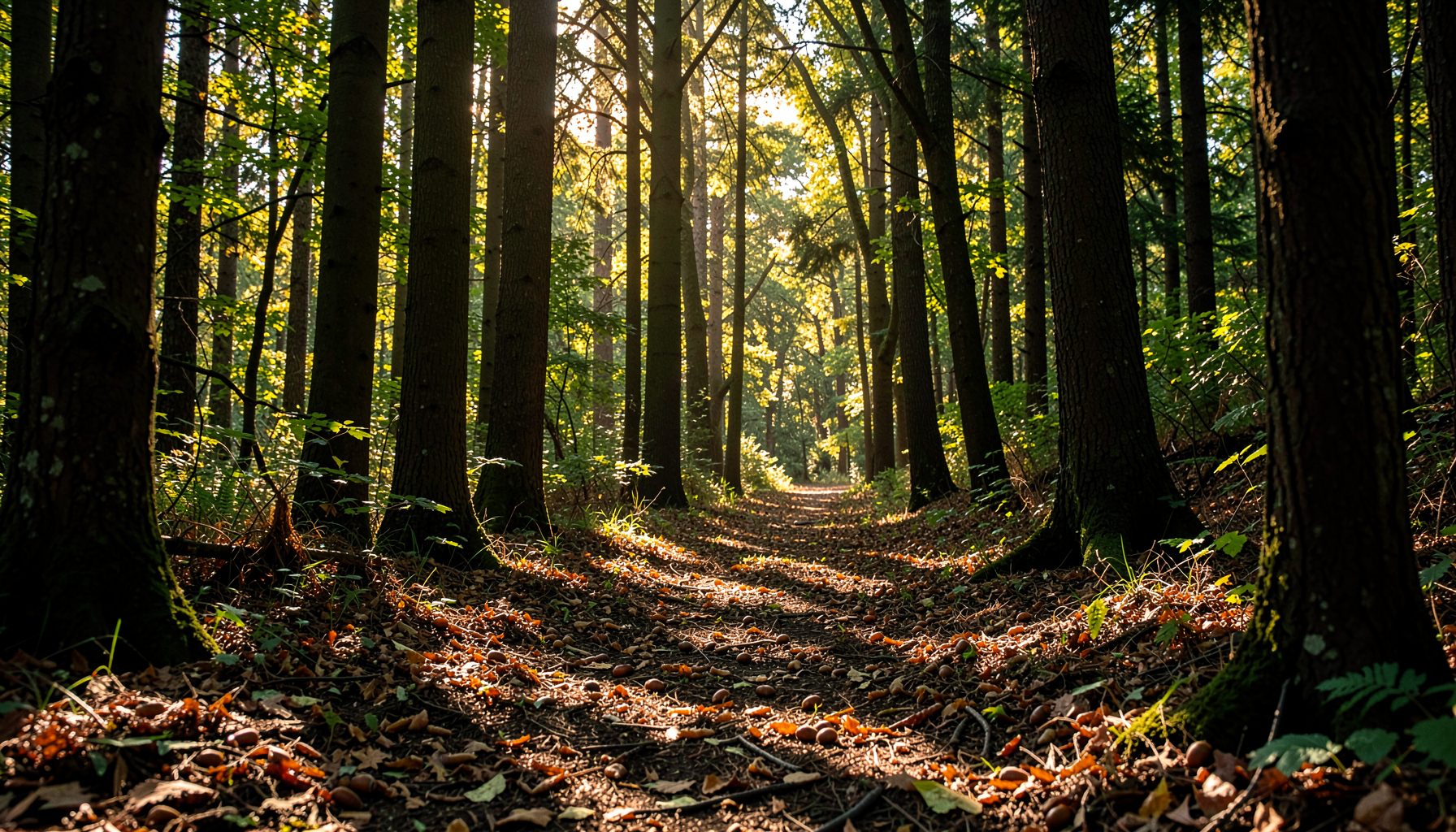
A Photo Guide to Common Native Tree Seeds in the Fall
Autumn turns the forest floor into a record of the trees growing overhead. Acorns roll beneath oaks, winged samaras spin from maples, and walnut husks drop into leaf litter with a heavy thud. Learning to recognize these seeds makes a woodland walk more engaging and helps volunteers collect viable native material for restoration projects.
This photo guide to common native tree seeds in the fall focuses on visual features that are easy to capture with a phone: shape, size, color, husk texture, wing arrangement, and the way each seed hangs from a twig. A photograph of the parent tree, bark, leaves, and nearby habitat can make identification much more reliable.
Seed collection is also connected to watershed health. Native trees eventually shade streams, stabilize soil, and create habitat, so a handful of properly identified seeds can become part of a long-term restoration effort across the Potomac River watershed.
Reading the autumn seed crop
Start by photographing the whole scene before picking anything up. Capture the tree’s outline, trunk, bark, leaves if they remain, and the surrounding ground. A close-up of the seed should include a familiar object for scale, such as a finger, ruler, or coin. Several seeds in different stages of maturity can reveal useful changes in color and texture.
Look upward as well as downward. Some seeds sit directly beneath the parent tree, while wind carries others across paths, lawns, and streambanks. Note whether the seed is enclosed in a cup, attached to a papery wing, wrapped in a fleshy husk, or clustered in a cone-like structure. Habitat is another clue: sycamores often grow near water, tulip poplars favor rich forests, and oaks appear in a wide range of upland and lowland settings.
A good field note includes the date, location, tree species if known, and whether the seed looks sound. Avoid relying on a single feature. A smooth brown nut may suggest several species, while the combination of husk, twig, leaf scar, and nearby tree usually narrows the identification.
Acorns: the many faces of oak
Acorns are among the easiest native tree seeds to recognize, yet oak species vary considerably. White oak acorns are usually elongated or egg-shaped, with a shallow, warty cup that covers only part of the nut. Their color ranges from green and tan to warm brown as they mature. The nut often has a pointed tip and a relatively smooth surface.
Red oak group acorns commonly take two years to mature and tend to be longer, darker, and more pointed. Their cups may look deeper and more textured than those of white oak relatives. Chestnut oak acorns are often large and glossy, with a broad, rounded form. Black oak acorns may show a fuzzy cup interior and a darker cap, though individual appearance changes with age and weather.
For a useful photograph, place the acorn beside its cap and include the cup’s edge. Photograph the underside too, because the cup’s scales and depth can help distinguish species. A cluster of acorns beneath one tree is valuable evidence, but do not assume every acorn on the ground came from the nearest trunk; squirrels and gravity move them surprisingly far.
Healthy acorns feel firm and heavy for their size. Small exit holes, soft spots, mold, or a hollow sound when gently shaken may indicate insect damage or decay. Wildlife depends on this seasonal food, so collect only where permission is clear and leave plenty behind.
Walnuts, hickories, and other nuts
Black walnut seeds are enclosed in a thick, round green husk that gradually turns yellow-green, brown, and nearly black. The husk surface can be smooth or slightly rough, while the hard shell inside has deep grooves and ridges. Walnut husks stain hands and fabric, which is another practical clue. Photograph the intact husk, the opened husk, and the ridged shell when possible.
Hickory nuts are more variable. Shagbark hickory produces a relatively thin husk that separates into four sections as it dries, revealing a hard shell with a pointed base. Pignut and mockernut hickories may have thicker husks and different proportions. Their shells are often smooth or subtly ridged compared with the deeply furrowed walnut.
Tulip poplar seeds arrive in upright cone-like clusters that break apart into many small, winged seeds. Each seed has a slender, curved wing and a darker seed body at one end. Photographing the entire cluster on the twig is especially helpful because loose individual seeds can be mistaken for other wind-dispersed species.
American beech produces small, sharply triangular nuts inside prickly husks. The husks often remain attached to twigs or collect beneath mature trees. Beech nuts are a valuable wildlife food, so careful observation is more important than taking a large quantity. Their three-sided shape is the feature to emphasize in a close-up image.
Winged seeds and streamside finds
Maples produce samaras, commonly called “helicopters,” with a seed attached to a thin wing. Red maple samaras are often paired in a V shape and may turn reddish before falling. Silver maple samaras are usually larger, with wings that spread widely. Sugar maple samaras tend to form a tighter angle and mature later in the season. Photograph the angle between the wings and the length of the paired unit.
River birch produces tiny seeds in cylindrical catkins that disintegrate into delicate, winged or hairy particles. These are difficult to photograph individually, so capture the catkin, the twig, and the tree’s peeling bark together. Sycamore balls are larger and more conspicuous: round, dangling seed clusters that change from green to brown and release many small, hairy seeds.
The comparison below highlights features that work well in a field photo. Sizes are approximate because moisture, maturity, and local conditions affect appearance.
| Native tree | Seed or fruit form | Useful photo clues | Typical fall setting |
|---|---|---|---|
| White oak | Acorn in a shallow cup | Egg-shaped nut, light color, shallow cap | Dry or mixed hardwood forest |
| Red oak | Acorn in a deeper cup | Pointed nut, textured cap, darkening shell | Uplands, slopes, broad forest stands |
| Black walnut | Nut inside thick husk | Round husk, strong staining, deeply ridged shell | Rich woods, roadsides, stream valleys |
| Shagbark hickory | Nut in a splitting husk | Four-part husk, pointed hard shell | Mature upland hardwood forest |
| Tulip poplar | Winged seeds in a cone-like cluster | Curved wings, upright cluster on twig | Moist, fertile woodland |
| Red maple | Paired samaras | V-shaped wings, reddish or tan color | Wet woods, edges, floodplains |
| American beech | Triangular nut in prickly husk | Three-sided nut, spiny husk | Mature, shaded hardwood forest |
| Sycamore | Round seed ball | Hanging brown ball, hairy seeds | Riverbanks and wet bottomlands |
Native hardwoods help intercept rainfall before it reaches bare soil and paved surfaces. Their leaves, branches, roots, and forest floor slow water and support infiltration; this explanation of how hardwoods filter runoff shows why seed collection connects directly to cleaner streams.
Collecting seeds without harming the forest
Before gathering, confirm land access and follow any park, preserve, or property-specific rules. Choose mature, healthy parent trees away from roadsides treated with salt, recently sprayed areas, and places where seeds may be contaminated by pets or heavy traffic. Collect from several trees rather than taking everything from one individual. This preserves genetic variety and leaves food for birds and mammals.
Use breathable paper bags, not sealed plastic, for most nuts and acorns. Label every bag immediately with the species, collection date, location, and collector’s name or group. Keep different species and collection sites separate. If seeds become wet inside a bag, spread them briefly in a cool, shaded place rather than allowing condensation to build.
Do not collect seeds that are green when mature brown seeds are expected, visibly moldy, crushed, or heavily insect-damaged. Avoid digging up seedlings or stripping seeds from branches. A light touch protects the parent tree and keeps the forest’s natural regeneration process intact.
Preparing a useful volunteer collection
A community seed drive works best when identification and handling instructions are simple. Provide volunteers with a few reference photographs, paper bags, labels, pencils, and a checklist of target species. Encourage participants to photograph the tree and habitat before collecting. Schools and workplaces can turn the activity into a seasonal lesson about food webs, seed dispersal, and watershed protection.
Collected seed may be donated to a participating nursery or restoration program, where staff determine whether it is suitable for propagation. Some species require special storage, cleaning, or stratification before they can germinate. Do not plant unknown seed in a restoration site yourself; proper source tracking helps ensure that seedlings are appropriate for the region.
For a dependable fall field day, use these practices:
- Photograph the parent tree, bark, leaves, seed, and surrounding habitat.
- Collect only mature, healthy seeds from permitted locations.
- Keep each species and collection site in a separately labeled paper bag.
- Leave ample seed for wildlife and natural regeneration.
- Deliver collections promptly according to the receiving program’s instructions.
Streamside forests deserve particular attention because their roots hold banks together and their canopies moderate water temperature. The relationship is explained in this resource on streamside erosion control, which places individual seeds within the larger work of protecting waterways.
Turning observations into restoration
A well-made seed photograph can remain useful long after the walk ends. Compare images across weeks to see which species release seed early, which hold their fruit into winter, and how weather changes color and texture. Sharing labeled photographs with a school group or volunteer coordinator can also improve local knowledge of native trees.
Growing Native welcomes individuals, families, classrooms, community groups, and workplaces into this seasonal work. By learning to identify acorns, walnuts, hickory nuts, samaras, beech nuts, and other native tree seeds, volunteers help connect careful observation with practical conservation. Those small collections can eventually become streamside seedlings, shade, habitat, erosion control, and healthier water.
Find a permitted place to observe native trees this fall, bring a camera and paper bags, and document what you discover. Then connect with Growing Native to learn how properly collected seed can support restoration throughout the Potomac River watershed.