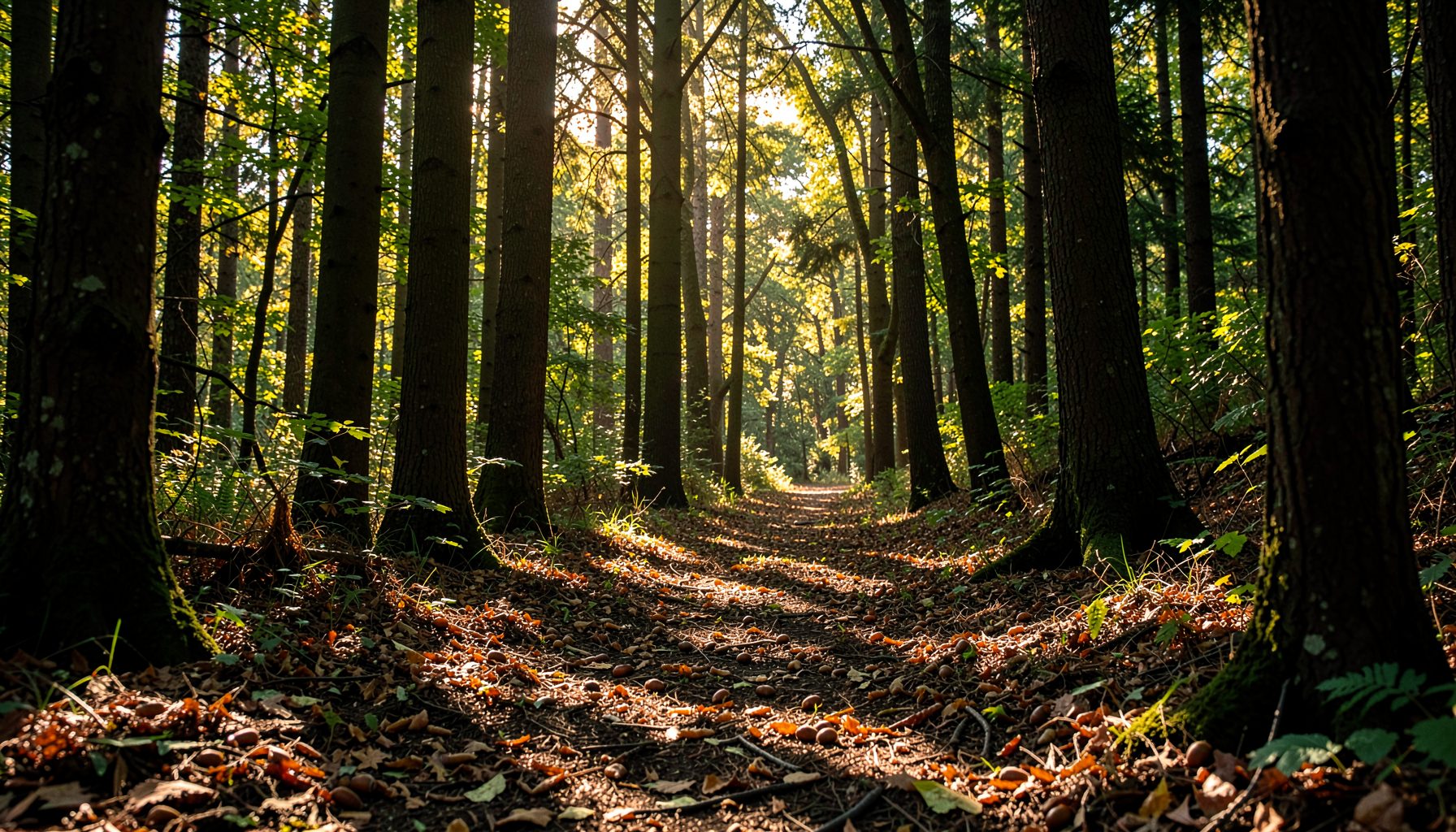
A Guide To The Ecological Benefits Of Riparian Buffer Reforestation
Riparian buffers are strips of trees, shrubs, grasses and groundcover beside creeks, rivers, wetlands and drainage lines. When these areas are replanted, they reconnect land and water, slow runoff and create habitat where human activity has previously simplified the landscape. Their value extends far beyond the streambank: healthy buffers support cleaner drinking water, stronger biodiversity and more resilient communities.
The ecological benefits of riparian buffer reforestation are especially relevant in Australia, where drought, intense rainfall, salinity, erosion and urban growth place pressure on waterways. Lessons from the Potomac River watershed also apply widely: collecting local native seed, raising suitable seedlings and restoring the right plants in the right places can turn small volunteer actions into long-term watershed protection.
| Restored riparian buffer | Degraded or sparsely vegetated stream edge |
|---|---|
| Filters sediment, nutrients and pollutants before they enter water | Allows contaminated runoff to flow directly into the channel |
| Provides shade, shelter and food for wildlife | Offers limited habitat and higher exposure to heat |
| Stabilises banks with deep, interconnected roots | Increases bank collapse, erosion and channel widening |
| Slows floodwater and improves soil infiltration | Produces faster runoff and greater downstream damage |
| Stores carbon in vegetation and soil | Loses organic matter and releases stored carbon through disturbance |
| Connects isolated habitat areas | Creates gaps that restrict movement of native species |
How Riparian Buffers Protect Waterways
Vegetated stream margins act as living filters. Leaves and stems slow rainwater moving across paddocks, roads and urban surfaces, while fallen litter and root networks help water soak into the soil. Sediment settles before it reaches the channel, and plants take up some excess nitrogen and phosphorus that would otherwise contribute to algal growth.
This function matters in the Murray–Darling Basin, where irrigation, grazing, salinity and low river flows can intensify water-quality problems. It also matters in Brisbane and other fast-growing cities, where paved surfaces send stormwater rapidly into creeks. A well-planned buffer cannot solve every catchment issue, but it reduces the load arriving at the waterway and gives aquatic ecosystems greater capacity to recover.
Reforestation also lowers stream temperature. Overhanging branches shade shallow water, reducing heat stress for fish, frogs and aquatic invertebrates. Cooler water generally holds more dissolved oxygen, which supports the food webs on which larger species depend.
Erosion Control And Flood Resilience
Riparian trees and shrubs stabilise banks through extensive root systems. Species suited to local soils can bind layers of sediment, reduce slumping and protect bends in a creek from being gradually cut away. Grasses and low plants cover exposed ground between larger stems, limiting the impact of raindrops and fast-moving surface water.
During heavy rainfall, the buffer temporarily stores and slows runoff. Branches intercept rain, rough vegetation disrupts flow and porous soil absorbs part of the water. This can reduce the speed and volume of the flood peak moving downstream. It does not eliminate flood risk, particularly in heavily built areas, but it can reduce local damage and help waterways maintain a more stable form.
Landholders and volunteers need to match restoration methods to flood behaviour. Planting too densely in an active channel, using unsuitable species or ignoring existing weeds can create new maintenance problems. Site assessment should consider bank height, inundation frequency, soil type, fencing, livestock access and the natural regeneration already present.
Habitat Corridors For Native Wildlife
A mature buffer supplies several habitat layers at once. Canopy trees provide nesting sites and movement routes for birds, shrubs shelter small mammals and reptiles, while leaf litter supports insects, fungi and decomposers. Fallen branches and tree hollows add structure that is often missing from cleared agricultural and urban landscapes.
The corridor effect is particularly important where remnant vegetation survives as isolated patches. A planted stream margin can connect woodland, wetland and roadside habitat, allowing animals to move between feeding and breeding areas. Pollinators and seed-dispersing birds may travel through these links, helping native plants reproduce across a wider area.
Local provenance improves the ecological fit of a restoration project. In Australia, a creek in northern New South Wales, a Melbourne waterway and a dryland gully near Perth require different plant communities. Seed collected from healthy nearby populations is more likely to suit local rainfall, soils, seasonal conditions and wildlife relationships than a generic commercial mix.
Soil Health, Carbon And A Changing Climate
Reforestation adds organic matter to soil through leaf fall, fine roots and decaying wood. This improves soil structure, supports microbial life and increases the capacity of the ground to absorb water. Better infiltration can reduce both surface erosion and the need for frequent watering during establishment.
Trees and shrubs also store carbon in trunks, roots and soil. Riparian planting is not a substitute for cutting fossil-fuel emissions, yet it contributes to climate mitigation while delivering immediate local benefits. Shade can reduce heat around waterways, and healthier soils are better positioned to withstand dry periods followed by intense rainfall.
Australian restoration teams must plan for climate variability rather than assuming past conditions will continue. Extended drought, heatwaves, sudden storms and altered fire patterns affect survival rates. Protective guards, staged planting, temporary watering and careful timing after reliable rainfall can make a major difference, while diverse plantings spread risk across species.
Practical Priorities For Effective Restoration
Successful riparian work begins with protection and preparation. Fencing stock away from young plants, controlling aggressive weeds and retaining existing mature trees usually provide greater ecological value than clearing a site and starting again. Regeneration that is already occurring should be mapped and incorporated into the planting design.
The following priorities help volunteers, schools, councils and land managers direct effort where it has the greatest long-term benefit:
- Choose locally appropriate native trees, shrubs, sedges and grasses rather than relying on a single species.
- Protect streambanks from trampling, grazing, vehicle access and repeated mowing.
- Restore the full width needed for filtering runoff, wildlife movement and bank stability.
- Collect seed only with permission and follow local rules for threatened or protected plants.
- Monitor survival, weed cover, bank condition, water clarity and wildlife use over several years.
- Plan maintenance before planting, including watering, guards, replacement plants and weed control.
In cities such as Sydney and Melbourne, narrow reserves may be the only available corridor, so even modest plantings can connect parks, wetlands and school grounds. In regional areas, larger buffers may support farm productivity by reducing stock access to water, protecting fences and lowering the loss of fertile soil. Community nurseries and native plant markets can help supply suitable species, although quality and provenance should be checked before purchase.
Turning Seed Collection Into Stewardship
Seed collection gives people a practical relationship with restoration. Learning to identify acorns, walnuts, pods and other native fruiting structures encourages attention to seasonal cycles and local forest ecology. It also helps restoration programs obtain diverse material for nurseries, where seed can be propagated into seedlings suited to future planting sites.
Safety and legality are essential. Collectors should obtain landholder or reserve permission, avoid damaging parent plants, leave enough food for wildlife and record the collection location and date. Guidance on collecting native seed can help groups prepare equipment, identify suitable material and handle it responsibly.
School programs make these lessons especially memorable. A field excursion can combine tree identification, watershed science, mapping and hands-on collection, then connect the experience to future planting and monitoring. Teachers organising an excursion can use this school seed-collection guide to plan permissions, safety procedures, learning activities and volunteer roles.
The approach used by Growing Native in the Potomac River watershed demonstrates how a simple community task can support a long restoration chain: volunteers collect local hardwood and shrub seed, nurseries raise seedlings, and streamside projects use those plants to improve water quality and habitat. Australian groups can adapt the same model to local ecosystems, working with councils, state nurseries, Landcare networks and Traditional Owners where appropriate.
Healthy buffers are built through repeated care rather than a single planting day. Join a local seed collection, help protect a creek corridor or organise a school and workplace project that links native plants with cleaner water. Each carefully collected seed and well-placed seedling can become part of a living network that strengthens Australian waterways for decades.