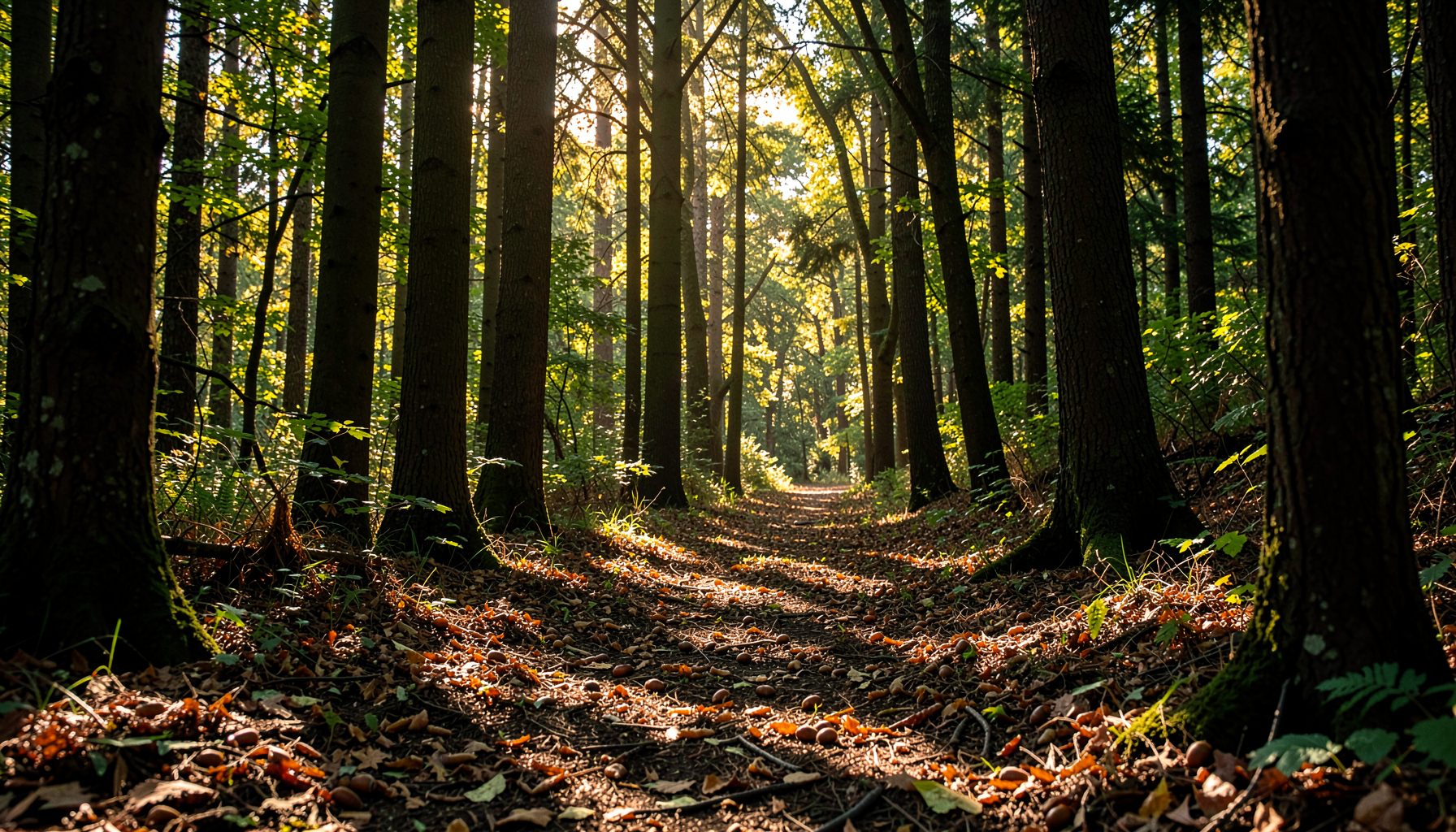
Sycamores Anchor Healthy Stream Corridors
Sycamore trees are among the most recognizable hardwoods along rivers and creeks in the eastern United States. Their mottled bark, broad crowns, and tall, pale trunks often mark places where water moves through a floodplain. These trees are also functional parts of streamside ecosystems: their roots bind soil, their canopies moderate temperature, and their fallen leaves support aquatic food webs.
A stable stream bank is more than a strip of ground beside flowing water. It is a living boundary shaped by roots, soil, vegetation, seasonal floods, groundwater, and wildlife. When native trees such as American sycamore are established in this zone, they help the bank absorb water’s energy rather than steadily losing soil to erosion.
The value of sycamores becomes especially clear in the Potomac River watershed, where stormwater, changing land use, and intense rainfall can place pressure on small streams and larger waterways. Protecting and restoring native riparian forests gives communities a practical way to improve both stream bank stability and watershed health.
A Root System Built for Moving Water
Sycamores develop extensive root systems that spread through the soil surrounding a stream channel. These roots create a network of living fibers that hold soil particles together, increasing the bank’s resistance to slumping and being washed downstream. Larger roots can form a structural framework through the bank, while smaller roots reinforce the upper soil layers.
This support matters during high-flow events. Fast-moving water can scour the outside bends of a creek, undermine exposed soil, and carry sediment into the channel. A well-rooted bank is not immune to flooding, but it is better able to withstand repeated wetting and drying, rising water, and the force of passing currents.
Sycamores are also suited to the variable conditions of floodplain soils. They can tolerate periodic flooding and often grow in deep, moist alluvial ground. Their roots may occupy layers with different moisture levels, allowing the tree to remain anchored as surface conditions change throughout the year.
Canopy, Shade, And Soil Protection
The broad crown of a mature sycamore shades the stream and the soil along its banks. This shade can reduce the amount of solar radiation reaching shallow water, helping moderate stream temperatures during hot weather. Cooler water generally provides better conditions for many aquatic organisms, including temperature-sensitive fish and invertebrates.
A shaded bank also loses moisture more slowly than bare soil exposed to direct sun and wind. Moisture retention helps reduce surface cracking and the repeated expansion and contraction that can weaken a bank. Leaf litter and small branches add a protective layer to the ground, softening the impact of rainfall before it reaches the soil.
Rain that strikes bare earth can detach soil particles and create small channels that grow during successive storms. Vegetation interrupts that process. Sycamore leaves, understory plants, and woody debris spread the force of rainfall, allowing more water to infiltrate gradually instead of rushing directly into the stream.
A Living Filter For Watershed Health
Streamside forests act as buffers between upland areas and waterways. As runoff crosses a vegetated riparian zone, roots and soil can slow its movement and help capture sediment. The same buffer may also take up some excess nutrients before they reach the stream, supporting cleaner water downstream.
Sycamores contribute to this process as part of a diverse plant community. Their deep roots stabilize the bank, while shrubs, grasses, ferns, and smaller trees protect different soil layers. A multi-layered riparian buffer is usually more resilient than a single row of mature trees because it fills gaps near the waterline and provides continuous ground cover.
The Growing Native's mission connects native plant stewardship with restoration across the Potomac River watershed. Collecting and growing locally appropriate hardwoods and shrubs helps expand the living infrastructure that protects waterways from erosion, sedimentation, and declining habitat quality.
Sycamores also contribute organic matter to the stream. Leaves, twigs, and fallen wood become resources for decomposers and aquatic insects. Those organisms help process plant material and support larger species, creating a food web that links the stream channel with the surrounding forest.
How Sycamores Compare With Other Streamside Trees
No single tree species can solve every stream bank problem. Sycamores are valuable because they combine flood tolerance, large root systems, rapid early growth in suitable conditions, and substantial canopy cover. Other native species add different strengths, so restoration projects should use a mixture rather than rely on sycamores alone.
Black willow, river birch, red maple, boxelder, and several native shrubs can complement sycamore plantings. Willows may root readily near wet channel edges, while shrubs can protect low banks and provide dense cover close to the water. Oaks, hickories, and walnuts contribute long-term structure and valuable seeds where conditions allow.
| Streamside feature | Contribution from sycamores | Value of a diverse planting |
|---|---|---|
| Bank reinforcement | Extensive roots help bind moist floodplain soil | Different root depths protect more of the bank profile |
| Flood tolerance | Mature trees can withstand periodic inundation | Species diversity reduces the risk of one disturbance affecting all plants |
| Water temperature | Broad canopy provides shade | Layered vegetation creates more continuous stream cover |
| Runoff control | Leaf litter and surface roots slow rainfall and overland flow | Shrubs, grasses, and ground covers close gaps near the soil |
| Wildlife habitat | Seeds, bark, branches, and canopy support many species | Mixed native plants provide food and shelter through more seasons |
| Long-term resilience | Large trees add durable structure to the riparian forest | A varied age and species mix supports regeneration after storms |
A restoration site should be evaluated for soil texture, bank height, flood frequency, available sunlight, invasive plants, and the width of the existing buffer. Planting a sycamore in a dry, compacted upland location may produce poor results, while placing it in an appropriate floodplain setting can help the tree establish naturally.
Habitat Above And Below The Bank
Sycamores support wildlife at several levels. Their canopy offers nesting and perching locations for birds, and cavities in older trees may shelter bats, squirrels, and other animals. Seeds can provide food for wildlife, while the rough bark creates surfaces for insects and other small organisms.
The tree’s influence extends into the water. Fallen leaves enter the stream and are broken down by fungi, bacteria, and aquatic invertebrates. These organisms form an important food source for fish and amphibians. Branches and larger pieces of wood can also create pools, resting areas, and cover when they fall into the channel in a safe, natural pattern.
Large trees should not automatically be removed simply because they stand near water. Their roots may be holding a bank together, even when some of the trunk or limbs appear old. Professional assessment is appropriate when a tree threatens a home, road, bridge, or public infrastructure, but routine clearing can remove valuable habitat and destabilize the soil.
Healthy riparian habitat depends on natural regeneration as well as planted seedlings. Protecting young sycamores from browsing, mowing, invasive vines, and repeated foot traffic gives them time to develop the roots and canopy needed for long-term stream protection.
Building Stronger Riparian Buffers
Successful stream restoration begins with matching the right native plants to the right place. Sycamore seedlings may be suitable in moist floodplain soils, but a project should also include species that occupy slightly higher ground, wetter margins, and shaded understory positions. This arrangement creates a gradual transition from open water to mature forest.
Seed collection can strengthen that process by providing locally sourced genetic material. Acorns, walnuts, and other native seeds gathered responsibly can be grown into seedlings suited to regional conditions. Community participation also turns restoration into a learning experience rather than an isolated planting event.
Educational materials such as tree identification resources help volunteers distinguish sycamores from other native trees and recognize the plants that belong in a healthy watershed. Learning bark patterns, leaf shapes, fruit types, and habitat preferences makes fieldwork more accurate and helps participants understand why species selection matters.
When planting along a stream, volunteers should avoid straight, uniform rows that leave the bank vulnerable between trees. A naturalized pattern with varied spacing, shrub clusters, ground cover, and multiple age classes is generally better for habitat and erosion control. Protective measures may be needed during establishment, especially where deer, invasive species, or mowing pressure are present.
Practical Priorities For Streamside Restoration
Restoration projects are most effective when they protect existing vegetation first and add new plants where the buffer is thin or fragmented. Mature sycamores already provide bank reinforcement that would take decades to replace. Careful planning can preserve those trees while filling gaps with native seedlings and understory plants.
The following priorities help communities support stable, functional stream banks:
- Preserve established sycamores and other native riparian trees whenever they do not pose a safety hazard.
- Plant a diverse mix of native trees, shrubs, grasses, and herbaceous ground covers suited to local moisture and light conditions.
- Keep invasive vines and aggressive nonnative plants from smothering young seedlings or reducing native regeneration.
- Protect planted trees from deer browsing, mowing, soil compaction, and unnecessary clearing during their first several years.
- Monitor banks after major storms and replace failed plants with species better matched to the site.
Monitoring should continue after planting day. Volunteers can record seedling survival, observe exposed roots or fresh bank scouring, remove competing invasives, and report changes after floods. These observations reveal whether a project is developing into a self-sustaining forest or needs additional care.
Schools, families, workplaces, and community groups can contribute at different stages, from identifying parent trees and collecting seeds to nurturing seedlings and restoring streamside habitat. Each activity builds practical knowledge about erosion, native plants, forest ecology, and the connections among land, water, and wildlife.
Sycamores are essential to stream bank stability because they combine physical strength with ecological value. Their roots hold floodplain soil, their crowns shade water and ground, and their leaves and wood sustain organisms throughout the stream corridor. Their greatest impact emerges when they grow within a diverse native buffer rather than as isolated specimens.
Supporting native seed collection, protecting existing riparian forests, and caring for young trees are direct investments in cleaner water and healthier waterways. Join a local restoration effort, learn to identify native streamside trees, and help grow the next generation of sycamores for the Potomac watershed.