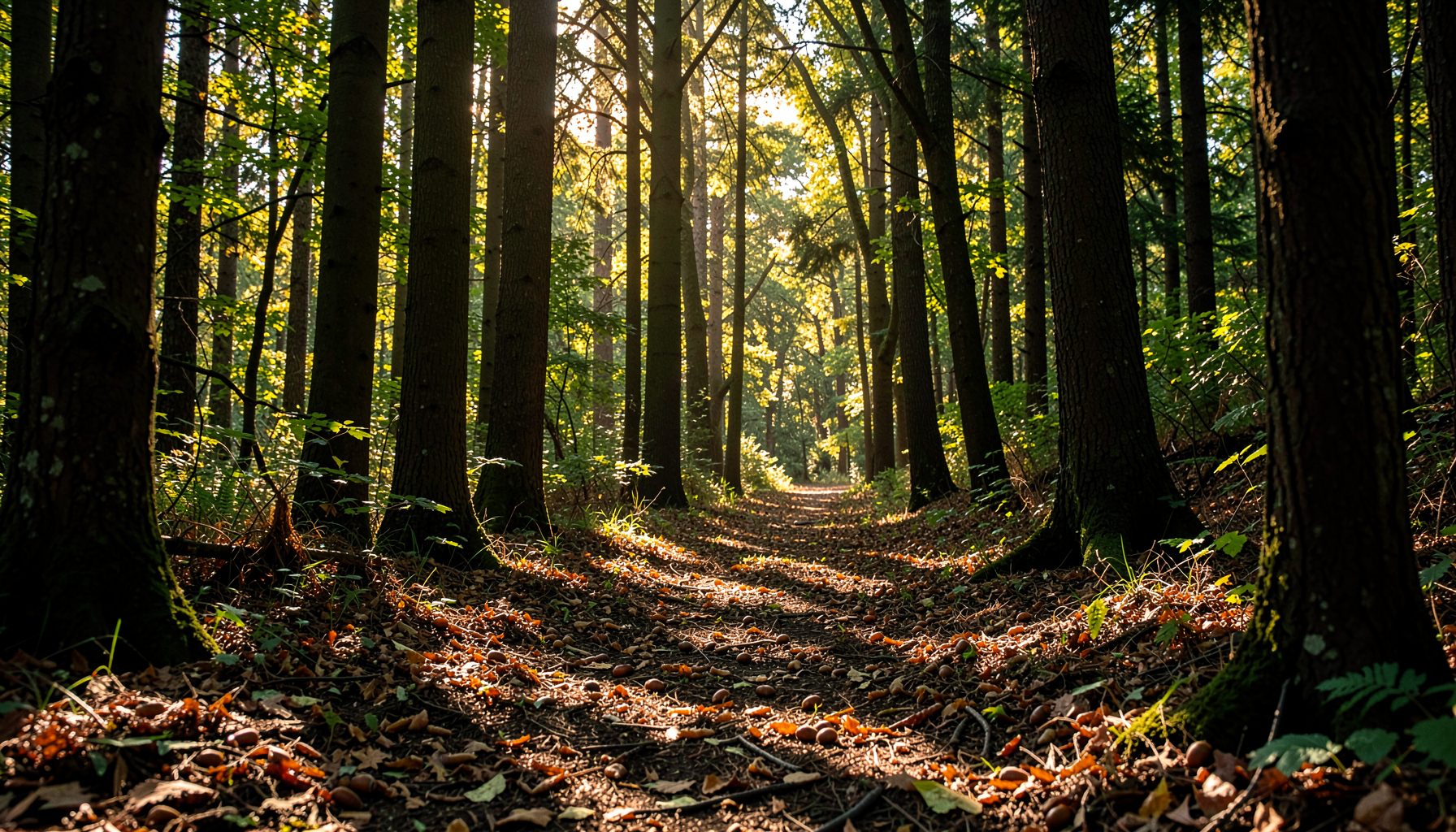
Why River Birch Seeds Anchor Healthy Riparian Buffers
A handful of seeds gathered from a streamside tree in autumn can carry the entire blueprint of a riverbank decades into the future. That small, winged, papery parcel holds the genetic code for roots that grip saturated soil, leaves that shade trout nurseries, and bark that resists rot through endless flood cycles. When conservation programs like the one at growingnative.org gather these seeds in bulk, donate them to state nurseries, and grow them out as bare-root seedlings, they are quietly building the scaffolding for rivers that drink cleaner, fish that spawn safely, and farms that lose less topsoil after every storm.
Among the dozens of species that anchor healthy riparian corridors, river birch (Betula nigra) holds a peculiar reputation. Foresters call it a pioneer, an opportunist that arrives first on freshly scoured sandbars and abandoned gravel beds. Ecologists call it a keystone of edge habitat, because warblers, woodpeckers, and countless caterpillars depend on its soft catkins and dense branching. Volunteers call it generous, because a single mature female tree can shed hundreds of thousands of viable seeds in a good year, every one of them a candidate for the next stretch of bank that needs stitching back together.
Understanding why those tiny river birch seeds matter is the first step toward appreciating how a volunteer with a basket can help a watershed recover. The same logic that makes them valuable to the Potomac catchment in Maryland applies wherever a creek is asked to do too much work and a buffer can help it rest. That wider conversation, the one about local rivers and local hands, is where the rest of this article lives.
The Hidden Work of Streamside Tree Seeds
Riparian buffers are not decorative strips of greenery. They are functioning ecosystems squeezed between working land and moving water, and their value is mostly invisible until a flood strips a bank bare or an algal bloom turns a creek fluorescent green. Trees along a stream do three heavy jobs at once. Their roots knit the soil together so a fast current cannot peel it away. Their canopies drop the water temperature by shading the surface, which keeps oxygen levels high enough for fish and macroinvertebrates. Their leaves, branches, and trunks slow runoff long enough for sediments and excess nutrients to settle out before they reach the main channel.
Seeds are the raw material for all of this. A buffer does not plant itself, and natural regeneration is patchy in places where the existing tree line is thin, browsed by deer, or choked with invasive vines. Collectors who walk a floodplain at the right week in October can gather enough viable material in a single afternoon to grow out hundreds of seedlings the following spring. Those seedlings, once outplanted as two-year-old whips and tubes, will reach streambank-stabilising size within five to seven growing seasons, and their roots will outlive the people who planted them.
What Makes River Birch a Riparian Powerhouse
River birch earns its name honestly. Its range hugs the riverbanks and swamp forests of the eastern United States, from southern New England down through Florida and west into Missouri and Texas. Across that range it tolerates wet feet, periodic inundation, and the kind of compacted, oxygen-poor alluvial soils that kill less adaptable species. Its shallow, fibrous root mat forms a dense living net across the top metre of bank soil, the exact zone where scour damage begins during a high-flow event.
Several biological traits make its seeds especially useful for buffer projects. The seeds are tiny, lightweight, and produced in enormous quantities, which means a small basket can carry thousands of them. They germinate readily without long cold stratification, so nursery growers do not have to invest in expensive cold storage before sowing. River birch also fixes nitrogen poorly compared with legumes, but its leaf litter is high in organic matter and breaks down to feed the very invertebrates that fingerling fish rely on for food. As a bonus, the exfoliating bark and dangling catkins shelter swallowtail butterfly caterpillars, which then feed the nestlings of flycatchers and warblers along the same corridor.
From Acorn-Sized Seed to Living Fence
The journey from a catkin on a winter twig to a sapling on a nursery bench is short and forgiving. Collectors target the ripe female catkins when they begin to shatter in late autumn, spreading tarps under selected trees and shaking the branches gently. Once cleaned and dried, the seeds can be stored in breathable bags through winter and sown into raised beds in early spring. Germination is reliable, often above 80 percent under nursery conditions, and seedlings reach plantable size within eighteen to twenty-four months.
In the field, those seedlings are outplanted in staggered rows parallel to the channel, alternating with slower-growing hardwoods such as oak, sycamore, and silver maple. River birch moves in first, securing the bank with its quick root spread while the longer-lived companions catch up. The result is a layered buffer: a soft pioneer at the water's edge, a mixed middle story, and a stable canopy that will persist for a century. Volunteers who collect the seed see the first step of that sequence in their hands; volunteers who help plant the seedlings close the loop a few seasons later.
Australian Creek Lines and Their Own Riparian Needs
Australian readers might notice that Betula nigra is a North American species and wonder what it has to do with a billabong at the foot of the Dandenong Ranges or a stormwater drain in western Sydney. The answer is that the principles behind riparian buffer restoration are global, and many of the same jobs are done here by different trees. The Hawkesbury-Nepean system west of Sydney, the Brisbane River catchment in Queensland, and the Yarra River corridor through Melbourne all face the same trio of pressures: stock access to banks, urban runoff, and erosion after big rain events.
Common Australian species for streamside planting work:
- Casuarina cunninghamiana (river sheoak), the workhorse of eastern Australian bank stabilisation, with fine needle-like foliage that filters sediment.
- Melaleuca quinquenervia and Melaleuca linariifolia, paperbarks that thrive in waterlogged soil and produce dense aerial roots.
- Tristaniopsis laurina, the water gum, prized in Melbourne parks and Yarra tributaries for its tolerance of periodic flooding.
- Eucalyptus camaldulensis, the river red gum, whose massive root plate anchors deep sandy banks through years of drought and flood.
- Callistemon salignus and other bottlebrushes, which feed nectar-feeding birds along creek lines from late spring into early summer.
Local Landcare and Bushcare crews, often meeting on a Saturday arvo with a thermos and a pair of secateurs, run most of the planting work in their districts. The species list differs, the acronym does not: in Australia as in the United States, a buffer is built seed by seed, weekend by weekend.
How Buffers Filter Runoff and Cool the Water
A well-designed buffer is mostly invisible, and that is the point. When a paddock in the upper catchment sheds manure-laden runoff after a thunderstorm, the first thing that buffer does is slow the water down. Friction from stems, leaves, and litter reduces the velocity of sheet flow, giving soil particles a chance to drop out before the water reaches the creek. Those particles carry much of the phosphorus that drives algal blooms downstream, so slowing them is the same thing as keeping the river's oxygen budget intact.
The second job is chemical. Plant roots and the microbial films coating them take up dissolved nitrate and ammonium, and the litter layer itself hosts bacteria that perform denitrification, converting nitrate into harmless nitrogen gas. Studies along eastern Australian streams have shown that a buffer of even ten metres can strip a significant fraction of nitrate from shallow groundwater before it enters the main channel.
The third job is thermal. Cold-water fish such as trout, and their Australian equivalents like the introduced rainbow trout and the native Macquarie perch, need shaded riffles to spawn in. A grassy bank with no trees can run several degrees warmer than a forested one in late summer. River birch, with its fine twigs and dense leaf mass, drops summer water temperatures measurably within a decade of planting, and the same effect is documented for Melaleuca and Casuarina along Australian waterways.
Sourcing Seeds and Joining the Effort
Volunteers are the missing ingredient that turns a good idea into a living streamside. The cycle begins in autumn with seed collection, moves through winter dormancy and spring sowing at the nursery, and finishes two seasons later with outplanting along a chosen reach. There is room in that cycle for almost any schedule, age, or skill level.
Practical ways to pitch in across the season:
- Walking a known seed tree on a fine weekend morning with a labelled bag, a notebook, and a hand lens for identifying the right catkins.
- Sorting and cleaning collected seed at a community shed, weighing and bagging it for delivery to a state nursery.
- Potting up germinated seedlings into tree tubes during winter, a task often shared by school groups and TAFE horticulture classes.
- Helping with a planting day on a private property or council reserve, including site prep, staking, and watering-in during the first dry summer.
- Recording data on survival and growth rates so the next round of plantings can be more effective than the last.
For anyone reading this in Australia and wondering how to connect with a comparable effort, the volunteer page at Growing Native's volunteer hub walks through the calendar and the gear list. Many of the same steps apply locally through your nearest Landcare group, council bushcare coordinator, or catchment management authority, and most will happily share their planting plans with newcomers.
The mathematics of restoration are humbling. A riverbank needs hundreds of stems per hectare to function as a real buffer, and most of those stems will be chewed, drowned, or outcompeted before they mature. That is precisely why seed collection matters at scale. The volunteer who bags a few thousand river birch seeds from a single tree is not just doing a pleasant morning's work; they are underwriting a margin of loss that the watershed cannot afford to leave to chance.
The same arithmetic applies to every Casuarina pod, every Melaleuca capsule, and every eucalyptus capsule collected by a Landcare group along a tributary of the Murray. When a community decides that a creek deserves a forest, the forest starts with whoever picks up the basket. Sign up for the next collection day in your catchment, bring a friend, and treat it like the small, ordinary, repeatable act of country care that it is. A riverbank in ten years will quietly thank the stranger who bothered to bend down in autumn.