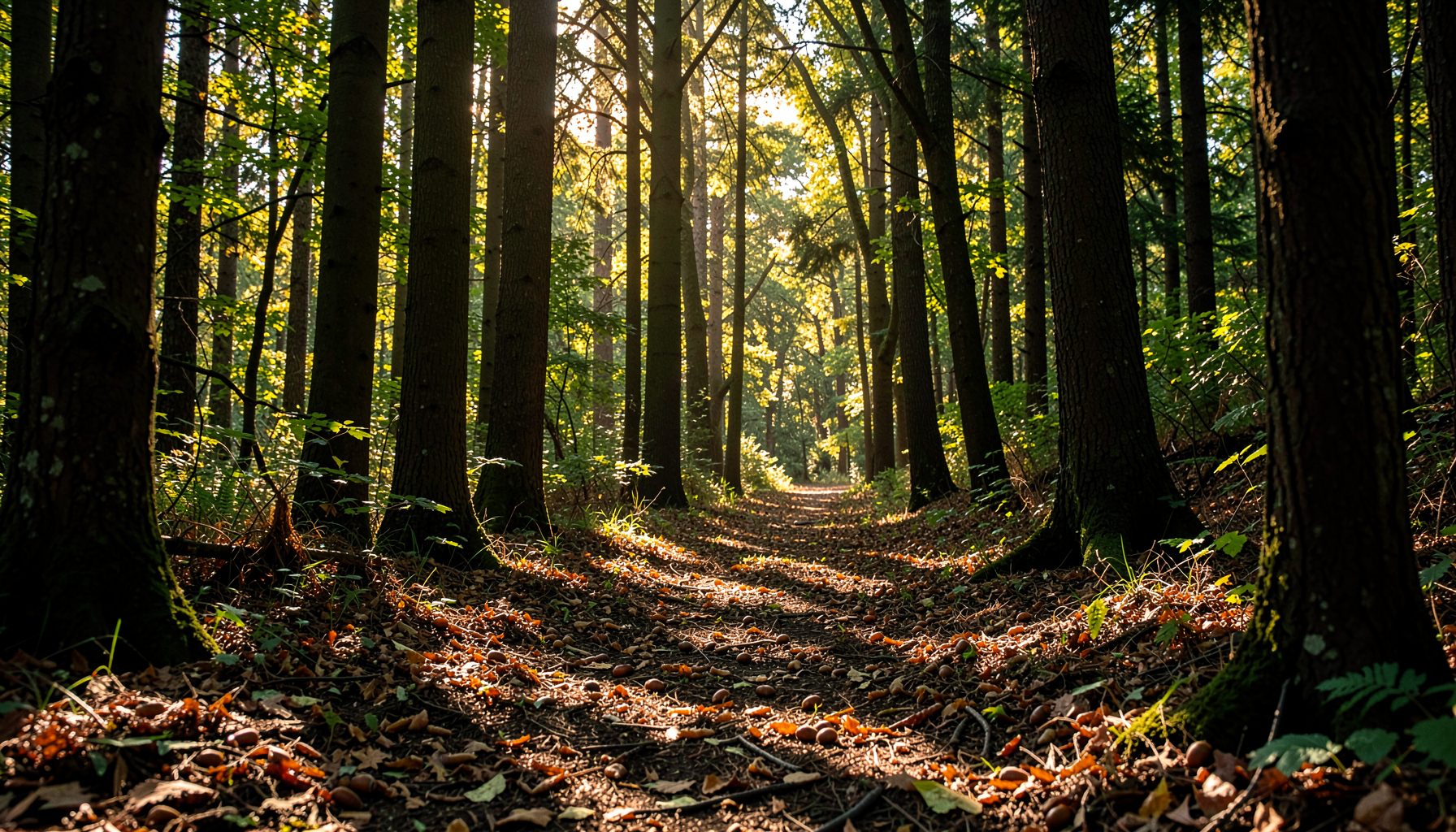
Reading fallen leaves to forecast a strong seed crop
A carpet of fallen leaves can reveal much more than the changing season. Beneath a mature tree, leaf litter records the condition of the canopy, the timing of fruiting and the way wind and rain have moved seeds across the ground. With a little practice, observers can use that ground-level evidence to estimate where acorns, nuts, pods or other viable seed may be found.
This simple field skill has value for restoration groups in Australia, even though the species and seasons differ from those in the Potomac River watershed. A dry eucalypt woodland near Canberra, a riparian reserve in northern New South Wales or a suburban bushcare site in the Dandenong Ranges can all benefit from careful observation before volunteers begin collecting. The goal is not to gather everything on the ground, but to identify healthy parent trees and collect responsibly.
Reading the ground beneath the canopy
The first clue is the relationship between leaf litter and the tree above it. A thick, fairly fresh layer of leaves usually marks an active canopy and a tree large enough to produce a substantial crop. If the litter is mixed with husks, caps, pods, samaras or small fruits, the site becomes even more promising. Seeds often fall during or shortly after the period when a tree sheds its older leaves, making the forest floor a useful record of recent reproductive activity.
Look for patterns rather than isolated objects. A concentrated patch of litter directly beneath a tree may indicate limited wind movement and a strong local seed fall. A wider scatter suggests that gusts, slopes or flowing water have carried material away from the parent. In a creek corridor, seeds may collect behind roots, logs and leaf dams. Those pockets can show where natural regeneration is already taking place, while also warning collectors not to remove every seed from a productive microsite.
Leaf shape and texture help identify the source tree. Broad oak leaves, walnut leaflets and gum leaves create distinct litter profiles, although decomposition, insects and wet weather can blur the differences. Field guides, photographs and a hand lens can support identification. When certainty is low, mark the tree, take a sample photograph and return with someone experienced rather than collecting seed from an unknown species.
Why leaf litter tracks a strong seed year
Many trees produce seed unevenly. A mature tree may flower or fruit lightly for several seasons, then produce an unusually large crop when rainfall, temperature and stored energy align. Ecologists often describe this as mast seeding. A heavy seed year can overwhelm birds, rodents and insects, leaving more viable seed available for germination or careful collection.
The leaf layer can help reveal this shift because it gives a visual baseline. Compare the current ground cover with last year’s photographs, notes or memory. An unusually deep carpet beneath several trees of the same species, combined with abundant fruits or empty seed cases, may signal a productive season. The pattern becomes more reliable when neighbouring trees show similar results rather than one unusually vigorous individual.
The signal is still indirect. A tree can shed many leaves after heat stress, drought or disease without producing much seed. Conversely, a valuable seed crop may be hidden in the crown, dispersed beyond the drip line or removed quickly by wildlife. Fallen leaves should therefore be treated as an early indicator, not a harvest guarantee. Checking the canopy, branches, fruiting structures and nearby seedlings makes the forecast stronger.
For Australian observers, this distinction matters in eucalypt country. Gum trees commonly release seed from woody capsules, and their litter can be abundant even when capsules contain little viable seed. Wattle pods, banksia cones, casuarina cones and rainforest fruits each have their own timing. A leaf-litter survey works best when it is combined with knowledge of the target species’ flowering, fruiting and seed-release cycle.
A practical survey for volunteers
Begin by choosing a small group of healthy parent trees in a place where collection is permitted. Record the species, approximate trunk size, canopy condition, location and date. Mark a few observation points beneath each canopy, such as the trunk base, drip line and downwind edge. This gives a consistent way to compare seed abundance between trees and across weeks.
At each point, inspect a small square of ground rather than sweeping the entire site. Count visible fruits, capsules, nuts or seeds, and note whether they are intact, damaged, mouldy or already sprouting. Record the depth and freshness of the leaf litter, recent rainfall, signs of animals and any barriers that may have changed seed movement. A phone photograph with a scale object can make later comparisons much easier.
Repeat the check after wind, heavy rain or a dry spell. Strong weather can create the appearance of a sudden seed fall by moving material from several trees into one place. Returning to the same trees separates a genuine increase in production from simple redistribution. In Australia, a short survey after a summer storm may be particularly informative, while a planned autumn check can suit deciduous species in cooler regions.
Do not collect every viable seed you find. Leave enough for natural regeneration and wildlife, avoid disturbing leaf litter unnecessarily, and follow land manager rules. Seeds from roadsides, sprayed verges or polluted drains may be unsuitable for propagation. On public land, permissions can differ between councils, parks agencies and private owners, so a productive tree is useful only when its seed can be collected legally and ethically.
Weather and habitat change the signal
Rainfall is one of the strongest influences on seed production, but its timing matters. Moisture during flowering can support fruit formation, while rain close to seed maturity may increase fungal damage or cause early drop. Heatwaves, frost, smoke and insect outbreaks can also change the apparent relationship between leaves and seed. A notebook that pairs litter observations with local weather records will reveal patterns that a single visit cannot.
The surrounding habitat affects what happens after seeds fall. In a healthy riparian buffer, damp leaf litter can protect seed from drying and create contact with mineral soil. In a compacted suburban reserve, thick litter may sit above hard ground where seedlings cannot establish. Grazing, mowing, fire frequency, invasive grasses and browsing animals can all reduce recruitment even when seed abundance is high.
Australian landscapes make these differences easy to see. A creek near Melbourne may hold moisture beneath leaf litter while a woodland outside Adelaide dries rapidly after rain. In the Blue Mountains, slope and wind can carry seed downslope into gullies. Around Brisbane, seasonal storms may move pods and leaf litter through drainage lines. These local conditions should shape both collection timing and restoration planning.
The same principle applies to the Potomac watershed work supported by Growing Native: seeds are part of a larger ecological system. Streamside trees help stabilise banks, filter runoff and improve water quality, but successful restoration also depends on suitable soil, moisture, protection and follow-up care. Reading the forest floor helps volunteers make better decisions before seed enters a nursery or planting program.
Turning observations into restoration value
A useful seed forecast connects field notes with a careful supply chain. When several healthy trees show a strong crop, a group can plan collection days, labels, storage containers and transport before the best material disappears. Species, collection date and parent-tree location should travel with each batch. Good records help nurseries assess provenance and avoid mixing seed that requires different treatment.
Community networks can make this work more efficient. A school may monitor trees during the week, a local Landcare group may collect on the weekend and a nursery may advise on cleaning and storage. Councils and bushcare coordinators can identify sites where seed collection supports future plantings without compromising remnant vegetation. Groups looking to coordinate these relationships can use this guide to build a seed exchange network across local communities.
The approach also creates an educational opportunity. Children can compare leaf shapes, measure litter depth and map seed movement without removing anything. Workplace teams can learn how canopy cover influences water quality and erosion control. For Australian families, a visit during school holidays to a local reserve can turn a familiar pile of gum leaves into a lesson about regeneration, habitat and seasonal change.
Data does not need to be complicated. A shared spreadsheet with dates, species, weather, litter condition and seed counts can identify productive trees over several years. Photographs taken from the same position add visual evidence. Over time, these observations show whether a site is becoming more resilient, whether a species is failing to reproduce and when volunteers should focus their limited effort.
Make seasonal monitoring part of the work
The most effective monitoring programs are simple enough to repeat. Choose a few trees, use the same method, record what you see and revisit them at meaningful points in the season. Consistency matters more than collecting a large amount of information once. It also makes the activity accessible to community groups that have limited equipment or only a few hours available.
Before visiting a site, prepare identification resources, gloves, paper bags or breathable containers, labels and a way to record coordinates. Avoid plastic bags for damp seed, because condensation can encourage mould. Check access arrangements, weather forecasts and local collection rules. If the area is remote, work with a partner and tell someone where the group will be.
Field habits that improve seed forecasts
- Compare leaf-litter depth and seed counts beneath several trees of the same species.
- Photograph the canopy, ground layer and individual seed structures at each visit.
- Record rainfall, wind, heat, animal activity and recent disturbance beside the seed observations.
- Leave sufficient seed and undisturbed litter for wildlife and natural regeneration.
- Label every collected batch with species, location, parent tree and collection date.
- Share observations with a nursery, Landcare group, school or council restoration team.
Volunteers who want practical experience with seed collection, tree identification and watershed restoration can volunteer with Growing Native. The program’s work in the Potomac River watershed demonstrates how small observations can support larger efforts to grow streamside seedlings, reduce erosion and improve the health of connected waterways.
A fallen leaf is easy to overlook, yet it can be the beginning of a useful seasonal record. By reading the layer beneath the canopy, checking the tree above it and respecting the habitat around it, volunteers can predict where seed abundance is likely to be greatest and direct collection toward healthy, well-managed restoration. Start with one site, revisit it through the season and let the forest floor guide the next careful action.