Sowing Resilience: Why Nut Tree Seeds Anchor Long-Term Food Security
Across rural and suburban Australia, conversations about food resilience are no longer abstract. Rising grocery prices, disrupted import supply chains, and increasingly erratic weather have prompted households from Hobart to Cairns to rethink what they can grow, store, and share. Nut-bearing trees sit quietly at the centre of this conversation, offering a calorie-dense food source that can produce for decades, even generations, once established. Yet the often-overlooked first step in expanding this resource happens long before harvest: gathering and donating quality seed so nurseries and community groups can raise the next generation of trees.
Seed collecting from hardwood species like oaks, walnuts, and chestnuts is a quiet form of food security planning. Unlike annual vegetable crops that need to be replanted every season, a well-sited nut orchard produces reliable yields year after year, requiring only modest inputs of water and care after establishment. Communities that prioritise seed stewardship today lay the foundation for neighbourhood-scale food webs tomorrow, with surplus harvest shared among households, schools, and local food banks.
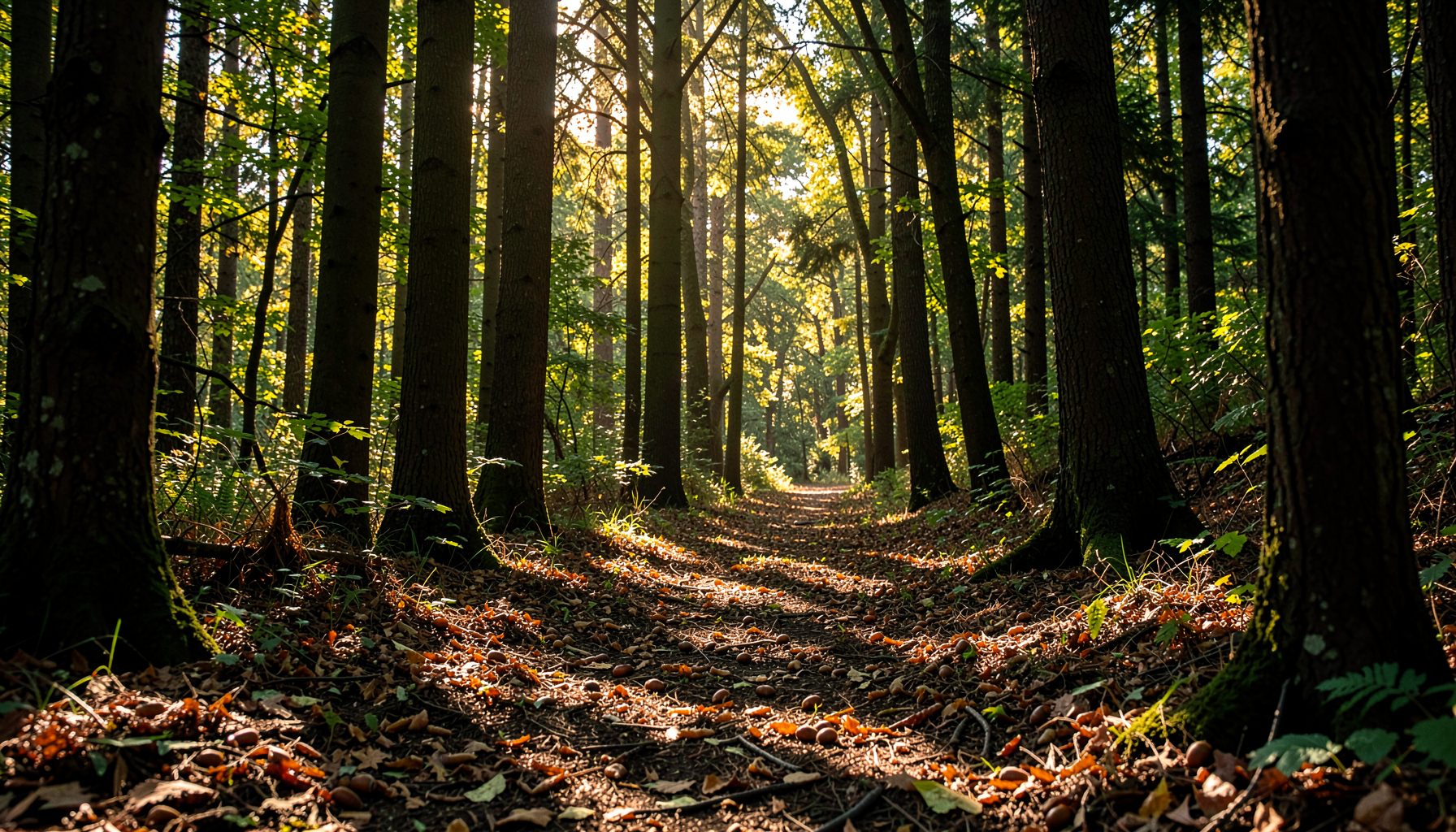
The work connects deeply to watershed restoration, voluntary conservation programs, and the simple pleasure of wandering beneath a tree heavy with autumn nuts. Programs such as Growing Native demonstrate how collective seed gathering can serve both ecological recovery and household provisioning at the same time.
Nut Trees as Living Pantries
Nut trees function as living pantries that store the sun's energy in a dense, shelf-stable form. Acorns, walnuts, hickory nuts, and chestnuts can be dried, stored in cool conditions, and consumed across many seasons, providing carbohydrates, protein, and healthy oils. For families in Brisbane's outer suburbs or the peri-urban fringe of Melbourne, where backyard space is plentiful but grocery budgets are tight, mature nut trees offer an underused carbohydrate stream that complements home vegetable gardens and small-livestock husbandry.
Unlike grain crops that demand annual tillage, fertilising, and seed purchases, nut-bearing trees invest energy in wood, roots, and masts of fruit that mature over years rather than weeks. Once a tree reaches bearing age, its output grows with its canopy, often doubling within a decade. The nutritional density of nuts also makes them valuable for people managing dietary requirements common in modern Australian life, such as lower-carb eating or plant-forward diets influenced by Mediterranean and Asian cuisines that have become part of everyday cooking.
From a climate adaptation standpoint, nut trees buffer households against both drought and flood. Their deep tap roots access moisture far below the surface, while their broad canopies cool local microclimates. In regions prone to heatwaves such as the Adelaide plains or inland parts of Western Australia, a mature walnut tree can lower ground-level temperatures by several degrees, creating a cooler environment for surrounding vegetables and a more comfortable outdoor workspace for families during long summer evenings.
The Science of Seed Viability and Storage
Collecting seed from nut trees is part harvesting, part anticipatory science. A viable seed carries an embryo capable of germinating into a robust seedling, provided it is gathered at the right moment, kept moist or dormant appropriately, and sown within a viable window. Different species behave differently: walnuts prefer autumn sowing or careful stratification, while acorns are notoriously recalcitrant, drying out quickly and losing viability if stored warm for more than a few weeks. Knowing each species' rhythm is the difference between a thriving nursery cohort and a tray of empty pots.
Cool, moist conditions mimic what nature provides beneath leaf litter through winter. In southern Australia, where winter temperatures drop reliably in places like Ballarat, Canberra, and parts of rural Tasmania, overwintering seed outdoors often produces strong germination by spring. In subtropical zones such as coastal Queensland, where winters are mild, growers may need to refrigerate seed deliberately or sow immediately to avoid fungal losses during the humid months.
Healthy populations of nut trees also need genetic diversity, which is why collecting from many parent trees within a region matters. Seed collected from a single isolated tree may produce seedlings less resilient to local pests, drought cycles, or disease. Volunteers working across multiple sites, swapping notes and occasionally trading collections with neighbouring landholders, contribute to a more robust regional seed bank. Conservation programs that pair field collection with formal nursery partnerships ensure that collected seed reaches growers equipped to cultivate it well.
Australian Realities: Climate, Law, and Local Landscapes
Australia presents a unique mix of opportunity and constraint for nut tree stewardship. The continent lacks true oaks and traditional chestnuts as native species, but introduced and naturalised trees such as European walnut, black walnut, and the American hickory have established widely across cooler parts of the country. Meanwhile, two genuinely Australian contributors to the nut pantry deserve attention: the macadamia, native to subtropical Queensland and northern New South Wales, and the bunya pine, a towering conifer whose massive cones have long sustained Aboriginal communities in south-east Queensland.
State-based regulations shape what can be planted where. Under Queensland's Vegetation Management Act, clearing native vegetation in certain regional ecosystems requires permits, which has implications for establishing new plantings on previously uncleared land. In Victoria, native vegetation frameworks influence which species can be planted on sites that have remnant habitat values, while NSW's Biodiversity Conservation Act guides offsets and stewardship agreements. Savvy seed collectors familiarise themselves with their local council overlays before planning large plantings, ensuring that their food-security aspirations align with biodiversity and waterway protections.
Urban infrastructure also offers untapped potential. Inner Melbourne laneways, Brisbane footpath easements, and Perth verges in established suburbs sometimes host mature street trees whose nuts go unharvested. Community planting groups in places like Fremantle and the Inner West in Sydney have begun organised harvests of walnut and pecan trees from public land, distributing the seed to local nurseries or processing it into flour and oil. The trend is small but growing, and aligns with broader enthusiasm for bush tucker, edible streetscapes, and the cottage revival of fermenting, drying, and seed-saving.
| Tree | Climate Fit | Bearing Age | Key Quirk |
|---|---|---|---|
| Macadamia | Subtropical, frost-free | 4–6 years | Native to QLD; nuts ripen over months and drop unevenly |
| Bunya pine | Warm temperate, humid | 15–20 years | Massive cones; needs space and careful harvest timing |
| English walnut | Cool temperate, inland | 6–8 years | Late-spring frosts can damage flowers; needs deep soil |
| Black walnut | Cool temperate | 8–10 years | Produces juglone, suppressing some understorey plants |
| Chestnut | Cool temperate, well-drained | 5–7 years | Pollinator needed nearby for heavy crops |
Building Seed Networks and Community Resilience
Few activities translate household enthusiasm into regional impact as efficiently as organised seed collecting. A small group of volunteers working through autumn can gather enough seed to raise hundreds of seedlings in a state nursery, which then return to the public as riparian plantings, schoolyard trees, or community orchard specimens. The arithmetic is striking: a few kilograms of collected nuts can yield a tree expected to feed wildlife, shade a creek, and feed people for several decades.
Local seed networks flourish when growers share more than nuts. They exchange provenance notes, harvest dates, parent tree health observations, and germination tips. A scout leader in Geelong, for instance, may know which reserve has the most vigorous walnut parent, while a teacher in Wollongong can map local chestnut flowering times across multiple years. Capturing that knowledge in regional seed catalogues helps future planters choose trees suited to their soils and microclimates. Those interested in expanding such networks can explore community exchange guidance to find tested ways to coordinate collection drives, store seed safely, and pass collections between groups.
Such networks also serve as early warning systems. If nut harvests begin failing across a particular valley, attentive collectors notice before commercial growers do. The same networks can pivot quickly to send seed, scion wood, or starter trees to communities recovering from bushfires, floods, or prolonged drought. The resilience built through years of shared collecting pays dividends precisely when disaster strikes, turning neighbourly goodwill into tangible food resources for households rebuilding in the aftermath.
Joining the Broader Restoration Movement
Collecting seed from nut-bearing trees is rarely an isolated pursuit. The activity overlaps naturally with riparian repair, fire-preparedness planting, and watershed rehabilitation, because many of the same species useful for human food also anchor creek banks, filter runoff, and shelter aquatic life downstream. Programs that organise volunteers to gather acorns and walnuts from catchment headwaters simultaneously advance clean-water goals and household pantry goals, a convergence that rarely appears in conventional agricultural policy.
Australian participants often find their strongest contributions through established programs with proven protocols, safety guidance, and downstream nursery partnerships. Volunteering as a family or workplace group offers a tangible way to teach children about forest cycles, food origins, and the slow patience required to grow a tree. For those ready to begin, the volunteer team can outline upcoming collection events, training sessions, and the seed varieties most needed by partner nurseries.
The act of kneeling to gather autumn nuts carries more weight than it first appears. Each seed represents a future tree, a future meal, a future shaded creek, and a thread woven into the long story of land stewardship. Across Australia, communities that treat seed collecting as both an ecological duty and a household investment are quietly building the layered food security that future generations will rely on, one acorn, one walnut, and one shared seedling at a time.