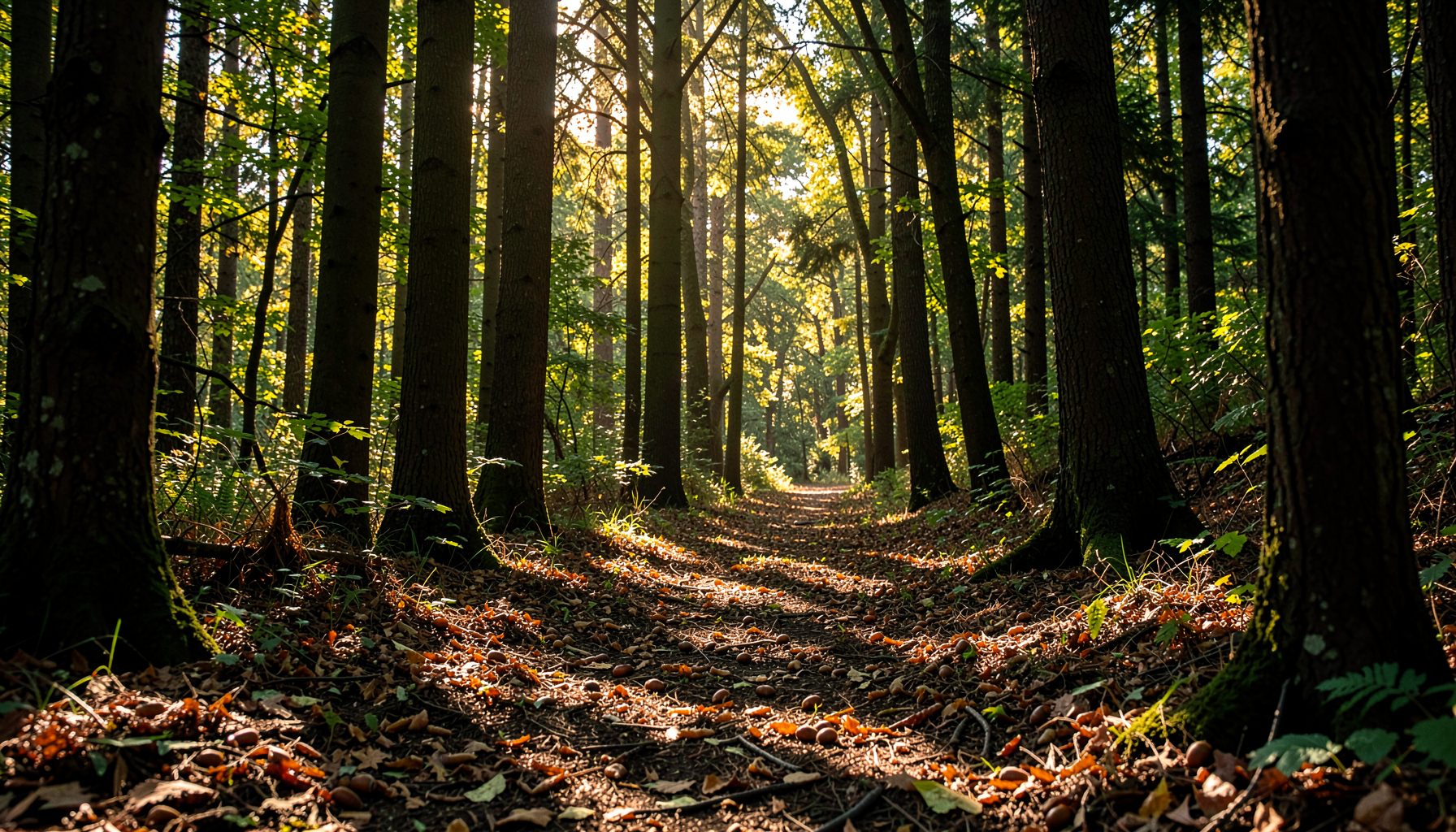
Why American Beech Trees Matter in Floodplain Soils
Floodplains are among the most productive landscapes in a watershed, yet they are also exposed to repeated flooding, shifting channels, saturated ground, and intense erosion. Their soils can support rich forests when roots, leaf litter, woody debris, and flowing water remain in balance. When those protective systems are removed, stream banks become unstable and sediment can move quickly into nearby waterways.
American beech trees (Fagus grandifolia) are valuable members of these forest communities. Their broad crowns, extensive root systems, fallen leaves, and long-lived structure help hold alluvial soils together while creating habitat for wildlife. Beech trees do not grow in every part of a floodplain, but on elevated terraces, moist slopes, and well-drained streamside ground, they can make an important contribution to soil stability and watershed health.
A Root System That Holds Alluvial Soil
American beech often develops a wide, spreading root network rather than a single dominant taproot. Many of its roots occupy the upper layers of soil, where they bind particles together and reinforce the ground along stream margins. This network can reduce the movement of loose sediment during high water, especially where the tree grows alongside shrubs, grasses, and other native hardwoods.
The stabilizing effect is strongest when beech roots are part of a continuous riparian plant community. A mature tree working alone cannot prevent a large bank from collapsing, particularly during a major storm. However, beech roots intertwine with the roots of ironwood, spicebush, river birch, sycamore, and herbaceous plants. Together, these layers create a living mesh that resists surface wash and slows the loss of soil.
Root reinforcement also helps maintain small variations in the forest floor. Exposed roots, leaf-covered hollows, and patches of organic matter interrupt the movement of rainwater before it reaches the stream. This reduces the force of runoff and gives water more opportunities to soak into the ground.
Leaf Litter Protects the Forest Floor
A beech canopy changes the way rainfall reaches floodplain soil. Water is first caught by leaves and branches, then released gradually as droplets or flows down the trunk. This interception reduces the direct impact of heavy rain on bare ground. In a forest with multiple canopy layers, the combined effect can significantly slow runoff.
Beech leaves are durable and often remain on the forest floor longer than the leaves of many other deciduous trees. Their litter forms a protective blanket over soil, shielding it from raindrop impact, temperature swings, and rapid drying. As the leaves decompose, they add organic material that improves soil structure and helps the ground retain moisture.
That organic layer supports fungi, earthworms, insects, and microorganisms involved in nutrient cycling. Looser, biologically active soil can absorb and store more water than compacted soil. During moderate floods, this improved infiltration can reduce the amount of muddy runoff entering the stream, while the litter itself helps trap fine sediment moving across the forest floor.
Beech leaves also contribute to a gradual release of nutrients. Rather than washing away immediately, minerals are processed through decomposition and taken up by plants. This closed nutrient cycle supports vigorous regeneration, which is essential for maintaining a stable floodplain forest over time.
Floodplain Forest Structure Slows Water
Soil stability depends on more than roots beneath a single tree. The entire vertical structure of a floodplain forest affects how water moves. Tall beech trees form part of the upper canopy, while young trees, shrubs, ferns, fallen branches, and groundcover occupy lower levels. This layered vegetation increases surface roughness and slows overland flow.
When floodwater spreads across a forested terrace, trunks and fallen wood act as small barriers. They redirect currents, reduce velocity in localized areas, and encourage sediment to settle. A standing beech may survive repeated flooding if its roots remain healthy and the soil drains between events. Fallen beech wood can continue to support the ecosystem by providing cover, moisture, and physical structure long after the tree dies.
| Beech feature | Effect on floodplain soil | Watershed benefit |
|---|---|---|
| Spreading lateral roots | Reinforces upper soil layers and streamside ground | Reduces bank erosion and sediment loss |
| Persistent leaf litter | Protects soil from rainfall and runoff | Improves infiltration and moisture retention |
| Broad canopy | Intercepts precipitation and moderates ground conditions | Slows surface flow and reduces soil disturbance |
| Fallen limbs and trunks | Create roughness and trap moving sediment | Supports channel and floodplain complexity |
| Beechnuts and mature habitat | Sustains wildlife and forest regeneration | Strengthens long-term ecological resilience |
These functions are especially important in the Potomac River watershed, where tributaries pass through forests, farms, roads, and developed communities. A healthy riparian corridor can filter runoff before it reaches the channel, stabilize the edge of the stream, and provide a refuge for species affected by habitat fragmentation.
Beech Trees Support a Living Watershed
American beech contributes to soil stability through relationships with other organisms. Its nuts, known as beechnuts, feed squirrels, deer, turkeys, bears, and many other animals. Wildlife movement spreads seeds and helps connect individual forest patches. Those animals also interact with the leaf litter and soil community, influencing decomposition and nutrient cycling.
The tree’s large canopy provides shade that can moderate air and soil temperatures. Along streams, shade helps maintain cooler water conditions for aquatic organisms. Lower temperatures can benefit fish and aquatic insects, while a stable forest floor protects the small springs and seepage areas that feed tributaries during dry periods.
Beech trees are also part of a diverse native plant community that offers greater protection than a simplified stand of vegetation. Different species root at different depths, leaf out at different times, and respond differently to flooding. This variety spreads ecological risk. If one species suffers from a pest, disease, drought, or unusually severe flood, other plants may continue to hold the soil and provide habitat.
In this way, American beech is best understood as one component of a broader floodplain system. Its value increases when it grows with native shrubs, canopy trees, groundcover, fungi, and decomposers rather than in isolation.
Regeneration Requires Careful Stewardship
American beech can live for centuries, but natural regeneration is not guaranteed. Seedlings may struggle where deer browse heavily, invasive plants dominate the understory, or compacted soil prevents beechnuts from reaching suitable ground. Floods can also move seeds away from favorable sites or bury them under sediment.
Climate stress and beech bark disease may further affect mature trees in some areas. This makes it important to protect existing beech stands while encouraging a diverse mix of native species. Restoration should focus on the conditions that help forests renew themselves: connected habitat, healthy soils, reduced disturbance, and protection from invasive vegetation.
Collecting native seeds can support this work when it is done responsibly and coordinated with restoration programs. The benefits of collecting seeds include preserving locally adapted plant material and giving communities a direct role in rebuilding native forests. Seeds should be gathered sustainably, identified accurately, and directed to nurseries or projects equipped to grow them.
For floodplain restoration, planting decisions should reflect local conditions. Beech may be appropriate on moist terraces and upland edges, while other native trees are better suited to frequently inundated banks or wet depressions. Matching each species to its natural habitat improves survival and creates a more functional forest structure.
Practical Ways to Protect Floodplain Soils
Landowners, municipalities, schools, and volunteer groups can help conserve the conditions that allow beech and other native trees to stabilize streamside ground. Small actions matter when they reinforce the natural processes already operating in a watershed.
- Preserve mature beech trees and existing riparian forest wherever development or maintenance work is being planned.
- Keep fallen logs, branches, and leaf litter in place unless they create a specific safety hazard or obstruct critical infrastructure.
- Remove invasive plants carefully and replace them with locally appropriate native trees, shrubs, and groundcover.
- Avoid mowing, grading, or compacting the narrow forested buffer beside streams.
- Join seed collection, tree planting, and watershed education efforts through the Growing Native program.
Restoration projects should also monitor results over time. Signs of improvement may include less exposed soil, stronger stream banks, more natural understory growth, clearer water after rainfall, and increased wildlife activity. Monitoring helps identify where additional planting, invasive species control, or deer management may be needed.
Community Action Builds Long-Term Resilience
The most durable floodplain improvements connect ecological knowledge with local participation. Volunteers can learn to identify beech, oak, walnut, hickory, and other native trees while collecting seeds from healthy parent plants. Families and students gain a practical understanding of how a nut can become a seedling, a tree, a root network, and eventually a source of cleaner water and wildlife habitat.
Community involvement also expands the reach of restoration work beyond public parks and large preserves. Urban and suburban stream corridors often contain valuable mature trees and seed sources, even when they are surrounded by roads or buildings. Protecting and collecting from these areas can help maintain regional genetic diversity when programs follow appropriate permissions and collection standards.
American beech trees will not solve every floodplain problem, but they provide several forms of ecological support at once. Their roots reinforce soil, their leaves protect the ground, their canopies moderate rainfall and temperature, and their presence contributes to a diverse forest community. When these benefits are combined with native shrubs, other hardwoods, and careful stewardship, floodplains become better able to absorb disturbance and protect the waterways that connect communities.
Support local forest restoration by learning native tree identification, collecting seeds responsibly, or volunteering with a watershed conservation project. Each healthy seed and protected streamside tree helps build stronger floodplain soils and a more resilient Potomac River watershed.