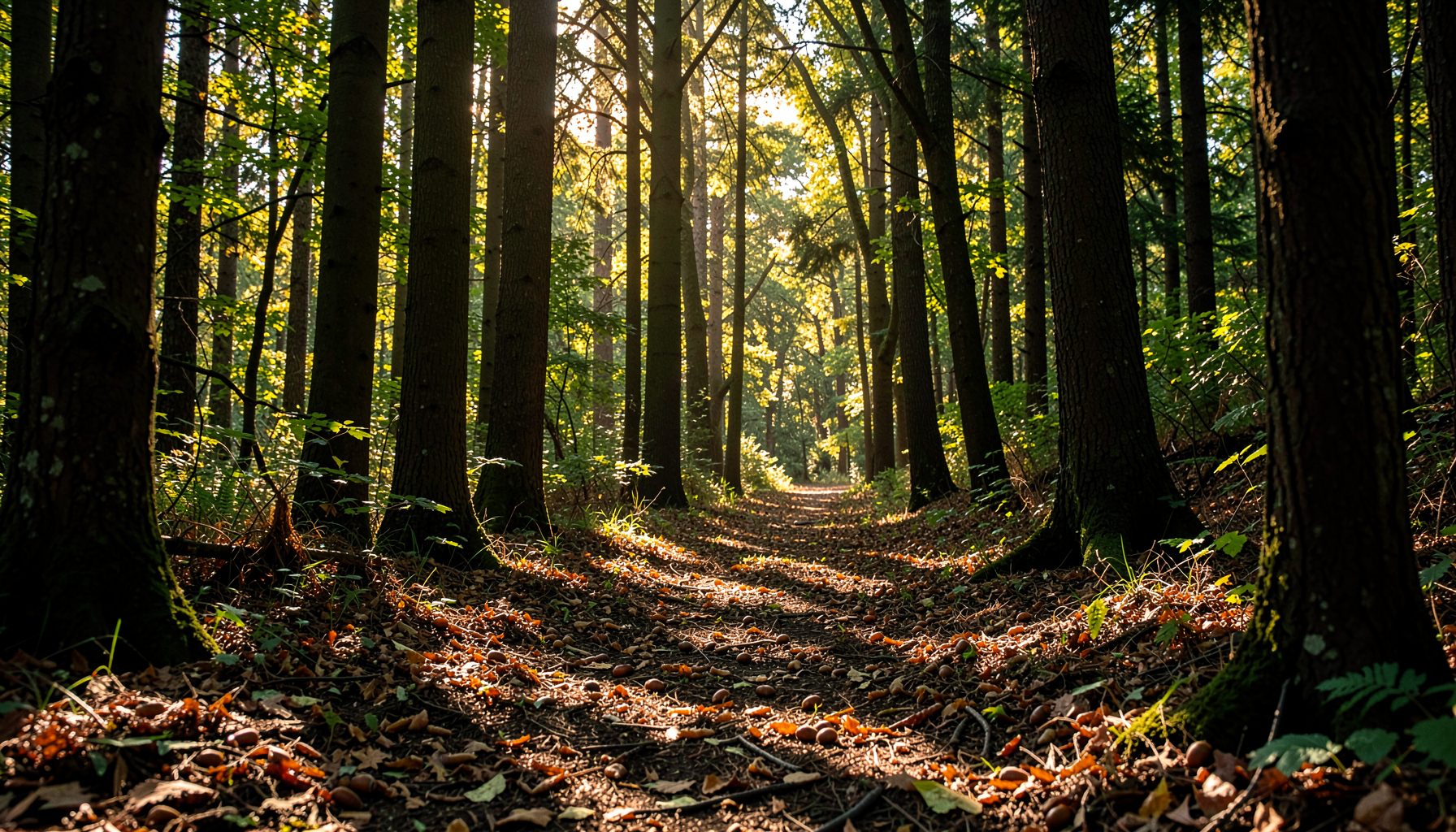
Understanding the Potomac watershed’s forest history
The forests surrounding the Potomac River have never been static. Their composition, density, and distribution have shifted with climate, fire, wildlife, Indigenous stewardship, farming, industry, and modern conservation. Reading that history helps explain why some hillsides remain wooded while nearby streams run through open fields or heavily developed communities.
The Potomac watershed stretches across parts of Maryland, Virginia, West Virginia, Pennsylvania, and the District of Columbia. It includes mountain forests, rolling piedmont woodlands, agricultural valleys, urban tributaries, and thousands of miles of small streams. Each setting carries evidence of past land use, from old field boundaries and charcoal-rich soils to mature trees growing beside former mills.
Forest history is more than a record of tree cover. It reveals how water moved through the landscape, how soil was retained, which species could regenerate, and why restoring native trees along waterways remains an important conservation strategy today.
Forests before large-scale European settlement
Before colonial expansion, the Potomac region supported a varied mosaic of forests, wetlands, grasslands, and cultivated areas. Indigenous nations managed landscapes through seasonal harvesting, selective burning, planting, and careful observation of wildlife and plant cycles. These practices influenced forest structure without converting broad areas into permanently cleared land.
Oak, hickory, chestnut, beech, tulip poplar, maple, sycamore, river birch, walnut, and many shrub species occupied different soils and elevations. Mountain slopes often held mixed hardwood stands, while floodplains supported trees adapted to periodic inundation and rich alluvial soil. Small disturbances created openings where young trees, berries, and herbaceous plants could thrive.
The result was not a single untouched forest type. Windstorms, floods, ice, insects, disease, fire, and human activity continually reshaped the woodland. Some stands were old and structurally complex, while others were younger or more open. This natural variation helped support diverse bird, mammal, amphibian, insect, and plant communities.
Clearing the land for farms and towns
European settlement accelerated forest clearing throughout the watershed. Farmers cut trees for fields, livestock pasture, homes, fences, charcoal, and fuel. River valleys and fertile uplands were particularly attractive because they offered productive soils and access to transportation. By the nineteenth century, many areas that had once been forested were dominated by crops or pasture.
Clearing changed the relationship between rainfall and rivers. Tree roots that once held soil were removed, leaf litter declined, and exposed ground became more vulnerable to erosion. Heavy storms carried sediment into tributaries, where it could bury gravel beds, reduce water quality, and alter habitat for fish and aquatic insects.
Timber also powered regional growth. Sawmills, iron furnaces, canals, railroads, and expanding towns created strong demand for wood. In mountainous parts of the watershed, repeated cutting and industrial activity affected large areas. Some slopes were left with thin soils and limited natural regeneration, while lowland forests became fragmented into smaller patches.
The loss of American chestnut in the early twentieth century further changed eastern forests. Chestnut had been an important canopy tree and food source, and its decline opened space for oak, red maple, tulip poplar, and other species. Forests recovered in many places, but they did not return to precisely the same composition.
A changing landscape of farms and regrowth
Forest cover began to increase in portions of the Potomac watershed as agriculture shifted. Improved transportation allowed farmers to move goods from more productive areas, while marginal farms on steep or rocky ground became less viable. Fields were abandoned, shrubs moved in, and pioneer trees such as eastern red cedar, Virginia pine, and fast-growing hardwoods established new stands.
This natural regrowth created the broad forested appearance found across many watershed ridges today. Yet a young woodland developing on an abandoned field differs from a long-established forest. It may contain simplified soils, dense even-aged trees, invasive plants, and fewer large logs or tree cavities. Its wildlife value can still be substantial, but ecological recovery takes many decades.
The timing and pattern of regrowth also matter. A continuous forest patch can protect interior habitat and moderate local temperatures, while isolated fragments are more exposed to heat, wind, invasive species, and development. Streamside areas often regrow unevenly, with gaps caused by roads, lawns, utility corridors, agriculture, or repeated mowing.
Historic maps, aerial photographs, property records, tree ages, and surviving witness trees help researchers reconstruct these changes. A large oak standing in a former pasture may preserve part of the old landscape, while a line of mature trees can mark a forgotten fence or field edge.
Why streamside forests became a conservation priority
Riparian forests—the trees and shrubs beside rivers, creeks, and wetlands—play a central role in watershed health. Their roots stabilize banks, their fallen leaves feed aquatic food webs, and their shade keeps water cooler. Branches and woody debris also create physical structure in channels and floodplains.
When streamside vegetation is removed, banks can become unstable and rainfall can wash soil directly into the water. Restoring these areas can reduce the movement of sediment and help protect downstream communities and aquatic ecosystems. Growing Native explains how streamside forests reduce erosion, connecting forest history with a practical restoration need.
Riparian buffers also filter runoff from roads, farms, lawns, and developed areas. A mixture of native canopy trees, understory trees, shrubs, and groundcover provides stronger habitat than a narrow row of ornamental plants or a mowed bank. The best restoration designs reflect local soil, flooding patterns, existing vegetation, and the needs of nearby communities.
Historical knowledge can guide this work. A restoration team may look for remnant species, old floodplain trees, nearby reference forests, and records of previous land use before choosing what to plant. The aim is not to recreate a perfectly frozen moment in time, but to rebuild a resilient native plant community suited to current conditions.
| Period or phase | Major forest change | Effects on the watershed |
|---|---|---|
| Indigenous stewardship | Diverse forests shaped by harvesting, burning, cultivation, and natural disturbance | Maintained habitat mosaics and locally adapted plant communities |
| Colonial expansion | Large-scale clearing for farms, pasture, fuel, and settlements | Increased runoff, soil loss, and habitat fragmentation |
| Industrial growth | Intensive timber cutting, mills, furnaces, canals, and railroads | Disturbed slopes, altered streams, and reduced mature forest |
| Farm abandonment | Woodland returned to less productive fields and pastures | Expanded forest cover, often in young or fragmented stands |
| Modern conservation | Reforestation, riparian buffers, invasive control, and improved land management | Better erosion control, cleaner water, and stronger habitat connections |
Forest recovery is uneven across the watershed
The phrase “forest recovery” can conceal major differences between locations. A steep Appalachian slope may have regenerated for a century, while a suburban stream corridor may lose trees each year to construction, mowing, or invasive vines. Agricultural regions may have extensive woodland on ridges but little vegetation along drainage channels.
Urban and suburban forests face additional pressures. Impervious surfaces send stormwater into streams quickly, increasing the force and frequency of bank erosion. Compacted soils make it difficult for seedlings to establish, and fragmented habitat limits the movement of wildlife. Heat, deer browsing, pests, and nonnative plants can further reduce the survival of young trees.
Climate shifts add another layer of uncertainty. Warmer temperatures, intense rainfall, drought periods, and new pest pressures may change which species thrive in particular locations. Restoration therefore benefits from diversity rather than reliance on a single favored tree. Including several native hardwoods and shrubs can spread risk and improve habitat throughout the watershed.
Healthy forests also need time. A newly planted buffer may look modest for several years, but its roots, stems, leaf litter, and canopy gradually begin to influence soil and water. Protecting existing mature trees remains essential because large trees provide functions that young seedlings cannot immediately replace.
Native seeds connect history with restoration
Collecting local native seeds is a practical way to support long-term forest recovery. Acorns, walnuts, and seeds from native shrubs carry genetic material suited to regional conditions. When these collections are grown at state nurseries, they can become seedlings for streamside planting and other restoration projects.
Seed collection also turns forest history into a community activity. Volunteers learn to recognize fruit, nuts, bark, buds, and leaves while observing how seasonal weather affects seed production. Families, schools, workplaces, and community groups can participate, making conservation more tangible than a distant planting project.
Growing Native coordinates opportunities for people to collect native hardwood and shrub seeds for restoration across the watershed. Through watershed volunteer programs, participants can find educational resources, learn about tree identification, and contribute material that supports future forests.
This approach reflects an important ecological principle: restoration begins well before a seedling reaches the ground. Protecting seed sources, gathering at the right time, handling collections carefully, and matching trees to suitable sites all influence whether a restored forest will endure.
Reading the past to shape the future
Forest history helps conservationists set realistic goals. Some sites may be best suited to reconnecting fragmented woods, while others need erosion control, invasive plant management, or protection from repeated disturbance. A historic farm field, a floodplain, and a mature forest edge each require different strategies.
The most effective projects combine historical evidence with present-day monitoring. Teams can record tree survival, streambank condition, canopy development, invasive species, and wildlife use over time. These observations reveal whether a project is moving toward a stable, diverse forest or needs additional care.
Individuals can support this work through practical actions:
- Learn to identify local native trees, shrubs, and common invasive plants.
- Protect streamside vegetation by avoiding unnecessary mowing and soil disturbance.
- Collect native seeds through organized programs that provide proper guidance.
- Plant diverse native species suited to local soils, moisture, and flood conditions.
- Share watershed education with schools, neighbors, workplaces, and community groups.
The Potomac watershed’s forest history is still visible in its trees, fields, streambanks, and recovering slopes. By studying those signs and supporting careful native seed collection, people can help create forests that hold soil, shelter wildlife, moderate water temperatures, and protect clean water for generations. Explore Growing Native’s resources and take part in the seasonal work that turns local seeds into a stronger watershed.